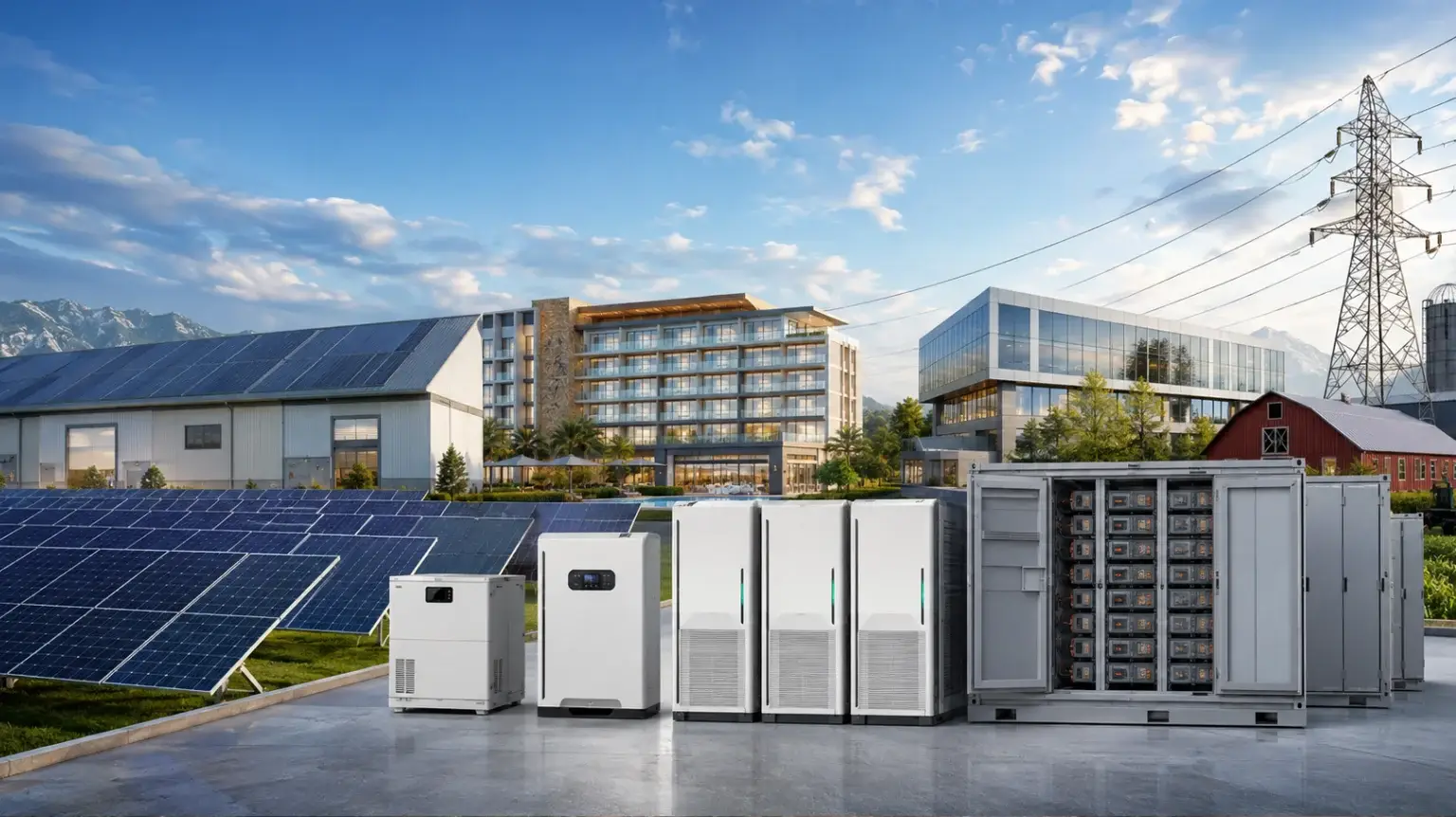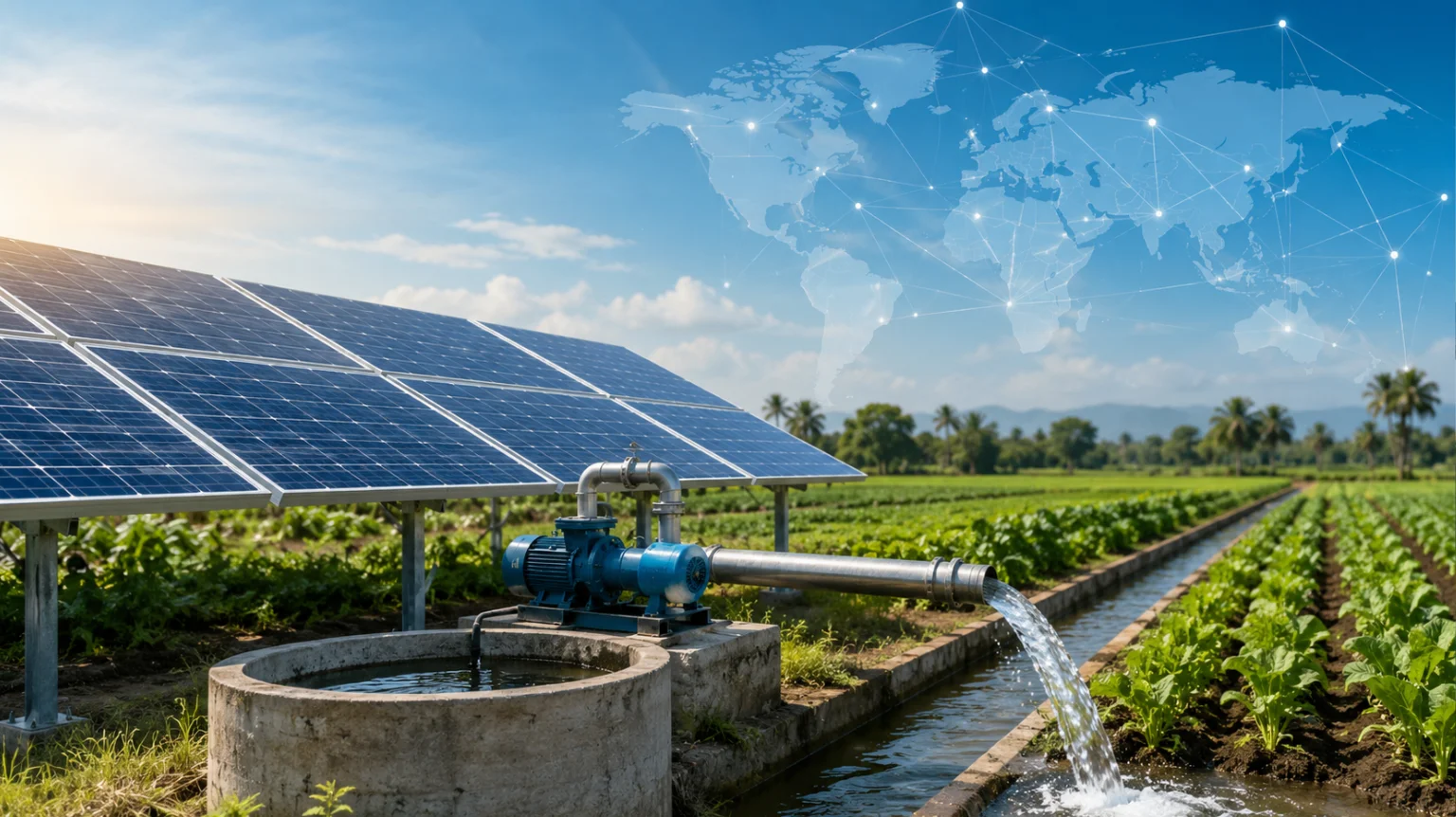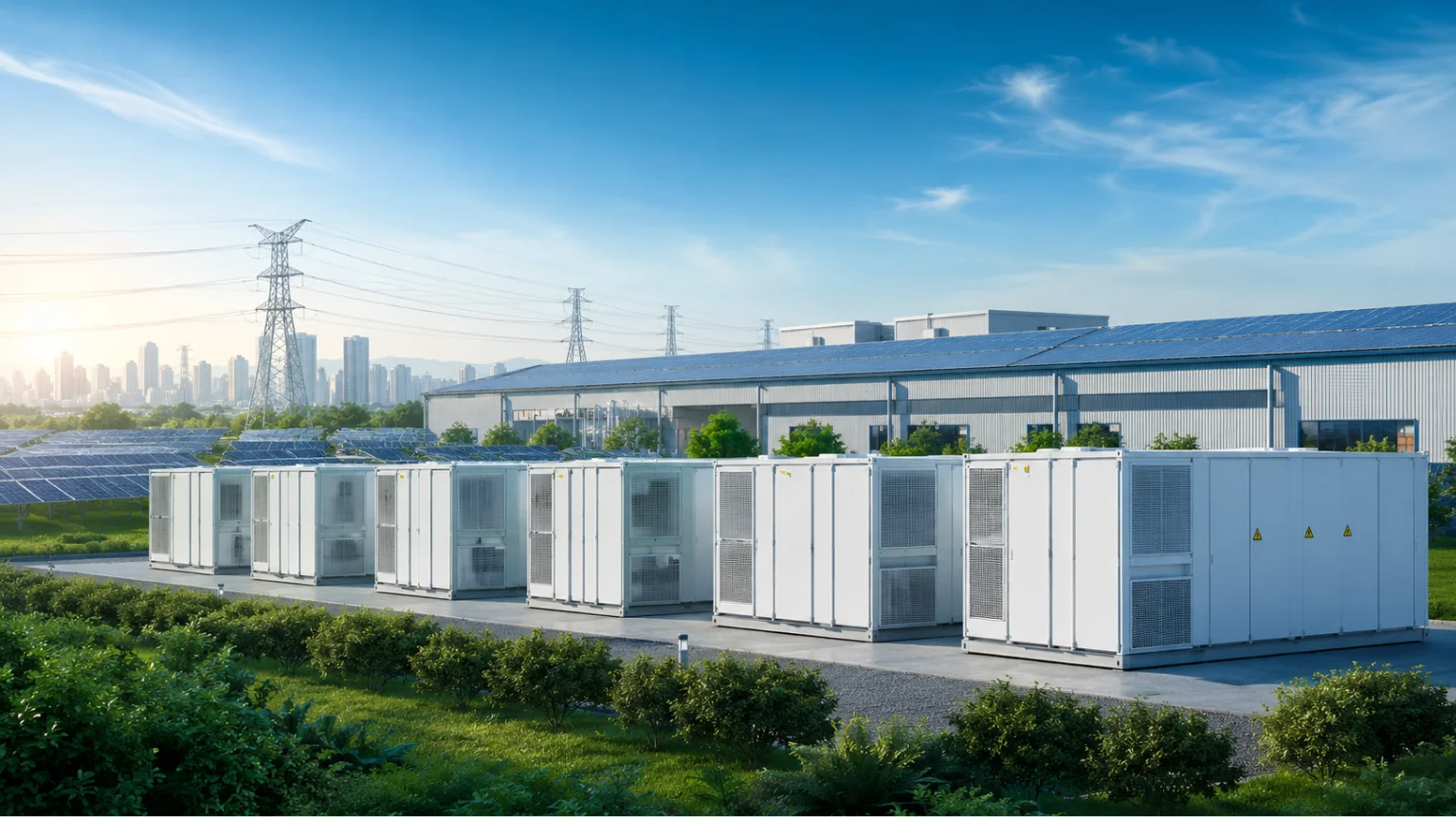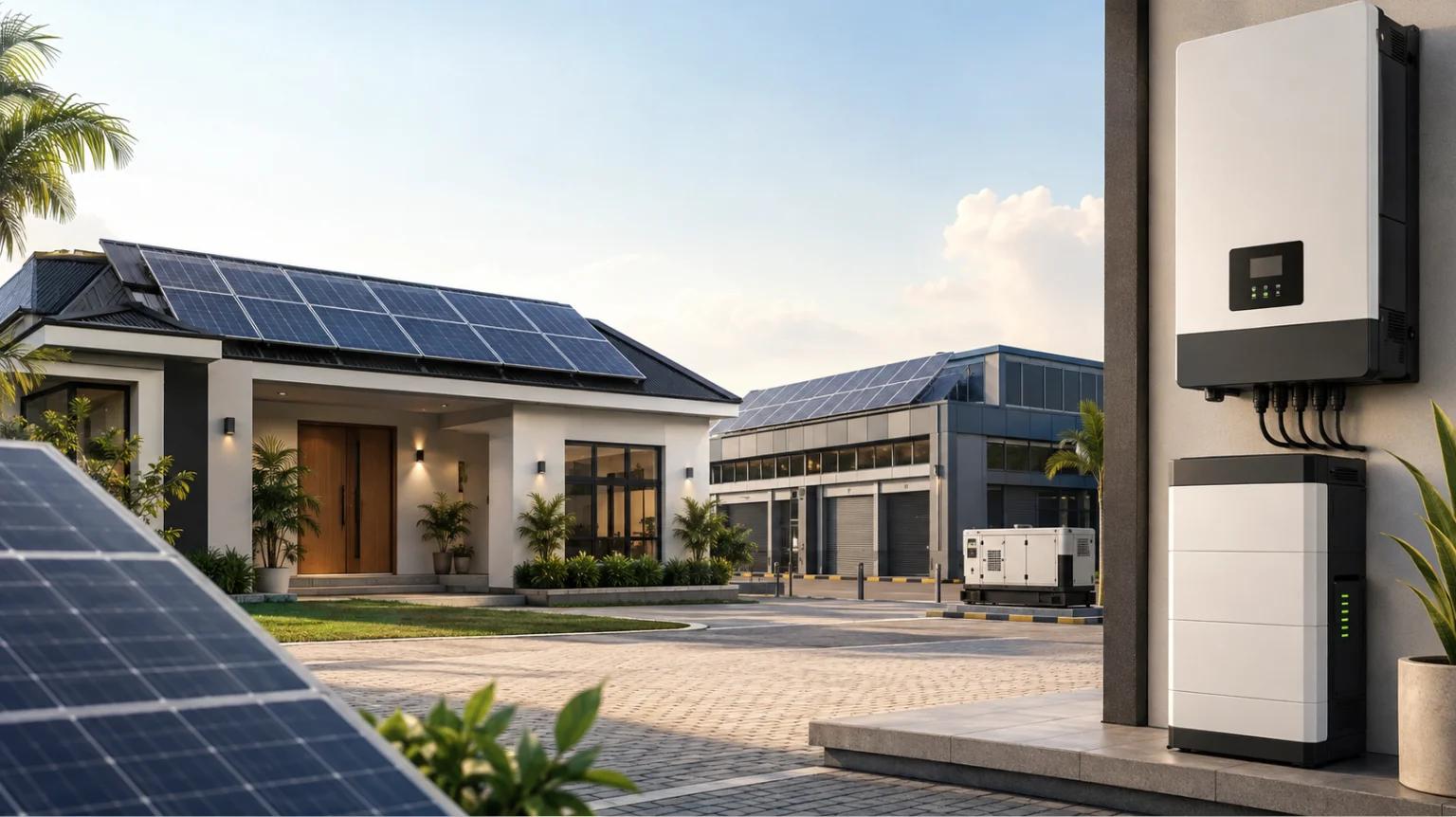
When designing a commercial solar project, I often find that inverter sizing is one of the most important decisions that directly affects system performance, reliability, and project cost. Many projects start by looking at solar panel capacity, but the inverter size cannot be determined by PV capacity alone. A correct configuration requires understanding the relationship between electricity demand, solar generation, battery storage, and the actual operating conditions of the project.
In commercial applications, the inverter must be matched with the customer’s load requirements, including peak demand, operating hours, critical equipment, and future expansion plans. A factory with motors and production equipment, an agricultural solar pumping system, and a commercial building will all require different inverter considerations because their energy consumption patterns are not the same.
A solar inverter for commercial projects should be sized by matching the actual load demand, PV capacity, DC-to-AC ratio, battery requirements, and operating conditions to ensure reliable system performance.
In this guide, I will explain how to size a solar inverter for commercial solar projects by covering the key engineering factors, including load analysis, DC-to-AC ratio, PV system matching, battery storage requirements, and common design mistakes. The goal is to help EPC contractors, system designers, and project developers create more reliable solar solutions through better inverter selection.
What Does Solar Inverter Sizing Mean in Commercial Solar Projects?
When designing a commercial solar project, inverter sizing is one of the most important technical decisions because it determines how effectively the entire system can convert, manage, and deliver solar energy. Many companies initially focus on the total solar panel capacity or the inverter price, but in real project development, selecting the right inverter requires a much deeper understanding of how electricity is generated, consumed, and managed. A properly sized inverter needs to match the project’s load requirements, solar generation capacity, operating environment, and future energy objectives.
In commercial applications, the inverter is not simply a device that converts DC electricity from solar panels into AC electricity. It acts as the core connection point between the photovoltaic system, electrical loads, battery storage, grid connection, and backup power sources such as diesel generators. From my experience working with solar system projects, the most successful installations are not based on choosing the largest inverter or the lowest-cost equipment, but on creating a balanced system where every component works together according to the customer’s actual requirements.
Understanding the Relationship Between Solar Panels and Inverter Capacity
The relationship between solar panels and inverter capacity is the foundation of solar inverter sizing. Solar panels generate electricity in the form of direct current (DC), while most commercial buildings, factories, and industrial equipment operate using alternating current (AC). The inverter is responsible for converting DC electricity from the solar array into usable AC power that can be consumed by the facility or integrated with other energy sources.
When evaluating a solar project, it is important to distinguish between the DC capacity of the solar array and the AC output capacity of the inverter. The DC capacity represents the total power generation capability of the solar panels based on the number of modules installed and their rated wattage. For example, a system with 500 solar panels rated at 550W each would have a total PV capacity of 275kW DC. This value shows the maximum theoretical energy generation potential of the solar array under standard testing conditions.
The AC capacity of the inverter represents the maximum amount of power that can be delivered to the electrical system after the DC electricity has been converted. These two values are related but they are not always identical. In many commercial solar projects, the solar array capacity may intentionally be higher than the inverter capacity because solar panels rarely operate at their maximum rated output throughout the entire day. Factors such as sunlight intensity, temperature, weather conditions, and installation conditions influence actual energy production.
For example, a commercial project may use a 120kW DC solar array with a 100kW AC inverter, creating a DC-to-AC ratio of 1.2. This type of design can help improve inverter utilization and increase energy production during periods when sunlight levels are lower. However, the correct ratio depends on the project location, electricity consumption profile, equipment specifications, and customer objectives. A professional solar design approach focuses on achieving the right balance rather than simply matching solar panel capacity with inverter capacity.
Why Solar Inverter Size Cannot Be Selected Only Based on Solar Panel Capacity
One of the most common mistakes in commercial solar projects is selecting an inverter only according to the total solar panel capacity. While the PV array size is an important consideration, it does not provide enough information to determine the correct inverter configuration. A commercial solar system must be designed according to how the energy will actually be generated, distributed, stored, and consumed.
When analyzing a project, the first consideration is usually the maximum load demand. Different applications have completely different electricity requirements. A factory with production equipment, compressors, and motors may experience significant peak power demand, while a warehouse or office building may have a more stable electricity consumption pattern. The inverter must be capable of supporting the actual operational requirements of the facility, not just the theoretical output of the solar panels.
The solar generation capacity is another important factor. The inverter must be compatible with the planned PV configuration, including solar string design, input voltage range, current limitations, and expected energy production. A system that has sufficient solar panel capacity but an incorrectly selected inverter may experience reduced efficiency, operational limitations, or unnecessary energy losses.
Operating conditions also influence inverter selection, especially for commercial projects in regions with challenging environments. Solar systems installed in areas such as Africa and Southeast Asia may experience high temperatures, dust, unstable grid conditions, or remote operating locations. These factors can affect system performance and must be considered during the initial design stage rather than after installation.
Battery storage requirements are another critical factor for hybrid and off-grid solar projects. When a system includes lithium batteries, the inverter must be properly matched with battery voltage, charging and discharging power, communication protocols, and energy management requirements. In these applications, the inverter is not operating independently; it is managing the relationship between solar generation, battery storage, electrical loads, and backup power sources.
Ultimately, inverter sizing depends on the purpose of the solar project. A factory looking to reduce electricity costs and maintain production during outages will have different requirements from a remote agricultural project seeking energy independence. The correct inverter size is determined by understanding the complete system objective rather than selecting equipment based on a single parameter.
Why Correct Inverter Sizing Matters for Commercial Solar Project Success
For commercial solar projects, inverter sizing is not only a technical calculation but also a key factor that affects project reliability, customer satisfaction, and long-term system performance. A correctly selected inverter helps ensure that the solar system can operate efficiently, support the required loads, and work reliably together with other energy components.
For EPC contractors and solar system integrators, understanding inverter sizing is especially important because their reputation depends on delivering systems that perform as expected after installation. A project that uses mismatched equipment may create problems such as unstable operation, reduced energy output, or difficult maintenance, which can affect future business opportunities.
The purpose of professional inverter sizing is not to select the largest available capacity or simply reduce initial investment. The goal is to design a balanced solar system where the solar array, inverter, battery storage, and electrical loads work together according to real operating conditions. This approach allows commercial solar projects to achieve better reliability, improved energy performance, and stronger long-term value for the customer.
What Factors Should Be Considered When Sizing a Solar Inverter?
When I evaluate a commercial solar project, inverter sizing is never just about selecting an inverter with enough kilowatt capacity. In real-world applications, the inverter must be matched with the complete energy system, including the customer’s electricity demand, solar generation capacity, installation environment, battery storage requirements, and future expansion plans. A correctly sized inverter helps ensure that the solar system can operate efficiently, maintain stable power output, and avoid problems caused by equipment mismatch.
Many solar projects fail to achieve their expected performance because the inverter selection process focuses only on the solar panel capacity while ignoring how the electricity will actually be consumed. From my experience working with EPC contractors and commercial solar applications, the most reliable designs always begin with understanding the project’s operating conditions first and then selecting the inverter configuration that supports the customer’s actual business requirements.
Analyze the Project Load Requirement Before Selecting an Inverter
The first step in sizing a solar inverter is understanding what the system needs to support. Before selecting any inverter model, I need to understand the customer’s total connected load, actual power consumption pattern, peak demand, and the type of equipment that will operate during the day. The purpose of a commercial solar system is not simply to generate electricity but to provide reliable power for specific operations, which means the inverter must be selected based on real energy requirements rather than only the size of the solar array.
For commercial and industrial projects, the difference between average electricity consumption and peak power demand is especially important. A factory may have production machines, motors, compressors, and other industrial equipment that require higher starting power compared with their normal operating power. If the inverter is selected only according to average consumption, the system may not perform reliably when heavy equipment starts or when multiple loads operate simultaneously. In agricultural projects, irrigation pumps and water systems create similar challenges because motor-driven equipment often requires additional starting power. For hotels and commercial buildings, the inverter design needs to consider HVAC systems, lighting, refrigeration, security equipment, and essential backup loads because maintaining continuous operation directly affects customer experience and business continuity.
Daily operating hours and seasonal changes should also be considered during inverter selection. A factory operating 24 hours a day has a completely different energy profile compared with a facility operating only during daylight hours. Similarly, agricultural projects may have different electricity requirements depending on irrigation seasons, while commercial buildings may experience changes in consumption due to occupancy levels or climate conditions. By understanding these factors before selecting the inverter, the system can be designed to provide reliable performance under actual operating conditions rather than only under ideal situations.
Calculate Solar PV Array Capacity and DC to AC Ratio
After understanding the electricity demand, the next important step is evaluating the relationship between solar PV capacity and inverter output capacity. One of the most important concepts in commercial solar system design is the DC-to-AC ratio, which describes the relationship between the total solar panel capacity and the inverter’s AC output capacity. The formula is simple: DC/AC Ratio = Solar PV Capacity ÷ Inverter AC Capacity.
In many commercial solar projects, EPC engineers intentionally design a DC-to-AC ratio between approximately 1.15 and 1.25 instead of matching the solar array capacity exactly with the inverter capacity. For example, a system with 125kW DC solar panels connected to a 100kW AC inverter creates a DC-to-AC ratio of 1.25. This approach is commonly used because solar panels rarely produce their maximum rated output throughout the entire day. Factors such as sunlight intensity, temperature, weather conditions, and installation angle influence actual solar generation.
A properly designed DC-to-AC ratio can improve overall system performance because the inverter receives stronger solar input during morning and afternoon periods when solar production is lower. It can also improve inverter utilization and optimize project investment by avoiding unnecessary oversizing of inverter capacity. However, this design approach requires careful engineering analysis because excessive PV oversizing can increase clipping losses, where the solar array produces more power than the inverter can convert at certain times of the day.
When selecting the DC-to-AC ratio, I always consider the specific project conditions rather than applying a fixed value to every system. The ideal configuration depends on the customer’s electricity consumption pattern, local solar resources, inverter specifications, and whether the project includes battery storage or other energy management requirements.
Consider Inverter Input Voltage, Current and String Configuration
Selecting the correct inverter capacity is only one part of the design process. Even if the inverter power rating matches the project requirements, incorrect electrical matching between the solar array and inverter can affect system safety, efficiency, and long-term reliability. This is why professional solar design requires reviewing the electrical characteristics of the PV system before finalizing the inverter selection.
One of the key considerations is PV string voltage. Solar panels are typically connected in series to form strings, and the combined voltage of each string must remain within the inverter’s maximum input voltage range. If the string voltage exceeds the inverter’s allowable limit, it may create safety risks and affect equipment reliability. The MPPT operating range is also important because the inverter needs to track the maximum power point of the solar panels under different operating conditions, including temperature variations throughout the year.
Current matching is another important factor. The inverter must be capable of handling the short-circuit current and operating current generated by the connected PV strings. The number of strings connected to each inverter also affects system performance because an incorrect configuration may reduce energy harvesting or create operational limitations. In commercial projects, two inverters with the same output power rating may have completely different electrical specifications, meaning the correct selection depends not only on capacity but also on how well the inverter matches the complete solar array design.
Consider Battery Storage and Hybrid System Requirements
For hybrid and off-grid solar projects, inverter sizing becomes more complex because the inverter is responsible for managing energy between multiple power sources. Unlike a simple grid-connected solar system, a hybrid system needs to coordinate electricity flow between solar panels, batteries, diesel generators, and connected loads. Therefore, the inverter cannot be selected as an independent component but must be designed as part of the complete energy solution.
When battery storage is included, I need to consider factors such as battery voltage, charging and discharging power, backup duration, and communication compatibility between the inverter and battery management system. The inverter must be capable of controlling energy flow efficiently, allowing the battery to store excess solar energy during production periods and provide power when solar generation is insufficient.
For projects that combine solar with diesel generators, inverter selection also needs to consider generator integration and energy management strategies. In many developing markets, commercial customers use diesel generators because of unstable grid conditions, but they want to reduce fuel consumption through solar and battery solutions. A properly configured hybrid inverter can help coordinate solar production, battery operation, and generator backup to maintain reliable power while reducing operating costs.
The main difference between standard inverter selection and hybrid system design is that the inverter becomes the control center of the entire energy system. It must work together with the PV system, battery storage, generator, and electrical loads to achieve the customer’s project objectives. This is why commercial solar projects require a complete system approach rather than simply selecting individual components based on their specifications.
How to Size a Solar Inverter for Different Commercial Applications
When I size a solar inverter for commercial projects, I always start by understanding the application scenario because different businesses have completely different energy requirements. A factory, farm, hotel, or commercial building may all require solar power, but the way electricity is generated, consumed, and managed can vary significantly. The inverter configuration that works well for one application may not be suitable for another.
In real projects, I do not select an inverter only based on the total solar capacity or the connected equipment rating. Instead, I evaluate how the facility operates, which loads are most important, whether backup power is required, and how the customer expects the system to perform in the future. By connecting inverter sizing decisions with actual business operations, the solar system can provide more reliable performance and better long-term value.
Factory Solar Projects
Factory solar projects usually require a higher level of reliability because electricity directly affects production efficiency, equipment operation, and business continuity. When I evaluate an industrial solar project, the first thing I consider is the factory’s operating pattern, including continuous production loads, working hours, and the types of equipment connected to the electrical system. Unlike simple commercial buildings, factories often have machines that operate for long periods and cannot tolerate unstable power conditions.
Three-phase electricity is commonly required in industrial applications because many production machines, motors, and heavy equipment rely on three-phase power systems. When selecting an inverter for a factory project, I need to ensure that the inverter configuration matches the electrical characteristics of the facility, including voltage requirements, phase balance, and the expected power demand. A system that appears sufficient based only on total kilowatt capacity may still face operational issues if the electrical characteristics are not properly considered.
Motor starting current is another important factor in factory solar system design. Many industrial machines require significantly higher power during startup compared with normal operation. Equipment such as pumps, compressors, and production motors can create short periods of increased demand that the inverter must be capable of handling. If the inverter is selected only according to the average running load, the system may experience insufficient power support when multiple machines start or operate at the same time.
For many factories, solar power is not only about reducing electricity costs but also about maintaining stable production during grid interruptions. This is why industrial projects often require hybrid solar systems with battery storage and sometimes diesel generator integration. A properly designed hybrid system can allow the factory to continue operating during outages, reduce dependence on diesel fuel, and improve overall energy security. In these applications, the inverter becomes a key component that manages energy flow between solar generation, battery storage, backup power sources, and factory loads.
Agricultural Solar Pumping Projects
Agricultural solar pumping projects require a different approach because the inverter must support both energy generation and water management requirements. When I work on solar irrigation projects, I do not select an inverter simply based on the rated power of the water pump. The actual system design needs to consider the complete relationship between the pump, water demand, solar conditions, and operating schedule.
Pump power is an important starting point, but it is not the only factor that determines inverter sizing. Many pumps, especially larger agricultural pumps, require higher starting current when the motor begins operation. The inverter must be capable of handling this temporary power demand while maintaining stable operation. A system that only matches the pump’s normal running power may fail to provide sufficient performance during startup.
Daily water demand is another important consideration because agricultural operations depend on consistent irrigation schedules. The solar system needs to be designed according to how much water the farm requires, how many hours the pump operates each day, and whether water storage systems are available. A farm requiring several hours of irrigation every day may need a different inverter and solar configuration compared with a seasonal irrigation project.
Solar radiation conditions also directly influence inverter selection because solar pumping systems depend on available sunlight to operate effectively. Factors such as geographic location, weather patterns, seasonal changes, and installation conditions affect daily solar production. In some regions, the system may need additional design considerations to ensure reliable operation during periods with lower sunlight availability.
For agricultural applications, the objective is not simply powering a pump but creating a reliable water supply solution. This is why successful solar pumping projects require matching the inverter with the complete irrigation system rather than selecting equipment based only on the pump specification.
Hotel and Commercial Building Solar Projects
Hotel and commercial building solar projects require careful inverter sizing because energy consumption is closely connected with daily operations and customer experience. When I evaluate these projects, I focus on understanding when electricity is consumed, which loads are essential, and how much backup power the customer requires during grid interruptions.
Many hotels and commercial buildings have significant daytime energy consumption from systems such as air conditioning, lighting, elevators, refrigeration, and office equipment. The inverter must be selected based on the facility’s actual energy usage pattern rather than only the total installed equipment capacity. Understanding daytime consumption is especially important because it determines how effectively the solar system can reduce electricity costs during operating hours.
Backup requirements are also a major consideration for hotels and commercial facilities. Unlike some industrial applications where production can be temporarily stopped, hotels, offices, and commercial buildings often need continuous power to maintain normal operations. Power interruptions can affect lighting, security systems, communication equipment, guest comfort, and essential services. For this reason, many commercial buildings choose hybrid solar systems with battery storage to provide more stable energy availability.
Customer experience is an important factor that makes commercial buildings different from other applications. A hotel experiencing frequent power interruptions may directly affect guest satisfaction and business reputation. Therefore, inverter sizing should consider not only energy savings but also operational reliability and service continuity.
Critical loads must also be identified during the system design process. Instead of powering every electrical device during an outage, many commercial projects prioritize essential systems such as emergency lighting, communication equipment, security systems, refrigeration, and selected operational equipment. By understanding these priorities, the inverter and battery system can be designed more effectively to provide the required backup performance.
For commercial buildings, the best inverter solution is usually one that balances energy cost reduction, operational reliability, and future expansion needs. A properly designed solar system should support the customer’s business objectives rather than simply provide renewable energy generation.
Real Project Example: How We Selected a Solar Inverter Configuration From Initial Requirement to Final Solution
When discussing commercial solar projects with EPC contractors, I often find that the biggest challenge is not simply choosing an inverter with the correct power rating. The real challenge is understanding the customer’s energy problem, translating operational requirements into technical specifications, and creating a system where solar generation, energy storage, and backup power can work together reliably. In many developing markets, commercial customers are not only looking for lower electricity costs but also need protection against unstable grids, production interruptions, and rising diesel expenses. The following project example shows how we approached a commercial solar requirement from the initial customer situation through system configuration and final delivery, demonstrating why inverter selection should always be part of a complete energy solution rather than an isolated equipment decision.
Project Background: Customer Needed a Reliable Commercial Solar System
A local EPC partner approached Mars Solar with a commercial solar project requirement from a customer operating in a developing market where unstable electricity supply was affecting daily operations. The customer was facing frequent power interruptions, increasing dependence on diesel generators, and unpredictable operating schedules caused by unreliable grid conditions. For this type of business, the problem was not only the electricity cost itself but also the impact of power instability on productivity, equipment operation, and overall business efficiency. The EPC partner already had strong local advantages, including customer relationships, installation capability, and knowledge of the site environment, but they needed a reliable solar system supplier who could support the technical design, equipment selection, quotation preparation, and complete solution development.
At the beginning of the project, the discussion was not focused on selecting a specific inverter model or simply asking how many kilowatts of solar equipment were required. Instead, the objective was to understand what the customer wanted the solar system to achieve. The EPC partner needed a solution that could reduce diesel generator usage, improve power reliability, and provide stable electricity for the facility. This required Mars Solar to work together with the EPC team to analyze the project requirements and develop a suitable configuration based on actual operating conditions.
Step 1 — Understanding the Electrical Load Before Choosing the Inverter
The first part of the design process was understanding the customer’s electrical demand because inverter selection should always begin with the load side rather than the equipment side. We reviewed the customer’s equipment information, daily operating schedule, peak electricity demand, and backup requirements to understand how power was being consumed throughout the day. This included evaluating which equipment was critical for operation, whether there were high starting current requirements, and how long the facility needed backup support during grid interruptions. This step was essential because a commercial solar inverter is not selected only according to the solar panel capacity; it must be capable of supporting the actual electrical behavior of the customer’s facility.
During this stage, the purpose was to determine the relationship between the required inverter output, solar generation capacity, and battery storage needs. For example, a factory with production equipment may require a different inverter configuration compared with a warehouse or commercial building because industrial loads often have larger power fluctuations. By understanding the customer’s real operating requirements first, we could avoid a common mistake in commercial solar projects: selecting equipment based only on theoretical calculations without considering how the system would perform in daily operation.
Step 2 — Matching Solar Capacity With Inverter Capacity
After understanding the electrical requirements, the next challenge was creating the right balance between solar capacity, inverter capacity, and battery storage. In commercial solar projects, the goal is not to select the largest inverter available but to design a system that provides reliable performance while maintaining reasonable investment efficiency. Based on the available installation area, expected energy demand, operating conditions, and project budget, the system configuration was developed with the appropriate PV capacity, inverter capacity, and battery capacity.
One important consideration during this process was the relationship between DC solar capacity and AC inverter output. Commercial projects often do not require a one-to-one match between solar panel capacity and inverter capacity because solar generation changes throughout the day. A carefully designed DC-to-AC ratio can improve system utilization by allowing the solar array to provide sufficient energy during periods of lower sunlight while avoiding unnecessary inverter oversizing. The engineering objective was to create a balanced solution that could deliver stable operation, achieve better project economics, and provide flexibility for future expansion if the customer’s energy requirements increased.
Step 3 — Solving Compatibility Between Solar, Battery and Backup Power
One of the most important parts of commercial solar system design is ensuring that all components can operate together as one complete energy system. In many projects, the inverter is connected not only with solar panels but also with battery storage, diesel generators, monitoring platforms, and different types of electrical loads. This creates additional technical requirements because each component must communicate correctly and follow the intended operating logic.
During the system design process, we evaluated important factors such as inverter and battery compatibility, charging and discharging control logic, protection settings, and different operating modes under grid-connected, backup, and off-grid conditions. For hybrid solar projects, the inverter becomes the central controller that manages energy flow between solar production, battery storage, generator backup, and customer loads. A system can only achieve reliable performance when these components are properly matched and configured together.
This is also why many EPC contractors prefer working with a supplier that understands complete system integration rather than purchasing separate products from multiple manufacturers. Even when individual components meet their technical specifications, compatibility issues between different brands can create challenges during installation, commissioning, and after-sales support. A complete system approach helps reduce these risks and improves the overall project delivery experience.
Delivering a Complete System Solution
Through the cooperation between Mars Solar and the local EPC partner, the project moved from an initial energy challenge into a complete solar solution supported by system configuration, BOM preparation, equipment supply, and technical documentation. Mars Solar focused on providing the technical and supply chain support required from the China side, while the local EPC partner remained responsible for installation, commissioning, and local project execution. This cooperation model allows each party to contribute its own strengths: the supplier provides reliable equipment and system expertise, while the local partner provides installation capability and customer support.
From my perspective, this type of cooperation represents the practical approach needed for commercial solar projects in developing markets. A successful solar project is rarely achieved by selling individual products alone. Customers need a reliable system that works in real operating conditions, and EPC partners need a supplier who can support them throughout the project process. By combining local execution capability with professional solar system supply, Mars Solar aims to become a long-term technical partner for EPC contractors and energy solution providers rather than simply an equipment supplier.
Common Mistakes When Sizing a Solar Inverter for Commercial Projects
When I review commercial solar projects, I find that many inverter sizing problems do not come from a lack of available equipment or technology. The bigger challenge is that some systems are designed by looking at only one part of the project, such as solar panel capacity or initial equipment cost, while ignoring how the entire energy system will operate in real conditions. A solar inverter is the connection point between solar generation, electrical loads, battery storage, and other power sources, so incorrect sizing decisions can affect system reliability, performance, and long-term customer satisfaction.
From my experience working with EPC contractors and commercial solar applications, many problems can be avoided by analyzing the complete project requirements before selecting equipment. Understanding these common mistakes helps project developers, installers, and system integrators create more reliable solutions and reduce technical risks during installation and operation.
Choosing Inverter Size Only Based on Solar Panel Capacity
One of the most common mistakes I see in commercial solar projects is selecting the inverter size only according to the total solar panel capacity. Although the PV array capacity is an important factor, it does not independently determine the correct inverter size. A solar system is designed to serve a customer’s electricity demand, which means inverter selection must consider how the generated energy will actually be used.
For example, a project with a 200kW solar array does not automatically require a 200kW inverter. The correct inverter configuration depends on factors such as the customer’s load profile, operating hours, energy consumption pattern, local solar conditions, and whether battery storage is included. In many commercial systems, engineers intentionally design a specific relationship between DC solar capacity and AC inverter capacity to improve system performance and investment efficiency.
When I evaluate a project, I always look beyond the solar panel rating and understand the purpose of the system first. A factory that needs stable power during production hours, a farm requiring irrigation support, and a commercial building seeking electricity cost reduction may all have the same PV capacity but completely different inverter requirements. Choosing an inverter based only on panel capacity can lead to an unbalanced system that does not fully meet the customer’s operational needs.
Ignoring Peak Loads and Motor Starting Requirements
Another common mistake in commercial solar projects is ignoring peak loads and motor starting requirements during inverter selection. Many businesses do not operate with a constant electricity demand throughout the day. Instead, their power consumption changes depending on equipment operation, production schedules, and specific activities.
This issue is especially important for factories, agricultural pumping systems, and industrial facilities because many types of equipment require significantly higher power during startup compared with normal operation. Motors, compressors, pumps, and production machinery can create temporary power demands that are much higher than their rated running power.
For example, a factory may have a production machine that operates within a certain power range during normal operation, but requires additional current when the motor starts. Similarly, a solar irrigation system may have a water pump that requires higher starting power before reaching normal operating conditions. If the inverter is selected only based on the average operating load, the system may experience insufficient power support, unexpected shutdowns, or reduced reliability.
When designing these systems, I focus on understanding the customer’s actual operating environment rather than only reviewing equipment specifications. The inverter needs to support both normal energy consumption and temporary demand changes. This is especially important in commercial applications where power interruptions can affect production schedules, operating costs, and customer trust.
Selecting Equipment From Different Suppliers Without System Compatibility Checks
A third mistake I frequently see in commercial solar projects is selecting individual components from different suppliers without considering overall system compatibility. At first, purchasing each component separately may appear to provide more flexibility or lower equipment costs, but it can create additional technical challenges during installation and operation.
A commercial solar system often includes multiple connected components, such as solar inverters, batteries, monitoring platforms, and backup generators. These components need to communicate correctly and operate according to the intended energy management strategy. If compatibility is not confirmed before purchasing, problems may occur during commissioning, including communication failures between inverter and battery systems, incorrect charging and discharging control, or limitations in system monitoring functions.
Another challenge is responsibility when problems occur. When equipment comes from multiple suppliers, it can become difficult to identify the source of a technical issue. One supplier may consider the problem related to another component, while another supplier may not have enough information to provide a solution. This can create delays and increase after-sales service difficulties for the EPC contractor and end customer.
From my perspective, a reliable commercial solar project requires more than individual high-quality products. The entire system needs to be designed and tested as a coordinated solution. Working with a supplier that understands system integration can help reduce compatibility risks and provide clearer technical support throughout the project lifecycle.
Ignoring Future Expansion Requirements
The final mistake I often see in commercial solar system design is ignoring future expansion requirements. Many businesses do not remain at the same energy consumption level throughout the life of the solar system. As companies grow, their production capacity, operational hours, and electricity requirements often increase.
For example, a factory may add new production lines in the future, increasing its electricity demand beyond the original system design. A commercial building may expand its facilities, while an agricultural operation may add additional irrigation equipment. Similarly, customers who initially install a solar-only system may later decide to add battery storage to improve energy independence or backup capability.
If future development is not considered during the initial inverter selection process, the customer may face additional costs when upgrading the system. In some cases, the existing inverter configuration may limit future expansion or require significant changes to the original installation.
When I work with EPC partners, I recommend considering not only the customer’s current requirements but also their possible future energy needs. A well-designed commercial solar system should provide a reasonable balance between current investment and future flexibility. Planning for expansion helps customers achieve better long-term value and allows the solar system to continue supporting their business as energy requirements grow.
A successful commercial solar project is not simply about selecting equipment that works today. It is about designing a system that remains reliable, adaptable, and valuable throughout its operating life.
What Information Should EPC Contractors Prepare Before Selecting a Solar Inverter?
When I work with EPC contractors on commercial solar projects, one of the biggest differences between an ordinary quotation and a professional system proposal is the quality of the information provided at the beginning. Many project inquiries start with a simple request such as “we need a 100kW solar system” or “please quote a hybrid inverter,” but this information is usually not enough to determine the correct inverter configuration. A reliable commercial solar solution requires understanding how the customer uses electricity, what problems the system needs to solve, and how the solar, battery, and backup systems will operate together.
Before selecting a solar inverter, EPC contractors should prepare complete project information so that the supplier can evaluate the technical requirements accurately. The more details available during the initial discussion, the easier it becomes to select the appropriate inverter capacity, solar configuration, battery system, and overall energy solution. In commercial projects, accurate system design does not begin with choosing equipment; it begins with understanding the project.
Project Location and Application Type
The first information I review when supporting an EPC project is the project location and application type because these factors influence the entire system design. The same inverter capacity can perform very differently depending on where the system is installed and what purpose it serves. A factory in Nigeria with unstable grid conditions, an agricultural irrigation project in Senegal, and a hotel in the Philippines may all require solar power, but their inverter requirements and energy priorities will not be the same.
The application type helps determine what the solar system needs to achieve. For example, a factory may require stable power to maintain production, meaning the inverter and battery system need to support critical industrial loads. An agricultural project may focus on operating irrigation pumps according to water demand and solar availability. A commercial building or hotel may prioritize reducing electricity costs while maintaining backup power for essential operations. Understanding the customer’s actual application allows the supplier to recommend a system configuration that matches the business requirement rather than simply providing a standard product quotation.
The project location is also important because environmental conditions can affect equipment selection and system reliability. Factors such as temperature, humidity, dust, available installation space, and grid conditions all influence how the inverter and related components should be configured. Providing accurate location information at the beginning helps avoid technical adjustments later in the project process.
Electricity Consumption and Load Profile
Understanding electricity consumption is one of the most important parts of inverter sizing because the inverter must be designed around how the customer actually uses power. When reviewing a commercial solar project, I usually need more than a monthly electricity bill. A complete understanding of the customer’s load profile helps determine when electricity is consumed, which equipment creates the highest demand, and how much energy support is required throughout the day.
For commercial and industrial projects, the daily operating pattern often determines the most suitable system design. A factory operating during production hours may have significant daytime electricity demand, while a hotel or commercial building may have different consumption patterns because of lighting, HVAC systems, refrigeration, and customer services. Agricultural projects may depend on irrigation schedules and seasonal water requirements. These differences directly influence inverter capacity, solar array size, and whether battery storage is necessary.
A clear load profile also helps avoid oversizing or undersizing the inverter. If the supplier only knows the total energy consumption but does not understand the operating pattern, the recommended system may not perform as expected. By analyzing actual electricity usage, EPC contractors and suppliers can create a solution that better matches the customer’s operational needs.
Peak Demand and Critical Load Requirements
Peak demand is another key factor that EPC contractors should provide before selecting a solar inverter. Commercial systems are rarely operating at a constant power level throughout the day, and many facilities experience short periods where electricity demand increases significantly. This is especially important for factories, farms, and industrial facilities where equipment such as motors, pumps, compressors, and production machines may require higher starting power.
When evaluating a project, I pay close attention to the equipment that has the greatest impact on power demand. A factory may have production machinery that requires additional current during startup, while an agricultural project may have irrigation pumps with higher initial power requirements. If these conditions are ignored, the inverter may appear suitable during basic calculations but struggle during actual operation.
Critical loads should also be clearly identified because not every customer requires the entire facility to operate during a power outage. Some customers may only need essential equipment, such as production lines, communication systems, medical equipment, refrigeration, or security systems, to remain powered. Understanding these priorities helps determine the correct inverter output and battery backup requirements while avoiding unnecessary system costs.
Solar Capacity Target and Battery Requirement
The planned solar capacity and battery requirements are essential information when designing a commercial solar inverter configuration. However, I always emphasize that solar capacity should not be considered separately from the customer’s actual energy objective. A project designed to reduce electricity costs may have a different configuration from a project designed to provide full backup power or achieve energy independence.
EPC contractors should provide information about the expected solar capacity, available installation area, and the customer’s long-term goals. This allows the supplier to evaluate the relationship between PV capacity and inverter output, including the appropriate DC-to-AC ratio and overall system efficiency. The goal is not simply to install the largest possible solar array but to create a balanced system that delivers reliable performance and reasonable investment value.
For projects involving battery storage, additional information is required, including expected backup duration, battery capacity requirements, and the customer’s operating strategy. Some businesses use batteries mainly for backup during grid failures, while others use storage to reduce diesel consumption or optimize energy usage. These different objectives influence inverter selection because the inverter must coordinate solar generation, battery charging and discharging, and electrical loads as one integrated system.
Existing Generator Information and Installation Environment
Many commercial solar projects in developing markets involve existing diesel generators because businesses need reliable backup power when grid supply is unstable. In these situations, EPC contractors should provide detailed generator information, including generator capacity, operating conditions, and how frequently it is used. This information helps determine whether the project requires a solar-only solution, a solar plus battery system, or a hybrid solar and diesel configuration.
When designing hybrid systems, the inverter must communicate and operate correctly with the generator, battery system, and customer loads. The system needs to understand when solar power should be prioritized, when batteries should charge or discharge, and when generator backup is required. Without accurate generator information, it is difficult to create a reliable energy management strategy.
The installation environment is equally important because commercial solar equipment must operate reliably under real site conditions. Information about whether the inverter will be installed indoors or outdoors, available space, ventilation, temperature, humidity, dust exposure, and maintenance accessibility can affect equipment selection. Providing this information early helps suppliers avoid technical problems during installation and commissioning.
Why Complete Project Information Leads to Better Solar System Design
From my experience, the quality of the final solar solution is strongly connected to the quality of the initial project information. When EPC contractors provide detailed information about the location, application, electricity consumption, load profile, solar target, battery requirements, generator conditions, and installation environment, suppliers can provide more accurate inverter recommendations and more reliable system designs.
A professional solar inverter selection process is not about quickly choosing a product from a catalogue. It is about understanding the customer’s business requirements and designing a system that can operate reliably for many years. For EPC contractors, preparing complete project information before contacting a supplier not only improves quotation accuracy but also helps create a stronger technical proposal when presenting the solution to the final customer.
This is the cooperation model that allows local EPC expertise and China-based solar system supply capability to work together effectively. The EPC contractor understands the local project environment, while the supplier provides technical support, equipment integration, and system design experience to help deliver a successful commercial solar project.
How Mars Solar Supports EPC Contractors With Commercial Solar System Design
When I work with EPC contractors, I understand that their biggest challenge is not simply finding a company that can supply solar equipment. In commercial solar projects, the real challenge is reducing technical risks, ensuring system compatibility, and delivering a solution that performs reliably after installation. A project can involve many different decisions, including inverter selection, battery configuration, solar capacity planning, and integration with existing power systems. Without proper technical support, even high-quality equipment may not deliver the expected results.
This is why Mars Solar focuses on becoming a reliable solar system partner for EPC contractors rather than simply acting as an equipment supplier. Our role is to support project partners throughout the design and supply process by helping them create complete solar power and storage solutions that match their customer’s requirements. Instead of competing only through product pricing, we focus on helping EPC partners reduce engineering uncertainty, improve project confidence, and deliver reliable systems to their end customers.
Supporting EPC Contractors With Complete System Configuration
For commercial solar projects, system configuration is one of the most important stages because every project has different technical requirements. When an EPC contractor approaches Mars Solar, we first focus on understanding the application scenario, energy demand, operating conditions, and project objectives before recommending a solution. This allows us to move beyond individual product selection and develop a system configuration that considers how all components will operate together.
A commercial solar project may include solar panels, inverters, battery storage, monitoring systems, and backup power sources. Each component needs to work together correctly to achieve stable operation. Mars Solar supports EPC partners by evaluating the overall system requirements and helping determine suitable configurations for applications such as factories, agricultural projects, commercial buildings, hybrid systems, and off-grid solutions.
By approaching projects from a complete system perspective, EPC contractors can reduce the risk of selecting unsuitable equipment and provide their customers with a more professional technical proposal. The objective is not simply to supply more products but to help partners deliver solutions that are practical, reliable, and suitable for real operating conditions.
Helping Match Inverters and Battery Storage Systems
In hybrid and energy storage projects, inverter and battery compatibility is one of the most important technical considerations. A solar inverter cannot be selected independently because it needs to communicate and operate together with the battery system, solar generation equipment, electrical loads, and sometimes diesel generators.
Mars Solar supports EPC contractors by helping evaluate inverter and battery matching requirements, including system voltage, charging and discharging requirements, operating modes, and overall energy management strategy. This is especially important for commercial projects where customers may require backup power, reduced diesel consumption, or improved energy independence.
Through proper system matching, EPC partners can reduce common challenges that occur when components are purchased separately from different suppliers. A complete approach helps improve commissioning efficiency, simplify technical communication, and create a more reliable experience for the final customer.
Providing BOM Preparation and Technical Documentation Support
For EPC contractors, preparing an accurate quotation and technical proposal is often a critical part of winning a project. However, creating a complete bill of materials and technical documentation requires detailed understanding of system requirements, equipment specifications, and project conditions.
Mars Solar supports project partners by assisting with BOM preparation and providing technical information needed during the project development stage. This allows EPC contractors to evaluate the required equipment, prepare customer proposals, and communicate the system design more effectively.
Technical documents are especially important for commercial and industrial projects because customers often need clear explanations about system capacity, equipment functions, and expected performance. By supporting EPC partners with professional technical materials, Mars Solar helps them present more complete solutions and improve communication with their end customers.
Providing Reliable Equipment Supply and Project Communication Support
Beyond system design, successful commercial solar projects also depend on reliable equipment supply and effective communication throughout the project process. EPC contractors need a supplier who can coordinate different requirements, respond quickly to technical questions, and support project progress from initial discussion to final delivery.
Mars Solar provides complete solar power and storage equipment supply based on the approved system configuration. Instead of focusing only on individual products, we coordinate the required components as part of a complete project solution. This approach helps EPC partners reduce communication complexity and avoid managing multiple suppliers for different parts of the same system.
During the project process, communication between the EPC contractor and supplier is equally important. Changes in customer requirements, technical adjustments, and installation considerations often require quick coordination. Mars Solar works closely with project partners to provide technical communication support and help ensure the system design remains aligned with the customer’s actual needs.
Building Long-Term Partnerships With Local EPC Companies
From my perspective, the most successful solar projects are built through cooperation between companies with complementary strengths. Local EPC contractors understand the market, customer requirements, installation environment, and local regulations. A China-based solar system supplier provides manufacturing capability, product integration, technical resources, and supply chain support.
Mars Solar’s role is not to replace the EPC contractor’s local expertise. Instead, we support EPC partners by providing the system knowledge and equipment resources they need to complete projects more efficiently. This cooperation model allows both sides to focus on their strengths and deliver better results for the final customer.
Mars Solar focuses on complete solar power and storage solutions rather than isolated components. By supporting EPC contractors with system configuration, inverter and battery matching, BOM preparation, technical documentation, equipment supply, and project communication, we aim to become a reliable long-term partner for companies delivering commercial solar projects in developing markets.
Correct Solar Inverter Sizing Creates More Reliable Commercial Solar Projects
When I look back at the commercial solar projects we have supported, one thing becomes clear: selecting a solar inverter is never only about choosing equipment with enough power capacity. A successful commercial solar system requires a complete understanding of how energy is generated, consumed, stored, and managed throughout the project lifecycle. The inverter is an important part of this process, but its performance depends on whether it is correctly matched with the solar array, electrical loads, battery system, and overall project objectives.
Many customers initially focus on inverter capacity because it appears to be the most direct technical specification. However, real project success comes from understanding the relationship between actual load requirements, PV generation capacity, DC-to-AC ratio, battery storage needs, and operating conditions. A properly sized inverter should not only support today’s energy requirements but also provide stable operation under real working conditions and allow reasonable flexibility for future development.
For commercial solar projects, the correct approach begins with analyzing the customer’s actual electricity demand. The inverter needs to support the equipment that will operate in the facility, including peak loads, critical equipment, operating schedules, and specific application requirements. A factory, agricultural project, hotel, or commercial building may all use solar energy, but their inverter requirements can be completely different because their energy consumption patterns and business priorities are different.
The relationship between solar PV capacity and inverter capacity is also a key part of professional system design. A larger solar array does not always require a directly matching inverter size. By evaluating the appropriate DC-to-AC ratio, engineers can create a system that improves energy harvesting, increases inverter utilization, and achieves a better balance between performance and investment. However, this requires careful consideration because excessive oversizing can create unnecessary energy losses and reduce overall project efficiency.
For hybrid and off-grid applications, inverter sizing becomes even more important because the inverter is responsible for managing energy flow between multiple components. Solar generation, battery storage, diesel generators, and electrical loads must operate together as one integrated system. The correct configuration requires understanding battery requirements, charging and discharging conditions, backup expectations, and the customer’s long-term energy strategy.
From my experience working with EPC contractors and commercial solar projects, the strongest solutions are not created by adding more technical specifications or simply selecting higher-capacity equipment. They are created by understanding the customer’s real operational challenges and making engineering decisions based on actual project conditions. This is why project decision logic and practical implementation experience are just as important as technical calculations.
For EPC contractors and system integrators, working with an experienced solar system partner can significantly reduce design risks and improve project delivery. A reliable supplier should not only provide equipment but also support system configuration, component matching, technical communication, and project execution. This cooperation model allows local EPC teams to focus on installation and customer relationships while receiving technical support and supply chain capability from their solar partner.
At Mars Solar, our focus is not simply supplying individual solar components. We support EPC contractors by helping them develop complete solar power and storage solutions that match real commercial requirements. Through system design support, equipment integration, and project cooperation, we aim to help partners deliver reliable solar projects that create long-term value for their customers.
Correct solar inverter sizing is ultimately about creating a system that works reliably after installation, not just a system that looks suitable on paper. When the inverter, solar generation, battery storage, and customer energy requirements are properly balanced, commercial solar projects can achieve better performance, stronger reliability, and greater confidence for everyone involved.