Your Trusted Solar + Battery + Diesel Hybrid Solution Partner for Commercial and Industrial Projects
High diesel costs, unstable grid power, frequent outages, or existing generator systems that are becoming expensive to operate? We help factories, EPC contractors, generator companies and energy solution providers design practical solar + battery + diesel hybrid systems based on real project conditions—including load requirements, power reliability needs, existing generator capacity, operating patterns and future expansion plans. Whether the goal is to reduce diesel consumption, improve backup reliability, support off-grid operations or upgrade an existing power system, we help identify the right hybrid configuration for each application. From system planning and equipment integration to technical support and project delivery, we help our partners build more reliable power solutions while avoiding common challenges caused by incorrect sizing, incompatible equipment or disconnected suppliers.

Solar + Battery + Diesel Hybrid Solution Partner for Commercial and Industrial Projects
At Mars Solar, we understand that a solar + battery + diesel hybrid project is not simply about connecting solar panels, batteries and a generator together. The real challenge is making different power sources work reliably as one system under actual operating conditions. A factory may need continuous production despite unstable grid power, a commercial building may need backup power without running diesel generators all day, and a remote project may depend on diesel generation but want to reduce fuel consumption through renewable energy. We start by understanding your load requirements, daily energy consumption, existing diesel generator capacity, grid availability, critical power requirements and future expansion plans, then design the hybrid power solution around your actual operating environment—helping you avoid oversized equipment, poor system compatibility and unreliable power performance.
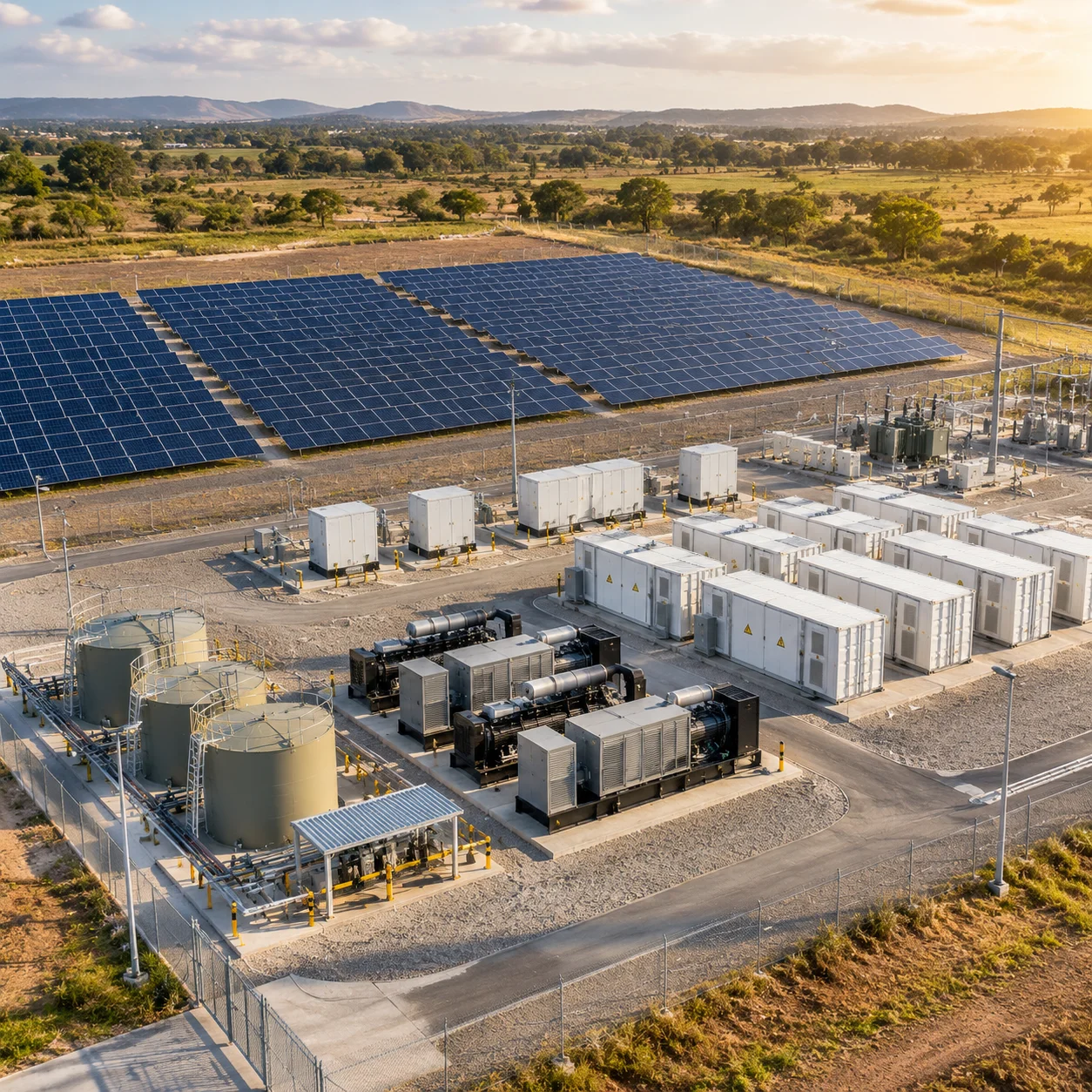
We provide practical Solar + Battery + Diesel Hybrid Solutions for different commercial and industrial applications: Solar + Battery Hybrid Systems with Diesel Generator Backup for businesses that need reliable power during grid interruptions, Solar + Battery Diesel Fuel Saving Systems for factories and commercial facilities looking to reduce generator operating hours and fuel costs, Solar + Battery + Diesel Microgrid Systems for remote projects requiring independent energy supply, and Solar + Battery + Grid + Diesel Hybrid Systems for industrial customers combining multiple energy sources for maximum reliability and energy optimization. We do not believe every project should use the same hybrid configuration. The right system depends on your electricity demand, power reliability requirements, existing infrastructure, generator operation strategy and whether the goal is backup protection, fuel reduction, energy independence or long-term operating cost control.
Whether you are an EPC contractor preparing a commercial solar project, a generator company expanding into renewable energy solutions, an energy service provider supporting industrial customers, or a factory owner looking to reduce electricity and diesel expenses, we help turn your project requirements into a complete and supply-ready hybrid power solution. We coordinate key equipment—including solar modules, hybrid inverters, lithium battery storage systems, energy management systems, protection devices and related components—together with system configuration, BOM support and technical documentation. This allows your team to prepare project proposals more efficiently, simplify equipment coordination and deliver reliable solar + battery + diesel projects with fewer risks caused by incorrect sizing, incompatible components or fragmented suppliers.

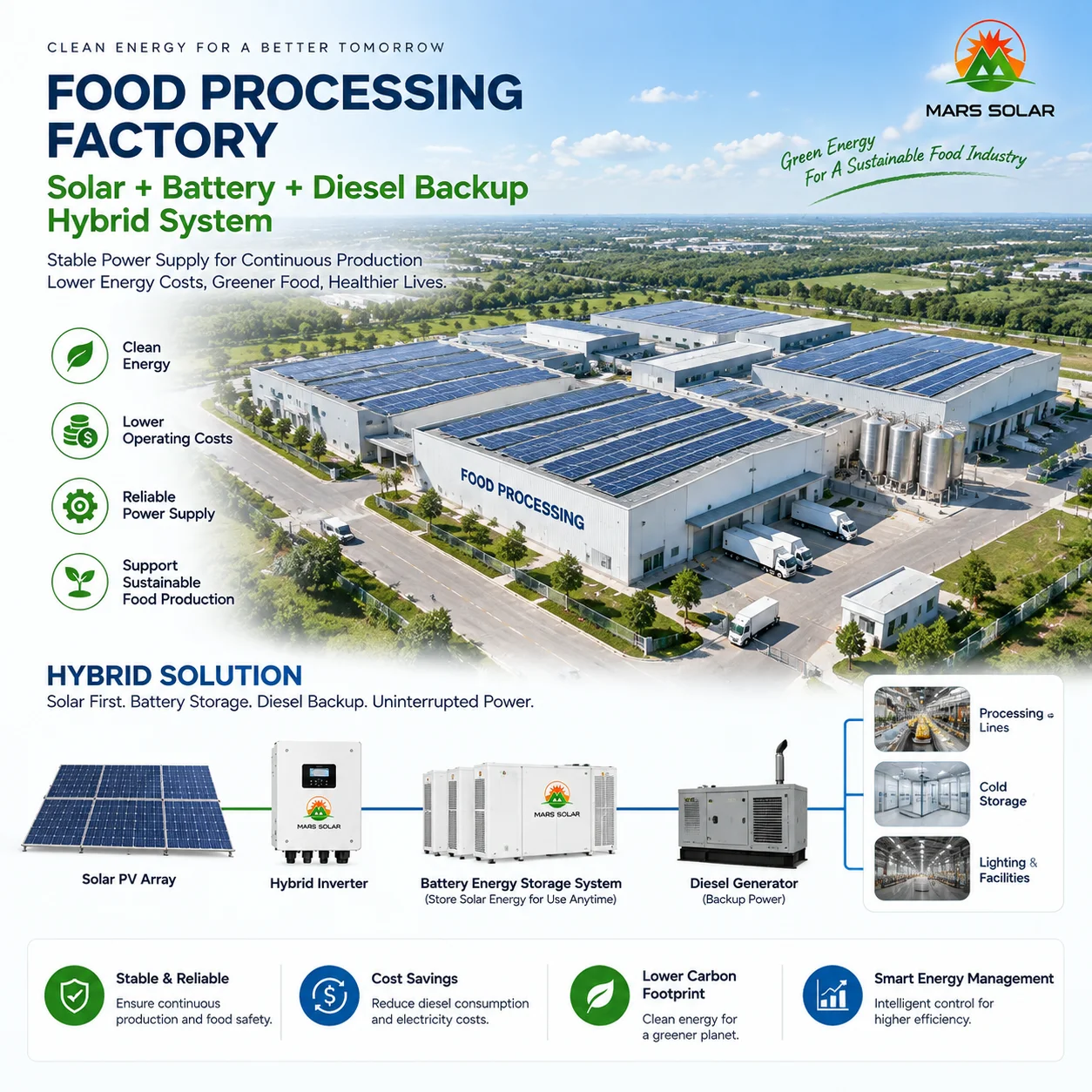
Solar + Battery + Diesel Backup Hybrid System
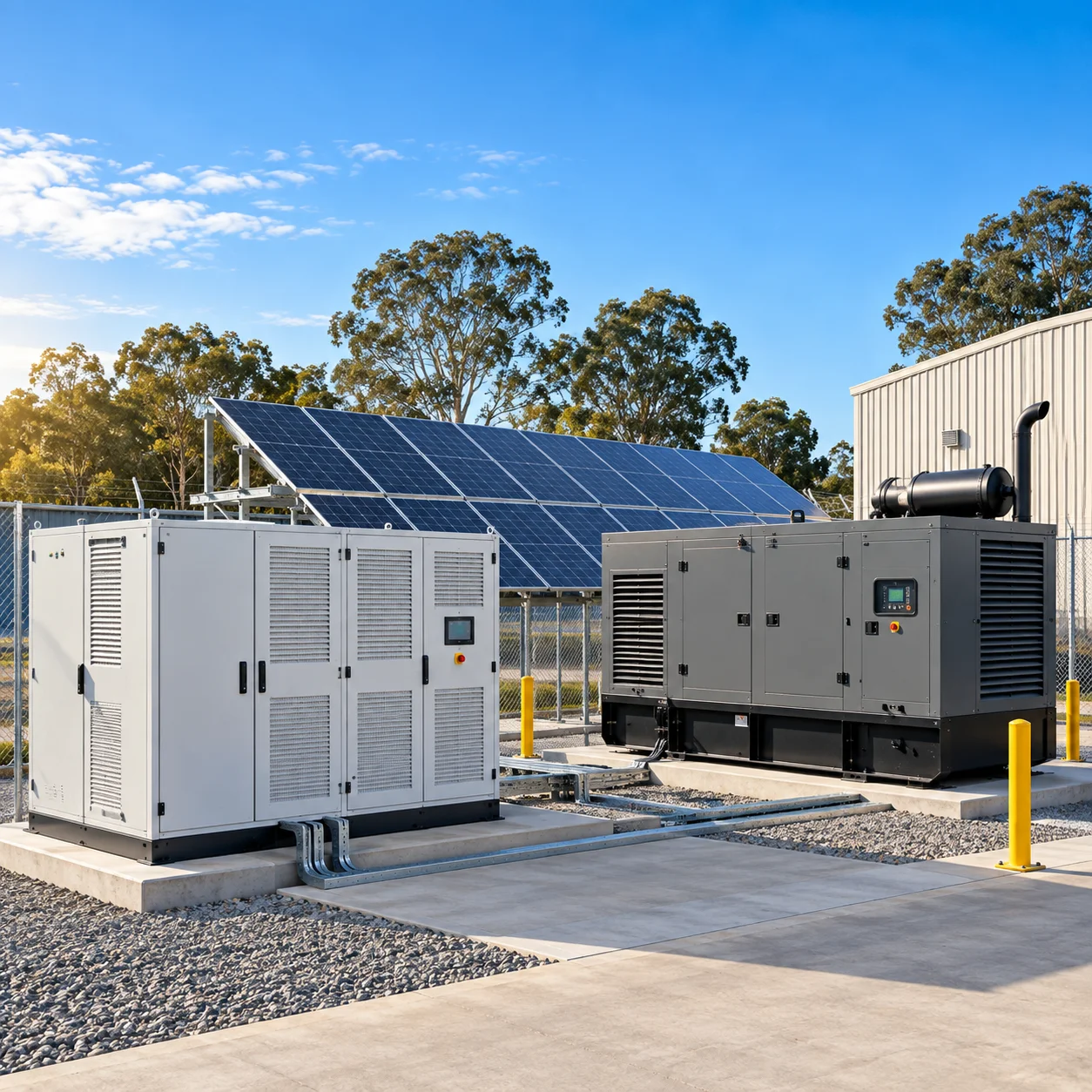
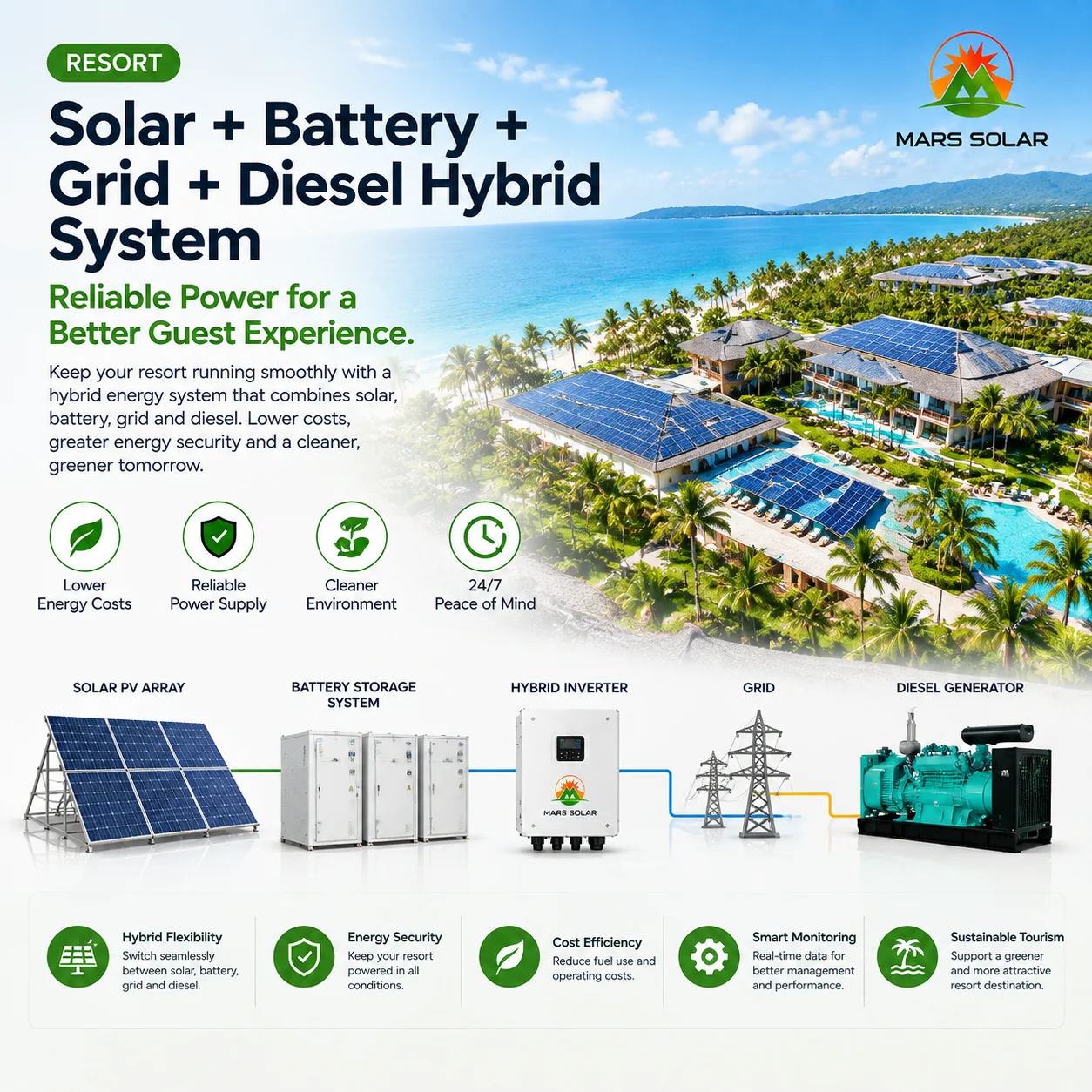
Solar + Battery + Grid + Diesel Hybrid System
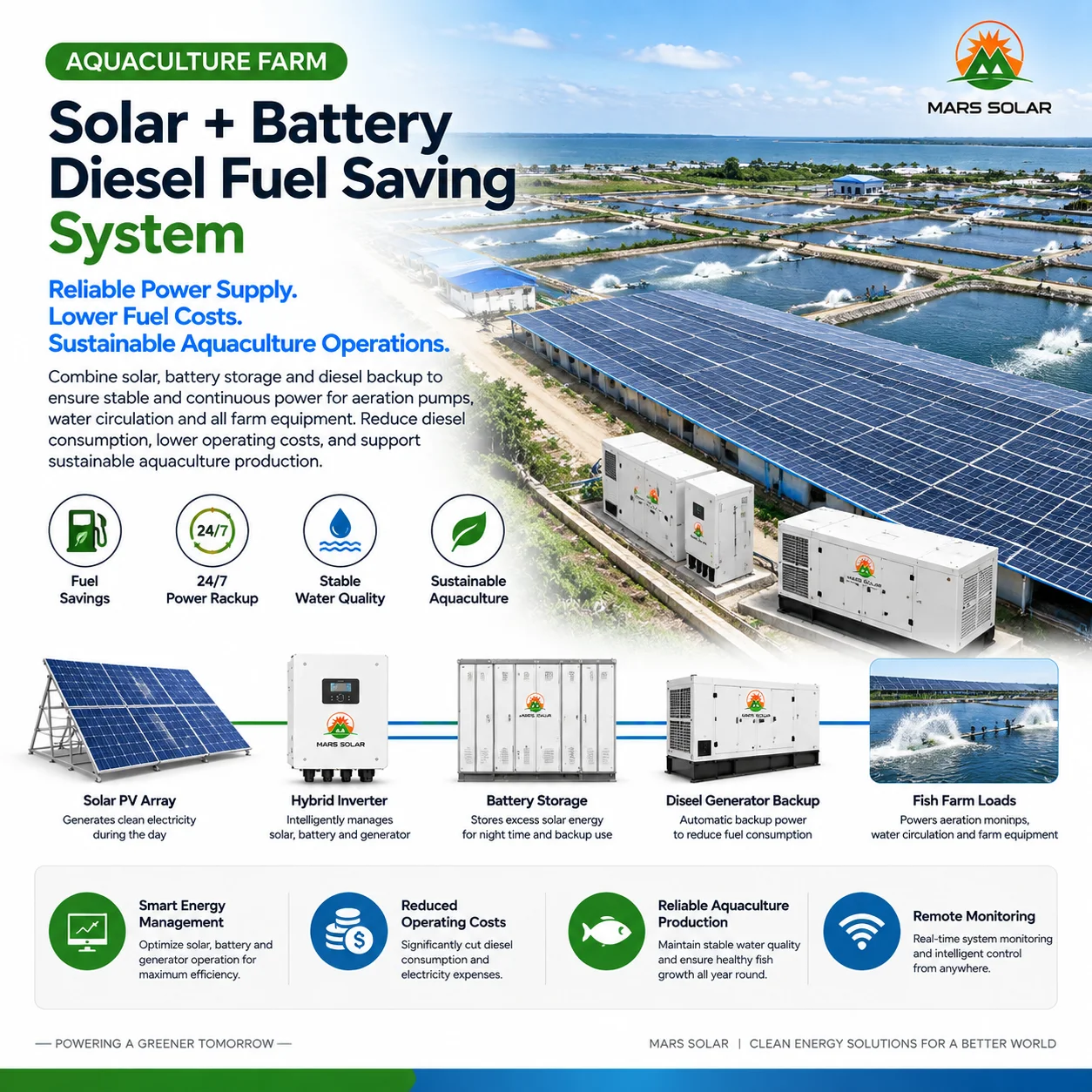
Solar + Battery Diesel Fuel Saving System
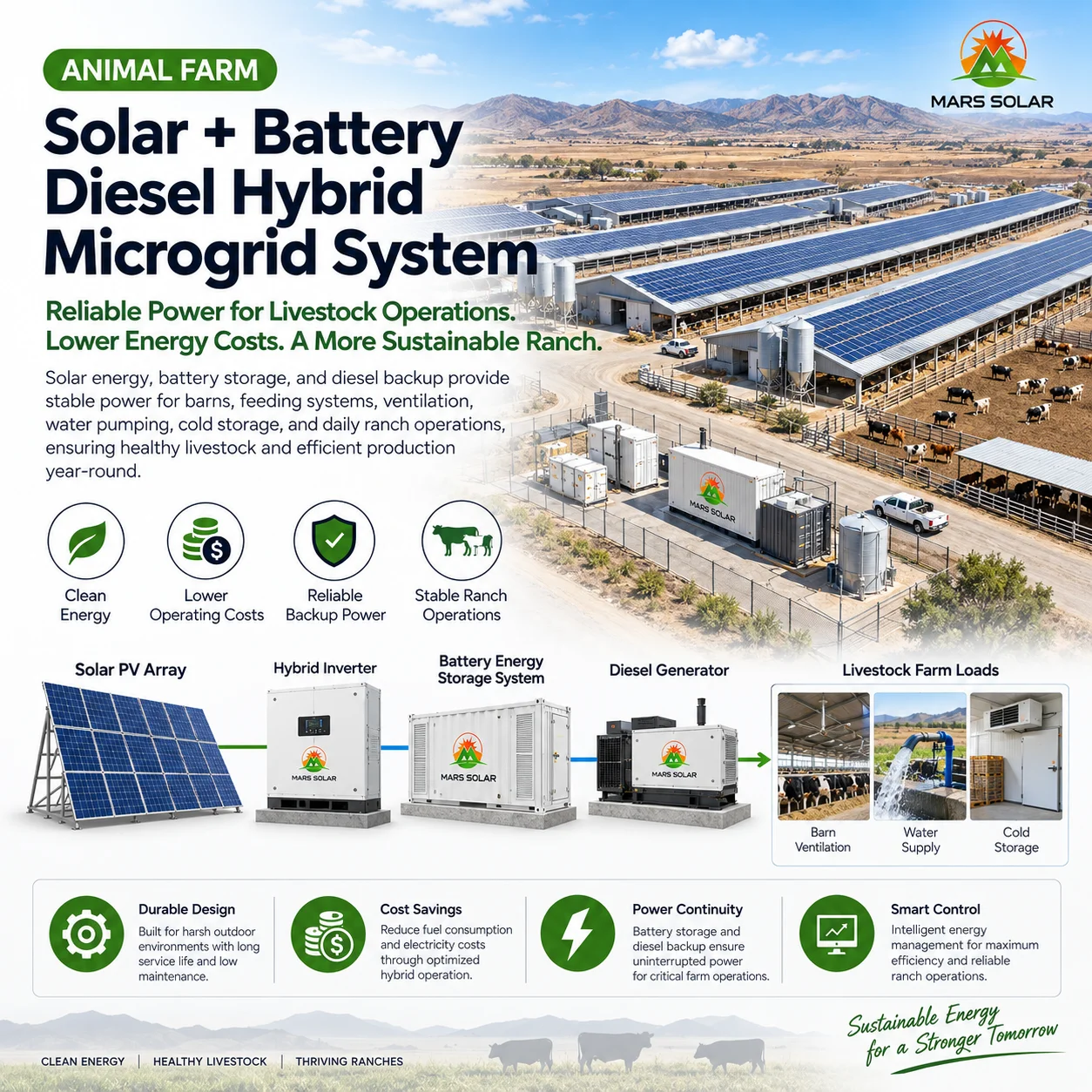
Solar + Battery Diesel Hybrid Microgrid System
Build Your Solar + Battery + Diesel Hybrid Project With a Partner Who Understands What Really Matters
If you already have a factory, commercial facility, remote project, generator business, or customers requesting more reliable power solutions, you are not simply looking for solar panels, batteries or a diesel generator supplier. You need to understand whether the solar generation, battery storage and backup power system can work together reliably under real operating conditions, whether the equipment is correctly sized for your load requirements, whether your existing grid or diesel generator should remain part of the solution, and whether your supplier can support you from initial system planning to final delivery. At Mars Solar, we approach hybrid power projects from both the energy demand and power reliability perspective, helping our partners build practical Solar + Battery + Diesel Hybrid Solutions for commercial and industrial applications.
The Right Hybrid Power Solution Starts With Understanding Your Energy Demand
Every hybrid power project begins with understanding how electricity is actually used, not simply selecting a solar capacity or battery size. A manufacturing facility with continuous production loads, a hotel requiring stable backup power, and a remote site operating without reliable grid access will all require different system configurations. Before recommending a solution, we consider your daily energy consumption, peak load requirements, critical equipment, existing diesel generator capacity, grid availability, operating schedule and future expansion plans. Based on these conditions, we can help configure Solar + Battery Hybrid Systems with Diesel Generator Backup, Solar + Battery Diesel Fuel Saving Systems, Solar + Battery Diesel Hybrid Microgrid Systems and Solar + Battery + Grid + Diesel Hybrid Systems. Our goal is not to add unnecessary equipment, but to ensure the energy sources are properly matched to your actual operating requirements.
Reliable Integration Between Solar Generation, Battery Storage And Diesel Backup
A hybrid power project can face problems even when each individual component appears suitable on paper. The real challenge is making sure solar modules, hybrid inverters, battery storage systems, energy management systems and diesel generators communicate and operate together correctly. We therefore focus on the complete power architecture instead of supplying disconnected products from different sources. If your project already has an operating diesel generator, unstable grid connection or existing electrical infrastructure, we evaluate how these assets should work together with the new solar and battery system rather than automatically replacing everything. Mars Solar’s capabilities cover solar generation, lithium battery storage, inverter systems and intelligent energy management, providing a practical foundation for supporting different commercial and industrial power requirements.
Designed For Businesses Where Power Reliability Directly Affects Operations
For commercial and industrial customers, electricity is not simply another operating expense. Unplanned outages can interrupt production schedules, affect business continuity and increase dependence on expensive diesel generation. This is why we consider reliability and operating cost together when planning hybrid power systems. For factories with high daytime electricity demand, solar generation can reduce grid consumption and generator operating hours. For facilities with unstable grid power, battery storage can provide faster backup response and improve energy stability. For remote projects where diesel remains necessary, a solar + battery + diesel hybrid approach can reduce fuel consumption while maintaining dependable backup power when renewable energy alone is not sufficient.
From Project Requirements To Complete System Supply And Technical Support
Choosing a hybrid solar supplier should involve more than providing a load number and receiving a standard quotation. We need to understand your project conditions, including power demand, daily operating hours, existing generator specifications, grid situation, critical loads, installation environment and future expansion plans before preparing a suitable configuration. From there, we help coordinate key system components—including solar modules, hybrid inverters, lithium battery storage systems, EMS solutions, protection equipment and related accessories—together with BOM support and technical documentation. Mars Solar follows a project process covering demand analysis, system design, production, testing, delivery and installation guidance, helping EPC contractors, generator companies and commercial customers move from project requirements to a supply-ready hybrid power solution with fewer risks caused by incorrect sizing, incompatible equipment or fragmented suppliers.

More Than a Solar + Battery + Diesel Hybrid Equipment Supplier
At Mars Solar, we believe a successful hybrid power project is not only about supplying solar panels, batteries, inverters or diesel generator integration. It is about making sure the complete energy system can operate reliably under real project conditions and support your customer’s business over the long term. We start with the actual power requirements—including load demand, operating hours, existing generator capacity, grid availability, backup expectations and future expansion plans—then help coordinate the right solar generation, battery storage and hybrid control equipment into a practical solution. Our goal is not simply to deliver equipment, but to help our partners provide reliable power solutions that create long-term value for their customers.

Win More Projects With Faster Technical Support
When your customer needs a solar + battery + diesel hybrid solution, you often need more than a product quotation. You need to confirm whether the system configuration is technically suitable, whether the equipment can work together and whether the solution can meet the customer’s reliability expectations. We help EPC contractors, generator companies and energy solution providers organize project requirements into a clearer system configuration and BOM, allowing your team to prepare proposals faster, communicate with end customers more confidently and reduce the time spent coordinating multiple suppliers.
Improve Project Economics Through Better System Matching
The lowest equipment price does not always create the lowest project cost. An oversized battery system can increase unnecessary investment, while an undersized inverter, insufficient PV capacity or incorrect generator integration can affect system performance and customer satisfaction. We focus on balancing energy cost, reliability requirements and investment efficiency by matching solar generation, battery storage and backup power according to the actual application. For businesses currently depending on diesel generators, we can help evaluate hybrid configurations that reduce fuel consumption while keeping reliable backup capability when it is needed.
Reduce Delivery Risks With Complete System Coordination
Hybrid power projects involve multiple technologies working together, including solar generation, battery storage, inverter control, EMS communication and diesel generator operation. Many project problems happen because these components are selected separately without considering the complete system design. We help coordinate the main equipment before delivery and provide the technical information required by your engineering team for installation and commissioning. By identifying compatibility, sizing and operating requirements earlier, we help reduce risks such as system instability, difficult commissioning, unexpected downtime or unnecessary after-sales issues after project completion.
Grow Your Energy Business With One Reliable Partner
Your first hybrid project may start with a small commercial backup system, while future opportunities may require larger industrial solutions, microgrids or more advanced energy storage applications. We support different project requirements through one supply relationship, helping EPC contractors, generator companies and energy providers simplify procurement, access technical support and gradually expand their solar and storage capabilities. Our goal is not only to complete one order, but to become a reliable partner who helps you successfully deliver projects, strengthen customer trust and create opportunities for future cooperation.
Build Your Solar + Battery + Diesel Hybrid Project With More Support Than You Expected
At Mars Solar, you may first contact us because you need a quotation for a Solar + Battery + Diesel Hybrid Solution. However, once we understand your project, the discussion usually goes beyond the price of solar modules, batteries, inverters or diesel generator integration. We look at how your facility uses electricity, what loads require continuous operation, how your existing grid or generator performs, how much backup time is needed and what challenges your local environment creates. Our goal is not only to supply hybrid power equipment, but to help you transform a complex energy requirement into a clearer system solution that your team can confidently propose, install and deliver.
We Start With The Real Power Challenge, Not Just Equipment Selection
Two projects with similar power ratings can require completely different Solar + Battery + Diesel Hybrid Solutions. A factory with continuous production loads may prioritize stable power and reduced downtime, while a remote project may need maximum energy independence because grid access is unavailable. A commercial building with an existing diesel generator may focus on reducing fuel consumption without removing its current backup system. Before recommending a configuration, we review the load profile, energy consumption pattern, peak demand, critical loads, existing generator capacity, grid availability, operating hours and future expansion requirements. This helps determine whether the project is better suited for a Solar + Battery Hybrid System with Diesel Generator Backup, Solar + Battery Diesel Fuel Saving System, Solar + Battery Diesel Hybrid Microgrid System or Solar + Battery + Grid + Diesel Hybrid System, instead of applying the same solution to every customer.
More Than Solar Panels, Batteries And Generators
A reliable hybrid power system is not created by simply combining individual products together. The actual performance depends on how solar generation, battery storage, inverter control, EMS communication and diesel generator operation work as one complete system. We help organize these elements into a practical configuration and BOM before production, allowing your team to clearly understand what equipment is required, how each energy source will operate and what local preparation is needed. This approach helps reduce common project issues such as incorrect battery sizing, insufficient inverter capacity, poor generator coordination or missing components discovered only after installation has started. Mars Solar’s system capabilities include solar generation, lithium battery storage, inverter solutions and intelligent energy management to support different commercial and industrial power requirements.
A Smoother Path From Project Requirements To System Delivery
We understand that hybrid energy projects can become difficult when solar equipment, batteries, generators and technical calculations are handled separately by different suppliers. A small mistake in load estimation, battery capacity or communication requirements at the beginning can create unexpected challenges during commissioning. That is why we keep the project process connected—from requirement analysis and system configuration to quotation support, production coordination, testing, shipment and installation guidance. Mars Solar follows a structured project process covering Customer Inquiry, Demand Analysis, Design & Production, Testing & Delivery, Installation Guide and Project Acceptance, helping partners move from initial project requirements to a supply-ready solution with greater confidence.
Support That Helps You Deliver More Projects In The Future
The value of a reliable hybrid power partner is not only completing one project successfully, but making future projects easier to evaluate and deliver. Once we understand your common applications, local power conditions, customer expectations and technical requirements, future project discussions can become more efficient. An EPC contractor may start with a factory backup system, a generator company may expand into solar hybrid solutions, or an energy provider may gradually develop larger commercial and industrial projects. Different customers may require different system configurations, but you do not need to rebuild your supply chain every time. Our goal is to help you create a more reliable way to evaluate, configure, source and deliver Solar + Battery + Diesel Hybrid Solutions with fewer uncertainties and stronger technical support.
Solar + Battery + Diesel Hybrid Solutions Video Insights from Mars Solar
FAQs Solar + Battery + Diesel Hybrid Solutions
For your convenience, we’ve gathered the most commonly asked questions about our Solar + Battery + Diesel Hybrid Solutions. However, should you have any further queries, please don’t hesitate to reach out to us.
1. Are you a solar equipment supplier or a complete hybrid power system partner?
We are both a solar equipment supplier and a hybrid power system partner. We understand that commercial and industrial projects usually require more than individual products. A reliable Solar + Battery + Diesel Hybrid Solution needs solar generation, battery storage, hybrid inverter or PCS, energy management, protection equipment and diesel generator coordination to work together correctly. Instead of asking our partners to coordinate multiple suppliers by themselves, we help organize the main system components into a practical configuration, BOM and supply plan based on the actual project requirements.
2. What types of Solar + Battery + Diesel Hybrid projects can you support?
We support hybrid power projects for factories, hotels, warehouses, farms, schools, clinics, mining sites, remote facilities and other commercial applications. Common applications include reducing diesel consumption, improving backup reliability, supporting unstable grid conditions, increasing energy independence and providing power solutions for areas where electricity supply is limited. We evaluate each project based on its operating environment rather than applying the same system configuration to every customer.
3. How do we know what solar capacity, battery size and inverter power we need?
You do not need to select the system based only on equipment specifications or estimated usage. We first review how your site actually consumes electricity, including load requirements, peak demand, daily operating hours, critical equipment, backup duration, existing solar capacity, grid conditions and diesel generator information. Based on these factors, we help recommend a suitable solar, battery and inverter configuration that balances reliability, investment cost and future expansion needs.
4. Can your hybrid system work with our existing diesel generator?
Yes, in many commercial and industrial projects, the diesel generator remains an important part of the energy system. We can help evaluate how solar, battery storage and the existing generator should operate together, including generator capacity, operating strategy, backup requirements and control communication. The goal is usually not to remove the generator completely, but to reduce unnecessary running hours, lower fuel consumption and maintain reliable power when additional support is required.
5. Can the system support factories with motors, pumps and heavy electrical loads?
Yes, but these loads need careful evaluation before system design. Equipment such as motors, pumps, compressors, chillers and production machines may require much higher starting power than their normal operating consumption. We review important factors such as motor power, starting method, simultaneous loads and operating schedules to help avoid a system that appears sufficient on paper but cannot perform reliably under real operating conditions.
6. Can you provide a Solar + Battery + Grid + Diesel Hybrid System?
Yes. Many commercial customers already have grid access and diesel generators but want to reduce electricity costs and improve reliability. We can design solutions that combine solar generation, battery storage, grid power and diesel backup according to the site’s operating requirements. The energy management strategy can prioritize solar usage, charge the battery when appropriate and coordinate backup power sources based on load demand and system conditions.
7. Can you work with our existing solar system or upgrade an installed project?
In many cases, yes. If you already have a solar system and want to add battery storage or diesel integration, we can review the existing system information before recommending an upgrade approach. We normally evaluate the existing inverter, electrical configuration, voltage requirements, switchgear conditions, available space and required backup functions to determine whether a retrofit or additional hybrid solution is more suitable.
8. Do you provide standard hybrid systems or customized project solutions?
We provide both standard configurations and customized solutions. Standard hybrid systems can help simplify quotation, production and delivery for common applications, while customized solutions are available for projects with special load requirements, unusual voltage conditions, larger backup requirements, diesel integration or future expansion plans. Our approach is to understand the project first and choose the most practical solution rather than adding unnecessary customization.
9. What technical support and documents can you provide for EPC contractors?
We support our partners with the technical information needed for project evaluation, quotation and installation preparation. Depending on the project requirements, we can provide system configuration information, equipment datasheets, BOM support, technical guidance, installation recommendations and remote communication during project preparation and delivery. Our goal is to help EPC contractors and energy solution providers confidently present and deliver hybrid power projects to their customers.
10. What information do you need before preparing a Solar + Battery + Diesel Hybrid Solution quotation?
To prepare a useful configuration, we normally need information about your project conditions rather than only the desired system size. This may include the project location, load requirements, daily electricity consumption, critical loads, operating hours, existing solar system information, grid availability, diesel generator specifications and future expansion plans. With these details, we can better evaluate the suitable hybrid configuration and avoid common issues caused by incorrect sizing or incomplete project information.
11. What testing, quality control and delivery support do you provide?
We understand that hybrid systems require reliable operation after reaching the project site, so quality control and system verification are important parts of delivery. Depending on the project scope, we can support equipment inspection, parameter confirmation, technical documentation and remote guidance during installation and commissioning. Mars Solar’s process includes demand analysis, system design, production, testing, delivery and installation guidance, with equipment undergoing testing procedures before shipment to support reliable operation.
12. What are the MOQ, lead time and delivery arrangements for hybrid projects?
The requirements depend on the system capacity, battery configuration, inverter rating, customization level and project scope. For many commercial hybrid projects, we can support complete system quotations starting from a single project requirement. We also assist with export documentation, packaging coordination and international shipment arrangements. Local site surveys, permits, installation work and long-term maintenance are normally completed by qualified local engineering teams, while we provide the equipment supply and technical support needed for project delivery.
Mars Solar in Numbers
Industry Experience
Since 1000
Countries & Markets
0 +
Manufacturing Facilities
3000 ㎡
Technical & R&D Team
0 +
Systems Supplied or Supported
1500 +
Your Guide to Solar + Battery + Diesel Hybrid Solutions
If you’re planning a commercial or industrial solar project—whether you are an EPC contractor expanding your energy solutions, a factory owner looking to reduce electricity costs, or a business operating in an area with unreliable grid power—you’re not simply choosing another power generation system. You’re making a decision about how your business will manage energy reliability, operating costs, and future power requirements. Solar + Battery + Diesel Hybrid Solutions have become an increasingly practical approach for companies that need more than traditional grid power or diesel backup alone. By combining renewable energy generation, battery storage flexibility, and diesel reliability, these systems help businesses reduce fuel consumption, improve power stability, and maintain operations under changing energy conditions.
Over the past few years, we’ve seen commercial and industrial energy needs become more complex. Many factories, warehouses, farms, mining sites, and infrastructure projects are facing the same challenges: rising electricity costs, unstable grid supply, increasing diesel expenses, and the need for more reliable backup power. At Mars Solar, we’ve seen that successful hybrid energy projects are not created by simply adding solar panels and batteries to an existing generator system. The real difference comes from understanding how each energy source should work together based on the customer’s load profile, production schedule, local power conditions, and operational priorities.
This guide is built from what we’ve learned supporting commercial and industrial solar projects across different application scenarios. Instead of focusing only on equipment specifications, we want to share how Solar + Battery + Diesel Hybrid Solutions work in real business environments. Factors such as understanding whether the project requires backup power, reducing diesel runtime, managing peak electricity demand, selecting the right battery capacity, integrating existing generators, and preparing a practical system design all influence whether a hybrid energy project delivers long-term value or becomes another expensive installation that does not fully match the customer’s needs.
Table of Contents
How to Choose the Right Solar System Size for a Factory: Lessons From a Real Industrial Project
Choosing the right solar system size for a factory is not simply a matter of calculating available roof space or selecting a standard capacity such as 100kW, 500kW, or 1MW. In real industrial projects, the correct solar configuration depends on how the factory operates, when electricity is consumed, which machines create the highest demand, whether production will expand in the future, and how solar energy will interact with existing power sources. A well-designed industrial solar system should not only generate electricity but also create measurable business value by reducing energy costs, improving power reliability, and supporting long-term operational needs.
From my experience working with commercial and industrial solar projects, I have found that many design mistakes happen before installation even begins. Some projects are oversized because they focus only on available installation space, while others are undersized because they only consider current electricity consumption without considering future growth. The most effective approach is to understand the factory’s actual energy behavior first, then match solar capacity, inverter selection, battery requirements, and system architecture around those conditions. This article explains how professional solar system sizing works and what lessons can be learned from a real industrial project evaluation.
Why Choosing the Right Solar System Size Is More Than Selecting a Capacity Number
When factory owners, industrial energy managers, or EPC contractors start planning a solar project, one of the first questions is usually: “How many kilowatts of solar does this factory need?” It is understandable because system capacity directly affects investment cost, equipment selection, and expected energy savings. However, after reviewing different industrial applications, it becomes clear that the answer cannot come from one simple calculation.
A factory solar system is not designed in the same way as a residential rooftop project. Industrial facilities have complex operating patterns, including different production shifts, machinery loads, seasonal demand changes, and future expansion plans. Two factories with similar electricity bills can require completely different solar solutions because their energy consumption happens at different times of the day and their production requirements are not the same.
When evaluating an industrial solar project, the focus should not only be on how much electricity a factory consumes, but also on how that electricity is consumed. A factory that uses most of its power during daylight production hours may achieve high solar self-consumption, while another facility with significant night operations may require battery storage or a hybrid energy strategy. The objective is not to install the largest possible solar system, but to create the most practical balance between energy generation, investment efficiency, and long-term operational benefits.
Understanding Factory Energy Consumption Before Designing a Solar System
One of the most important steps in industrial solar design is understanding the factory’s real electricity consumption pattern before selecting equipment. Many initial discussions start with monthly electricity bills because they are easy to provide, but monthly consumption alone cannot explain how the factory operates throughout the day.
A professional evaluation usually begins by reviewing historical electricity usage, production schedules, and major equipment operation. A factory consuming 200,000 kWh per month may appear to require a large solar system, but the final design depends on whether that energy is mainly consumed during solar production hours or outside them. If most electricity demand happens during daytime operations, solar energy can directly offset grid consumption. If demand is concentrated during evenings or nights, the project may require battery storage or another energy management approach.
In my experience, many industrial customers initially focus on total electricity consumption because it is the easiest number to understand. However, the more important question is often: “When does the factory need energy most?” Understanding this difference helps avoid incorrect system sizing and creates a solution that matches the actual business operation.
Why Production Schedule Has a Direct Impact on Solar System Size
A factory’s production schedule has a direct influence on solar system economics because energy consumption is closely connected with operational activities. Industrial facilities are not constant loads; their electricity demand changes depending on production lines, working hours, machinery usage, and business requirements.
When reviewing a project, I usually look beyond the total installed equipment and focus on how the factory operates every day. A manufacturing facility operating multiple machines between morning and evening may naturally align with solar generation, allowing a large percentage of generated electricity to be consumed directly. On the other hand, a facility operating mostly during night shifts may need a different approach because solar generation alone cannot support its main production period.
Future expansion is another important consideration. Many factories plan to increase production capacity, add new equipment, or expand their facilities after installing solar. A system designed only according to current consumption may become insufficient within a few years, while an oversized system installed too early may reduce investment efficiency. The right design considers both current energy demand and realistic future development.
Real Industrial Project Example: Why Roof Size Was Not the Final Answer
A manufacturing factory project in West Africa provides a good example of why solar system sizing requires more than measuring available installation space. At the beginning of the discussion, the factory considered a larger rooftop solar system because the building had enough available area for additional PV modules. From a simple perspective, maximizing the roof utilization appeared to create greater energy savings.
However, during the project evaluation, the energy consumption pattern showed a different picture. After reviewing the factory’s production schedule and daytime electricity usage, it became clear that the power demand was not evenly distributed throughout the day. Some production periods required significantly higher electricity consumption, while other periods had lower demand. Designing the system only based on roof availability could have resulted in unnecessary investment because the generated solar energy would not fully match the factory’s actual usage pattern.
The final system approach was adjusted based on the factory’s operating requirements rather than the maximum possible rooftop capacity. This experience reflects a common situation in industrial solar projects: the best solution is not always the largest system, but the one that creates the strongest connection between energy production and business operation.
Matching Solar Capacity With Inverter and Battery Requirements
After understanding the factory’s electricity profile, the next challenge is ensuring that the main system components are properly matched. Solar panels, inverters, battery storage systems, and energy management equipment cannot be selected independently because their performance depends on how they operate together.
A common mistake in industrial projects is focusing heavily on PV capacity while treating other components as secondary decisions. In reality, inverter sizing affects how much solar energy can be converted and used, while battery capacity should be determined by the purpose of storage. A battery designed for backup power has different requirements from one designed for reducing peak electricity demand or supporting diesel reduction strategies.
When I evaluate a factory project, I always consider why energy storage is needed before recommending battery capacity. Some factories need backup power because production cannot stop during outages. Others need batteries because they want to optimize energy usage or reduce reliance on diesel generators. Understanding the actual business objective ensures that the final system is technically suitable and financially reasonable.
Considering Future Expansion Before Finalizing System Size
A factory solar project should not only solve today’s energy challenge; it should also support future business development. Industrial facilities often change over time as production capacity increases, new equipment is introduced, or operating hours are extended.
During project discussions, future expansion is an important factor because it influences the long-term suitability of the system. A factory planning to add new production lines may require additional flexibility in solar capacity, inverter selection, or battery integration. However, preparing for future growth does not mean installing unnecessary equipment immediately. The better approach is to design a scalable system that can adapt as energy demand changes.
This balance between current requirements and future possibilities helps factories achieve better investment efficiency while maintaining the ability to expand their energy system when business needs increase.
The Right Solar System Size Should Support Factory Operations
Selecting the right solar system size for a factory is ultimately a process of understanding the relationship between energy generation and industrial operation. The most successful projects are not created by choosing the largest available capacity or filling every available rooftop area with solar panels. They are created by understanding electricity consumption patterns, production requirements, equipment compatibility, and future business plans.
From my experience with industrial solar projects, the biggest difference between a basic solar quotation and a professional energy solution is the depth of analysis behind the design. A reliable system should help factories reduce energy costs, improve operational stability, and create long-term value rather than simply increase installed capacity.
Whether the project requires a 100kW rooftop system, a 500kW commercial installation, or a larger industrial solar solution, the same principle applies: the correct solar system size should be determined by how the factory operates, not only by how much space is available.
Why Factories Still Need Diesel Generators After Installing Solar: Real Hybrid Energy Project Insights
When factory owners search for a solar diesel hybrid system, solar battery generator system, or factory backup power solution, they are usually not looking for a simple replacement for their existing energy source. In many developing markets, factories already depend on diesel generators because unstable grid power can directly affect production, equipment operation, and business continuity. From my experience working with commercial and industrial energy projects, I have found that the most practical approach is often not choosing between solar and diesel, but understanding how solar generation, battery storage, and diesel backup can work together as one reliable energy system. A properly designed hybrid solar power system allows factories to reduce diesel consumption during normal operation, improve energy reliability during outages, and maintain backup capability when renewable energy alone cannot meet demand.
Many industrial customers initially believe that installing solar means removing diesel generators completely, but this assumption does not always match real operating conditions. A factory is not only an energy consumer; it is a business operation that depends on stable electricity to maintain production schedules and customer commitments. The right hybrid solution focuses on improving the overall energy structure rather than replacing one technology with another. Solar reduces daily operating costs, batteries provide flexibility and fast response, while diesel generators continue serving as a reliable backup source when the factory requires additional power.
Why Factories Cannot Simply Remove Diesel Generators After Installing Solar
When I discuss hybrid energy solutions with factory owners and EPC contractors, one of the first concerns is usually whether diesel generators will still be necessary after solar installation. The answer depends on the factory’s operating environment. For facilities located in areas with stable grid power, solar may mainly focus on reducing electricity costs. However, in regions where grid interruptions are frequent, factories often cannot accept any interruption because production equipment, refrigeration systems, processing lines, and other critical loads may require continuous operation. In these situations, diesel generators still provide an important role because they offer dependable power during extended outages or periods when renewable energy production is insufficient.
The purpose of a solar diesel hybrid system is therefore not to eliminate diesel immediately, but to change how diesel is used. Instead of operating generators for many hours every day, factories can allow solar energy and battery storage to handle a larger portion of their normal electricity demand while keeping diesel available only when necessary. This approach helps reduce fuel consumption, lower maintenance costs, and improve the overall efficiency of the existing power infrastructure.
The Real Challenge Is Coordinating Solar, Battery and Diesel Power Sources
A factory hybrid power system is successful only when all energy sources are properly integrated. I have seen many projects where individual components appear suitable when evaluated separately, but problems occur when solar panels, batteries, inverters, and generators are expected to operate together without proper system planning. The challenge is not simply purchasing solar modules, batteries, or generators; it is creating an energy management strategy where each component has a clear role within the overall system.
In a well-designed hybrid solar power system, solar energy normally becomes the preferred power source when sunlight is available. Battery storage helps balance energy fluctuations and provides additional support during short interruptions or periods of reduced solar production. The diesel generator remains available for longer outages, high-demand situations, or emergency conditions. This combination creates a more stable energy structure because each technology supports the limitations of the others instead of competing with them.
Real Hybrid Energy Project Example: Reducing Diesel Consumption Without Losing Production Reliability
I worked on a project involving a food processing factory in West Africa where unstable grid power frequently affected production schedules. The factory already relied heavily on diesel generators because any unexpected shutdown could impact production efficiency, product quality, and delivery commitments. Initially, the discussion focused on whether the factory should continue using diesel or completely transition to solar, but after reviewing the actual operating conditions, it became clear that neither option alone was the most practical solution.
The project approach was adjusted by introducing solar generation and battery storage while keeping the existing diesel generator as part of the energy system. During normal daytime operation, solar power was used as the primary energy source to reduce dependence on diesel generation. When solar production exceeded immediate demand, the battery system could store additional energy for later use. During extended grid failures or situations where solar and battery capacity were not sufficient, the diesel generator continued providing reliable backup power.
This project demonstrated an important lesson that applies to many industrial applications: the goal of hybrid energy is not always replacing diesel, but using diesel more intelligently. By allowing renewable energy to handle more of the daily electricity demand, factories can reduce fuel costs while maintaining the reliability required for continuous production.
How Solar Priority Operation Helps Factories Reduce Diesel Running Hours
One of the main advantages of a hybrid solar power system is that it changes the traditional operating logic of diesel generators. In many factories, diesel generators are used as the main power source simply because they are reliable. However, reliability often comes with high operating costs because fuel consumption, maintenance requirements, and engine wear increase when generators run continuously.
With a properly designed solar diesel hybrid system, solar generation can take priority during suitable conditions. During daylight hours, solar energy can directly support factory loads, reducing the amount of electricity required from diesel generation. If additional solar energy is available, the system can direct it toward battery charging depending on the project design. This allows the factory to reserve diesel generation for situations where additional power support is genuinely needed.
From my experience, many factories are not facing a shortage of generation capacity. They are facing the challenge of expensive and inefficient energy operation. The value of hybrid systems comes from changing when and how each energy source is used.
The Role of Battery Storage in Improving Factory Energy Reliability
Battery storage plays an important role because solar production and factory electricity demand do not always match perfectly. Solar generation changes throughout the day, while industrial loads often follow production requirements rather than weather conditions. Without storage, factories may still experience limitations when solar production decreases or when sudden power interruptions occur.
When evaluating battery requirements, I always focus on the purpose of storage rather than selecting capacity based only on solar size. Some factories need batteries mainly to provide backup power for critical equipment. Others use batteries to reduce diesel generator operation, improve energy management, or support unstable grid conditions. The correct battery configuration depends on how the factory operates and what business problem the system needs to solve.
A well-designed battery system creates flexibility between different energy sources. It allows solar energy to be stored when available and released when needed, helping factories achieve more stable operation while reducing unnecessary reliance on diesel generation.
How EMS Controls Solar, Battery and Diesel Generator Operation
The Energy Management System is one of the most important elements in a hybrid power system because it coordinates how different energy sources operate together. Without intelligent control, solar generation, battery storage, grid power, and diesel generators cannot respond effectively to changing conditions.
In practical applications, the EMS monitors system conditions and manages energy flow based on predefined operating strategies. For example, during normal daytime operation, the system may prioritize solar power for factory loads. When solar production decreases, battery storage can provide additional support. If battery levels reach a certain threshold or electricity demand exceeds available renewable energy capacity, the diesel generator can automatically provide additional power.
This coordination is what transforms separate technologies into a complete hybrid energy solution. The objective is not simply connecting equipment together, but creating an intelligent system that continuously balances cost, reliability, and operational requirements.
When Should a Diesel Generator Start in a Solar Hybrid System?
A common question from factory owners is whether the diesel generator will still run frequently after installing solar and battery storage. The answer depends on how the system is designed and what the customer prioritizes. A well-configured hybrid system does not normally start the generator whenever solar output decreases. Instead, generator operation is controlled according to specific conditions.
The diesel generator may start when battery capacity reaches a minimum level, when factory demand exceeds available solar and battery power, or when a longer outage requires additional generation support. The exact operating strategy depends on factors such as critical loads, generator capacity, battery size, and reliability expectations.
This is why proper system design is important. A hybrid solution should not only reduce fuel consumption but also ensure that the factory continues operating when energy conditions become challenging.
The Future of Industrial Power Is a Smarter Combination of Energy Sources
After working with industrial solar projects, I believe the future of factory energy management is not about choosing one energy source over another. Solar, batteries, and diesel generators each have different advantages, and the most reliable solutions come from combining them intelligently according to real operating requirements.
Factories need energy systems that can reduce operating costs while protecting production reliability. Solar provides renewable energy and reduces dependence on traditional power sources. Battery storage improves flexibility and backup response. Diesel generators continue providing dependable support when additional power is required.
For factories operating in regions with unstable electricity networks, a Solar + Battery + Diesel Hybrid Solution is not simply an alternative energy system. It is a practical approach to creating a more predictable, efficient, and resilient industrial power strategy.
The Hidden Challenges Behind Industrial Solar Projects: What EPC Contractors Learn After Their First Installation
When solar EPC contractors move from residential or small commercial installations into industrial solar projects, the biggest challenge is usually not selecting solar panels or finding competitive equipment prices. The real difficulty comes from making different technologies, suppliers, and electrical systems work together reliably in a real factory environment. From my experience reviewing commercial and industrial solar projects, I have found that many installation problems are not caused by poor-quality products, but by insufficient system planning before equipment arrives at the site. Components may come from different suppliers, electrical compatibility may not be fully evaluated, protection requirements may be overlooked, and commissioning issues may only appear after installation has already started.
For industrial customers, a solar system is not simply a collection of individual products. It becomes part of an existing electrical infrastructure that supports production lines, machinery, and business operations. A successful commercial solar system installation requires more than selecting the right capacity. It requires careful coordination between solar modules, inverters, protection equipment, monitoring systems, battery storage when required, and the customer’s existing power environment. This is why experienced EPC contractors gradually learn that system integration capability is often more important than individual equipment selection.
Why Industrial Solar Projects Require More Than Equipment Purchasing
When I discuss industrial solar projects with EPC contractors, one common misunderstanding is that a factory solar installation is simply a larger version of a residential solar system. In reality, the complexity increases significantly because industrial customers depend on electricity for continuous operations. A factory may have production machines, motors, compressors, pumps, refrigeration systems, and other equipment that create different electrical requirements compared with ordinary buildings. The solar system must operate together with these existing loads while maintaining safety, reliability, and long-term performance.
The challenge becomes even greater when EPC companies purchase different components from separate suppliers. Solar modules may come from one manufacturer, inverters from another, and electrical protection equipment from another supplier. Although each product may meet its own technical specifications, the complete system can still experience problems if voltage ranges, communication protocols, protection settings, and operating logic are not considered together. In my experience, the success of industrial solar projects depends less on whether individual products are available and more on whether the complete system has been designed and coordinated properly before installation begins.
Real Project Example: How Separate Equipment Purchasing Created Unexpected Delays
I reviewed a factory solar project where an electrical contractor received an opportunity to deliver a commercial solar installation but decided to purchase the main components separately to optimize purchasing costs. The solar modules, inverter, and protection equipment were sourced from different suppliers because each supplier offered competitive pricing for their own products. During the initial quotation stage, the approach appeared reasonable because the major specifications seemed to match the project requirements.
However, once installation started, the engineering team discovered several coordination issues between the different components. The inverter communication settings required additional adjustment, some protection parameters needed to be reviewed, and the monitoring system required further configuration before the complete system could operate correctly. The problem was not that any individual product was unusable. The problem was that the equipment had not been evaluated as one integrated system before arriving at the project site.
This situation created additional communication between suppliers, delayed commissioning, and increased pressure on the installation team. The experience highlighted an important lesson for EPC contractors: reducing equipment purchasing cost does not always reduce total project cost. In industrial solar projects, poor integration planning can create hidden expenses through installation delays, troubleshooting time, and additional engineering work.
Why System Integration Is the Key Difference Between Simple Installation and Industrial Solar Delivery
A professional industrial solar system requires understanding how every major component interacts with the others. When I evaluate a commercial solar project, I do not look only at solar capacity or inverter power. I consider how the PV system, inverter, electrical protection, monitoring platform, battery storage if required, and existing factory electrical infrastructure will operate together throughout the project lifecycle.
System integration becomes especially important when factories have complex operating conditions. Industrial machines may create high startup currents, different production schedules may change electricity demand throughout the day, and existing generators or grid connections may need to remain part of the energy solution. A technically correct solar system must consider these real operating conditions rather than only meeting theoretical specifications.
This is why experienced EPC contractors focus on complete system design instead of treating every component as an independent purchase. The objective is not only to install equipment successfully but to ensure that the final system performs reliably after commissioning and continues supporting the customer’s business operation.
Why Complete BOM Planning Reduces Industrial Solar Project Risks
One of the biggest lessons I have seen in commercial solar projects is the importance of detailed BOM planning before purchasing begins. Many project problems happen because the focus remains on major components such as solar modules and inverters, while smaller but essential elements are not fully considered during the early design stage.
A complete BOM should represent the actual system that will be installed at the customer’s site. It needs to consider electrical protection equipment, cables, switching devices, communication accessories, mounting requirements, monitoring components, and other necessary items that allow the system to operate correctly. Missing these details may not create problems during quotation, but they often become issues during installation when the engineering team discovers additional requirements.
Proper BOM planning also helps EPC contractors communicate more clearly with customers because the project scope becomes easier to understand. It improves quotation accuracy, reduces unexpected costs, and creates better coordination between suppliers, installers, and end users.
Electrical Compatibility Determines Long-Term System Performance
In industrial solar projects, matching equipment ratings is only the beginning. A system can have correctly sized solar modules and inverters but still experience operational issues if electrical compatibility is not carefully reviewed. Voltage requirements, current limitations, protection coordination, communication systems, and grid conditions all influence how the final system performs.
From my experience, this is particularly important when integrating solar with existing factory infrastructure. Many factories already have transformers, distribution systems, generators, and complex electrical equipment. The solar system must be designed around the existing environment rather than installed as an isolated energy source.
A reliable commercial solar system installation requires understanding the complete electrical ecosystem. This approach helps prevent problems such as inverter shutdowns, communication failures, incorrect protection settings, or unexpected limitations after the system becomes operational.
Why Commissioning Preparation Should Start Before Equipment Arrives
Many EPC contractors focus heavily on installation activities but underestimate the importance of commissioning preparation. In reality, many commissioning problems are created much earlier during the design and procurement stages. If system parameters, communication requirements, protection settings, and operating procedures are not clearly defined before installation, the commissioning process can become unnecessarily complicated.
When I review project execution processes, I always consider commissioning as part of the design stage rather than the final step after installation. The engineering team should already understand how the system will be tested, how different components will communicate, and what operating conditions need to be verified before the equipment reaches the site.
For industrial customers, commissioning delays can have a larger impact because the solar system is connected to business operations. A delayed project may affect production planning, customer expectations, and the EPC contractor’s reputation. Proper preparation before delivery helps create a smoother transition from installation to operation.
How EPC Contractors Can Build More Reliable Industrial Solar Projects
After working with different commercial and industrial solar applications, I believe the strongest EPC contractors are not necessarily those who find the lowest equipment prices. They are the companies that understand how to manage the entire project process, from technical evaluation and equipment selection to installation and commissioning.
Industrial customers expect more than installed solar capacity. They expect a reliable energy system that performs consistently for years. This requires EPC contractors to work with suppliers who can support system configuration, technical coordination, documentation, and project delivery rather than simply providing individual products.
As industrial solar markets continue to grow, the ability to integrate different technologies will become an increasingly important competitive advantage. Contractors who understand system planning and supplier coordination will be better positioned to deliver successful projects and build long-term customer relationships.
Industrial Solar Success Comes From Integration Experience
The biggest lesson I have learned from industrial solar projects is that successful delivery depends on much more than selecting good equipment. Solar modules, inverters, batteries, and protection devices are important, but the real value comes from how these components are designed, coordinated, and operated as one complete system.
For EPC contractors entering commercial and industrial solar markets, understanding system integration is one of the most important steps in avoiding project delays and customer dissatisfaction. A well-designed solar system should not only work on paper but also perform reliably in the real factory environment.
The future of industrial solar is not only about installing more capacity. It is about creating smarter, more reliable energy systems where every component works together to support the customer’s business goals.
How Generator Companies Can Expand Into Solar Without Building Their Own Solar Supply Chain
When generator companies search for solar business partnership opportunities or hybrid power solution providers, they are usually facing a change in customer demand rather than simply looking for a new product category. For many years, generator companies have built their businesses around one core value: helping customers maintain reliable electricity when the grid cannot meet their needs. However, as factories, commercial buildings, and infrastructure projects face rising diesel costs, unstable electricity networks, and increasing interest in renewable energy, customers are beginning to ask a different question: “Can you help us reduce fuel consumption while keeping reliable backup power?” From my experience reviewing commercial and industrial energy projects, I believe this transition creates a natural opportunity for generator companies because they already understand the most important part of the energy business — reliability. The future opportunity is not necessarily replacing diesel generators with solar, but combining generator expertise with solar generation, battery storage, and intelligent energy management to create more efficient hybrid power solutions.
Many generator companies hesitate to enter solar because they believe they need to completely rebuild their supply chain, hire a new engineering team, and become a solar manufacturer. In reality, the market transition can happen more gradually. Generator companies already have valuable advantages, including existing industrial customers, electrical installation experience, knowledge of backup power requirements, and trusted relationships with factories and commercial facilities. By developing the ability to evaluate hybrid projects and cooperating with reliable solar system suppliers, they can expand their services without abandoning their existing business foundation.
The Energy Market Is Changing From Generator Backup Toward Hybrid Power Solutions
When I talk with traditional generator distributors and electrical contractors, one common pattern is becoming increasingly clear: customers are no longer only asking for backup power. In regions where grid reliability is poor, businesses have traditionally accepted diesel generators as the only practical solution because keeping operations running is more important than fuel costs. However, this situation is changing as companies become more aware of long-term operating expenses. A factory that runs diesel generators every day may solve its reliability problem, but it also faces continuous fuel consumption, maintenance requirements, and increasing operating costs. This creates demand for a more balanced energy strategy where solar can provide lower-cost daytime energy, batteries can improve flexibility, and diesel generators remain available when additional power support is required.
I do not see this transition as a competition between solar and generators. In many commercial and industrial applications, the most practical solution is a combination of different technologies. A generator company already understands customer expectations because its business has always focused on keeping electricity available when customers need it most. Solar and battery systems simply provide additional tools to achieve the same goal with better efficiency. This means generator companies are not starting from zero; they are expanding their existing energy expertise into a broader solution model.
Why Generator Companies Already Have a Strong Advantage When Entering Solar
One of the biggest advantages generator companies have is their existing position close to the customer. Unlike a new solar company trying to enter the industrial market, generator businesses often already serve factories, hotels, hospitals, warehouses, construction companies, and remote facilities where reliable electricity is critical. They already understand how customers use power, what problems they experience during outages, and what level of reliability their operations require.
In my experience, this customer knowledge is extremely valuable because hybrid energy projects are not simply equipment sales. The right system depends on understanding the customer’s operational environment. A factory owner may not only want lower electricity costs; they may also need to protect production equipment from unexpected shutdowns. A hotel may not only want renewable energy; it may need continuous power for guest services. A remote project may not only want fuel savings; it may need a system that can operate independently from the grid. Generator companies already understand these business requirements, which gives them a strong foundation for adding solar and battery solutions.
Real Project Example: How a Generator Distributor Expanded Into Hybrid Energy Solutions
I reviewed a case involving a diesel generator distributor that had been serving industrial customers for many years. The company mainly provided generators and maintenance services for factories that experienced frequent grid interruptions. Over time, customer conversations began to change. Factory owners were still concerned about reliability, but they were also becoming increasingly concerned about diesel costs and wanted solutions that could reduce generator operating hours without creating power risks.
Instead of changing its entire business model, the company expanded into hybrid energy solutions by combining its existing generator expertise with solar generation and battery storage technology. The generator remained part of the system, but its role changed from being the primary daily energy source to becoming a reliable backup component. During normal operating conditions, solar energy could support factory loads and reduce fuel consumption. Battery storage could provide additional flexibility during short interruptions or periods of lower solar production. The generator continued supporting the system during extended outages or situations where additional power was required.
This project demonstrated an important industry trend: generator companies do not need to become completely different businesses to enter solar. Their existing experience in power reliability, electrical systems, and customer service already provides a strong foundation. The key is adding the right solar and storage capabilities around their existing strengths.
What Technical Knowledge Generator Companies Need Before Offering Solar Solutions
Although generator companies have many advantages, entering solar does require developing additional technical understanding. The challenge is not simply learning how solar panels produce electricity. The real challenge is understanding how solar generation, battery storage, inverters, generators, and energy management systems operate together as one complete power solution.
When I evaluate hybrid projects, I focus heavily on system coordination because this is where many problems occur. A generator that works correctly as a standalone backup system may require different operating strategies when combined with solar and batteries. The system needs to determine when solar should supply the load, when the battery should charge or discharge, and when the generator should start. Without proper planning, the customer may not achieve the expected fuel savings or reliability improvements.
For generator companies, the goal is not necessarily to build their own solar manufacturing capability or develop every technology internally. The more practical approach is to understand the fundamentals of hybrid system design, collect the correct project information, communicate customer requirements clearly, and cooperate with experienced solar suppliers who can provide technical support and equipment coordination.
Expanding Into Solar Without Building a Completely New Supply Chain
One of the biggest concerns I hear from generator companies is that entering solar requires managing too many unfamiliar suppliers. They worry about sourcing solar modules, inverters, batteries, mounting systems, protection equipment, and technical documentation from different manufacturers. This concern is understandable because industrial solar projects involve many components that need to work together correctly.
However, a generator company does not necessarily need to create an entirely new supply chain. A more efficient approach is to establish cooperation with reliable solar system partners who can support equipment integration, system configuration, and project preparation. The generator company’s strongest advantages remain its customer relationships, local installation capability, and understanding of power requirements.
This partnership approach allows generator companies to focus on what they already do well: developing customer relationships, managing local projects, and providing service support. At the same time, they can access solar and storage expertise without taking on unnecessary complexity in the early stages of market expansion.
The Growing Opportunity for Generator Companies in Hybrid Power Projects
The opportunity for generator companies is growing because many businesses are facing the same energy challenges: unreliable grids, expensive diesel consumption, and increasing pressure to improve energy efficiency. These challenges exist across factories, commercial buildings, agricultural facilities, remote infrastructure, and industrial projects.
For factories, hybrid systems can reduce generator running hours while maintaining production reliability. For remote projects, solar and battery storage can reduce fuel transportation costs while keeping diesel backup available. For commercial facilities, hybrid systems can improve energy security while creating a more predictable operating cost structure. These applications create opportunities for generator companies to move beyond selling backup equipment and become broader energy solution providers.
From my perspective, this transition represents an evolution of the generator industry rather than a replacement. Companies that already understand customer power requirements are in a strong position to participate in the renewable energy market by adding solar and storage capabilities.
Generator Companies Can Become Hybrid Energy Partners Without Starting From Zero
After reviewing different commercial and industrial energy projects, I believe generator companies have one of the most natural paths into the solar market. They already understand reliability, electrical systems, customer expectations, and the consequences of power failure. These capabilities are extremely valuable in hybrid energy projects because customers are not only purchasing renewable energy; they are purchasing confidence that their operations will continue running.
The successful transition will not come from abandoning existing generator expertise. It will come from combining that expertise with solar generation, battery storage, and hybrid system knowledge. By developing the right technical understanding and working with reliable supply partners, generator companies can expand their business into solar solutions without rebuilding their entire operation from the beginning.
The future of commercial and industrial power will increasingly depend on combining different energy sources intelligently. Generator companies that recognize this shift can become important hybrid power solution providers by helping customers achieve both energy reliability and better long-term operating efficiency.
Solar + Battery Storage for Factories: When Does Battery Storage Actually Make Financial Sense?
When factory owners and energy managers search for battery storage for factory solutions or industrial energy storage systems, they are usually facing an important investment decision: whether adding batteries can actually create enough business value to justify the additional cost. Unlike solar panels, which directly generate electricity and reduce grid consumption, battery storage creates value in more complex ways. It can improve energy reliability, protect critical production processes, reduce diesel generator usage, manage electricity costs, and allow factories to use renewable energy more efficiently. However, after reviewing different commercial and industrial energy projects, I have found that battery storage is not automatically the right choice for every factory. The decision should always start with understanding the factory’s real energy challenges rather than simply following a market trend.
Some factories can achieve strong results with solar only, especially when their electricity consumption happens mainly during daylight hours and grid power is relatively stable. However, for factories operating in areas with frequent outages, unstable electricity supply, high demand charges, expensive diesel backup, or production processes that cannot stop, battery storage can create significant additional value. The most important question is not whether a factory should install batteries, but whether the battery system solves a problem that has a measurable financial impact on the business.
Why Not Every Factory Needs Battery Storage After Installing Solar
When I discuss solar battery backup for business applications with factory owners, one of the first things I explain is that battery storage should not be added simply because it is considered a more advanced solution. A solar system and a battery system solve different problems. Solar mainly helps reduce electricity costs by generating renewable energy, while batteries provide flexibility by controlling when and how that energy is used. If a factory already consumes most of its electricity during daytime solar production hours and has a reliable grid connection, adding batteries may increase investment without creating enough additional return.
The value of battery storage becomes much clearer when the factory faces specific operational challenges. For example, a manufacturing facility may lose production time whenever the grid fails, causing material waste, delayed deliveries, or equipment restart issues. Another factory may experience high electricity charges during peak demand periods and needs a way to reduce grid dependence during expensive hours. Some businesses may already rely heavily on diesel generators and want to reduce fuel consumption without sacrificing backup capability. In these situations, battery storage becomes more than an additional component; it becomes a tool to solve a real business problem.
Real Factory Project Example: Why Solar Alone Was Not Enough
I reviewed a factory project where the initial plan was to install a solar system without battery storage because the main objective was reducing electricity costs. At first, this approach appeared reasonable because the factory had sufficient rooftop space and significant daytime electricity consumption. However, during the project evaluation, the discussion moved beyond energy savings and focused on the operational impact of unexpected power interruptions. The factory experienced frequent grid outages that affected production schedules, created downtime, and increased operational losses because production lines required time to restart after power was restored.
After analyzing the factory’s actual operating conditions, the project team realized that maximizing solar generation alone would not solve the most important business problem. The larger value came from maintaining production continuity during power interruptions. The project direction was therefore adjusted from a solar-only system to a solar plus battery storage solution. The battery system allowed solar energy to be stored and provided additional support when the grid became unavailable, while the factory could continue operating critical loads during short interruptions.
This project demonstrated an important lesson that I often see in industrial energy planning: the financial value of battery storage is not always measured by electricity savings alone. Sometimes the biggest value comes from avoiding production losses and protecting business continuity.
How Battery Storage Provides Backup Protection for Factory Operations
For many factories, the primary reason for considering battery storage is not energy savings but operational reliability. Industrial facilities often depend on equipment that cannot tolerate sudden power interruptions, including production machines, control systems, refrigeration units, pumps, and other critical loads. A power failure may only last a few minutes, but the business impact can continue much longer because production processes may need to restart, materials may be wasted, and delivery schedules may be affected.
When I evaluate backup requirements for factories, I focus on understanding which parts of the operation truly require continuous power. Not every electrical load needs battery support, and designing a system for the entire facility without considering priority loads can significantly increase investment costs. A practical industrial energy storage system should be designed around the equipment that creates the highest business impact when interrupted.
Battery storage also provides an advantage compared with traditional diesel backup because it can respond almost immediately when grid power fails. This fast response helps protect sensitive equipment and maintain stable operation before other backup sources are activated. However, the required battery capacity depends on the customer’s actual backup expectations. A system designed for short-term power protection will be very different from a system designed to operate critical factory loads for several hours.
How Battery Storage Helps Factories Reduce Peak Electricity Costs
Another important application of battery storage is peak shaving, especially in markets where industrial electricity prices are influenced by demand levels or time-based tariffs. Many factories experience periods where electricity consumption increases significantly because multiple machines operate simultaneously. These peak demand periods can increase electricity costs even if the factory’s total monthly consumption remains stable.
A battery system can help manage this challenge by storing energy during lower-demand periods and providing additional power support when factory demand reaches expensive peak levels. Instead of purchasing all required electricity from the grid during high-cost periods, the factory can use stored energy to reduce peak demand and improve overall energy efficiency.
From my experience, peak shaving only makes financial sense when the local electricity pricing structure supports this strategy. The battery investment needs to be evaluated based on actual tariff conditions, factory operating schedules, and expected savings. A system that creates strong financial value in one market may not provide the same return in another market because electricity pricing policies are different.
How Energy Shifting Improves Solar Utilization in Factories
One of the limitations of solar energy is that electricity generation does not always perfectly match factory consumption patterns. Solar production is naturally highest during the daytime, but many factories operate extended shifts, evening production, or equipment that continues running after solar output decreases. Without battery storage, some solar energy may not be used effectively because production and consumption happen at different times.
Battery storage creates the ability to shift energy usage by storing excess solar power when generation is available and releasing it when the factory needs additional electricity. This allows businesses to increase their solar self-consumption and reduce dependence on grid electricity or diesel generators during periods when solar generation is unavailable.
When I review solar battery backup for business projects, I consider energy shifting one of the most practical advantages of storage. Solar panels create energy, but batteries provide control over when that energy creates the highest value. For factories with different operating schedules, this flexibility can significantly improve the overall performance of the energy system.
How to Evaluate the ROI of Battery Storage for Industrial Projects
When factory managers ask whether battery storage is financially worthwhile, I always explain that the answer depends on the specific business situation. Battery systems require additional investment, so the financial evaluation needs to consider the complete value created by the system rather than only comparing equipment costs. The return may come from reducing electricity expenses, lowering diesel consumption, preventing production losses, improving energy reliability, or supporting future energy expansion.
For some factories, the strongest financial benefit comes from reducing peak electricity charges. For others, the biggest value comes from avoiding production interruptions caused by unstable power supply. A factory that loses thousands of dollars every time production stops will evaluate battery storage differently from a facility where outages have little impact. This is why industrial energy storage projects should always be evaluated based on operational reality rather than using a standard calculation.
A successful battery project is not necessarily the one with the largest capacity. It is the one where the investment is closely connected to a measurable business improvement.
Designing the Right Solar Battery Storage Solution for a Factory
When I help evaluate battery storage projects, I do not begin by asking how many batteries the factory needs. I begin by understanding why the factory needs energy storage. The system design should consider electricity consumption patterns, production schedules, critical loads, outage frequency, existing solar capacity, diesel generator availability, and future energy requirements.
A factory that experiences frequent grid failures may prioritize backup capability. A factory facing high electricity demand charges may focus on peak shaving. A factory with strong solar resources but mismatched energy consumption may benefit from energy shifting. Each application requires a different approach, and the correct solution depends on the business problem that the system needs to solve.
This is why a professional industrial energy storage system should be designed around the customer’s operation rather than simply selecting a battery size from a catalogue. The goal is to create a practical energy solution that improves reliability, reduces operating costs, and supports long-term business development.
Battery Storage Makes Sense When It Solves a Real Industrial Energy Challenge
After reviewing different factory energy projects, I believe battery storage should be viewed as a strategic business decision rather than simply an additional solar component. Factories do not invest in batteries because they want more equipment; they invest because they need better control over energy costs, improved reliability, or protection against operational risks.
Solar generation can reduce electricity expenses, but battery storage creates flexibility by allowing factories to decide when and how energy is used. For businesses facing unstable grids, high diesel costs, frequent outages, or demanding production requirements, solar plus battery storage can create significant long-term value.
The right question is not whether every factory needs batteries. The right question is whether the factory’s specific energy challenges justify the investment. When designed around real operational needs, battery storage becomes more than an energy upgrade — it becomes a tool that helps factories achieve greater reliability, efficiency, and resilience.
How to Design Solar Power Systems for Remote Industrial Sites Without Reliable Grid Access
When mining companies, remote project developers, and infrastructure operators search for solar power systems for mining, remote hybrid power systems, or off-grid industrial solar solutions, they are usually dealing with a much deeper energy challenge than simply installing solar panels. These projects are often located in areas where grid connection is unavailable, unreliable, or too expensive to justify, which means diesel generators have traditionally become the default power source. However, depending completely on diesel creates long-term challenges, including high fuel transportation costs, frequent generator maintenance, difficult logistics, and increased operational risks when access conditions become challenging. From my experience reviewing commercial and industrial energy projects, I have found that the most successful remote energy solutions are rarely based on replacing one technology with another. Instead, they are designed around how solar generation, battery storage, and diesel backup can work together to create a reliable and practical power system.
Remote industrial projects require a different way of thinking compared with normal commercial solar installations. A factory connected to a stable grid can rely on external electricity support when conditions change, but a mining site, remote construction facility, or isolated infrastructure project often has no such option. Every design decision needs to consider reliability, maintenance capability, environmental conditions, future expansion, and the consequences of power interruption. A properly designed solar + battery + diesel hybrid system does not simply reduce fuel consumption; it creates a more resilient energy structure that allows remote operations to continue while improving long-term operating efficiency.
Why Remote Industrial Sites Continue to Depend on Diesel Generators
When I discuss remote power projects with customers, I often find that diesel generators remain widely used not because companies prefer diesel, but because reliability is critical. Remote mining operations, infrastructure projects, and industrial facilities cannot always depend on renewable energy alone because their electricity demand must be maintained regardless of weather conditions, production schedules, or unexpected events. Diesel generators provide a familiar and dependable solution because they can operate whenever fuel is available, making them suitable for locations without grid access.
However, the challenge with diesel-only power systems is that the cost extends far beyond fuel consumption. In remote areas, fuel must often be transported over long distances, stored safely on-site, and managed carefully to avoid supply interruptions. Generator maintenance also becomes more difficult because operating hours accumulate quickly, while technical support and spare parts may require significant logistics. In many remote projects, fuel transportation and generator operation become one of the largest ongoing expenses. This is why more companies are evaluating hybrid energy solutions that allow solar and battery storage to reduce diesel dependency while maintaining the reliability that remote operations require.
Remote Energy Planning Starts With Understanding the Project Environment
I always believe that remote solar projects should begin with understanding the site conditions rather than selecting equipment first. A common mistake is assuming that a remote project can be solved simply by calculating electricity demand and adding enough solar panels. In reality, remote energy planning requires a much broader evaluation of how the site operates, including daily load requirements, critical equipment, operating hours, seasonal conditions, available space, existing generator capacity, environmental challenges, and future development plans.
For example, a mining operation with heavy machinery running continuously will require a completely different approach compared with a remote communication facility or temporary construction camp. Some projects may prioritize reducing diesel consumption because fuel costs are the main concern, while others may prioritize maximum reliability because a power interruption could create significant financial losses. Understanding this difference helps determine whether the system should focus more on solar generation, battery storage capacity, generator integration, or overall energy management. A successful remote hybrid power system begins with understanding the customer’s operational reality rather than applying a standard package.
Real Project Example: Reducing Diesel Dependence at a Remote Mining Operation
I reviewed a remote mining project where the entire operation depended on diesel generators because there was no reliable grid connection available. Initially, the generator system provided the necessary electricity supply, but over time fuel transportation became one of the highest operating expenses. Because the site was located far from traditional infrastructure, every fuel delivery required additional logistics planning, and increasing generator operating hours created higher maintenance requirements.
Instead of removing the existing diesel generators, the project introduced solar generation and battery storage as additional energy sources while keeping diesel backup available. During periods of strong sunlight, solar energy became the preferred power source for supporting site loads and reducing generator runtime. When solar generation exceeded immediate demand, the battery system could store additional energy for later use. During periods of poor solar production, high electricity demand, or extended operation requirements, the diesel generator remained available to provide additional support.
This approach created a more balanced energy system. The project did not depend entirely on renewable energy, but it also no longer relied entirely on diesel. By combining solar, storage, and backup generation, the mining operation could reduce fuel consumption while maintaining the reliability required for continuous operation. This type of hybrid strategy has become increasingly important for remote industrial applications where both cost control and energy security are critical.
Designing Solar, Battery and Diesel Systems to Work Together
A remote hybrid power system is successful only when each energy source has a clearly defined role. Solar generation provides low operating-cost electricity when sunlight is available, battery storage improves flexibility by balancing energy supply and demand, and diesel generators provide dependable support when renewable resources cannot fully meet the site’s requirements. The challenge is not installing these technologies individually, but ensuring they operate together as one coordinated energy system.
When I evaluate a remote hybrid project, I focus on how the energy sources interact under different operating conditions. During normal daytime operation, solar energy can supply the site and reduce generator usage. When solar production changes throughout the day, battery storage can help maintain a more stable power supply. When energy demand increases beyond the available solar and battery capacity, the diesel generator can provide additional power. The effectiveness of the system depends heavily on the control strategy, because poor coordination can prevent customers from achieving the expected fuel savings and reliability improvements.
This is why remote hybrid projects require more than selecting suitable equipment. The system architecture, inverter capability, battery management, generator compatibility, and energy control strategy all need to be considered together during the design stage.
Reliability Requirements Are the Foundation of Remote Power System Design
For remote industrial projects, reliability is usually the first priority because technical support and emergency response are often more difficult than in urban areas. A power failure at a mining site, remote infrastructure project, or isolated industrial facility can create serious financial consequences because replacement equipment, engineers, or fuel supplies may not arrive quickly.
When I look at remote energy systems, I consider not only normal operating conditions but also possible failure scenarios. The system needs to continue supporting critical operations during periods of poor weather, equipment maintenance, or unexpected increases in energy demand. This requires careful consideration of battery capacity, generator backup strategy, monitoring capability, and local maintenance conditions.
A remote hybrid power system should therefore be designed around reliability first and efficiency second. The purpose of solar and battery integration is not to create a system that looks impressive on paper, but to create a practical energy solution that can operate consistently in challenging environments.
Maintenance Considerations for Long-Term Remote Solar Systems
One of the most important lessons I have learned from remote projects is that system operation after installation is just as important as the initial design. A remote solar system may perform well during commissioning, but long-term success depends on whether the customer can maintain and monitor the system effectively over many years.
Remote locations often have limited access to specialized technicians, which means the system should be designed with operational simplicity and monitoring capability in mind. Remote monitoring allows operators to understand system performance, identify potential issues earlier, and reduce unnecessary site visits. Battery systems, inverters, and control equipment require proper management because they are responsible for coordinating different energy sources.
The maintenance strategy should also consider the relationship between solar, battery storage, and diesel generators. While solar modules generally require less maintenance than generators, the complete hybrid system still requires regular monitoring and proper operating procedures. A reliable remote power solution is not only about installation; it is about creating a system that can continue supporting the project throughout its operational life.
Remote Energy Solutions Require a Balance Between Reliability and Efficiency
After reviewing different remote industrial applications, I believe the most important principle is that energy reliability directly affects business performance. Mining operations, infrastructure projects, and remote facilities cannot afford power systems that only work under ideal conditions. They need solutions that consider real-world challenges, including difficult access, changing weather, fuel logistics, and limited maintenance resources.
Solar generation provides an opportunity to reduce dependence on diesel, but its true value comes from being integrated with battery storage and backup generation in a carefully designed system. The future of remote power is unlikely to depend on one single technology. Instead, the most practical solutions will combine renewable energy, storage, and traditional backup systems according to the actual requirements of each project.
For companies operating without reliable grid access, solar power systems for mining, remote hybrid power systems, and off-grid industrial solar solutions represent more than an energy upgrade. They provide a pathway toward lower operating costs, improved energy security, and more sustainable long-term operations.
What Information Does an EPC Contractor Need Before Requesting a Commercial Solar Quotation?
When EPC contractors request a commercial solar quotation, the first message we often receive is something like “We need a 500kW solar system for a factory.” While this provides a starting point, it is rarely enough information to design a reliable commercial solar solution. From my experience working with industrial and commercial solar projects, I have found that the biggest quotation mistakes usually happen before pricing even begins because the supplier does not yet understand the actual project conditions. A solar system is not designed only according to capacity; it depends on where the project is located, how the facility consumes electricity, what electrical infrastructure already exists, whether backup power is required, and how the system will be installed and operated.
A professional solar EPC requirements review should focus on understanding the complete project environment before selecting equipment. The supplier needs to know the customer’s energy demand, electrical conditions, installation limitations, and operational expectations before recommending solar capacity, inverter configuration, battery requirements, protection equipment, and other system components. When EPC contractors provide complete information at the beginning, the quotation becomes more accurate, engineering discussions become faster, and the risk of redesign, unexpected costs, and installation problems can be significantly reduced.
Why “500kW Solar System” Is Only the Beginning of a Commercial Solar Project Discussion
When I communicate with EPC contractors, I often find that many projects begin with a target capacity because the end customer already has a general expectation. They may believe they need a 500kW, 1MW, or another specific size because of available roof space, competitor quotations, or previous project experience. However, the required solar capacity is not determined only by the number of panels that can be installed or the customer’s initial assumption. A commercial solar system must be designed around how electricity is actually consumed and how the facility operates every day.
For example, two factories with similar monthly electricity bills may require completely different solar solutions because their production schedules, daytime energy consumption, peak demand, and backup requirements are different. One factory may benefit from maximizing solar self-consumption during working hours, while another may require battery storage because critical operations continue after sunset. A commercial solar quotation based only on system size may appear simple, but it often creates problems later when the engineering team discovers that the original assumption does not match the real operating conditions. This is why experienced EPC contractors understand that a good quotation starts with project information, not with equipment pricing.
Understanding the Site Location and Operating Environment Before Solar Design
The project location is one of the first pieces of information required before preparing a commercial solar system design because the physical and electrical environment directly affects the final configuration. When I review solar projects, I consider not only the country but also the specific installation conditions, including climate, temperature, humidity, dust exposure, local regulations, grid characteristics, and accessibility. A factory located in a hot industrial area with dust exposure may require different equipment considerations compared with a commercial building in a moderate environment, while a remote industrial site may require additional planning for transportation, maintenance, and system reliability.
The location also determines important electrical factors that influence equipment selection. Grid voltage, frequency, connection standards, and existing infrastructure all affect inverter compatibility and system integration. Without understanding these conditions, a supplier may provide a quotation that looks technically attractive but requires major adjustments during engineering review. Providing accurate project location information at the beginning helps ensure that the proposed solution is suitable for the actual environment where it will operate.
Why Load Data Determines the Real Solar System Requirement
One of the most important parts of a solar project quotation is understanding the customer’s electricity consumption pattern. Many EPC contractors provide only monthly electricity bills or an estimated system size, but industrial solar design requires a deeper understanding of how and when electricity is used. In my experience, the biggest difference between a basic quotation and a professional commercial solar system design is the analysis of the customer’s load profile.
A factory’s electricity demand changes throughout the day depending on production schedules, machinery operation, working shifts, and future expansion plans. A facility that consumes most of its electricity during daylight hours may achieve excellent solar utilization, while another facility with significant evening or nighttime consumption may require battery storage or a different energy strategy. Before confirming the system configuration, it is important to understand peak demand, average consumption, critical loads, production hours, and expected future changes. This information allows the supplier to match solar capacity, inverter size, and optional storage requirements with the customer’s actual business operation rather than simply providing a standard package.
Real Project Example: How Additional Information Changed the Final Solar Configuration
I reviewed a commercial solar project where an EPC contractor initially requested pricing based only on the customer’s required solar capacity. The original request was straightforward because the customer believed a specific system size would be suitable for the facility. However, after additional project information was collected, including electricity consumption patterns, operating schedules, existing electrical infrastructure, and site conditions, the proposed solution changed significantly because the actual energy demand did not match the original assumption.
The review showed that the factory’s electricity consumption pattern was different from what had been expected, which affected the recommended solar capacity and overall system approach. Instead of simply providing the requested capacity, the engineering team adjusted the configuration based on how the factory actually used electricity. This example reflects a common situation in commercial solar projects: the customer’s initial request is often a starting point, not the final design requirement. A professional supplier’s role is not only to provide a price but also to help transform project information into a technically suitable solution.
Electrical Information Required for Commercial Solar System Design
Because commercial solar systems connect directly with existing electrical infrastructure, detailed electrical information is essential before finalizing the design. When I evaluate EPC projects, I normally need to understand the customer’s existing power system, including grid voltage, transformer capacity, main distribution equipment, existing solar systems if available, generator information, and electrical drawings. These details determine how the solar system should connect with the facility and whether additional protection, switching, or control equipment is required.
Generator information is especially important for factories that already rely on diesel backup. A standard grid-connected solar system and a solar system integrated with diesel generation require different design considerations because the operating logic, protection requirements, and energy management strategy are different. Without understanding the existing electrical environment, it is difficult to prepare an accurate quotation or ensure smooth commissioning after installation. Providing single-line diagrams, electrical drawings, and equipment details early in the process allows the supplier and EPC contractor to solve potential compatibility issues before they become installation problems.
Why Roof Structure and Installation Conditions Affect Project Cost and Feasibility
For rooftop commercial solar projects, the available roof area is only one part of the installation evaluation. When I review solar EPC requirements, I also consider roof structure, material type, loading capacity, shading conditions, cable routing, equipment placement, and access limitations because these factors directly influence the engineering approach and project cost. A roof that appears suitable from satellite images may require additional structural assessment before installation can begin.
Industrial buildings often have different roof designs, including metal roofs, concrete roofs, and warehouse structures, each requiring different mounting approaches. Ground-mounted projects also require evaluation of land conditions, foundation requirements, security considerations, and cable distances. Understanding these installation conditions before quotation helps prevent unexpected engineering changes after the project starts and allows EPC contractors to provide customers with a more realistic project proposal.
What Documents Help EPC Contractors Receive Faster and More Accurate Quotations
A complete solar project information package allows suppliers to move from general discussion into practical engineering evaluation much faster. In my experience, the most efficient EPC contractors usually provide a combination of technical information and project background, including the application type, location, electricity data, electrical drawings, site photos, existing equipment details, and customer expectations. This information helps the supplier understand not only what equipment is required but also why the customer needs the system.
For larger commercial and industrial projects, additional documents such as load analysis reports, single-line diagrams, equipment schedules, roof information, and installation requirements can significantly improve quotation accuracy. The purpose of collecting this information is not to create unnecessary complexity but to reduce uncertainty before equipment selection and pricing. A well-prepared project allows both the EPC contractor and supplier to focus on creating the right solution instead of repeatedly changing the design after new information appears.
Successful Solar Projects Begin Before the Quotation Stage
After reviewing many commercial and industrial solar projects, I believe the quality of the final installation is often determined before the quotation is even created. A supplier cannot design the right system without understanding the customer’s energy demand, electrical environment, installation conditions, and business objectives. The most reliable solar projects are built through cooperation between EPC contractors and suppliers who share complete information and focus on the real application rather than only the equipment list.
For EPC contractors, providing detailed project information is not only about receiving a faster quotation. It creates a stronger foundation for the entire project lifecycle, from commercial solar system design and equipment selection to installation and commissioning. When the initial project requirements are clear, both sides can reduce technical risks, improve communication efficiency, and deliver a more reliable solar solution for the final customer.
Solar Microgrid Projects: Why Community and Rural Electrification Systems Require More Than Solar Panels
When mini-grid developers, NGO contractors, and rural infrastructure companies search for a solar mini grid system, they are usually facing a much larger challenge than simply installing solar panels. In areas without reliable grid access, the objective is not only to generate electricity but to create an energy system that can continue operating reliably for years under changing community needs. From my experience reviewing off-grid and hybrid energy projects, I have found that many rural electrification projects fail not because there is insufficient solar capacity, but because the overall system planning does not consider long-term operation. Electricity demand changes as communities develop, maintenance capability may be limited, and technical support may be difficult to access after project completion. A successful community solar power system requires careful planning of solar generation, battery storage, monitoring, operation processes, and future expansion.
Solar panels are only one part of a rural energy solution. The real challenge is creating a system that can balance electricity generation with real community demand while remaining practical to operate in remote environments. A village, school, clinic, or small commercial area may have relatively low electricity requirements at the beginning, but demand usually increases as more users connect and economic activities develop. This means the system needs to be designed not only for today’s energy requirements but also for future growth. The most successful rural electrification solar projects are those that consider the complete energy lifecycle, from initial installation to long-term operation and expansion.
Why Rural Electrification Projects Require More Than Installing Solar Panels
When I discuss rural electrification projects with developers and contractors, I often find that the initial focus is usually on solar capacity because it is the most visible part of the project. However, providing electricity access to a remote community involves much more than installing enough photovoltaic modules. A rural energy system must consider how electricity will be used, who will operate the equipment, how maintenance will be handled, and how the system will respond as demand changes over time.
Unlike a simple solar installation for a single customer, a community solar power system serves multiple users with different energy requirements. Households may need lighting and basic appliances, schools may require educational equipment and communication systems, clinics may depend on refrigeration and medical devices, and local businesses may gradually increase electricity demand as opportunities develop. If the project is designed only around the initial electricity requirement, the system may become limited as the community grows. This is why sustainable rural electrification requires a complete approach that combines generation capacity with energy management, storage, operation planning, and future scalability.
Real Project Example: Why a Rural Solar Project Needed More Than Additional Generation Capacity
I reviewed a rural electrification project where the original planning focus was mainly on installing enough solar panels to provide electricity access to a remote community. At the beginning, the developer believed that increasing solar generation capacity would be the most important factor because the area had no reliable connection to the existing grid. However, during the detailed planning stage, the team realized that electricity generation alone would not determine the long-term success of the project.
The community’s future electricity demand was expected to increase as more households, public facilities, and local businesses connected to the system. The project therefore needed battery storage to manage energy availability during periods without sunlight, monitoring systems to allow operators to understand system performance remotely, and maintenance planning to ensure that local teams could manage basic operation after installation. Training and future expansion planning also became important because the project needed to remain practical beyond the initial deployment stage.
This experience highlighted an important lesson that I often see in community energy projects: the success of a solar microgrid is not measured only by how much electricity it produces on the first day. The real measure is whether the system can continue providing reliable electricity as the community changes and develops.
Understanding Solar Mini Grid System Architecture for Remote Communities
When I evaluate a solar mini grid system, I look at the project as an integrated energy network rather than a collection of separate products. A complete solar microgrid usually involves solar generation, battery storage, power conversion equipment, distribution infrastructure, monitoring systems, and control strategies that determine how electricity flows throughout the community. Each part of the system has a specific role, and the final performance depends on how well these elements work together.
Solar generation provides renewable electricity when sunlight is available, while battery storage helps balance the difference between electricity production and consumption. The inverter and control system manage energy conversion and distribution, while monitoring technology allows operators to track system performance and identify potential issues. For rural applications, the distribution side is equally important because electricity may need to serve households, schools, clinics, water pumping systems, and small businesses with different operating requirements.
A well-designed mini-grid is not simply a larger solar system. It is a small-scale power network that requires planning similar to traditional electricity infrastructure. The system needs to consider current users, future connections, operational responsibilities, and maintenance requirements to ensure long-term reliability.
Why Accurate Load Estimation Determines the Success of Community Solar Power Systems
One of the most important steps in designing rural electrification solar projects is accurately estimating electricity demand. This can be challenging because many communities without existing grid access do not have historical electricity consumption data. Instead of analyzing existing bills, project developers need to estimate demand based on population, expected users, public facilities, economic activities, and future development plans.
When I review these projects, I focus not only on current electricity requirements but also on how demand is likely to change after electricity becomes available. A school may initially require lighting and communication equipment, but future needs may include additional classrooms, computers, or other educational facilities. A health clinic may begin with basic electricity requirements but later need more reliable power for refrigeration or medical equipment. Small businesses may also increase demand as electricity access creates new economic opportunities.
Accurate load estimation helps prevent two common problems. If the system is too small, users may experience unreliable power and the project may fail to meet its objectives. If the system is oversized, unnecessary investment may reduce project efficiency. The goal is to create a balanced design that supports current needs while allowing reasonable future expansion.
Battery Sizing Is Critical for Reliable Solar Microgrid Operation
Battery storage is one of the most important components of a solar microgrid because it determines how electricity availability is managed when solar generation is unavailable. In rural areas without grid support, the battery system often plays a key role in maintaining reliable electricity during evening hours, cloudy weather, or periods of increased demand.
When I evaluate battery requirements, I consider several factors, including daily energy consumption, solar resource availability, required backup duration, critical loads, and future demand growth. A community that depends on electricity for healthcare services or essential infrastructure may require a different storage strategy compared with a smaller residential-focused project. The battery capacity should be designed around the actual purpose of the system rather than simply maximizing storage size.
The challenge is finding the right balance between reliability and investment. A battery system that is too small may create power shortages, while an oversized system may increase costs without providing proportional benefits. Proper battery sizing requires understanding how the community uses electricity and how the entire mini-grid will operate throughout different conditions.
Why Operation Planning and Maintenance Determine Long-Term Project Success
From my experience with remote energy projects, the biggest challenge often appears after installation rather than during construction. A solar mini-grid can be technically successful on the day it is commissioned, but long-term reliability depends on whether the system can be properly operated and maintained in the local environment.
Many rural projects are located far from major cities, which means regular technical support may not always be available. This makes monitoring systems, remote diagnostics, and local training extremely important. Operators need to understand basic system operation, identify abnormal conditions, and coordinate maintenance when professional support is required.
A sustainable community solar power system should therefore be designed with operation in mind from the beginning. Equipment selection, monitoring capability, spare parts planning, and training should all be considered during project development. The goal is not only to complete installation but to ensure that the community can continue receiving reliable electricity many years later.
Planning Future Expansion Before Building the First Solar Microgrid System
A rural electrification project should always consider how the community may develop in the future. Electricity access often creates new opportunities, and demand usually increases as households purchase appliances, businesses expand, and public services improve. A system designed only for initial demand may become insufficient as the community grows.
When I review mini-grid projects, I always consider whether the system architecture allows future expansion. This may include additional solar capacity, increased battery storage, additional customer connections, or upgraded distribution infrastructure. Planning for expansion does not mean installing unnecessary equipment from the beginning; it means creating a system that can adapt when new requirements appear.
This approach is especially important for rural electrification projects because the purpose is not only providing electricity access but supporting long-term social and economic development. A flexible system creates greater value because it continues supporting the community as energy needs evolve.
Sustainable Rural Electrification Requires a Complete Energy Strategy
After reviewing different solar mini-grid and community electrification projects, I believe the biggest lesson is that reliable electricity access depends on much more than solar generation capacity. Solar panels provide the energy source, but long-term success depends on how the complete system is designed, operated, maintained, and expanded.
A successful solar mini grid system combines accurate demand analysis, suitable battery sizing, reliable equipment integration, monitoring capability, and practical operation planning. These elements determine whether a project can continue providing value after the initial installation is complete.
For mini-grid developers, NGO contractors, and rural infrastructure companies, the goal should not simply be installing renewable energy equipment. The real objective is creating a sustainable power system that communities can depend on for years. A well-designed community solar power system provides more than electricity; it creates the foundation for better education, healthcare, communication, local business development, and long-term economic opportunity in areas without reliable grid access.
Why Industrial Solar Projects Fail: Common System Design Mistakes Before Installation
When experienced buyers, EPC contractors, and industrial energy managers search for commercial solar system problems or solar installation mistakes, they are usually not looking for basic information about solar panels. They are trying to understand why some industrial solar projects fail despite using high-quality equipment. From my experience reviewing commercial and industrial energy projects, I have found that many failures do not happen because of one defective component. Instead, they usually come from decisions made much earlier during the system design stage, including incorrect load analysis, unsuitable equipment selection, incomplete understanding of site conditions, or insufficient commissioning preparation.
An industrial solar system is not simply a larger version of a residential installation. Factories, commercial buildings, and infrastructure projects often have complex electricity requirements, critical equipment, backup expectations, and operational risks that need to be considered before any equipment is purchased. A system that looks technically acceptable on paper may still fail to meet customer expectations if the design does not match how the facility actually uses electricity.
A successful industrial solar design guide should therefore focus not only on selecting solar modules and inverters but also on understanding the complete project environment. The right approach includes evaluating energy demand, choosing compatible equipment, considering environmental conditions, selecting reliable suppliers, and preparing for commissioning before installation begins.
Why Industrial Solar Projects Fail Even When The Equipment Appears Correct
When I review industrial solar projects, one of the most common situations I see is that the individual equipment appears suitable, but the complete system does not perform as expected. Solar modules may have sufficient capacity, inverters may match the required power rating, and batteries may meet basic specifications, yet the final system can still experience operational problems because the design process did not consider how all components interact with the customer’s actual energy requirements.
Commercial and industrial solar projects are complex because they become part of an existing electrical environment. A factory may already have transformers, generators, production equipment, and different types of electrical loads. A commercial building may require backup power for elevators, security systems, communication equipment, or critical services. If the design focuses only on electricity generation without understanding these operational requirements, the final system may create savings but fail to deliver the reliability the customer expected.
In my experience, the biggest difference between a successful industrial solar project and a problematic one is not always the equipment quality. It is whether the system was designed around the customer’s real business needs before installation started.
Incorrect Load Estimation Creates The Foundation For Future Problems
One of the most common solar installation mistakes is designing the system without accurately understanding the customer’s electricity demand. Many projects begin with a simple statement such as “We need a 500kW solar system,” but the actual energy requirement depends on much more than the requested capacity. The project needs to consider when electricity is consumed, which equipment creates the highest demand, whether production schedules will change, and what future expansion plans may affect energy usage.
When I evaluate commercial solar projects, I always look beyond monthly electricity consumption because a single energy number cannot explain how the facility operates. Two factories with similar electricity bills may require completely different solar solutions because one may consume most of its power during daytime production hours while another may require energy support during evenings or nights. Without understanding the load profile, the system may be oversized, reducing investment efficiency, or undersized, preventing the customer from achieving the expected energy savings.
Accurate load estimation is especially important when battery storage or backup power is involved. A system designed only around total energy consumption may not provide enough power for critical equipment during outages. Understanding the difference between normal loads and essential loads is one of the most important steps in creating a reliable industrial solar solution.
Real Project Example: Why Backup Requirements Must Be Defined Before Design
I reviewed a commercial building project where the customer installed solar equipment with the expectation that the system would provide backup power during grid outages. The original design focused mainly on electricity production because the project team wanted to maximize renewable energy generation and reduce electricity costs. However, after the system was installed, the customer discovered that the backup function did not fully meet expectations because the original design had not clearly identified which loads needed to remain operational during power failures.
The issue was not that the solar equipment failed. The system was able to generate electricity, but the design had been created around energy production rather than backup requirements. Critical loads, switching requirements, battery capacity, and backup operating conditions had not been fully evaluated during the early planning stage.
This project highlights an important lesson that I often share with industrial customers: producing electricity and providing reliable backup power are two different objectives. A system designed for solar self-consumption may not automatically provide backup capability. The customer’s operational priorities must be clearly defined before selecting equipment and finalizing the system architecture.
Inverter Capacity And System Compatibility Are Critical For Industrial Applications
Another common commercial solar system problem is selecting inverter capacity based only on solar panel capacity without considering the actual electrical environment. The inverter is not simply a device that converts solar energy into usable electricity; it is the connection point between renewable generation and the customer’s existing power system.
When I review industrial solar designs, I pay close attention to inverter selection because factories often include equipment with demanding electrical characteristics. Motors, compressors, pumps, and production machinery may create higher startup currents than normal operating conditions. A system that appears large enough based on average consumption may experience limitations when handling real operating requirements.
System compatibility also involves voltage ranges, grid conditions, protection coordination, communication requirements, and future expansion plans. A reliable industrial solar design requires understanding how the inverter will interact with the entire electrical system rather than evaluating it as an isolated product.
Poor Battery Selection Can Reduce The Value Of Energy Storage
Battery storage is becoming increasingly common in commercial and industrial projects, but poor battery selection remains one of the most frequent design mistakes. A battery system should not be selected only according to capacity because different applications require different storage strategies.
When I evaluate industrial energy storage projects, I first consider why the customer needs batteries. A factory requiring backup power for critical loads will have different requirements compared with a facility using batteries for peak shaving or solar energy shifting. Battery capacity, discharge capability, operating conditions, cycle requirements, and integration with the energy management system all influence the final performance.
A battery that is too small may fail to provide the expected backup duration, while an oversized system may increase project costs without creating sufficient financial return. The right battery selection comes from understanding the customer’s operational objectives and designing the storage system around those requirements.
Ignoring Environmental Conditions Can Affect Long-Term System Reliability
Industrial solar projects often operate in challenging environments, and ignoring local conditions can create problems years after installation. Temperature, humidity, dust, salt exposure, rainfall, and installation location all influence equipment performance and maintenance requirements.
When I review projects in different markets, I consider environmental conditions because equipment that performs well in one location may require additional protection in another. A factory located in a hot and dusty environment may have different requirements compared with a coastal facility exposed to humidity and corrosion risks. Remote industrial projects may also require additional consideration because maintenance access can be more difficult.
A professional industrial solar design should consider not only whether the system can operate on the first day but whether it can continue performing reliably throughout its expected lifespan.
Supplier Evaluation Is More Important Than Comparing Equipment Prices Alone
When experienced buyers evaluate solar suppliers, one of the biggest mistakes is focusing only on equipment pricing. A lower quotation may appear attractive initially, but industrial solar projects involve many technical details that influence long-term success. Supplier capability, engineering support, documentation quality, testing procedures, and after-sales communication are equally important.
From my experience, reliable suppliers are not simply companies that provide equipment. They are partners that can support project development from technical discussion through delivery and commissioning. They should understand system integration, provide accurate technical information, and help identify potential issues before equipment reaches the site.
For EPC contractors and industrial buyers, supplier evaluation should focus on whether the supplier can support the entire project lifecycle rather than only whether they offer competitive pricing.
Why Commissioning Preparation Should Begin Before Installation
Many solar installation mistakes become visible during commissioning because preparation was not completed during the design stage. A successful commissioning process requires more than turning on the system after installation. The engineering team needs to understand testing procedures, equipment settings, communication requirements, protection parameters, and expected operating conditions before the system starts.
When I review project execution, I consider commissioning preparation a critical part of the original design process. If system configuration, monitoring setup, and operating expectations are unclear, even a technically correct installation can experience unnecessary delays.
Industrial customers are especially sensitive to commissioning problems because solar systems are often connected to active business operations. Delays can affect production planning, customer confidence, and project timelines. Proper preparation before installation helps ensure a smoother transition from construction to operation.
Successful Industrial Solar Projects Are Designed Before They Are Installed
After reviewing different commercial and industrial solar applications, I believe the biggest lesson is that successful projects are created long before equipment arrives at the site. The quality of the final system depends heavily on early decisions, including load analysis, equipment selection, supplier evaluation, environmental assessment, and commissioning preparation.
Industrial solar projects are not only about generating electricity. They are about creating reliable energy systems that support real business operations. A well-designed system should reduce energy costs, improve reliability, and continue performing under actual site conditions.
For EPC contractors and industrial buyers, avoiding solar installation mistakes requires looking beyond individual products and focusing on complete system design. When the project requirements are understood clearly from the beginning, the result is a more reliable commercial solar system with fewer risks, smoother commissioning, and stronger long-term value.
From Factory Energy Problem to Solar Solution: A Complete Industrial Solar Project Journey
When factory owners and industrial energy managers search for a factory solar solution or an industrial solar project guide, they usually already know that something needs to change. Electricity costs may continue increasing, grid interruptions may affect production schedules, or diesel generators may become too expensive to operate regularly. However, the challenge is that many industrial customers understand the energy problem but do not know what type of solar solution can actually solve it. They may not know whether they need a standard solar system, a solar plus battery backup solution, a diesel hybrid system, or a larger energy management approach. From my experience working with commercial and industrial solar projects, I have found that successful projects rarely begin with equipment selection. They begin with understanding the customer’s operational reality, including electricity consumption patterns, production requirements, backup expectations, existing power infrastructure, and future business expansion. A professional commercial solar system process is not simply about installing solar panels on a factory roof; it is a complete journey that transforms an energy challenge into a practical and reliable power solution through assessment, analysis, design, equipment coordination, installation, and long-term performance evaluation.
Understanding The Real Energy Challenge Before Designing A Factory Solar Solution
When I first communicate with industrial customers, I often find that their initial request focuses on the symptom rather than the real technical requirement. A factory owner may say that electricity bills are too high, production stops because of unstable grid power, or diesel consumption has become a major operating expense. These are clear business problems, but the correct solar solution depends on understanding why these problems exist and how they affect daily operations. A factory operating mainly during daytime production hours may achieve strong results with solar generation alone, while another facility with critical machinery, frequent outages, or extended operating hours may require battery storage or diesel integration. This is why I believe industrial solar projects should start with energy assessment rather than product recommendations. By understanding the customer’s actual challenge first, the system design can focus on solving the business problem instead of simply adding equipment.
Energy Assessment: Understanding The Factory Before Building The Solution
Before creating any commercial solar system design, I believe the first important step is understanding the customer’s existing energy environment. A professional assessment needs to look at more than electricity bills because monthly consumption numbers alone cannot explain how a factory operates. I normally focus on information such as electricity usage patterns, production schedules, operating hours, grid reliability, existing diesel generator usage, major electrical equipment, and future expansion plans. These details help determine whether the main objective is reducing electricity costs, improving backup reliability, lowering diesel consumption, or creating greater energy independence. A factory with heavy daytime production may benefit from maximizing solar self-consumption, while a facility operating important equipment during outages may require additional battery storage. Without understanding the real energy situation, even high-quality equipment may fail to create the expected business value.
Load Analysis: Determining The Right Solar Capacity For Industrial Applications
One of the most important stages in an industrial solar project is load analysis because the correct system size depends on actual electricity demand rather than assumptions. I have seen many projects where customers initially requested a specific capacity, such as a 500kW or 1MW solar system, but later discovered that the real requirement was different after reviewing the factory’s electricity consumption pattern. A solar system that is too small may not create meaningful savings, while an oversized system may increase investment without improving project returns. During load analysis, I look at when electricity is consumed, which equipment creates peak demand, whether production schedules will change, and whether future expansion should be considered. This information helps determine the relationship between solar capacity, inverter selection, battery requirements, and energy management strategy. The purpose is not to install the largest possible system but to create the most practical configuration for the customer’s real operation.
Real Project Example: Moving From A Simple Power Problem To A Complete Solar Solution
I reviewed a factory project where the original request was relatively simple: the customer wanted to reduce the impact of frequent power interruptions that were affecting production. At the beginning, the discussion focused mainly on installing solar capacity because the factory wanted a more stable and lower-cost electricity source. However, after reviewing the operating conditions, the project team discovered that the main challenge was not only electricity generation but maintaining production continuity during grid failures. The project therefore moved through a complete evaluation process, including energy assessment, load analysis, system design, equipment selection, installation planning, and performance evaluation. Instead of creating a solar system based only on electricity production, the final approach considered how solar, battery storage, and backup power could work together to support the factory’s critical operations. This type of project experience shows why industrial solar solutions require a deeper understanding of business operations rather than simply matching equipment specifications.
System Design: Creating A Solar Solution That Matches Business Requirements
After completing energy assessment and load analysis, the next stage is developing a system design that connects technical requirements with business objectives. When I review industrial solar projects, I do not only consider solar panel quantity or inverter capacity. I look at how the complete energy system will operate under different conditions, including normal grid operation, power interruptions, future expansion, and changes in electricity demand. Some factories may require a standard grid-connected solar system, while others may benefit from solar plus battery storage or solar plus diesel hybrid solutions. The correct design depends on the customer’s operational priorities. A factory that cannot afford production downtime may prioritize reliability, while another facility may focus mainly on reducing electricity costs. The best industrial solar design is not the most complicated one; it is the one that creates the strongest connection between energy technology and business requirements.
Equipment Selection: Why Industrial Solar Projects Require System Integration
Once the system design is confirmed, equipment selection becomes another critical stage because industrial solar projects depend on how different components work together. Solar modules, inverters, batteries, protection equipment, monitoring systems, and electrical components cannot be evaluated separately because compatibility affects long-term system performance. From my experience, many project issues occur when equipment is purchased from different suppliers without sufficient coordination. Problems may appear during installation because of communication differences, voltage compatibility, protection requirements, or unclear technical documentation. A reliable solar supplier should provide more than product pricing; they should support system coordination, technical documentation, and project communication. For EPC contractors and industrial customers, choosing the right partner reduces supply-chain complexity and helps ensure that the final system operates as originally planned.
Installation And Commissioning: Turning The Solar Design Into A Reliable Operating System
A successful industrial solar project depends not only on design but also on how effectively the system is installed, tested, and commissioned. I have seen situations where the equipment selection was technically correct, but project delays occurred because installation preparation and commissioning requirements were not clearly planned. Before the system begins operation, important aspects such as electrical connections, inverter settings, battery communication, protection parameters, monitoring functions, and operating procedures need to be verified. For industrial customers, commissioning is especially important because the solar system becomes part of an active business environment where unexpected issues can affect production. A professional project process considers commissioning from the beginning rather than treating it as the final step after installation. Proper preparation helps reduce operational risks and gives customers confidence that the system will perform according to expectations.
Performance Evaluation: Measuring Whether The Solar Project Creates Real Value
After installation is completed, the project enters the performance evaluation stage, where the customer can understand whether the system is delivering the expected benefits. I believe industrial solar projects should not only be evaluated by how much electricity the system generates but by how effectively it improves the customer’s business operation. Depending on the project objective, success may mean reducing electricity costs, lowering diesel consumption, improving backup reliability, or protecting production continuity. Monitoring system performance, reviewing energy savings, and understanding operational results help identify whether future adjustments or expansions may be needed. A solar project should continue creating value long after installation, and performance evaluation helps ensure that the system remains aligned with the customer’s long-term energy goals.
A Successful Industrial Solar Project Is A Complete Process, Not A Single Purchase
After reviewing different commercial and industrial solar applications, I believe the biggest misunderstanding is that customers are purchasing solar equipment. In reality, they are investing in an energy solution that must support their business operations for many years. The journey from factory energy problem to solar solution requires careful assessment, accurate load analysis, practical system design, reliable equipment integration, professional installation, and continuous performance evaluation. For factories, EPC contractors, and industrial energy managers, the most valuable solar partner is not simply the supplier offering the lowest price, but the partner who understands the customer’s energy challenge and helps create a reliable system around real operating conditions. A successful industrial solar project does more than reduce electricity costs; it improves energy security, supports business growth, and creates long-term operational confidence.
Ready to Build
Your Solar Project?
*Mars Solar takes your project information seriously. All technical, commercial, and contact information is used only to evaluate your requirements and prepare your system proposal. It will not be disclosed to unrelated third parties.
GET YOUR COMPLETE SOLAR SYSTEM PROPOSAL
From system sizing and component matching to BOM preparation and complete supply, we help EPC contractors, distributors, installers, and commercial buyers move projects forward with fewer technical and procurement risks.
Initial response within one business day.