Choosing an off-grid solar system supplier is not the same as purchasing a standard piece of equipment. The supplier may influence the system architecture, component compatibility, project cost, installation schedule, commissioning process, and long-term after-sales responsibility. For that reason, I do not believe professional buyers should evaluate suppliers only by comparing panel wattage, inverter capacity, battery size, and the final quotation amount.
The lowest equipment price does not always produce the lowest completed project cost. A proposal may appear cheaper because it uses optimistic sizing assumptions, excludes essential accessories, or transfers more technical responsibility to the local installer. These differences often become visible only after the order is confirmed, when missing components, incompatible products, unclear drawings, or delivery delays begin to affect the project. I therefore evaluate a supplier according to whether it can understand the real requirement, coordinate the complete system, communicate technical assumptions clearly, and remain responsible after the equipment has been shipped.
I First Look at How the Supplier Responds to the Enquiry
The quality of a supplier can often be seen in the first response. When I receive an off-grid enquiry, I do not believe the correct reaction is to send a standard price list immediately. A request for a 20 kW, 50 kW, or 100 kW system does not explain daily energy consumption, motor-starting demand, nighttime loads, required battery autonomy, generator availability, or installation conditions.
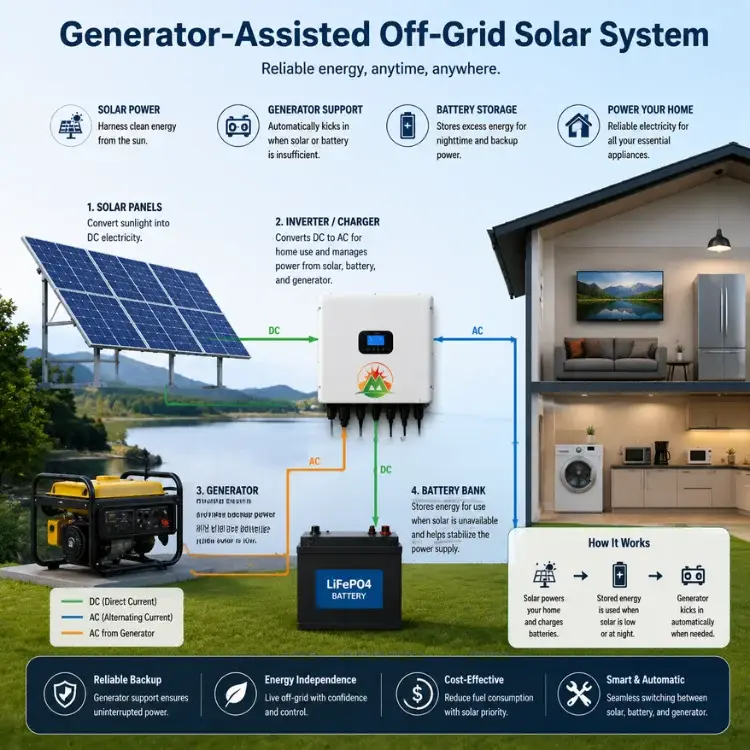
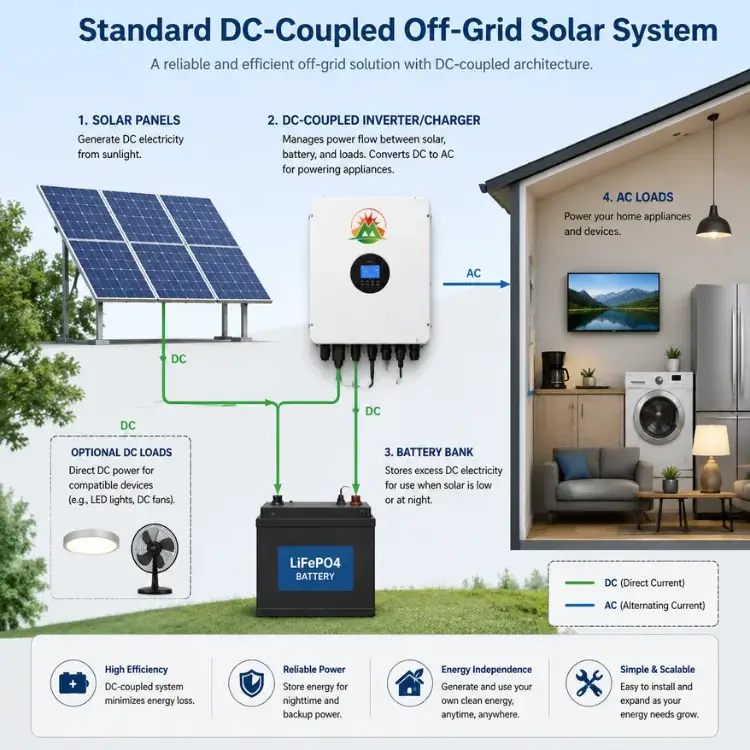
A professional supplier should ask what the system needs to power, where it will be installed, how long each load operates, which equipment must continue during low-energy periods, and whether the site has grid or generator support. These questions are not intended to delay the quotation. They help determine whether the requested capacity is technically realistic and whether the project needs a standard DC-coupled system, generator-assisted architecture, commercial three-phase configuration, or managed microgrid.
I become cautious when a supplier confirms a complete system immediately without requesting any load information. The quotation may be fast, but it is often based on a fixed ratio between inverter, solar, and battery capacities rather than the customer’s actual operating profile. This can create an attractive price while leaving the EPC contractor or end user responsible for the performance risk.
The first response should therefore demonstrate curiosity about the project, not only interest in the order. A supplier that asks the right questions is more likely to identify problems before they become expensive.
The Supplier Should Explain the Proposed Architecture
A professional proposal should explain why a particular system structure has been selected. I do not expect every commercial buyer to understand all the differences between DC coupling, AC coupling, generator support, and microgrid control, but the supplier should be able to explain how the proposed architecture responds to the project conditions.
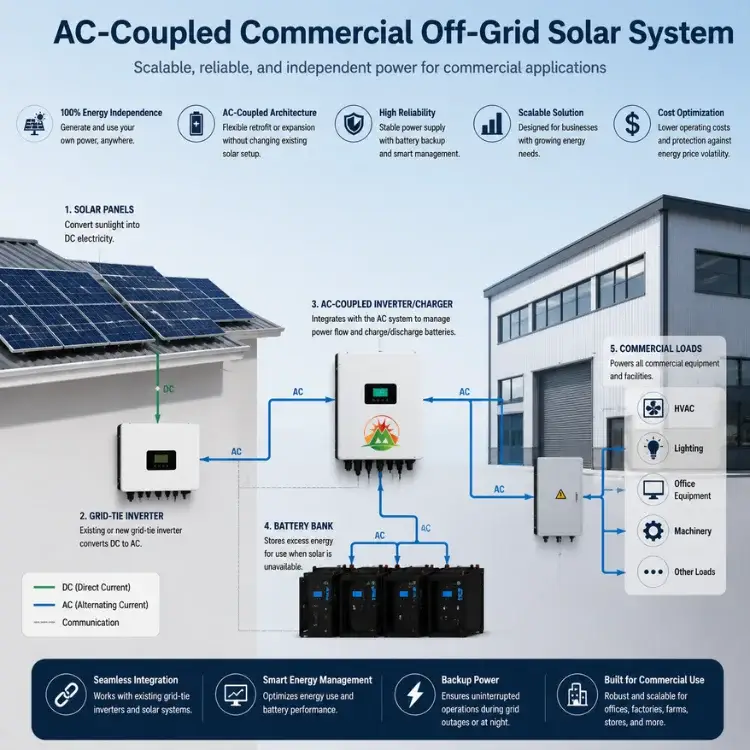
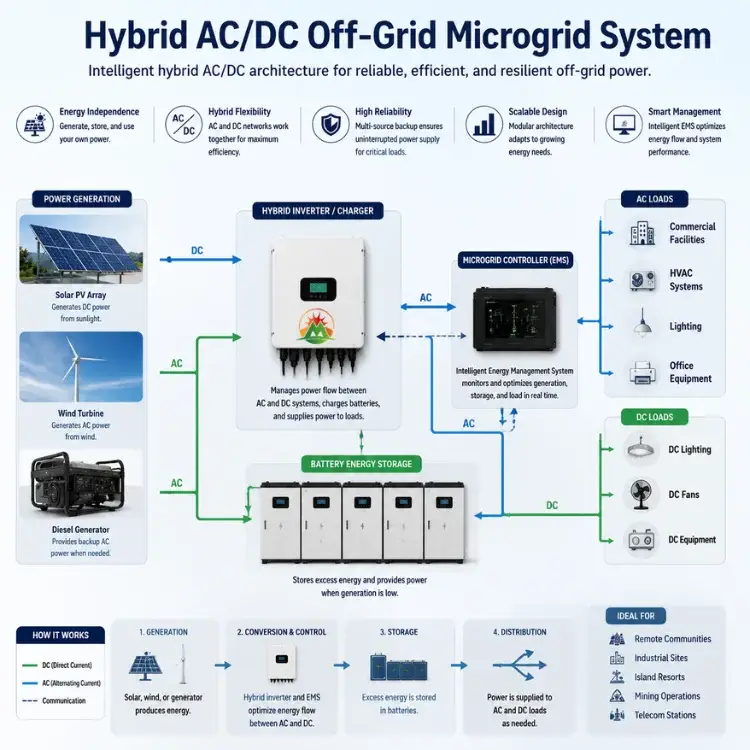
For example, a standard DC-coupled system may be suitable for a smaller facility with predictable loads and straightforward installation requirements. A hotel, hospital, telecom site, or remote factory may need generator support because the cost of prolonged downtime is too high. A larger commercial facility may benefit from a three-phase AC-coupled system, while a village, island, mining site, or multi-building project may require a managed microgrid.
The supplier should connect the architecture to the load profile, backup requirement, installation environment, maintenance capability, and future expansion plan. I do not consider statements such as “this is our best system” or “this is our most popular package” to be sufficient technical reasoning.
A clear explanation also helps the buyer compare proposals more fairly. Two suppliers may quote similar inverter and battery capacities while using completely different operating assumptions. One design may depend on regular generator use, while another assumes the battery will support all nighttime loads. Without understanding the architecture, the buyer may compare prices that do not represent the same project outcome.
A Complete BOM Is More Valuable Than a Low Headline Price
The bill of materials is one of the most important documents I use when evaluating an off-grid supplier. It shows whether the proposal represents a complete system or only the most visible products.
Many low-price quotations include solar panels, an inverter, and a battery while excluding mounting structures, combiner boxes, isolators, breakers, surge protection, battery cables, PV cables, connectors, communication accessories, monitoring devices, battery racks, grounding equipment, or generator-control components. The customer discovers these omissions after the shipment arrives, when the local installation team is ready to begin work.
These missing items may represent a smaller percentage of the project value, but they can create significant delays and unexpected costs. A specialised breaker, communication cable, connector, or monitoring module may not be available locally. The EPC contractor may then need to arrange emergency procurement, pay additional shipping charges, or substitute an unverified component.
I therefore compare the actual supply scope rather than only the total quotation. I want to know what is included, what is optional, what is excluded, and which items remain the responsibility of the local installer. A supplier that prepares a transparent BOM gives the buyer a clearer picture of the real project cost and reduces disputes over missing equipment.
The lowest quotation may no longer be the lowest after mounting, protection, cables, controls, and local procurement are added. A complete BOM makes that difference visible before the order.
Technical Assumptions Should Be Clearly Identified
Every preliminary off-grid quotation contains assumptions, especially when the customer has not yet provided complete project data. I do not see assumptions as a problem when they are explained honestly. The problem appears when they are hidden behind precise-looking capacity figures and prices.
A supplier may assume a certain number of peak-sun hours, battery depth of discharge, system efficiency, nighttime load, generator availability, or seasonal operating pattern. These assumptions can have a major effect on the proposed solar and battery capacities.
For example, two suppliers may both quote a 200 kWh battery, but one may assume that nearly the full nameplate capacity is available for daily use, while the other reserves more energy for battery protection and emergency operation. The two proposals show the same capacity on paper but may provide different usable backup.
I expect the supplier to explain the estimated daily consumption, required autonomy, usable battery percentage, system losses, solar-generation assumptions, and any load-management conditions. This allows the buyer to understand what the system is designed to do and under which conditions that performance is expected.
Visible assumptions also make future revisions easier. When the customer later confirms a higher nighttime load or longer cable distance, both sides can understand why the system capacity or price needs to change.
Component Compatibility Must Be Verified Before Shipment
A supplier should not assume that high-quality products will automatically operate well together. The panels, inverter, battery, generator, meters, communication devices, and monitoring platform must function as one system.
I pay particular attention to inverter and battery communication. An inverter may support lithium batteries in general but not the specific communication protocol used by the selected battery. The system may still operate with manual voltage settings, but state-of-charge reporting, dynamic current limits, alarm information, and automatic protection functions may be reduced.
The PV string design must also remain within the inverter’s voltage and current limits under local temperature conditions. Panel voltage rises in cold weather and falls in hot weather, which means a string that looks acceptable under standard test conditions may exceed the maximum input voltage or fall below the MPPT operating range at the project site.
Generator integration creates another area of risk. The generator voltage and frequency must remain within the inverter charger’s acceptable range, and the generator must be able to support the loads and battery charging without becoming unstable. Three-phase systems also require correct synchronisation, phase sequence, load distribution, communication, and firmware consistency.
I therefore look for evidence that the supplier has reviewed these interfaces. This may include compatibility lists, communication confirmation, PV string calculations, charging-current limits, generator-control requirements, and pre-shipment checks. Early compatibility review is normally much less expensive than troubleshooting after installation.
The Supplier’s Engineering Communication Matters as Much as the Equipment
A good supplier must be able to communicate with the buyer’s sales, procurement, engineering, and installation teams. The same project may require different information at each stage.
The sales team needs a clear configuration and commercial proposal. Procurement needs confirmed models, quantities, lead times, packing information, and payment terms. Engineers need drawings, specifications, communication details, protection requirements, and operating assumptions. Installers need wiring guidance, parameter settings, commissioning procedures, and technical support.
I evaluate whether the supplier can explain technical matters clearly rather than only forwarding datasheets. Product manuals are useful, but they do not automatically answer project-specific questions about load priorities, generator behaviour, battery reserve, PV strings, or the final system architecture.
Communication speed is also important. EPC contractors often compete for time-sensitive projects. If the supplier needs a week to answer every technical question, the contractor may lose the opportunity before the proposal is complete. However, I do not define good communication only as fast replies. The response must also be accurate, consistent, and connected to the confirmed project.
A supplier that replies quickly but changes the technical recommendation several times can create more risk than one that takes slightly longer to provide a reliable answer.
Technical Documentation Should Support Installation and Handover
Professional buyers should evaluate what documents the supplier can provide before and after the order. A complete project normally requires more than product brochures.
Depending on the project, I may expect a confirmed BOM, equipment datasheets, single-line diagram, PV string information, battery communication guidance, installation manuals, commissioning settings, packing list, warranty terms, and export documentation. Larger or institutional projects may also require certifications, test reports, maintenance information, training materials, and tender-specific documentation.
The documents should describe the system that is actually being supplied. A generic diagram showing a different inverter, battery, or generator arrangement can create confusion at the installation site. The final drawings, BOM, and equipment models should remain consistent.
I also look at whether important parameter settings are documented. Battery charging limits, minimum state of charge, generator-start thresholds, output voltage, frequency, monitoring accounts, and communication settings should not exist only in one technician’s memory.
Good documentation makes installation easier, supports project handover, and creates a reference for future maintenance or expansion. It also reduces after-sales disputes because the responsibilities and confirmed settings are clearer.
Quality Control Should Cover the Complete Project, Not Only Individual Products
Factory certificates and product test reports are useful, but I also want to understand how the supplier controls the complete order. An off-grid project may combine equipment from several manufacturers, and the supplier must ensure that the models, specifications, quantities, accessories, and communication requirements remain consistent with the confirmed proposal.
A substitute product with similar headline capacity may still change the system design. A different panel can affect string voltage and current. A different battery can change communication, charging limits, cabinet dimensions, or firmware. A different inverter may affect three-phase operation, generator control, or monitoring.
I therefore evaluate whether the supplier has a process for approving substitutions, checking incoming equipment, confirming quantities, and reviewing the final shipment against the BOM. For larger projects, pre-shipment compatibility checks or system-level verification may provide additional confidence.
Quality control also includes packing. Battery cabinets, inverters, solar modules, mounting structures, cables, and smaller electrical components need appropriate protection and clear labelling. A product can pass factory testing and still arrive damaged or become difficult to identify if the packing process is poorly organised.
Export Experience and Delivery Planning Reduce Procurement Risk
For international projects, manufacturing is only one part of the supply process. The supplier must also understand export documentation, packing, container planning, shipping coordination, and delivery schedules.
I evaluate whether the supplier can provide accurate packing dimensions, weights, container-loading information, commercial invoices, packing lists, certificates of origin, test documents, and other paperwork required by the destination market. The exact responsibility depends on the agreed Incoterm, but the supply boundary should be clear.
Delivery planning is especially important when the project includes products from several factories. Panels, batteries, inverters, mounting structures, and switchgear may have different production schedules. The supplier needs to coordinate them so one delayed component does not hold the complete shipment or force the buyer to arrange several separate deliveries.
I also ask how changes will be communicated. Production delays sometimes occur, but the commercial impact becomes much larger when the customer is informed only after the planned shipping date has passed. Transparent progress updates allow the EPC contractor or distributor to adjust the installation plan and customer communication.
Warranty Terms Need a Practical Operating Process
A long warranty period can look attractive, but the number of years alone does not tell me how the supplier will handle an actual problem. I want to understand the warranty conditions, evidence requirements, response process, replacement method, labour responsibility, and availability of spare parts.
In an off-grid project, a fault may involve the inverter, battery, communication, installation, generator, load growth, or system settings. The supplier should have a clear process for collecting alarm records, monitoring data, photos, videos, measurements, and parameter information.
I become cautious when every problem is immediately blamed on installation without technical investigation. At the same time, the buyer should not expect the equipment supplier to accept responsibility for incorrect local wiring, unauthorised settings, or loads that exceed the confirmed design.
A fair warranty process requires documentation from both sides. The confirmed models, firmware versions, settings, commissioning records, and operating data help determine the real cause of the issue.
For remote projects, replacement-part availability is particularly important. Waiting several months for a communication board, breaker, fan, control module, or replacement inverter can create significant downtime. A supplier should be able to explain which parts are normally stocked, how replacements are shipped, and whether local or remote technical support is available.
EPC Contractors Should Prioritise Quotation Speed and Project Support
For EPC contractors, supplier evaluation is closely connected to the ability to win and deliver projects. A technically capable supplier that responds too slowly may still be unsuitable for a competitive tender environment.
I look at how quickly the supplier can transform complete project information into a recommended architecture, preliminary sizing, BOM, and commercial quotation. The process should be structured enough to avoid repeated questions and accurate enough to reduce major revisions later.
The supplier should also help identify missing scope before the contractor submits the end-customer proposal. If cable distances, protection, generator integration, mounting, or commissioning support are not considered, the contractor may sign a fixed-price project and later absorb the additional cost.
Engineering communication is equally important. The contractor may need technical clarifications during customer meetings, design review, installation, and commissioning. A supplier that supports only the initial sale leaves the EPC company exposed during the most difficult stages of delivery.
For an EPC buyer, I therefore value speed, completeness, technical clarity, and continued support more than a small difference in equipment price.
Distributors Should Prioritise Stability and Repeatability
A distributor should evaluate the supplier from a longer-term perspective. One low-cost shipment is less important than stable models, repeat supply, consistent specifications, manageable spare parts, and dependable after-sales service.
I look at whether the inverter and battery platforms are likely to remain available, whether future orders can use the same communication protocols, and whether additional battery modules can be added without creating compatibility problems. Frequent product changes may give the distributor access to newer technology, but they can also make inventory, training, warranty, and expansion more difficult.
A distributor also needs a supplier that can support clear product families, OEM options, documentation, training, and upgrade paths. The sales team should be able to explain the systems, while the technical team should become familiar with installation, commissioning, and fault diagnosis.
The lowest price for the first container does not create much value if the next order uses different models or the supplier cannot support the installed base. I therefore consider product continuity and after-sales consistency to be major supplier-selection criteria for distributors.
Government, NGO, and Institutional Buyers Have Additional Requirements
Government, NGO, healthcare, education, and rural-electrification projects often require a different level of documentation and long-term planning. The buyer may need tender compliance, project references, certifications, training, maintenance procedures, spare-part plans, and evidence that the supplier can support the system throughout its operating life.
I evaluate whether the supplier can respond to formal technical specifications rather than only offering a standard catalogue. The proposal may need to show how the system meets load requirements, environmental conditions, autonomy targets, safety standards, monitoring requirements, and maintenance expectations.
Project references are also important, but I prefer relevant references over a long general list. A supplier that has completed small residential systems may not automatically have the experience required for a village microgrid, hospital, telecom network, or multi-site institutional project.
Training and serviceability are critical because these systems may be installed in locations with limited technical support. The local operator needs clear guidance, and essential spare parts may need to be supplied with the first order. The system should also be designed around the maintenance capability available locally rather than relying on permanent support from foreign engineers.
For institutional projects, the supplier’s responsibility extends beyond delivering equipment. The project must remain understandable, maintainable, and supportable after handover.
Buyers Should Verify What “Manufacturer” Actually Means
The solar industry includes panel manufacturers, battery manufacturers, inverter manufacturers, system integrators, project suppliers, trading companies, and engineering organisations. A company may describe itself as an off-grid solar system manufacturer even when it does not manufacture every major component.
I do not see this as automatically negative. A system integrator can create significant value by selecting suitable products, coordinating compatibility, preparing the BOM, testing key interfaces, and managing complete-system supply. In many projects, this capability is more relevant than owning every component factory.
However, the supplier should be transparent about what it manufactures directly, what comes from partner factories, and what system-level work it performs. Claims that one company manufactures panels, batteries, inverters, mounting, and every electrical accessory should be verified carefully.
I evaluate the supplier according to the responsibility it can genuinely accept. If it works as a system supplier and integrator, it should demonstrate engineering capability, compatibility control, supply coordination, documentation, and after-sales support. The title matters less than the actual process behind the project.
References and Case Studies Should Show the Decision Process
A useful case study should explain more than the final system capacity and shipment destination. I want to understand what problem the customer had, what information was collected, why the architecture was selected, how the battery and generator strategy was developed, and what risks were identified before delivery.
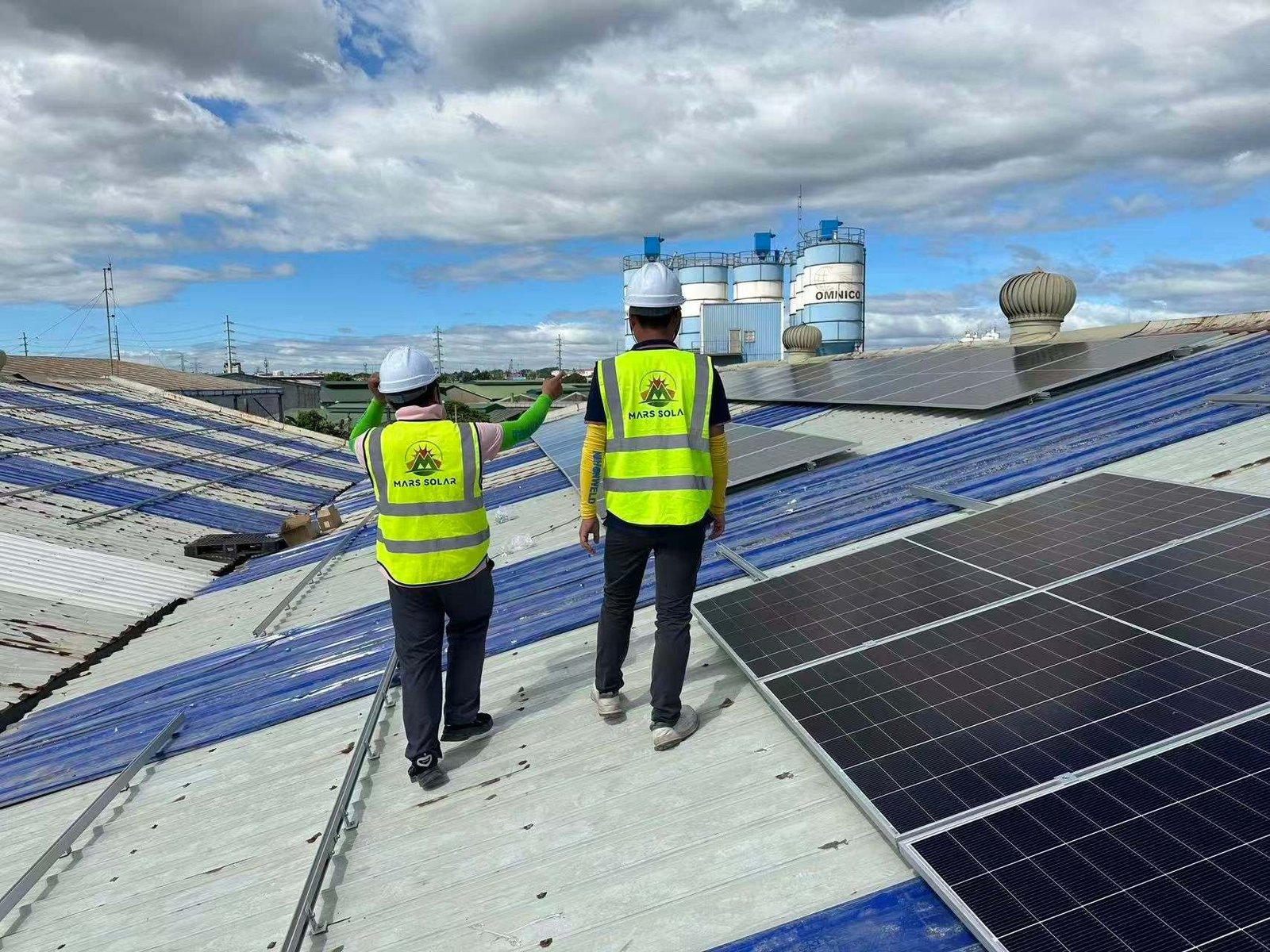
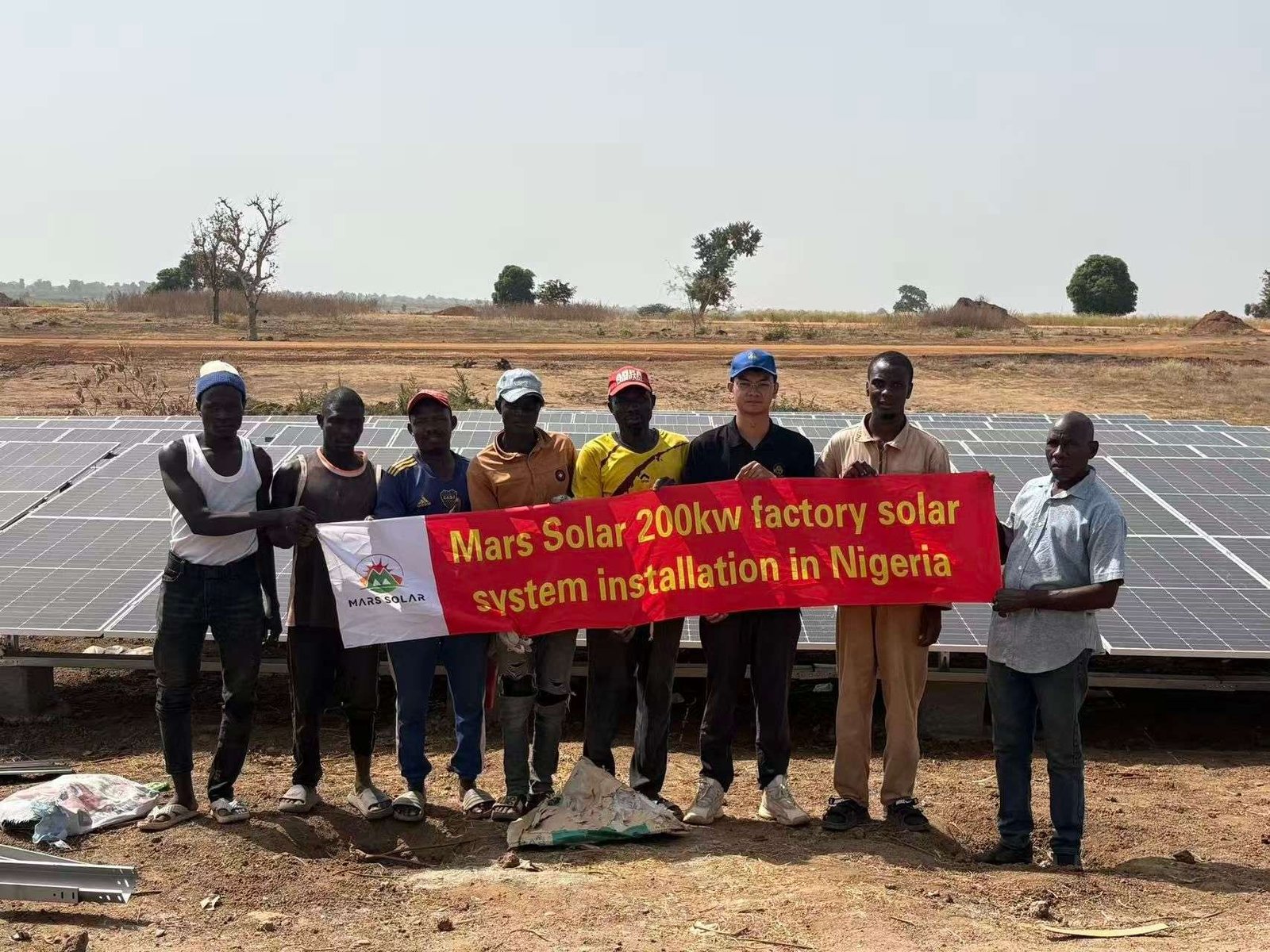
A photograph of panels and battery cabinets proves that equipment was supplied, but it does not necessarily demonstrate engineering capability. A stronger case shows how the supplier moved from an incomplete enquiry to a complete system proposal.
I also consider whether the case is relevant to the buyer’s application. A residential project does not provide strong evidence for a mining site, factory, rural hospital, or microgrid. Similar loads, capacity, environment, and operating requirements create more useful references.
Professional buyers should also distinguish between representative case content and verified customer projects. If exact customer information cannot be disclosed, the supplier should state that the case has been anonymised rather than presenting invented details as a confirmed project.
The Best Supplier Makes Risks Visible Early
I do not expect a good supplier to promise that every project will be simple. Off-grid systems involve load uncertainty, weather variation, battery ageing, generator behaviour, installation quality, and operating changes. The supplier creates value by making these risks visible before the order.
A professional supplier may explain that the requested battery will not support every load overnight, that generator backup is advisable during the low-solar season, or that the available roof area cannot support the calculated PV capacity. This may make the quotation more complex, but it protects the buyer from unrealistic expectations.
I am more confident in a supplier that identifies limitations honestly than one that agrees with every customer request immediately. A technically realistic proposal may sometimes cost more or require load management, but it is more likely to perform after commissioning.
Risk visibility also supports better commercial decisions. The buyer can choose whether to increase storage, add generator support, reduce non-critical loads, change the operating schedule, or accept a lower level of autonomy. The supplier’s role is to explain the consequences clearly.
How I Evaluate the Total Project Value
When I compare suppliers, I look at the total value created between the first enquiry and long-term operation. The equipment price is one part, but I also consider quotation speed, engineering support, completeness of supply, compatibility control, documentation, delivery reliability, commissioning assistance, warranty handling, and replacement-part availability.
A slightly higher quotation may provide better value when it reduces local procurement, prevents installation delays, protects battery life, and gives the technical team clearer support. A lower quotation may remain competitive when the buyer already has strong local engineering and prefers to source many accessories independently.
The correct decision therefore depends on the buyer’s own capabilities. An experienced EPC contractor may need only main equipment and engineering confirmation, while a new installer may benefit from a more complete package and stronger commissioning support. A distributor may prioritise stable products and spare parts, while an institutional buyer may need formal documentation and training.
I do not believe one supplier profile is ideal for every customer. The important question is whether the supplier’s strengths match the project’s real risks and the buyer’s internal capabilities.
Why Mars Solar Aims to Work as a System Partner
At Mars Solar, I do not want our role to end with sending separate prices for panels, inverters, and batteries. I aim to help customers clarify the project requirement, select a suitable system architecture, prepare the BOM, review component compatibility, and coordinate the complete supply process.
For EPC contractors, this means supporting faster and more complete project quotations. For distributors, it means building stable and compatible product families that are easier to sell, reorder, and support. For commercial and industrial buyers, it means translating an energy problem into a system with clearer operating expectations. For government, NGO, and institutional projects, it means supporting documentation, technical review, supply coordination, and long-term serviceability.
I also believe the limits of the project should remain clear. Final installation conditions, local electrical compliance, civil work, and commissioning responsibilities must be confirmed with the local engineering team. A responsible supply partnership works best when every party understands its role.
The Right Supplier Reduces Risk Across the Entire Project
A professional off-grid solar system supplier should make the project easier to understand before the order, easier to quote during the sales stage, easier to coordinate during procurement, and easier to install after delivery. The supplier should also help create a clearer technical reference for commissioning, warranty evaluation, maintenance, and future expansion.
I do not believe buyers should select a supplier solely because it offers the lowest equipment price or the largest catalogue. The stronger supplier is the one that asks the right questions, explains its assumptions, prepares a transparent BOM, confirms compatibility, communicates clearly, controls the supply process, and remains available when technical questions arise.
The goal is straightforward. I want the buyer to receive more than a shipment of disconnected solar products. I want the project to arrive as a coordinated system package with clearer responsibilities, fewer hidden procurement gaps, and a more realistic path from quotation to reliable operation.