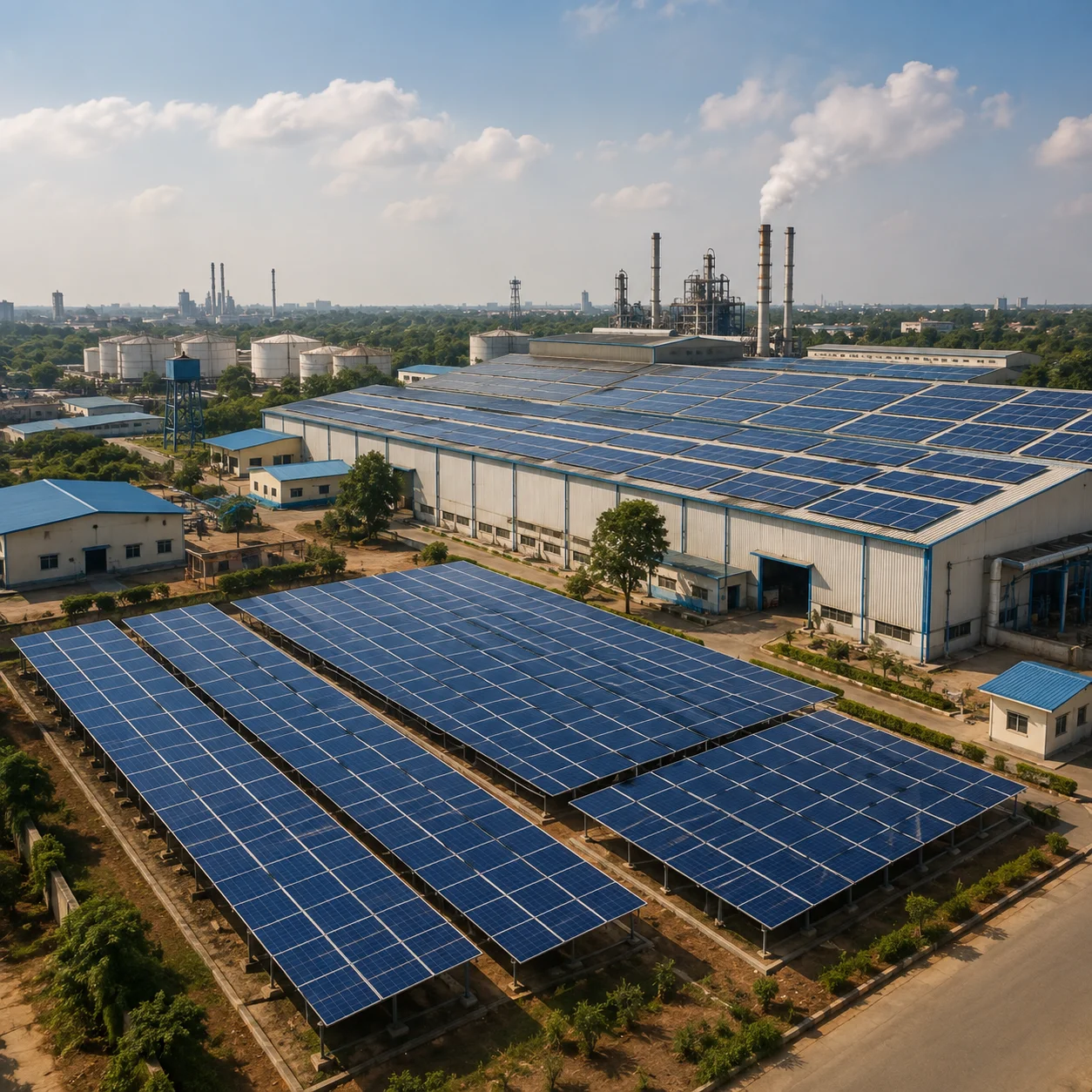
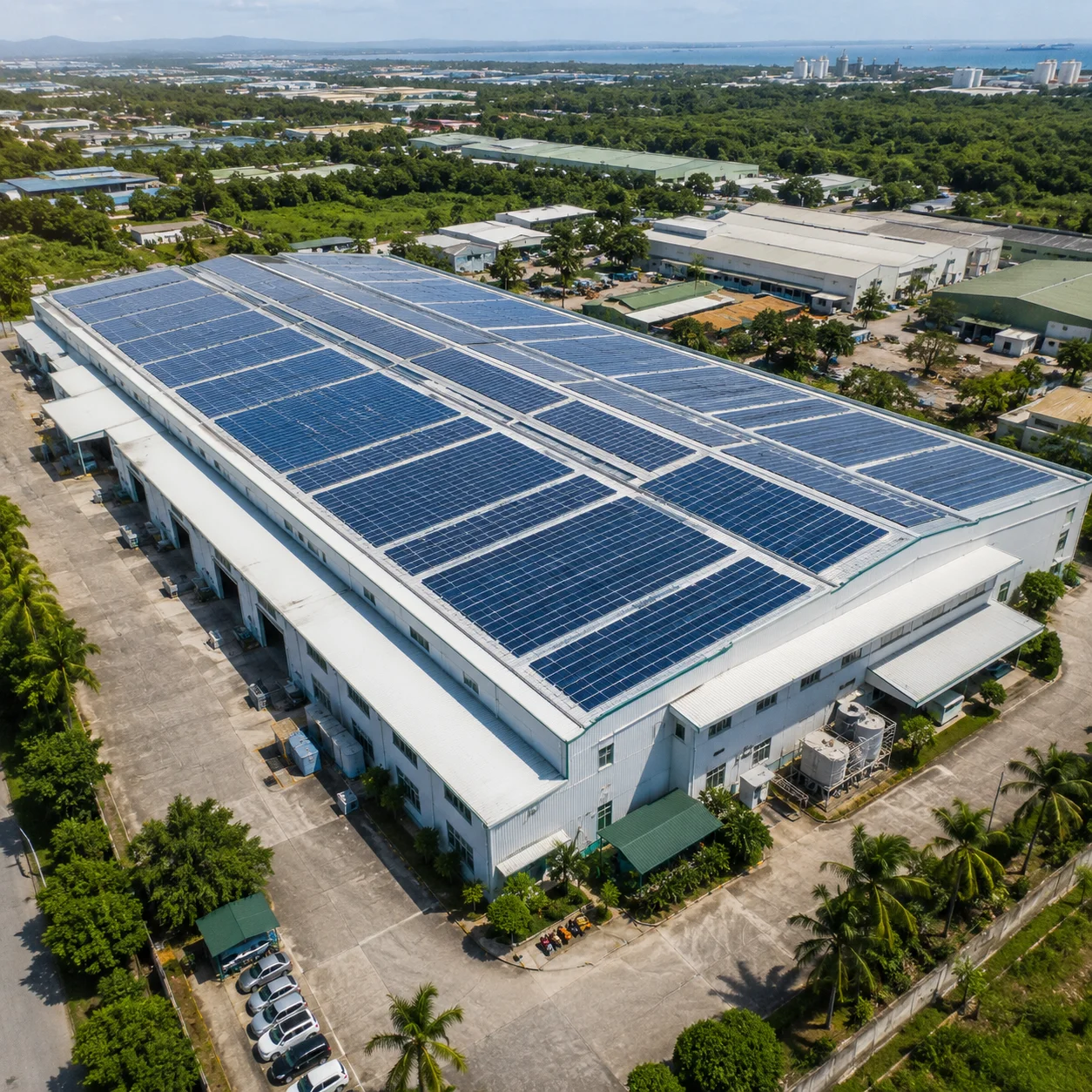
Your Trusted Solar System Partner for Factories and Industrial Energy Solutions
High electricity costs, unstable grid power, increasing diesel expenses, or a factory project that requires reliable energy planning? We design factory solar systems based on your actual production load, operating conditions, energy goals and backup requirements—helping you select the right on-grid, solar + battery, diesel-hybrid or off-grid solution. From system sizing and equipment matching to technical support and project delivery, we help reduce energy costs, improve power reliability and avoid the common challenges of incompatible components, oversized systems or unreliable supply chains.

Solar System Partner for Factories and Industrial Energy Solutions
At Mars Solar, we understand that a factory solar project is not simply about installing more solar panels or choosing a larger battery capacity. The real challenge is designing a system that matches how your factory actually consumes energy. A manufacturing plant may operate heavy machinery during the day, a warehouse may need stable backup power for critical operations, and a factory in an area with unreliable electricity may still depend on diesel generators to keep production running. We start by understanding your power consumption pattern, production schedule, grid reliability, backup expectations and installation conditions, then design the solar capacity, inverter, battery storage and energy management strategy around your actual requirements—helping you avoid unnecessary investment, system mismatches and unexpected problems during operation.
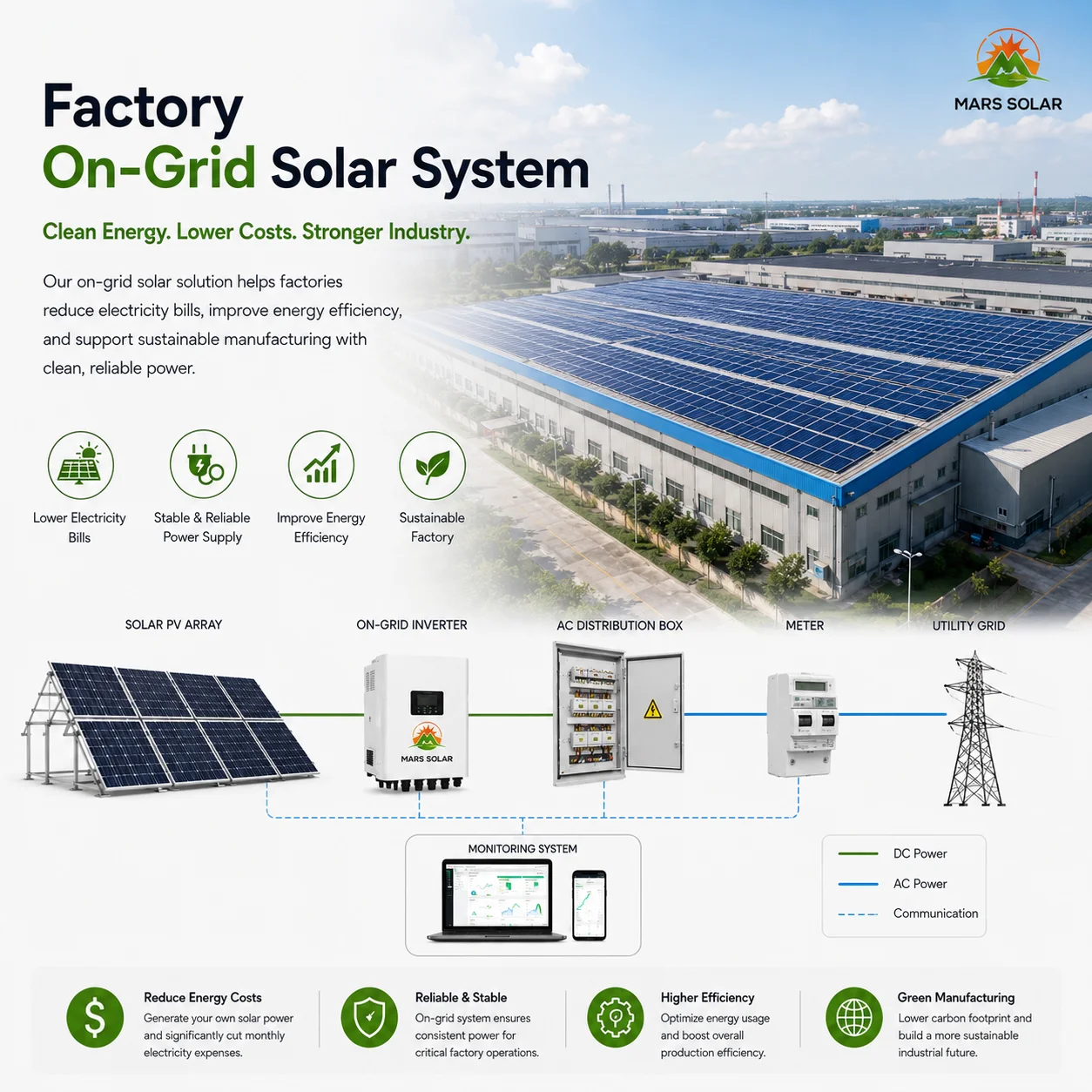
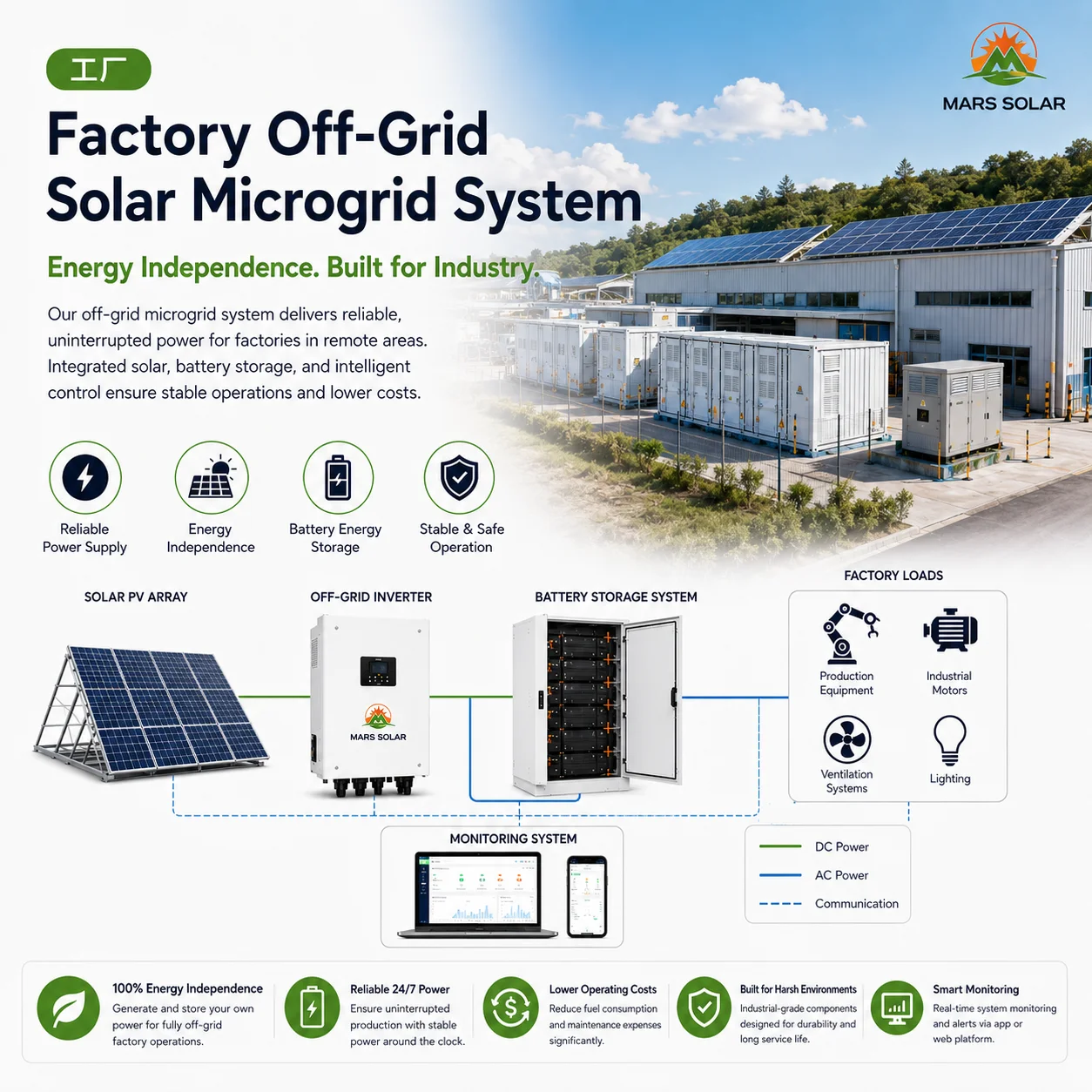
We provide practical solar solutions for different factory energy needs: On-Grid Factory Solar Systems for businesses mainly focused on reducing daytime electricity costs, Factory Solar + Battery Energy Storage Systems for facilities that need higher solar utilization and backup protection, Solar + Battery + Diesel Generator Hybrid Systems for factories facing frequent outages or high fuel expenses, and Off-Grid Solar Microgrid Systems for remote industrial sites requiring independent power supply. We do not believe every factory needs the same solution. The right system depends on your production load, operating hours, electricity conditions, required backup duration and whether existing grid or diesel equipment should remain part of the energy strategy.
Whether you are a factory owner looking to reduce operating costs, an EPC contractor preparing a commercial solar proposal, an electrical company expanding into renewable energy, or an energy solution provider sourcing reliable equipment from China, we help transform your project requirements into a complete and supply-ready solar solution. We coordinate the key system components—including solar modules, inverters, PCS, lithium battery storage, BMS, EMS, protection devices, monitoring systems and other required equipment—together with technical documents and BOM support. This allows your team to quote projects more confidently, simplify procurement and deliver reliable factory energy solutions with fewer risks.

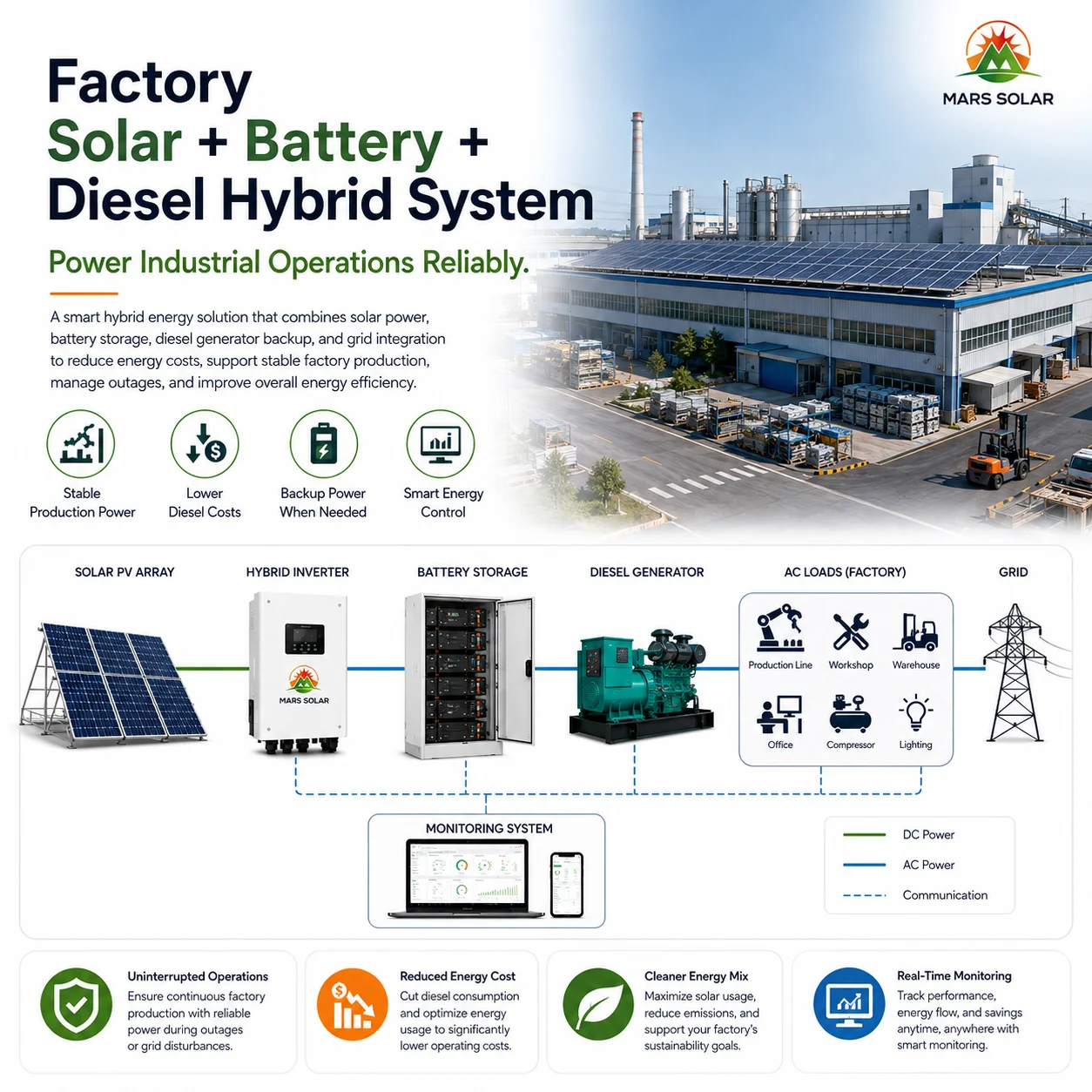
Factory Solar + Battery + Diesel Hybrid System
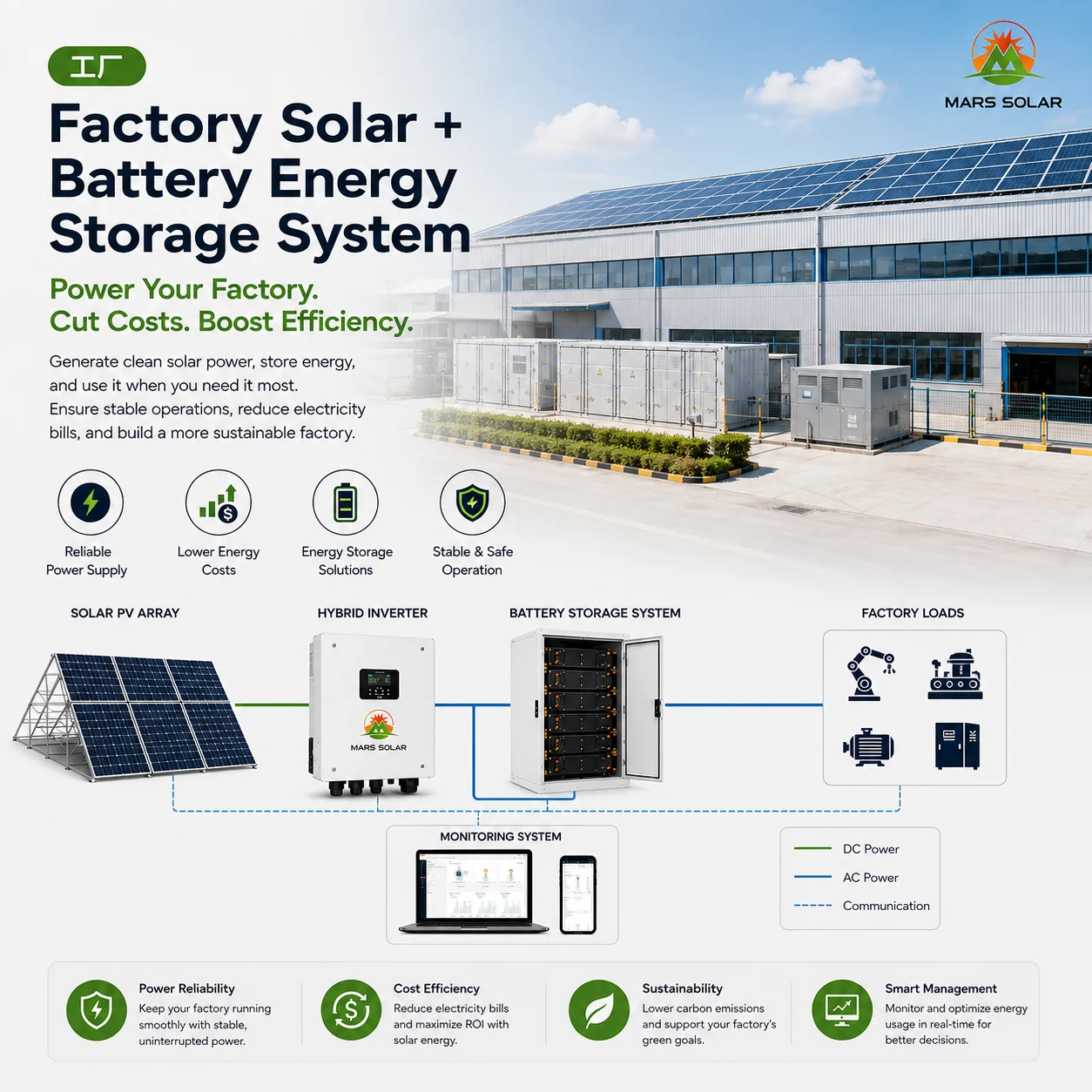
Factory Solar + Battery Energy Storage System
Factory On-Grid Solar System
Factory Off-Grid Solar Microgrid System
Build Your Commercial Solar Project With A Partner Who Understands What Really Matters
If you already have a factory, hotel, farm, warehouse, commercial facility, EPC project, or customers asking for solar solutions, you are not simply looking for solar panels or battery products. You need to understand whether the system can match the site’s energy demand, whether the investment creates real value, whether all components can work together reliably, and whether your supplier can support the project from system design to final delivery.
At Mars Solar, we focus on building practical solar power and energy storage solutions based on real project conditions. With 17 years of experience, projects across more than 130 countries, and integrated capabilities covering solar power generation and energy storage systems, we help our partners design solutions that improve energy stability, reduce electricity costs, and support long-term operation.
The Right Solar System Starts With Understanding Your Energy Challenges
Every commercial solar project has different requirements. A factory with high daytime electricity consumption, a hotel that cannot afford power interruptions, or a farm located in an area with unstable grid supply will require completely different system designs.Before recommending a solution, we look at your electricity usage, operating schedule, existing power sources, available installation space, backup requirements and future expansion plans. Based on these conditions, we can help configure suitable solutions including commercial on-grid solar systems, solar + battery storage systems, hybrid systems with diesel generators, and energy independence systems. Our goal is not to sell more equipment, but to make sure every component is selected according to your actual energy needs.
Reliable System Integration From Solar Generation To Energy Storage
A successful solar project is not only about choosing individual products. The real challenge is ensuring that solar panels, inverters, lithium batteries, BMS, EMS and other components operate together as one reliable energy system.At Mars Solar, we focus on complete system integration instead of isolated product supply. Our solutions combine intelligent management systems, modular electronic design and energy storage technologies to improve system efficiency and reliability. Before shipment, all equipment undergoes a 72-hour full-load test to ensure stable performance before reaching the project site.
Designed For Commercial Projects That Need Stable And Predictable Power
For many businesses, electricity is not only a monthly expense but also a key factor affecting daily operations. Unstable power supply can interrupt production, increase diesel costs, create customer complaints and reduce business efficiency.Our commercial solar solutions are designed to help factories, hotels, farms and other facilities reduce dependence on expensive electricity sources while improving energy security. By combining solar generation with battery storage and intelligent energy management, businesses can better control energy costs, maintain stable operation and create long-term value from renewable energy investment.
From Project Consultation To Installation Support
Choosing a solar supplier is not only about receiving a quotation. A reliable partner should understand your project requirements, provide accurate system design, coordinate production, support delivery and help ensure smooth installation.At Mars Solar, we follow a complete project process covering customer inquiry, demand analysis, system design, production, testing, delivery, installation guidance and project acceptance. We also provide remote monitoring support to help customers understand system performance after installation.
Our role is to make solar projects easier for EPC companies, energy solution providers and commercial customers by providing reliable products, practical engineering support and long-term cooperation.

More Than a Factory Solar System Supplier
At Mars Solar, we believe a successful factory solar project is not only about supplying panels, batteries or inverters. It is about creating a reliable system that matches the customer’s energy needs, supports your project delivery and protects your long-term business relationship. We work from the project requirements first, then coordinate the right solar, storage and power management components into a practical solution.

Win Projects Faster
When your customer needs a factory solar solution, speed and accuracy matter. We help you organize key project information, including energy demand, grid conditions, backup requirements and system capacity, into a clearer configuration and BOM. This allows EPC companies, electrical contractors and energy solution providers to prepare quotations faster without coordinating multiple suppliers for every component.
Improve Project Economics
The cheapest equipment does not always create the best project result. Incorrect sizing, unnecessary battery capacity or incompatible components can increase costs and affect system performance. We focus on selecting the right solar architecture based on the factory’s actual operation, helping you balance investment, energy savings and reliability while creating a more competitive solution for your customers.
Protect Your Project Delivery
A commercial solar project can face problems when solar, inverter, battery, BMS, EMS and backup systems are not properly integrated. We support the system design, equipment coordination and technical preparation before shipment, helping your local engineering team install with fewer uncertainties and reducing the risk of commissioning or after-sales issues.
Grow With One Reliable Partner
Your first project may be a factory on-grid solar system, while future opportunities may require battery storage, diesel hybrid solutions or off-grid power systems. We support different industrial energy applications with one integrated supply relationship, helping you simplify procurement, access technical support and build a more reliable solar business over time.
Build Your Factory Solar Project With More Support Than You Expected
At Mars Solar, you may first contact us because you need a quotation for a factory solar system. But after understanding the project, the discussion usually goes beyond equipment pricing. We look at how the factory consumes energy, how stable the grid is, which loads are critical, whether battery storage creates real value, and how the system should work with existing power sources. Our goal is not only to provide equipment, but to help you turn an energy requirement into a clearer solution that your team can confidently quote, install and deliver.
We Start With The Factory’s Real Energy Challenge
Two factories with similar production capacity can require completely different solar solutions. One may mainly want to reduce electricity costs with an on-grid system, while another may need battery backup because power interruptions affect production, and a third may need a solar + battery + diesel hybrid system because generator costs are becoming too high.
We first review the factory’s energy usage, operating hours, grid conditions, backup requirements, installation space and existing power sources before recommending a solution. This helps determine whether the project is better suited for an On-Grid Solar System, Solar + Battery Energy Storage System, Solar + Battery + Diesel Generator Hybrid System, or Off-Grid Solar Microgrid System instead of applying the same package to every project.
More Than Individual Solar Products
A reliable factory solar system is not created by simply combining solar panels, inverters and batteries. The performance of the complete system depends on how each part works together, including inverter capacity, battery storage, BMS, EMS, protection equipment and monitoring functions.We help organize these components into a clearer system configuration and BOM before production, allowing your team to understand what is included, how the equipment should operate together and what local preparation is required. This reduces common project issues such as incorrect sizing, missing accessories or compatibility problems discovered only after installation begins.
A Smoother Path From Project Inquiry To Delivery
We understand that commercial solar projects become difficult when technical design, quotation, production and delivery are handled separately by different suppliers. Small mistakes during the early stage can create delays and additional costs later.That is why we keep the project process connected—from requirement analysis and system configuration to quotation support, production coordination, testing, shipment and installation guidance. Mars Solar follows a structured process covering Customer Inquiry, Demand Analysis, Design & Production, Testing & Delivery, Installation Guide and Project Acceptance, with equipment undergoing a 72-hour full-load test before dispatch to support reliable project delivery.
Support That Helps Your Next Project Become Easier
The value of a reliable solar partner is not only completing one project successfully, but making future projects easier to evaluate and deliver. Once we understand your market conditions, common loads, voltage requirements and installation practices, future project discussions become faster and more efficient.An EPC company may start with a factory solar project, a generator company may expand into hybrid power solutions, or an energy provider may require battery storage for commercial customers. Different projects may require different system architectures, but you do not need to rebuild the supply chain every time. Our goal is to help you create a more reliable way to evaluate, quote, source and deliver factory energy solutions with less uncertainty.
Solar System for Factories Solutions Video Insights from Mars Solar
FAQs Solar System for Factories Solutions
For your convenience, we’ve gathered the most commonly asked questions about our Solar System for Factories Solutions. However, should you have any further queries, please don’t hesitate to reach out to us.
Are you a solar equipment supplier or a complete factory solar system partner?
We are both a solar equipment supplier and a system integration partner. We support factory solar projects by coordinating solar modules, inverters, lithium battery storage, BMS, EMS, protection equipment, monitoring systems and other required components into one practical solution. Instead of asking you to manage multiple suppliers for every part of the project, we help organize the system configuration, BOM and technical requirements around your actual factory application.
What types of factory solar systems can you provide?
We support different factory energy requirements, including On-Grid Factory Solar Systems, Solar + Battery Energy Storage Systems, Solar + Battery + Diesel Generator Hybrid Systems and Off-Grid Solar Microgrid Systems. The suitable configuration depends on the factory’s electricity consumption, grid reliability, production schedule, backup requirements and future expansion plans. We do not force every project into the same package; we help select the architecture that matches the actual operating environment.
How do we know what solar capacity and battery size our factory needs?
You do not need to estimate the system size by simply looking at equipment specifications. We review your factory’s load profile, daily electricity consumption, peak demand, operating hours, critical loads, grid conditions, available installation area and backup expectations before recommending a solution. This helps avoid common problems such as oversized systems, insufficient backup capacity or investing in equipment that does not create real value.
Can your solar system support factories with heavy industrial equipment?
Yes, but industrial loads require careful evaluation before system design. Equipment such as motors, pumps, compressors, production machines and refrigeration systems can have high startup power requirements compared with normal operation. We consider the equipment rating, starting characteristics, operating schedule and simultaneous loads to ensure the selected inverter, battery and power architecture can handle the real factory conditions.
Can the system provide backup power when the factory loses grid electricity?
Yes, if the project is designed for backup operation. A factory backup solution requires more than adding batteries—it needs the correct inverter or PCS capability, switching design, critical load planning and energy management strategy. We help define which factory equipment must continue operating during outages and design the system around those priorities to improve power reliability.
Can you integrate solar, battery storage, grid power and diesel generators together?
Yes. Hybrid factory power systems are one of the solutions we support, especially for locations with unstable grids or high diesel costs. The system can combine solar generation, battery storage, grid electricity and diesel generators through appropriate control logic to reduce fuel consumption while maintaining reliable power supply. The final configuration depends on the generator specifications, factory load requirements and desired operating strategy.
Can you provide a solar solution for our existing factory power system?
In many cases, yes. We can review existing electrical infrastructure and recommend suitable upgrade or integration options. Before confirming the solution, we typically need information about the existing solar system, inverter model, transformer capacity, distribution system, factory load profile and backup requirements. This helps determine whether the project is better suited for additional solar capacity, battery storage integration or a hybrid upgrade.
Do you provide standard factory solar systems or customized solutions?
We provide both standard and customized solutions. Standard configurations can make quotation and production faster for common factory applications, while customized designs are available for special requirements such as unstable grids, diesel integration, larger backup needs or future system expansion. Our approach is to find the most practical solution for the project instead of adding unnecessary complexity.
What technical support and project documents can you provide?
Depending on the project requirements, we can support system configuration, BOM preparation, product datasheets, technical documents, preliminary system information and installation guidance. Our goal is to help EPC companies and engineering teams understand the complete solution before procurement and installation. Mars Solar focuses on integrated solar and energy storage solutions with system testing and project support throughout the delivery process.
What are the MOQ, lead time and delivery arrangements for factory solar projects?
For complete factory solar systems, many projects can start from one complete system depending on the configuration and customization requirements. The final production time depends on system size, battery capacity, inverter selection, customization level and component availability. We support export packing, documentation and international shipment coordination, while local site surveys, permits, installation and maintenance are normally completed by the customer’s local engineering team or EPC partner.

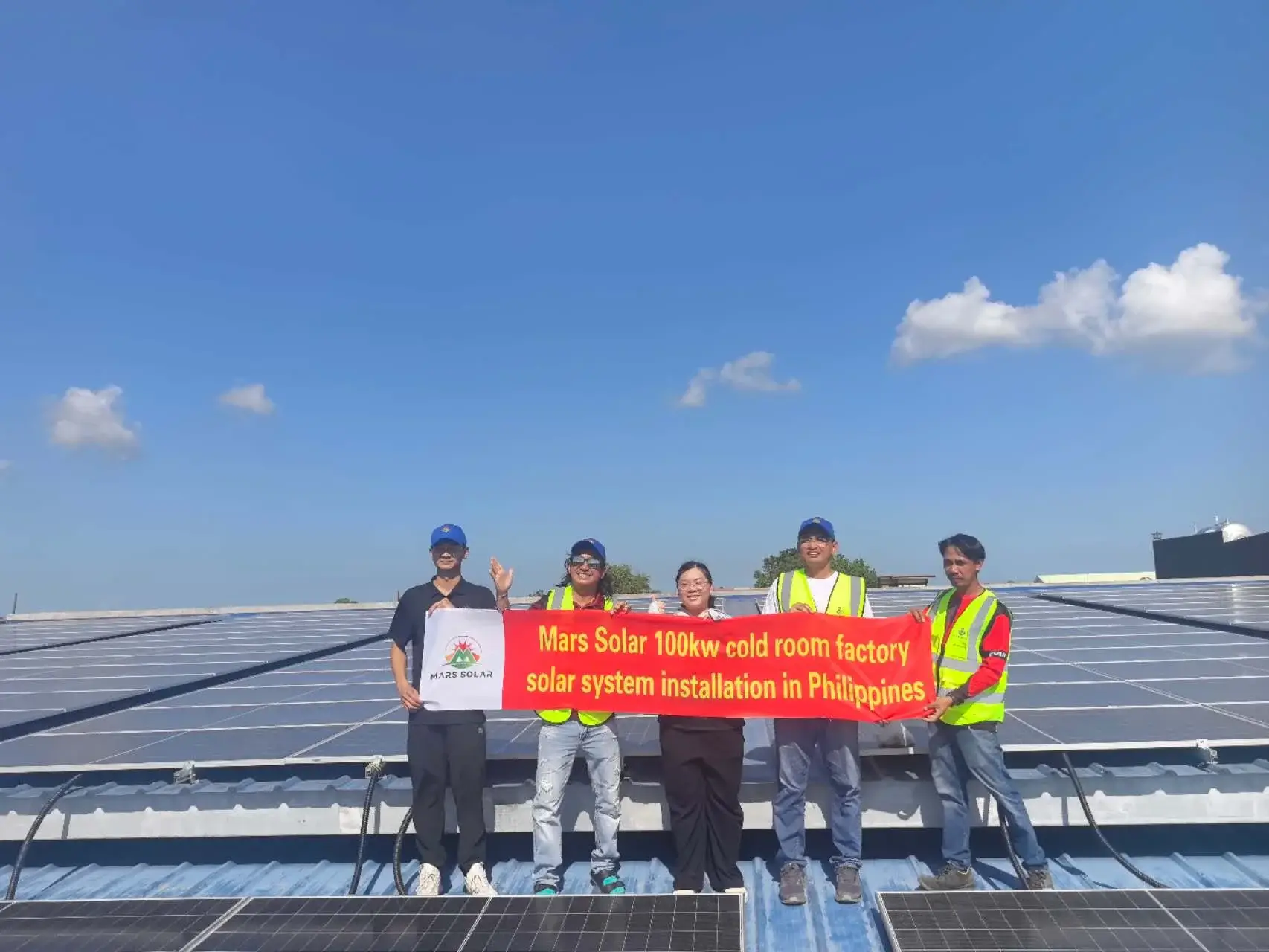
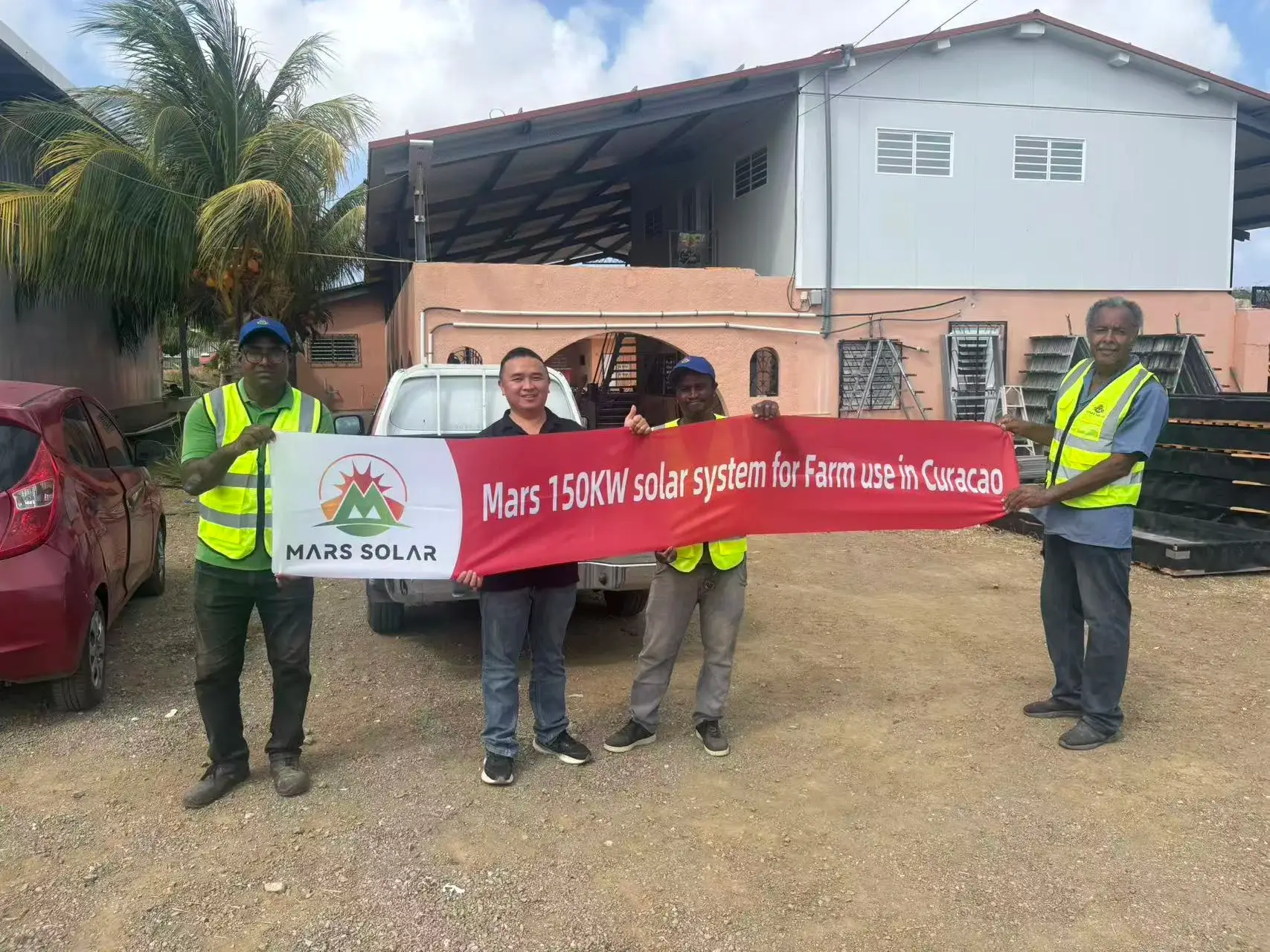

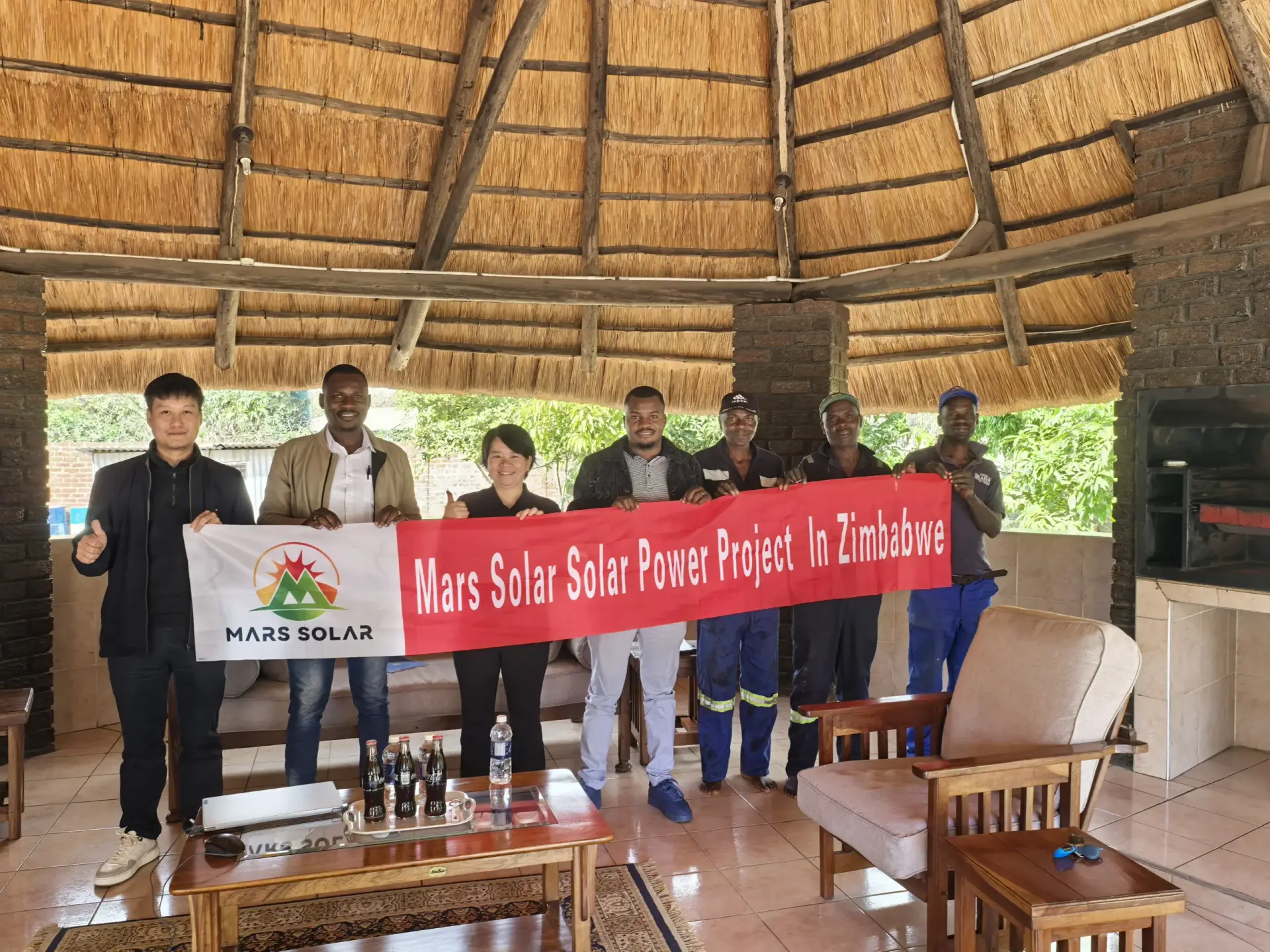
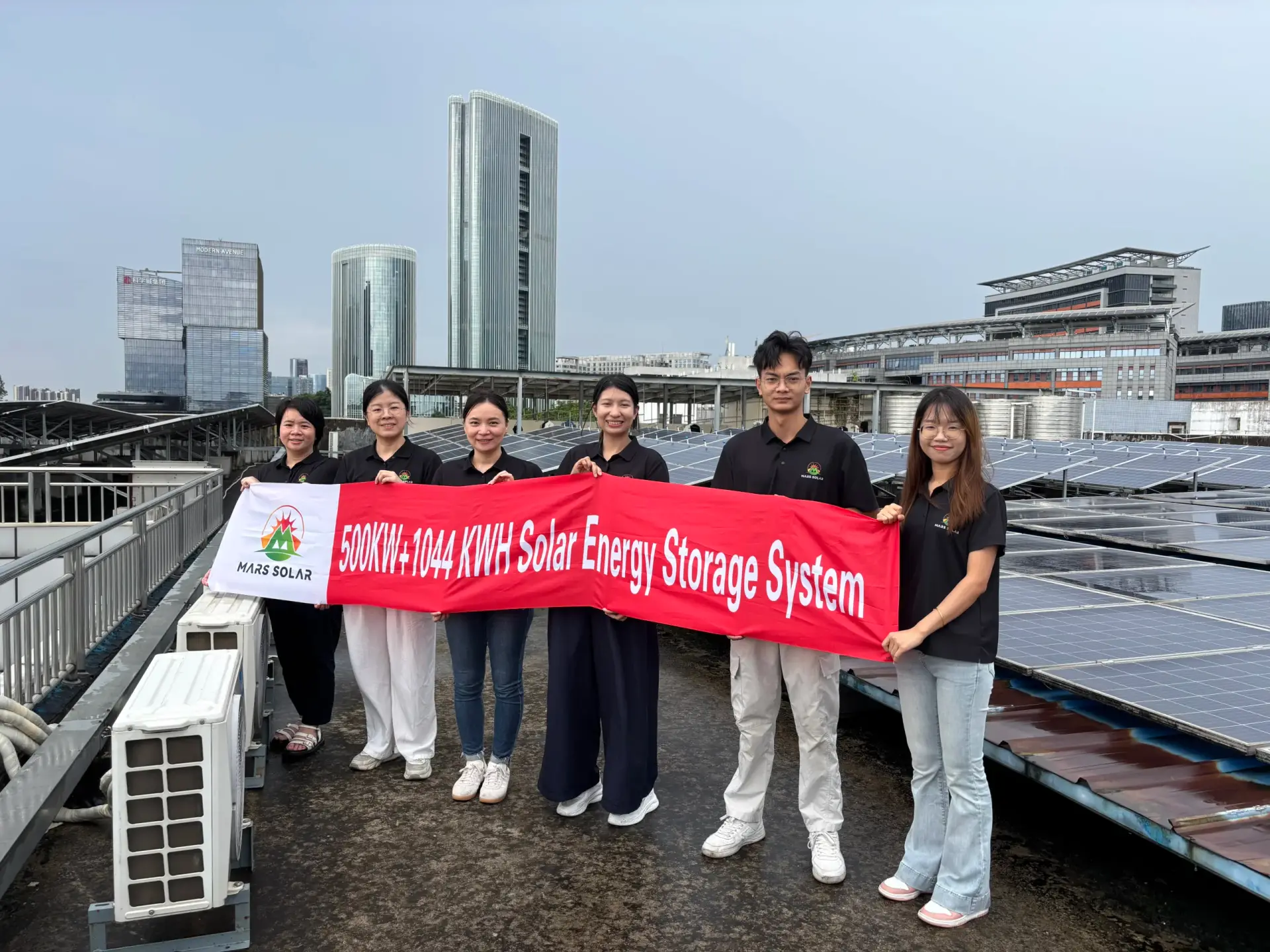
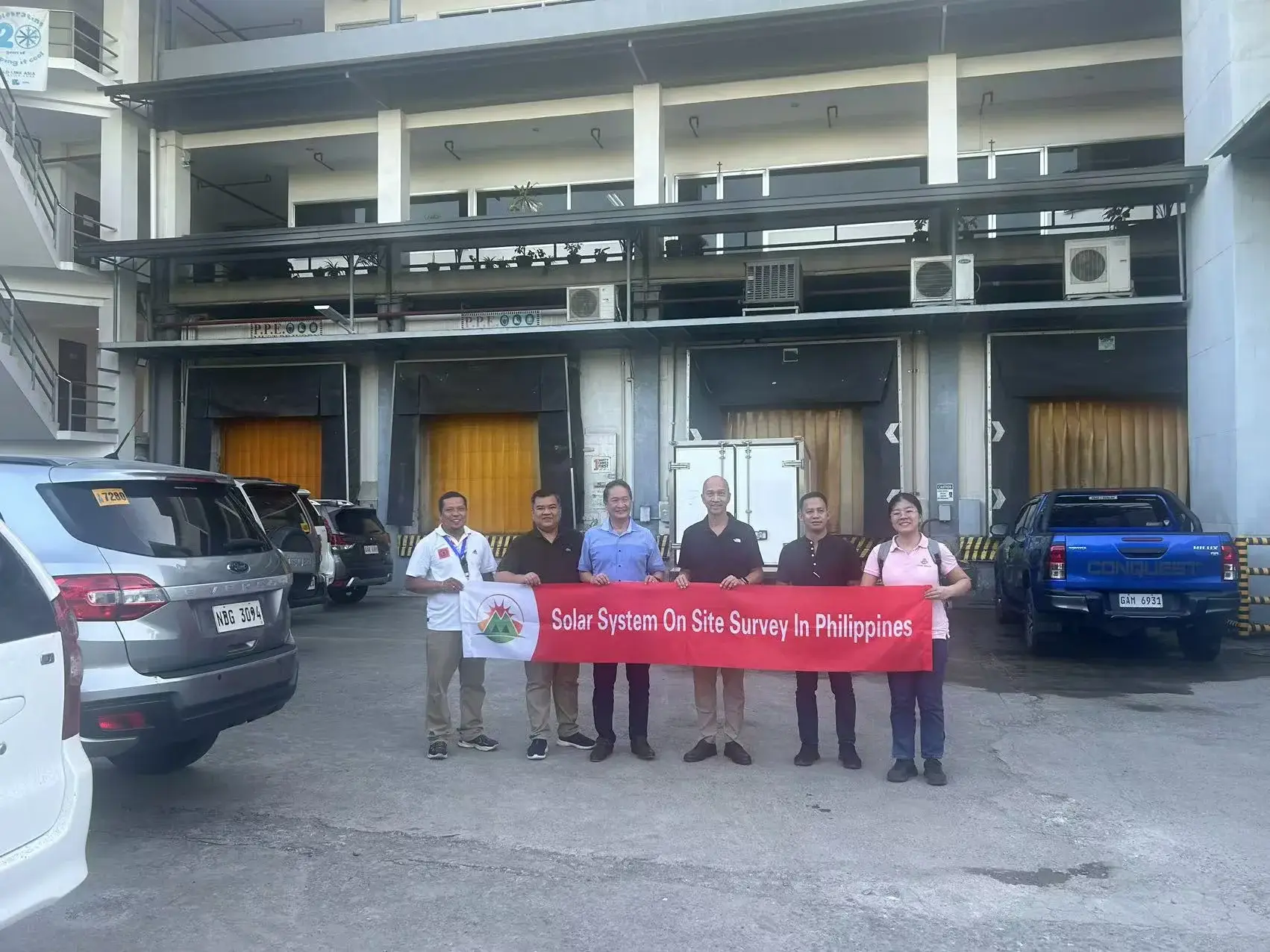
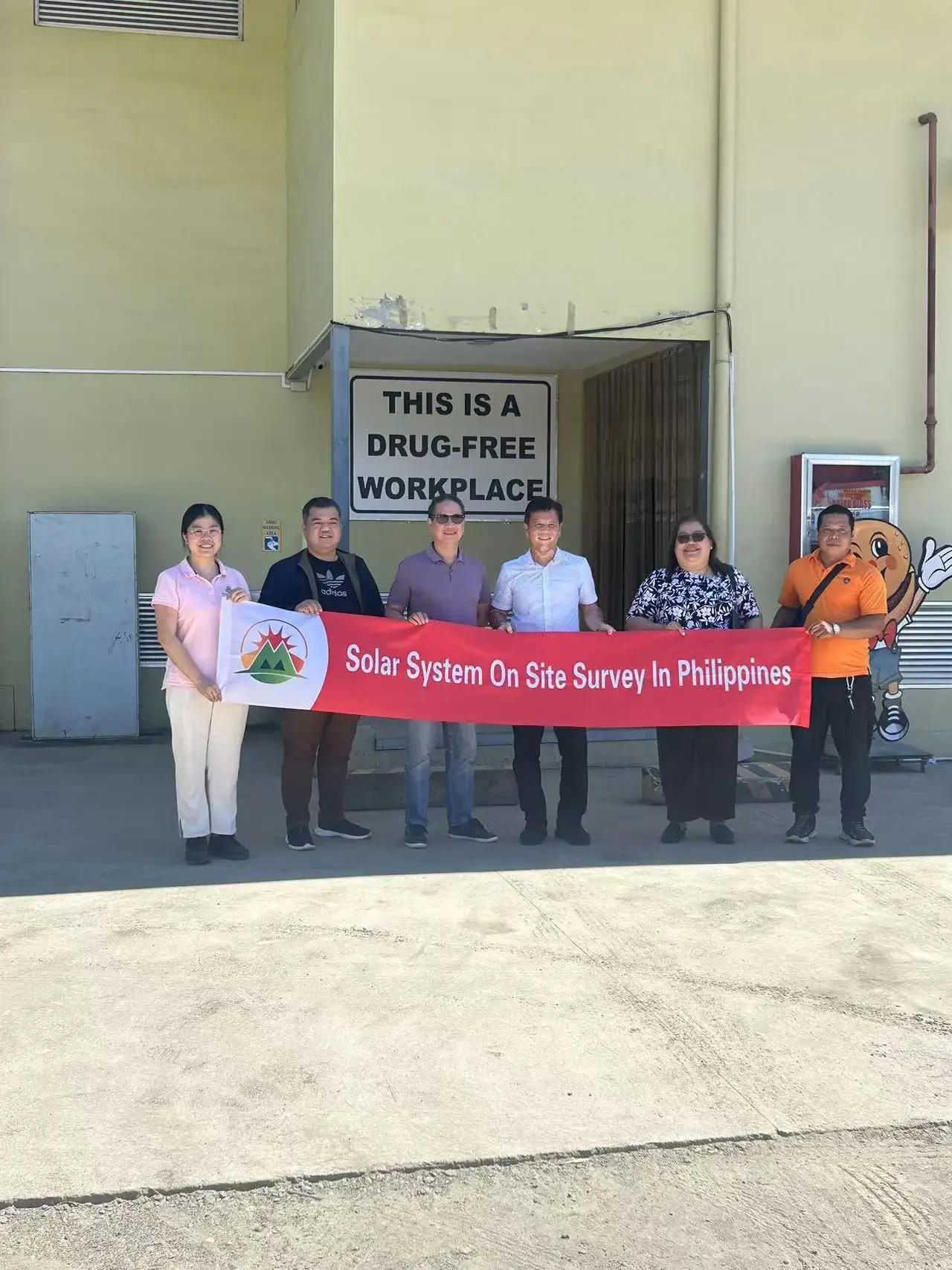
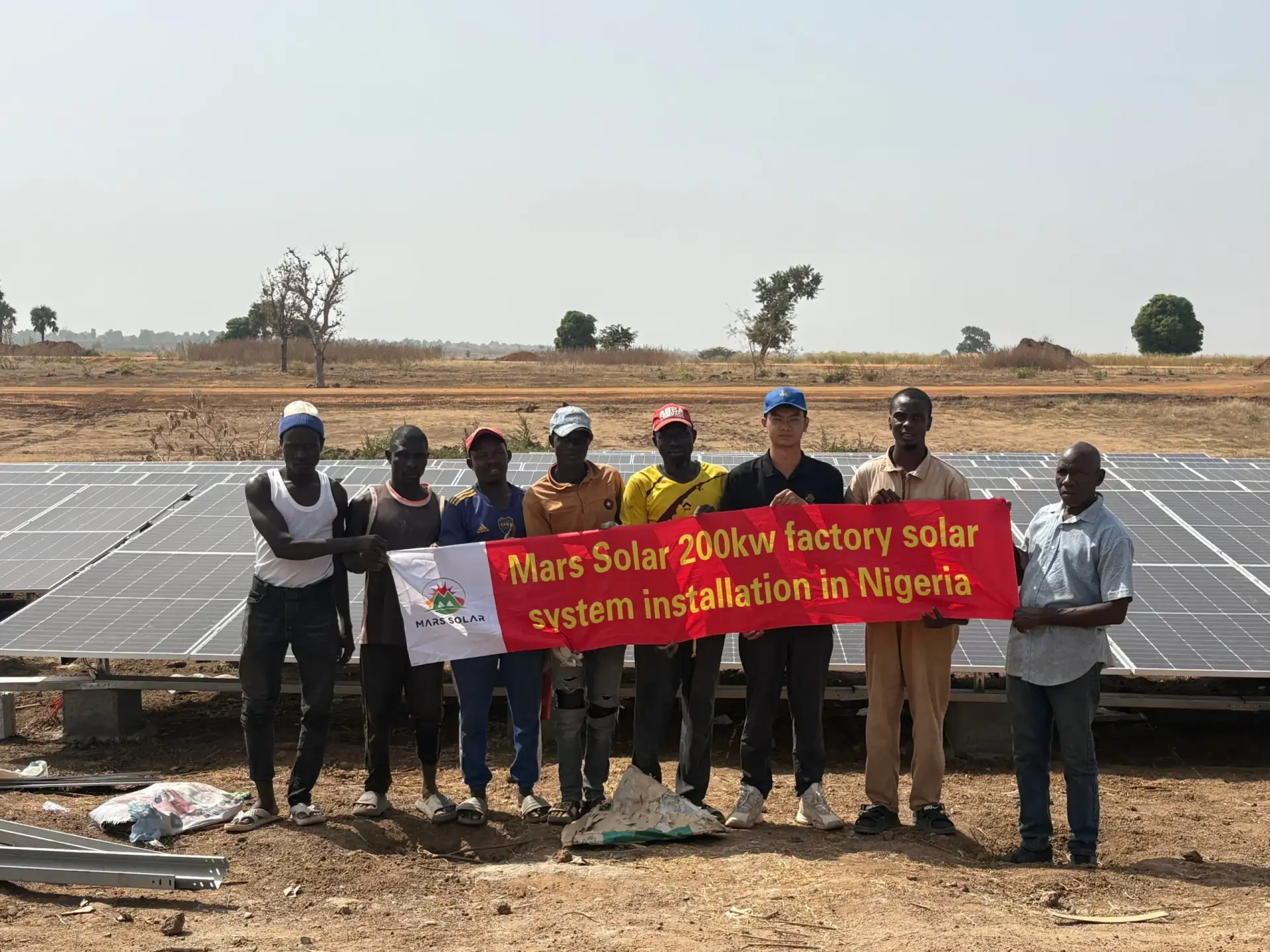
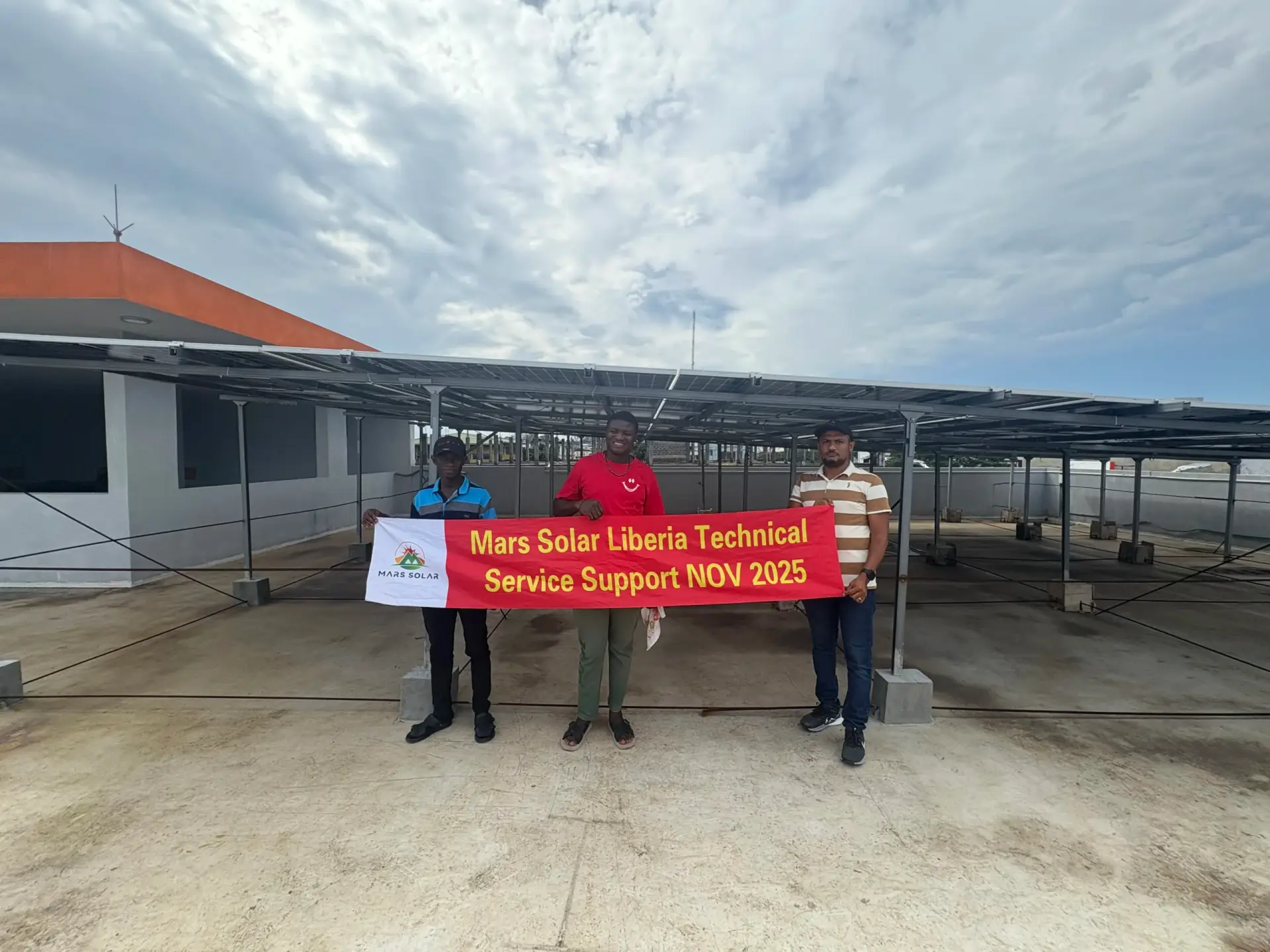
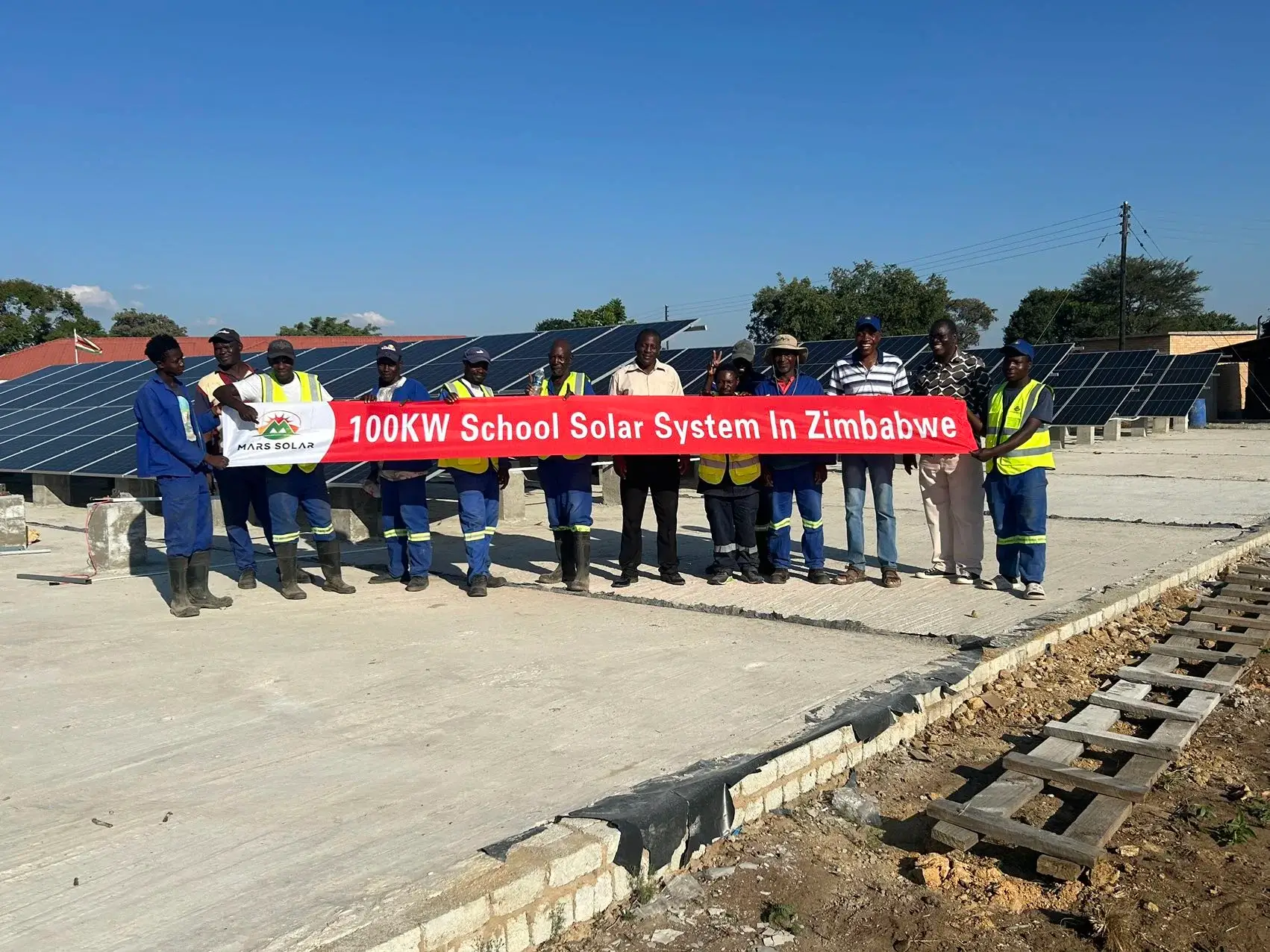
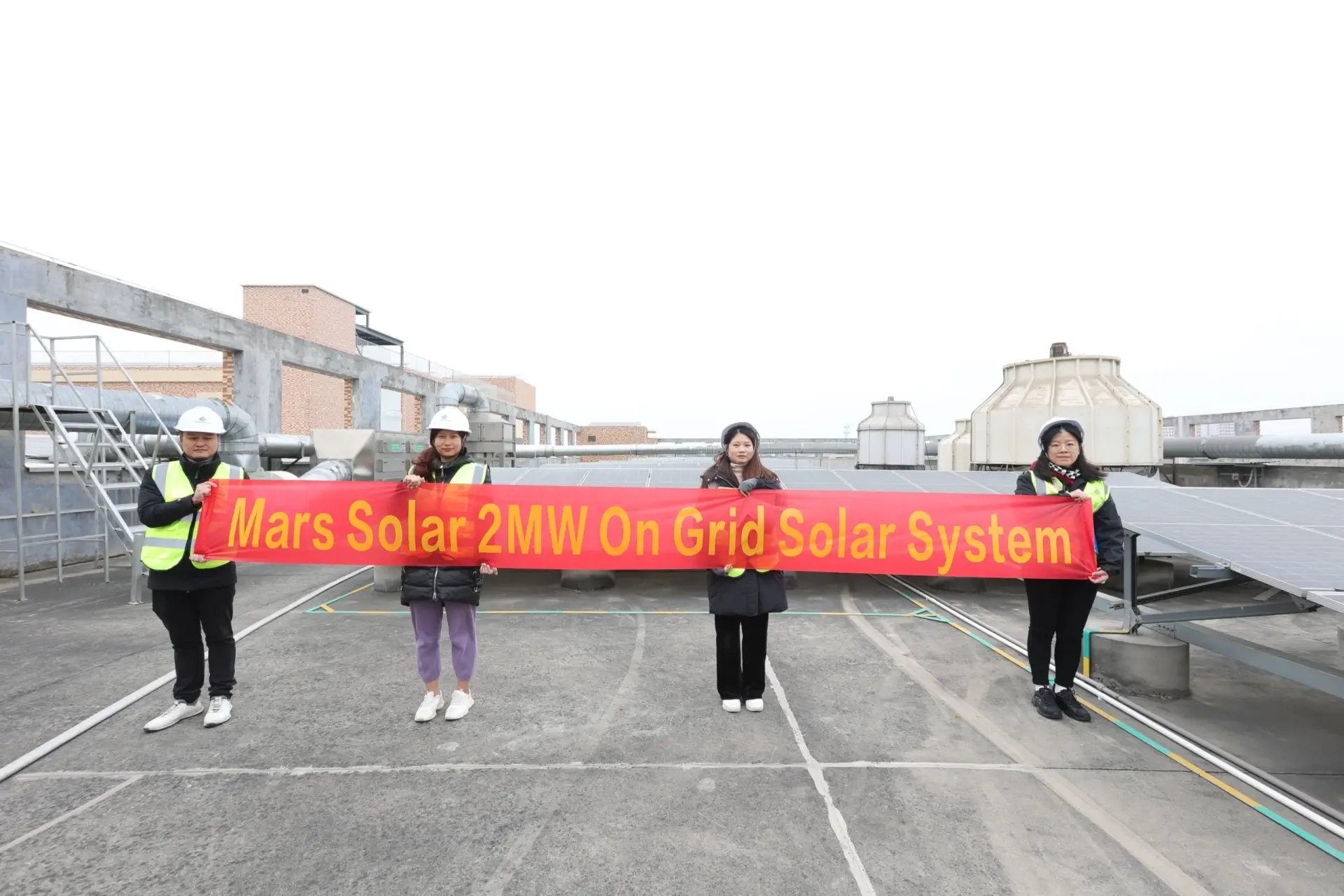
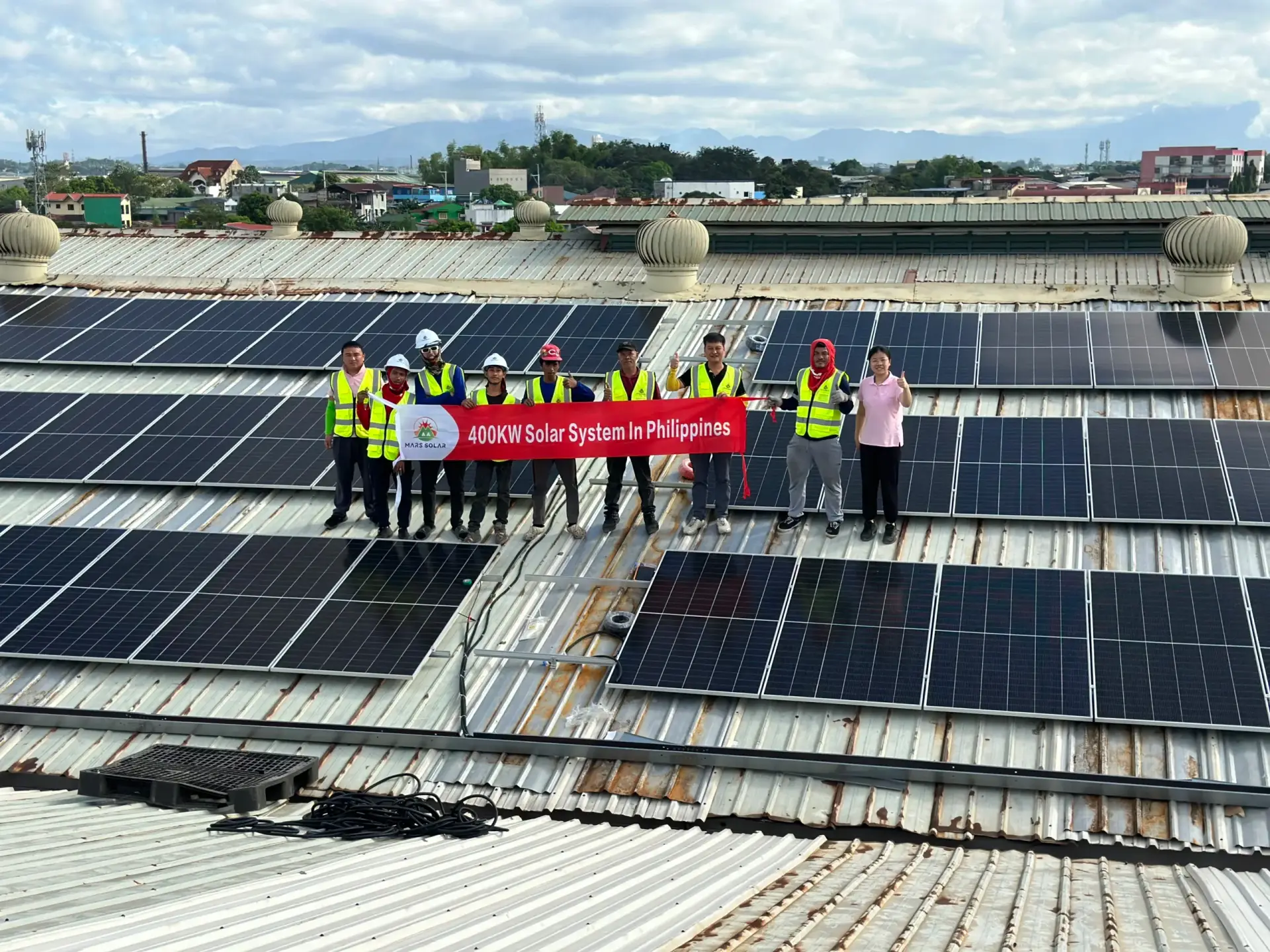
Mars Solar in Numbers
Industry Experience
Since 1000
Countries & Markets
0 +
Manufacturing Facilities
3000 ㎡
Technical & R&D Team
0 +
Systems Supplied or Supported
1500 +
Your Ultimate Guide to Solar System Partner for Factories and Industrial Energy Solutions
If you’re planning a solar system for a factory—whether you are trying to reduce electricity costs, improve backup reliability, cut diesel consumption, or prepare a new industrial project—you are not simply choosing panels, batteries, and inverters. You are making a long-term energy decision that will affect production stability, operating costs, and future expansion. A factory with a stable grid may only need an on-grid system, while another facility may require battery storage, diesel integration, or a complete off-grid architecture. The right solution depends on how the factory actually uses power, not simply on how much roof space is available or how large the connected load appears on paper.
Over the years, we’ve seen many industrial solar projects become difficult because the energy problem was not clearly defined at the beginning. Some factories install batteries that provide little financial value, while others choose simple grid-connected solar even though frequent outages remain the real operational risk. We’ve also seen EPC companies struggle with incomplete BOMs, equipment compatibility, unclear responsibilities, and system changes that appear only after installation has already started. In our experience, the difference between a project that moves smoothly and one that becomes expensive usually comes down to early decisions around load analysis, system architecture, backup strategy, equipment integration, local installation conditions, and long-term operating plans.
This guide is built around those real project decisions. Instead of only explaining how solar technology works, we want to share how factory energy systems are actually evaluated, sized, compared, and delivered in commercial environments. We’ll look at when on-grid solar is enough, when battery storage creates real value, why diesel generators may still remain part of the system, how EPC companies should evaluate suppliers, how factory owners should think about ROI and operational risk, and what should be planned before a new industrial facility is built. Our goal is to help you understand the questions that matter before equipment is ordered—so the final system is easier to justify, easier to deliver, and better aligned with the factory’s real energy needs.
Table of Contents
How to Choose the Right Solar System for a Factory: A Complete Guide for Industrial Energy Planning
When factories begin exploring solar energy, the first challenge is usually not whether solar is worth investing in, but understanding what type of system actually matches their operational needs. Through my experience working with commercial and industrial energy projects, I have found that many companies initially approach solar planning from the wrong angle. They focus on available roof space or total factory power capacity, but these factors alone do not determine whether a solar system will deliver the expected financial and operational benefits.
A factory solar project should always begin with understanding how electricity is consumed inside the facility. Production schedules, machine operation, daytime and nighttime demand, grid reliability, and backup expectations all influence the final system design. A 500kW factory does not automatically require a 500kW solar system, because the correct solution depends on when energy is needed, how much electricity can be replaced by solar, and whether the business needs additional protection against power interruptions.
Understanding Factory Energy Demand Before Selecting Solar Capacity
Before designing any factory solar system, I always start by understanding the factory’s real energy pattern rather than immediately discussing equipment size. Electricity consumption in an industrial facility is closely connected to production activities, working hours, machinery operation and business requirements. Two factories with similar production capacity may have completely different energy needs because one may operate mainly during daylight hours while another may run multiple shifts throughout the day and night.
This is why professional solar planning requires reviewing the complete energy situation, including historical electricity consumption, peak demand, operating schedules, critical equipment and future expansion plans. The purpose of this analysis is not only to calculate how much solar energy can be generated, but to understand how much of that energy can actually create value for the factory.
Why Roof Space Does Not Determine the Right Factory Solar System
One of the most common mistakes I see in industrial solar projects is designing the system based mainly on available installation space. A large factory roof may appear to provide an opportunity for a larger solar installation, but a bigger system does not always mean better economic performance. If solar generation exceeds the factory’s actual consumption during production hours, the additional investment may not create the expected return.
For example, a factory with a 500kW peak load may only consume a much lower amount of electricity during most daytime operations. In this situation, installing the maximum possible solar capacity may result in lower self-consumption efficiency. Another factory with the same peak load may have continuous production, high daytime demand and unstable electricity supply, making a larger solar system combined with battery storage much more valuable. The correct design always comes from understanding the relationship between energy production and energy usage.
Reducing Electricity Costs vs Improving Factory Power Reliability
When I discuss solar projects with industrial customers, I usually separate two different business goals: reducing electricity costs and improving power reliability. Although both objectives involve solar energy, the system approach can be very different.
For factories with stable grid supply and predictable electricity costs, the main objective is often reducing monthly energy expenses. An on-grid solar system can directly offset daytime electricity consumption and provide a straightforward return on investment. However, many factories operate in markets where grid interruptions, voltage instability or expensive diesel consumption create a much bigger operational challenge. For these businesses, the priority is not only saving money but ensuring production continues without interruption.
Understanding this difference is critical because a factory that only needs electricity savings may not require battery storage, while a factory that cannot afford downtime may need a solar + battery or solar + diesel hybrid architecture. The right solution depends on the business problem the factory is trying to solve.
When an On-Grid Solar System Is Suitable for a Factory
An on-grid solar system is usually the most practical choice for factories that already have reliable electricity supply and want to reduce daytime electricity costs. In these applications, solar energy directly supports factory operations during working hours, reducing the amount of electricity purchased from the utility grid.
I often see this approach working well for manufacturing plants, warehouses and processing facilities where production schedules closely match solar generation hours. The advantage of this system is its simplicity and lower investment compared with storage-based solutions. However, factories located in areas with frequent power outages should carefully evaluate whether cost reduction is their only priority, because a standard grid-connected solar system cannot continue supplying power during a blackout without additional backup functions.
When Battery Storage Becomes Necessary for Factory Solar Projects
Battery storage becomes valuable when a factory needs more control over when electricity is available. Solar generation naturally happens during the day, but many industrial facilities continue consuming electricity during evening hours, night shifts or unexpected grid interruptions. Battery systems allow factories to store available solar energy and use it when it provides greater operational value.
However, I do not believe every factory automatically needs the largest possible battery capacity. The right battery size depends on the actual business requirement, including which loads are critical, how long backup power is needed, how often outages occur and whether reducing peak electricity costs creates additional value. A well-designed energy storage system should solve a specific operational challenge rather than simply increase project size.
When Solar + Battery + Diesel Hybrid Systems Make Sense
For factories operating in regions with unreliable grids or high diesel expenses, hybrid solar systems can provide a more complete energy solution. Many industrial businesses already depend on diesel generators because production cannot stop during electricity failures. The challenge is that continuous generator operation creates significant fuel and maintenance costs.
A solar + battery + diesel hybrid system allows factories to combine multiple energy sources more intelligently. Solar energy can reduce daytime electricity consumption, batteries can provide flexibility and backup support, while diesel generators remain available when additional power is required. From my perspective, the goal of these systems is not always to completely remove generators, but to reduce unnecessary fuel consumption while maintaining reliable production.
Choosing the Right Solar Architecture for Your Factory
After reviewing many industrial projects, I have found that there is no single factory solar system that works for every business. The best solution depends on the factory’s operating environment, energy priorities and long-term objectives.
A factory with stable grid power may achieve strong results with an on-grid solar system. A facility looking for higher solar utilization and backup capability may benefit from solar combined with battery storage. A business facing frequent outages and high diesel consumption may require a hybrid solar solution, while remote industrial facilities may need a complete off-grid energy system. The most important decision is not selecting the most advanced technology, but choosing the system architecture that creates the greatest practical value for the factory.
Final Thoughts: Factory Solar Planning Starts With Understanding the Business
A successful industrial solar project begins long before equipment selection. It starts with understanding how the factory operates, how electricity affects production, and what energy challenges the business needs to solve. In my experience, the strongest solar projects are not always the largest installations; they are the projects where the system design matches the customer’s actual operational needs.
When planning a factory solar system, companies should first understand their electricity consumption pattern, production requirements, grid conditions and backup expectations. Once these factors are clear, selecting the right solar architecture becomes much easier. At Mars Solar, we believe the role of a solar partner is not simply to supply equipment, but to help customers transform energy requirements into practical, reliable and scalable industrial solutions.
On-Grid vs Solar + Battery vs Diesel Hybrid: Understanding Different Factory Solar Architectures
When factories start evaluating solar energy solutions, I usually find that the biggest challenge is not deciding whether solar is valuable, but understanding which system architecture actually matches their operational reality. Many businesses search for terms such as “hybrid solar system for factory”, “solar battery system for factory”, or “solar diesel generator system” because they already recognize that traditional electricity supply is creating challenges, but they are often unsure whether they need a simple grid-connected solar system, battery storage, or a complete hybrid energy solution.
From my experience working with commercial and industrial energy projects, I have learned that the wrong approach is selecting a system based only on equipment availability or supplier recommendations. A factory solar solution should begin with understanding the energy problem behind the project. Some factories simply want to reduce electricity costs, some need protection against power interruptions, and others require independent energy supply because grid reliability is a major operational risk. The best solar system is not the biggest system or the most expensive system; it is the system that matches the factory’s actual energy challenge.
Why Factory Solar System Selection Should Start With The Energy Problem
Before comparing different solar architectures, I always recommend looking at the factory’s business operation first because electricity serves different purposes in different industrial environments. A factory with stable grid power and predictable production hours has a completely different requirement from a facility where production stops every time the grid fails. The same solar technology can create very different results depending on how it is integrated into the factory’s daily operation.
In many projects, I see companies making decisions too quickly because they focus on individual products rather than the complete energy strategy. Some businesses install battery storage even though their main issue is simply high daytime electricity costs. Others choose basic grid-tied solar in areas where unstable electricity is the biggest challenge. Some companies consider removing diesel generators without evaluating whether their production can tolerate interruptions. These decisions often happen because the system is selected before the energy requirement is properly understood.
A professional factory solar evaluation should consider electricity consumption patterns, production schedules, critical equipment, grid reliability, backup expectations and future expansion plans before deciding which architecture is suitable.
On-Grid Solar System: Best For Factories Focused On Reducing Electricity Costs
An on-grid solar system is usually the most suitable choice for factories that already have reliable utility power and mainly want to reduce electricity expenses. In this type of project, the purpose of solar is straightforward: generate electricity during available sunlight hours and allow the factory to consume more renewable energy instead of purchasing the same amount of electricity from the grid. I often see this architecture working effectively for manufacturing plants, warehouses and processing facilities where daytime production matches solar generation.
However, I always remind customers that an on-grid system is designed primarily for energy cost reduction, not backup power. When the grid fails, a standard grid-connected solar system normally shuts down for safety reasons unless additional backup functions are included. This means factories located in regions with frequent outages should carefully evaluate whether their main goal is saving electricity costs or maintaining continuous production.
For factories with stable electricity supply, an on-grid system can provide a practical balance between investment and energy savings. But for businesses where downtime creates significant financial losses, a more advanced architecture may be required.
Solar + Battery Energy Storage System: When Energy Flexibility Becomes More Important
A solar + battery energy storage system becomes valuable when a factory needs greater control over when electricity is generated and when it is consumed. Solar energy production naturally follows daylight conditions, but factory operations often continue beyond solar production hours. A facility may have evening shifts, peak electricity periods or critical equipment that requires additional protection during unstable grid conditions.
Through my experience, I have found that battery storage is often misunderstood. Many businesses assume that adding a larger battery automatically creates a better system, but the real value of storage comes from solving a specific operational challenge. The right battery capacity depends on the factory’s energy consumption pattern, backup requirements, critical loads and expected operating strategy.
For some factories, batteries increase solar self-consumption by storing excess daytime generation. For others, batteries provide backup protection for important equipment or help manage energy costs during expensive electricity periods. The key is not installing more storage, but designing storage around the factory’s actual business requirements.
Solar + Battery + Diesel Generator Hybrid System: Designed For Unstable Power Environments
For factories operating in regions with unreliable grids, frequent outages or high diesel expenses, a solar + battery + diesel generator hybrid system can provide a more complete energy solution. Many industrial facilities already rely on diesel generators because production cannot stop when utility power becomes unavailable. However, running generators continuously creates significant operating costs through fuel consumption, maintenance requirements and transportation challenges.
I believe the purpose of a hybrid system is not always to completely replace diesel generators. In many industrial applications, the smarter approach is to reduce unnecessary generator operation while maintaining reliable power availability. Solar energy can support daytime loads, batteries can provide energy flexibility and backup support, while diesel generators remain available when additional power is required.
The value of this architecture comes from intelligent coordination between different energy sources. A well-designed hybrid system allows factories to reduce fuel consumption, improve power reliability and protect production continuity without depending entirely on one energy source.
Off-Grid Solar Microgrid System: Creating Independent Power For Remote Industrial Facilities
An off-grid solar microgrid system is designed for factories and industrial facilities where reliable grid access is unavailable or insufficient. Unlike grid-connected projects, these systems must operate as an independent energy network, meaning the solar generation, battery storage and energy management strategy must be carefully designed to support continuous operation.
Remote factories, mining facilities, agricultural processing plants and industrial projects located far from utility infrastructure often require this type of solution. In these situations, the challenge is not simply reducing electricity costs but creating a dependable power source where traditional grid connection may be difficult or economically impractical.
From my perspective, off-grid projects require the most careful planning because there is less room for error. The system must consider daily energy demand, peak power requirements, critical equipment, weather conditions and future expansion possibilities. A successful off-grid system is not defined by how much solar equipment is installed, but by how reliably it supports the industrial operation.
How To Choose The Right Factory Solar Architecture
After reviewing different industrial energy projects, I have found that the best system selection process always begins with one question: What problem is the factory trying to solve? There is no universal solution because different factories have different priorities.
A factory with stable electricity supply and high daytime consumption may achieve the best results with an on-grid solar system because the main objective is reducing energy costs. A factory that wants higher solar utilization and additional protection may benefit from solar combined with battery storage. A business facing frequent outages and expensive diesel consumption may require a hybrid solar and generator solution. A remote industrial facility without dependable grid access may need an off-grid microgrid system.
The mistake is not choosing one technology over another. The mistake is choosing a system without understanding the operational problem behind the project.
Final Thoughts: The Right Solar System Is The One That Fits The Factory
When I look at successful industrial solar projects, I notice that the strongest results do not always come from the largest installations or the most advanced technologies. They come from systems that are carefully matched to the factory’s energy conditions, operational requirements and long-term business objectives.
Solar panels, batteries, inverters and generators are only components. The real value comes from designing them into an energy system that supports production, controls costs and reduces operational risk. Before investing in solar, factories should first understand their electricity usage, grid conditions and reliability requirements.
At Mars Solar, we believe the first step of every factory solar project is understanding the customer’s energy challenge before selecting the solution. By starting with the real operational requirement, businesses can build solar systems that are more practical, more reliable and better aligned with their future growth.
How Much Solar and Battery Storage Does a Factory Really Need? A Practical Sizing Guide
When factories begin planning solar energy storage systems, the question I hear most often is, “How much battery capacity do we need?” Although this sounds like a technical calculation, the real answer depends on much more than the battery itself. In industrial projects, battery sizing is closely connected with how the factory operates, which equipment must continue running, how reliable the local grid is, how long backup power is required, and whether the business expects future expansion. After working with commercial and industrial energy projects, I have found that many companies focus too quickly on battery capacity without first defining the energy problem they are trying to solve.
A well-designed factory solar and battery system should not be based on simply choosing the largest storage capacity available. The purpose of energy storage is to support the factory’s operational goals, whether that means increasing solar utilization, reducing electricity costs, protecting critical production equipment, or improving power reliability during outages. The right battery size is the result of understanding the complete energy system, including solar generation, factory demand, inverter capacity, operating strategy, and future business requirements.
Why Battery Sizing Is More Than Choosing Backup Hours
One of the most common questions from factory owners is how many hours a battery can support their facility during a power outage. While backup duration is important, I usually explain that this is only one part of the calculation. A factory does not always need to keep every electrical load running during an outage. The key question is which equipment is truly critical for business continuity and which loads can temporarily stop.
In industrial applications, backup requirements are closely related to production risks. A manufacturing line, refrigeration system, communication network, control system, or safety equipment may require continuous power, while non-essential loads may not. By identifying the loads that directly affect production, safety, and revenue, companies can design a more practical energy storage system instead of investing in unnecessary battery capacity. This approach helps balance reliability and investment because the best battery system is not the one that provides the most hours of backup, but the one that provides the right level of protection for the factory.
Understanding Factory Load Profile Before Selecting Battery Capacity
Before calculating battery size, I always start by understanding how the factory consumes electricity throughout the day. Monthly electricity bills provide useful information, but they do not fully explain the operating pattern of an industrial facility. A factory may have the same monthly consumption as another facility but require a completely different energy storage solution because their production schedules and load characteristics are different.
A proper evaluation considers when machines operate, when electricity demand reaches its highest point, whether production continues during nighttime hours, and how much solar energy can be directly consumed during the day. Understanding the load profile allows us to determine when the battery should charge, when it should discharge, and whether the system is mainly designed for energy cost optimization or backup protection. Without this analysis, battery sizing becomes an estimation rather than an engineering decision.
How Factories Should Prepare Before Designing A Solar + Battery System
A reliable energy storage design begins with accurate project information. In many industrial projects, the biggest challenge is not the technology itself but the lack of detailed operating data during the early planning stage. When a factory only provides a general requirement such as “we need backup power,” it is difficult to determine the correct system architecture because the actual energy requirements remain unclear.
When I review a factory energy project, I focus on understanding the facility’s electricity consumption history, production schedule, peak demand, existing solar capacity, grid conditions, generator availability, and future expansion plans. These factors help determine whether the project requires a smaller battery for critical backup, a larger storage system for energy management, or a hybrid approach combining solar, battery, grid, and diesel generation. The purpose of this information collection is not to make the project complicated, but to ensure the final design reflects the factory’s real operating conditions.
Selecting The Right Battery Capacity Based On Critical Loads And Backup Requirements
Battery sizing becomes much more accurate once the factory understands which loads need protection during power interruptions. I often see businesses initially request backup for the entire facility, but after reviewing their operations, they realize that only certain production equipment or essential systems truly require continuous power.
The required battery capacity depends on the power demand of these critical loads, the expected backup duration, battery efficiency, usable capacity, and how frequently outages occur. A factory that needs two hours of backup for essential equipment will have a very different storage requirement from a facility that needs to maintain production throughout a long grid failure. By focusing on operational priorities rather than simply increasing battery size, companies can achieve better reliability without unnecessary investment.
Why Inverter And PCS Capacity Is Just As Important As Battery Size
Although battery capacity receives most attention during energy storage planning, the inverter or PCS capacity is equally important because it determines how much power the system can deliver at any moment. A battery may contain enough stored energy, but if the inverter cannot support the factory’s actual power demand, the system will not perform as expected.
This becomes especially important for factories with motors, pumps, compressors, and heavy production equipment because these loads can require much higher starting power than normal operating power. When designing a system, I consider the factory’s peak demand, equipment characteristics, startup requirements, and future expansion plans together with battery capacity. A balanced design ensures that the entire system can operate properly under real industrial conditions rather than only meeting theoretical energy calculations.
Avoiding Battery Oversizing And Other Common Industrial Energy Storage Mistakes
Battery oversizing is one of the most common mistakes I see in factory energy storage projects. A larger battery may appear to provide more security, but additional capacity does not always create additional business value. If the factory rarely uses the extra storage capacity, the investment may take much longer to recover.
Another common mistake is designing the battery separately from the solar system and factory operation. Solar generation, battery charging strategy, inverter power, grid conditions, and production requirements must work together as one system. A successful industrial energy storage project is not created by selecting the biggest battery available; it is created by matching the storage capacity with the factory’s actual energy behaviour and business priorities.
Planning Battery Storage For Future Factory Growth
Factories are constantly changing. Production capacity may increase, new machines may be added, and energy demand may grow over time. Because of this, I believe future expansion should be considered during the initial system design rather than treated as an afterthought.
A practical energy storage solution should allow reasonable scalability, whether through additional battery modules, inverter capacity, solar expansion, or improved energy management. However, planning for the future does not mean installing excessive capacity today. The most effective approach is creating a flexible system architecture that supports current needs while allowing the factory to expand without completely redesigning the energy system later.
Final Thoughts: The Right Battery Size Comes From Understanding The Factory
After reviewing different industrial solar and energy storage projects, I have learned that battery sizing is not simply a technical calculation. It is a decision that connects energy engineering with business operation. The correct storage capacity depends on understanding what the factory needs to achieve, whether that is reducing electricity costs, protecting production, lowering diesel consumption, or improving energy independence.
A successful factory solar + battery system is not defined by having the largest battery capacity. It is defined by how effectively the system supports the factory’s operation and creates long-term value. By starting with electricity consumption, critical loads, grid conditions, and future plans, businesses can develop energy storage solutions that are more practical, reliable, and financially responsible.
Case Study: From Unstable Power Supply to Reliable Factory Energy System — How a Commercial Solar Project Was Delivered Step by Step
When factory owners search for industrial solar project case studies, they are usually not only interested in the final equipment list or installed capacity. They want to understand how a real project moves from an energy problem to a working solution, because the biggest concerns are often related to system design, equipment compatibility, installation coordination, and whether the investment will actually improve business operations. Through my experience working with commercial and industrial solar projects, I have found that many factories understand the benefits of solar energy but hesitate to invest because they are unsure how to choose the right architecture and how to avoid expensive mistakes during implementation.
This case study explains the typical journey of an industrial solar project, starting from the factory’s initial energy challenge, moving through technical assessment and system design, and finally reaching installation and operation. The purpose is not to present solar as a simple equipment purchase, but to show how a reliable factory energy system is developed through proper analysis, engineering decisions, and project cooperation.
Understanding The Factory’s Original Energy Challenge Before Designing The Solution
Every successful industrial solar project begins with understanding why the factory needs a new energy solution. In this example, the factory was facing several challenges that are common among industrial businesses in regions with unstable electricity supply. Frequent grid interruptions were affecting production schedules, electricity costs continued increasing, and the factory had become increasingly dependent on diesel generators to maintain operations. While the generator provided temporary protection, the rising fuel consumption and maintenance requirements created additional operating pressure.
When I evaluate projects like this, I do not begin by asking how many solar panels the factory wants to install. The more important question is what business problem the energy system needs to solve. A factory does not invest in solar only because renewable energy is available; it invests because electricity reliability, operating costs, and production continuity directly affect profitability. Understanding this connection between energy and business operation is the foundation of a successful project.
Assessing Factory Load, Grid Conditions And Energy Requirements
After identifying the main challenges, the next step is understanding how the factory actually consumes electricity. I have seen many industrial projects become complicated because the system design starts too early, before the engineering team fully understands the site conditions. A request such as “we need a 500kW solar system with backup” does not provide enough information to determine the correct solution, because the final design depends on production schedules, machine operation, peak demand, grid stability, and the loads that cannot stop during an outage.
During the assessment stage, the project team reviews the factory’s electricity consumption pattern, operating hours, existing generator usage, critical equipment, and future expansion plans. This information helps determine whether the project should focus mainly on reducing electricity costs, improving backup capability, or creating a more independent energy supply. In industrial applications, the most important step is not selecting equipment; it is understanding the relationship between the energy system and the factory’s daily operation.
Designing The Right Solar And Energy Storage Architecture
Once the factory’s energy requirements are understood, the next challenge is selecting the correct system architecture. I have learned that many businesses initially believe there is one standard solution for industrial solar projects, but in reality, different factories require different approaches depending on their operating environment.
For this project, the solution was designed around the combination of solar generation, battery storage, and existing backup power capability. The solar capacity was determined based on the factory’s energy consumption pattern, while the battery system was evaluated according to backup requirements and the importance of maintaining specific production loads during power interruptions. The hybrid control strategy was also an important part of the design because solar, battery, grid electricity, and diesel generation needed to operate together rather than as separate systems.
From my perspective, this is where professional system integration creates real value. A successful factory energy solution is not created by simply combining good products. The challenge is ensuring that solar generation, energy storage, power conversion, protection systems, and control logic work together as one reliable architecture.
Coordinating Equipment Preparation, Testing And Installation
After the system design was confirmed, the project moved into equipment preparation and installation coordination. This stage is often underestimated because many customers assume the main challenge ends once the quotation is approved. However, industrial solar projects can experience problems during delivery when technical details, equipment specifications, documentation, and installation requirements are not properly coordinated.
A reliable project process requires confirming that all major components match the approved system design before shipment. Solar modules, inverters, battery systems, protection equipment, monitoring systems, and other electrical components need to work together according to the planned operating strategy. During installation, the local engineering team plays an important role in site preparation and construction, while the system supplier supports technical communication, documentation, and system understanding.
I believe successful international solar projects require cooperation rather than simply shipping equipment overseas. The supplier’s responsibility is not to replace the local installer, but to make sure the installation team has the information and support needed to complete the system correctly.
Commissioning The System And Confirming Real Performance
The commissioning stage is where the project moves from installation into actual operation. At this point, the focus is confirming that the system performs according to the original design expectations. Solar generation, battery charging and discharging, grid interaction, diesel generator coordination, and monitoring functions all need to be checked carefully before the system enters normal operation.
In my experience, commissioning is one of the most important stages because many issues that appear during operation are related to insufficient testing or unclear system settings before handover. A factory energy system is not successful simply because all equipment has arrived and been installed. It is successful when the factory team understands how the system works and when the energy strategy matches the actual operational requirements.
This is why proper testing, technical communication, and system verification are essential parts of industrial solar delivery.
Operational Results: Moving From Energy Uncertainty To Reliable Power Management
After the system begins operation, the value of the project becomes visible through daily factory performance. The objective is not only to generate renewable electricity but to create a more stable and controllable energy environment. By combining solar generation, battery storage, and backup power management, the factory can reduce unnecessary diesel generator operation, improve resilience during grid interruptions, and gain better control over long-term energy costs.
The most important result of an industrial solar project is not simply the installed capacity or the amount of solar energy produced. The real value comes from whether the system supports business continuity. When a factory can maintain production with fewer energy interruptions and lower operating risks, the solar system becomes a strategic business investment rather than just an electricity-saving tool.
Lessons From Delivering Industrial Solar Projects
After working with commercial energy projects, I believe the biggest lesson is that industrial solar success depends more on proper planning than on individual equipment selection. Many project problems happen because companies focus on purchasing products before clearly defining the energy challenge. A cheaper system may appear attractive initially, but incorrect sizing, poor integration, or insufficient technical preparation can create higher costs later.
The strongest projects follow a simple principle: understand the factory’s energy problem first, design the appropriate system architecture second, and then select the equipment needed to deliver that solution. Whether the goal is reducing electricity costs, lowering diesel consumption, improving backup reliability, or achieving greater energy independence, the system should always be designed around the factory’s real operating requirements.
At Mars Solar, we believe every industrial solar project should start from the customer’s energy challenge rather than from a product catalogue. By understanding the factory’s operation, grid conditions, and future objectives, businesses can develop energy solutions that are more practical, reliable, and valuable over the long term.
Why Factories Still Need Diesel Generators After Installing Solar: Understanding Hybrid Energy Systems
When factories consider solar energy, one of the most common assumptions I hear is that installing enough solar panels and batteries should completely eliminate the need for diesel generators. This idea is understandable because many businesses want to reduce fuel costs and move toward cleaner energy, but industrial power requirements are more complicated than simply replacing one energy source with another. After working with commercial and industrial energy projects, I have found that many factories still require diesel generators after installing solar, not because solar technology is insufficient, but because production reliability remains the highest priority.
In real industrial environments, factories cannot always stop operating when solar generation decreases, weather conditions change, batteries reach their operating limits, or the grid becomes unavailable. For businesses such as manufacturing plants, warehouses, agricultural processing facilities, and commercial operations, an unexpected power interruption can create much larger losses than the cost of electricity itself. This is why hybrid energy systems have become increasingly important in markets where grid stability is uncertain and diesel dependency remains high. The purpose of a solar diesel hybrid system is not simply to remove generators, but to create a smarter energy structure where solar, battery storage, grid power, and diesel generation work together to provide lower operating costs and reliable power.
Why Solar Alone Cannot Always Meet Factory Energy Requirements
Many factory owners initially view solar as a complete replacement for traditional power sources, but industrial energy consumption is very different from residential electricity usage. A factory may operate multiple production lines, heavy machinery, motors, compressors, refrigeration systems, and other equipment that require stable electricity at specific times. Solar generation naturally changes depending on sunlight availability, meaning there can be periods when the factory demand is higher than solar output, especially during cloudy weather, nighttime production, or unexpected increases in manufacturing activity.
When I evaluate industrial projects, I usually focus on the relationship between energy availability and production requirements. The question is not whether solar can generate electricity; the question is whether solar can provide the right amount of power at the exact time the factory needs it. Battery storage can help bridge this gap, but even batteries have practical limits based on capacity, charging conditions, and required backup duration. This is why many industrial facilities continue using diesel generators as part of a complete energy strategy rather than removing them completely.
How A Solar + Battery + Diesel Hybrid System Creates A More Reliable Energy Structure
A hybrid energy system works by allowing different power sources to support the factory according to their strengths. In a typical operating strategy, solar energy is prioritized whenever available because it provides the lowest operating cost after installation. During periods when solar production exceeds immediate factory demand, excess energy can be stored in batteries for later use. When solar output decreases, the battery can provide additional support, reducing dependence on grid electricity or diesel generation. If the battery reaches its minimum operating level, the grid is unavailable, or the factory demand exceeds available renewable energy, the diesel generator can automatically provide additional power.
From my perspective, the value of a hybrid system comes from intelligent energy coordination rather than simply combining different technologies together. Solar panels, batteries, generators, inverters, power conversion systems, and energy management systems must operate as one complete solution. Without proper control logic, the system may not achieve the expected fuel savings or reliability improvements. A successful hybrid project requires understanding how each energy source should operate under different conditions and how the system should respond when factory demand changes.
How Hybrid Systems Reduce Diesel Consumption Without Sacrificing Reliability
One of the biggest advantages of hybrid energy systems is that they allow factories to reduce unnecessary diesel generator operation while keeping backup capability available. Many industrial facilities already use diesel generators because they cannot risk production downtime, but continuous generator operation creates significant costs through fuel consumption, maintenance requirements, spare parts, and logistics.
A properly designed hybrid system changes the role of the generator. Instead of running the generator as the primary electricity source, the system allows solar and battery storage to handle as much energy demand as possible, while the generator operates only when additional support is required. For example, during normal daytime operation, solar can reduce generator usage significantly. During short outages, the battery can maintain critical loads without immediately starting the generator. During longer interruptions or periods of high demand, the generator provides additional energy security.
I believe the objective of hybrid solar is not to completely remove diesel generators in every situation. For many factories, the generator remains an important safety component. The real value comes from reducing operating hours, lowering fuel consumption, and creating a more predictable energy environment.
Why Generator Integration Requires Professional System Design
Connecting solar, batteries, and diesel generators together is not simply an electrical connection process. Industrial hybrid systems require careful planning because different energy sources have different operating characteristics. The inverter or PCS must communicate correctly with the battery system, the energy management system must control charging and discharging strategies, and the generator must respond correctly when additional power is required.
This becomes especially important for factories with sensitive production equipment. Motors, pumps, compressors, and automated systems may react differently during power transitions, and incorrect system settings can create operational problems. A hybrid solution that looks correct on paper may still fail to deliver expected performance if the control logic, protection systems, and communication settings are not properly considered.
From my experience, the biggest difference between a basic equipment supply project and a successful industrial energy project is system integration. The individual components are important, but the ability to make those components work together reliably is what determines long-term performance.
Why Solar Diesel Hybrid Systems Are Valuable In Developing Industrial Markets
In many African and Southeast Asian markets, industrial businesses face a combination of challenges that make hybrid energy solutions particularly valuable. Electricity grids may be unreliable, diesel prices may continue increasing, and businesses still need stable power to maintain operations. In these environments, factories often cannot depend entirely on one energy source.
I have seen that many businesses are not looking for the cheapest electricity solution; they are looking for a solution that reduces operational risk. A factory may accept a certain level of energy investment if it means fewer production interruptions, lower diesel consumption, and better control over long-term operating costs. Hybrid systems provide this balance by combining renewable energy savings with the reliability of traditional backup power.
This approach is especially relevant for factories, hotels, farms, warehouses, mining sites, and other commercial facilities where electricity reliability directly affects business performance.
Choosing The Right Hybrid Energy Strategy For A Factory
After reviewing different industrial energy projects, I believe the most important decision is not choosing between solar, batteries, or generators individually. The real decision is understanding what combination of technologies best matches the factory’s operational requirements.
A facility with stable grid power may only require solar to reduce electricity costs. A factory with expensive peak electricity periods may benefit from battery storage to improve energy management. A business facing frequent outages and high diesel usage may require a solar battery diesel hybrid system. A remote industrial site without reliable grid access may need a complete off-grid microgrid solution.
The best energy system is not the largest or most advanced one. It is the system that solves the factory’s specific energy challenge while creating practical long-term value.
Final Thoughts: Diesel Generators Are Not The Opposite Of Solar
After working with industrial energy projects, I have learned that the future of factory power is not always about replacing one technology with another. In many real-world applications, the strongest solution comes from combining different energy sources intelligently. Solar provides low-cost renewable generation, batteries provide flexibility and short-term energy support, the grid provides additional availability when possible, and diesel generators provide reliability when other sources cannot meet demand.
A successful solar diesel hybrid system is not measured only by how much solar energy is installed or how many hours the generator operates. It is measured by whether the factory can operate more efficiently, reduce unnecessary energy costs, and protect production from power uncertainty.
At Mars Solar, we believe every industrial energy project should begin by understanding the factory’s real operating challenges before selecting the technology. By evaluating load requirements, grid conditions, backup expectations, and future expansion plans, businesses can build energy systems that are more reliable, practical, and aligned with long-term growth.
How Industrial EPC Companies Should Evaluate Solar System Suppliers Before Starting a Factory Project
When industrial EPC companies prepare a factory solar project, selecting the right solar system supplier is often one of the decisions that has the biggest impact on project success. From my experience working with commercial and industrial energy solutions, I have found that many EPC companies initially focus on equipment pricing because they need to stay competitive when submitting quotations. However, the lowest-priced supplier is not always the supplier that creates the lowest overall project cost. A supplier that provides incomplete BOMs, slow technical responses, incompatible components, or unclear documentation can create additional engineering work, installation delays, commissioning problems, and even damage the EPC company’s relationship with the end customer. For industrial projects, a supplier should not be viewed only as a product source; the right supplier should become a technical partner that helps transform customer requirements into a reliable and deliverable energy system.
Evaluating Supplier Engineering Capability Before Starting A Project
The first thing I recommend EPC companies evaluate is whether the supplier truly understands industrial solar system design rather than only selling individual products. A factory solar project is not simply about purchasing panels, batteries, or inverters; it requires understanding the relationship between energy consumption, load characteristics, grid conditions, backup requirements, and future expansion plans. When I review industrial projects, I often find that the biggest risks appear when suppliers provide equipment before understanding the actual application. A capable solar supplier should be able to discuss whether the project requires an on-grid system, solar plus battery storage, diesel hybrid operation, or an off-grid microgrid solution based on the customer’s real operating environment. This engineering capability helps EPC companies avoid designing systems that look attractive on paper but fail to meet the customer’s actual expectations during operation.
Looking Beyond Individual Products: The Importance Of System Compatibility
One of the biggest challenges in commercial solar projects is that every component may perform well individually but still create problems when combined into one system. I have seen projects become complicated because solar modules, inverters, batteries, BMS, EMS, protection equipment, and communication systems were selected separately without considering how they would operate together. For EPC companies, this creates additional responsibility because they may need to solve compatibility issues after equipment arrives at the installation site. A reliable supplier should understand the complete system relationship, including power conversion, communication protocols, charging and discharging strategies, safety protection, and future expansion possibilities. The value of a system supplier is not only providing components but ensuring that those components can work together as one practical energy solution.
Why Complete Technical Documentation Can Determine Project Success
Technical documents are often underestimated during supplier evaluation, but in international EPC projects they directly affect installation efficiency and customer acceptance. From my perspective, documentation is part of the product itself because EPC companies rely on accurate information to complete engineering design, installation preparation, commissioning, and future maintenance. A supplier that only provides a quotation and basic datasheets may create difficulties later when the project requires detailed specifications, wiring information, communication settings, operation manuals, or system parameters. In industrial projects, unclear documentation can delay installation and create unnecessary communication between multiple parties. A professional supplier understands that successful delivery requires not only shipping equipment but also providing the technical information needed for the local engineering team to complete the project correctly.
Understanding Supplier Testing And Quality Control Before Delivery
Before cooperating with a solar supplier, EPC companies should understand how the supplier verifies system quality before shipment. This is especially important for commercial and industrial projects involving battery storage, hybrid operation, and multiple integrated components because many potential problems can be identified before the equipment reaches the project site. I believe a supplier’s testing process reflects its level of responsibility toward the final project outcome. Testing should not only focus on individual equipment performance but also confirm whether the system configuration, communication functions, protection settings, and operational parameters meet the approved design requirements. For EPC companies, strong pre-shipment testing reduces the risk of unexpected issues during installation and commissioning, helping the project move forward with greater confidence.
Communication Efficiency During Project Development And Execution
Industrial solar projects often require fast decisions because EPC companies are usually working under customer deadlines, tender schedules, or installation timelines. From my experience, communication capability is one of the most important but often overlooked factors when selecting an overseas supplier. A supplier that takes too long to respond, does not understand technical questions, or cannot provide clear feedback may slow down the entire project process. Good communication does not mean promising everything immediately; it means understanding the EPC company’s situation, providing realistic solutions, and keeping technical discussions clear throughout the project. When both sides communicate efficiently, design changes, quotation updates, and production arrangements become much easier to manage.
Delivery Reliability And The Ability To Support International Projects
A successful industrial solar project depends not only on system design but also on reliable execution. EPC companies are responsible for delivering results to their customers, which means supplier delays or unexpected changes can directly affect project reputation. When evaluating suppliers, EPC companies should consider whether the supplier understands international export requirements, production scheduling, packaging standards, and project coordination. I have found that delivery reliability is not simply about shipping products on time; it also means ensuring that the final delivered equipment matches the approved configuration, technical documents, and project expectations. A supplier that manages these details carefully helps EPC companies reduce uncertainty and maintain control throughout the project lifecycle.
Building A Long-Term Relationship With A Solar System Partner
For EPC companies, the most valuable supplier relationship usually develops after the first successful project. Once both sides understand each other’s working methods, technical expectations, and market requirements, future projects can become much more efficient. I believe a strong solar supplier should gradually become an extension of the EPC company’s technical team, helping evaluate opportunities, prepare solutions, coordinate equipment, and solve challenges during project delivery. This is especially important as EPC companies expand from smaller projects into larger commercial and industrial applications where system complexity increases. Long-term cooperation is built not only through competitive pricing but through trust, technical support, and consistent project execution.
Final Thoughts: Choosing A Solar Supplier Means Choosing A Project Partner
After working with industrial solar solutions, I have learned that choosing a supplier is not simply a purchasing decision; it is a decision about project risk and long-term customer satisfaction. A supplier with a low initial price may appear attractive, but if the system design is incomplete, communication is slow, or technical support is limited, the real project cost can become much higher. The right solar system partner helps EPC companies deliver projects more confidently by providing engineering support, compatible equipment, complete documentation, reliable delivery, and practical solutions.
For industrial solar projects, the goal should not be finding the cheapest supplier. The goal should be finding a partner who understands the project requirements and can help turn an energy concept into a reliable system that performs in the real world.
How Generator Companies Can Transition Into Solar and Build Hybrid Energy Solutions
When I look at generator companies today, I see a business model that is under pressure but also sitting very close to a major growth opportunity. Traditional generator distributors and electrical contractors already understand power systems, already have technicians, already work with factories, hotels, schools, hospitals, warehouses, and commercial buildings, and already have customers who care deeply about power reliability. What is changing is the customer conversation. More customers are no longer asking only for a larger diesel generator; they are asking how to reduce fuel consumption, how to use solar during the day, how to add battery backup, and how to keep the generator only for the moments when it is actually needed. In my experience, this means generator companies do not need to abandon their existing business. The more practical transition is to move from selling backup equipment to providing complete energy solutions that combine solar, batteries, grid power, and diesel generation in a coordinated way.
Why Generator Companies Are Naturally Positioned To Enter The Solar Market
I believe generator companies have a stronger starting position in solar than many completely new renewable energy businesses because they already understand the customer problem that solar is trying to solve. A generator company knows what happens when the grid fails, which loads cannot stop, how three-phase systems behave, how transfer switching works, and why a factory owner cares more about production continuity than about equipment specifications. This existing electrical knowledge creates a valuable foundation. The company may still need to learn solar generation, lithium battery systems, inverter or PCS selection, BMS communication, and energy management logic, but it does not need to learn the customer’s pain from zero. In many markets, the same customer who once purchased a diesel generator is now asking for a way to reduce the number of hours that generator runs, which means the generator company is already standing in front of a solar opportunity.
The Business Is Moving From Backup Power To Energy Cost Management
Traditional generator businesses are built around one simple promise: when the grid fails, the generator keeps the site running. That promise remains important, but I see customers increasingly asking a second question: “How much is this reliability costing me every month?” Diesel fuel, maintenance, spare parts, engine wear, and fuel transport can turn backup power into a major operating expense, especially for factories and other sites that run generators for several hours every day. This changes the role of the supplier. Instead of only solving the outage problem, the supplier is now expected to help reduce the cost of maintaining reliable power. Solar can reduce daytime energy costs, batteries can cover short interruptions and shift energy use, and diesel can remain available as the final backup source. This is the core commercial reason generator companies are entering hybrid energy: the customer still needs reliability, but now expects that reliability to be delivered more efficiently.
What Technical Knowledge Generator Companies Need To Add
The biggest transition challenge is that generator experience does not automatically equal solar system integration experience. I usually see the learning gap in areas such as PV array sizing, MPPT operating ranges, battery capacity planning, inverter and PCS selection, BMS communication, state-of-charge control, energy management, and the interaction between different power sources. Generator companies are often comfortable with AC distribution and backup switching, but solar and battery systems introduce a different operating logic because power can now flow from several sources in both directions. The important step is not trying to become an expert in every technology immediately; it is building enough technical understanding to evaluate load profiles, identify critical loads, define backup requirements, and understand how solar, battery, grid, and diesel should interact. Once this foundation is in place, the company can work more effectively with system suppliers and gradually develop stronger in-house engineering capability.
How Solar, Battery, Grid And Diesel Work Together In A Hybrid System
A hybrid power system is not simply a generator with solar panels added beside it. I think of it as an energy hierarchy designed around cost and reliability. During normal daytime operation, solar generation can support the site load directly because it has a very low operating cost after installation. If solar production exceeds immediate demand, the excess energy can charge the battery. When solar output falls, the battery can support the load, while the grid can continue contributing whenever it is available and commercially sensible. The diesel generator becomes the final source of support when the grid is unavailable, the battery reaches its minimum operating level, or the load exceeds what the solar and storage system can provide. The real value comes from control logic. A well-designed system decides when each source should operate, rather than allowing all sources to run independently and inefficiently.
Why Generator Integration Is More Complicated Than It First Appears
One of the biggest mistakes I see is treating generator integration as a simple start-and-stop signal. In real industrial projects, the system must consider generator minimum loading, rated capacity, frequency and voltage stability, battery state of charge, factory demand, and the way the inverter or PCS responds when the generator connects or disconnects. If the control strategy is poor, the generator may start too frequently, operate at inefficient loads, conflict with the inverter, or fail to deliver the expected fuel savings. I also pay close attention to heavy industrial loads such as motors, pumps, compressors, chillers, and production machines because startup current can be much higher than normal running power. This is why hybrid energy requires more than combining equipment; it requires understanding how the complete power system behaves under real operating conditions.
How Generator Companies Can Protect Their Existing Business While Expanding Into Solar
I do not think generator companies should position solar as the technology that replaces their core business. That message can create internal resistance and also misrepresent what many customers actually need. A more practical strategy is to reposition the generator as part of a broader power solution. The company can continue selling and maintaining generators while adding solar generation, battery storage, energy management, and hybrid control around them. This allows the existing service team, customer relationships, spare-parts business, and technical reputation to remain valuable. Over time, the revenue model can also become broader because the company is no longer dependent only on generator sales; it can participate in solar equipment supply, battery projects, hybrid system upgrades, energy optimization, monitoring, and long-term maintenance.
Where The Strongest Business Opportunities Usually Appear
From my perspective, the best opportunities are usually not customers who have no power problem at all, but customers who already spend significant money maintaining unreliable power. Factories, hotels, warehouses, farms, hospitals, schools, telecom sites, and commercial facilities with frequent generator use are especially attractive because the economic problem is already visible. A generator company can often identify these opportunities inside its existing customer base instead of starting with completely cold solar leads. The company already knows which customers run generators daily, which sites have high fuel bills, and which facilities experience repeated outages. These are natural candidates for hybrid energy assessments because the value proposition is easy to understand: reduce generator runtime, lower fuel and maintenance costs, and maintain the reliability the customer already expects.
How To Build The First Hybrid Energy Project Without Taking Unnecessary Risk
I recommend that generator companies treat the first hybrid project as a controlled expansion of their existing capability rather than trying to offer every type of solar system immediately. A good first project should have clear load information, a cooperative customer, manageable system size, and well-defined objectives such as reducing daytime diesel use or protecting critical loads during short outages. The company should understand the site load, generator specifications, operating hours, grid conditions, and backup expectations before selecting solar and battery capacity. Working with an experienced system partner during the early projects can also reduce risk because system configuration, equipment compatibility, and control logic can be reviewed before installation. The purpose of the first project is not only to make one sale; it is to build a repeatable internal process that the company can use for future customers.
Final Thoughts: The Real Opportunity Is Becoming A Complete Power Solution Provider
When I look at the direction of the market, I do not see generator companies disappearing; I see the strongest ones becoming broader energy solution companies. Their competitive advantage is that they already understand reliability, electrical systems, field service, and customer operations. Solar and batteries add a new layer of capability that allows them to solve the same customer problem in a more efficient way. The transition from “generator supplier” to “hybrid energy solution provider” is therefore less about abandoning diesel and more about changing the role diesel plays inside the system. Instead of being the primary energy source, the generator becomes one part of a coordinated power strategy. For companies that make this transition carefully, the result can be a stronger customer relationship, a wider range of projects, and a business model that is better aligned with how industrial customers increasingly want to buy energy solutions.
Factory Solar Investment Guide: What Business Owners Should Understand Before Approving a Project
When business owners evaluate a solar project for a factory, the decision is rarely about technology alone. The real questions are usually much more practical: how much money will the project save, how long will it take to recover the investment, whether production will be disrupted, and who will be responsible if something goes wrong after installation. In my experience, these are exactly the right questions to ask. A factory solar project should be treated as a business investment that affects operating costs, production reliability, asset value, and long-term energy risk. The purpose of this guide is to explain how I would evaluate that investment from an owner’s perspective without turning the discussion into an engineering manual.
Start With the Business Problem, Not the Solar System Size
Before discussing how many kilowatts of solar should be installed, I always want to understand why the factory is considering solar in the first place. Some factories are mainly trying to reduce expensive daytime electricity consumption, while others are struggling with frequent outages, rising diesel costs, or an unreliable grid that affects production. These situations may all lead to a solar project, but they do not lead to the same investment strategy. If electricity costs are the main problem, a relatively simple grid-connected solar system may create the strongest return. If production losses caused by outages are more serious, then battery storage or a hybrid system may deserve investment even if the payback period is longer. From a business point of view, the right system is the one that solves the cost or operational problem that is already affecting the factory, not the one that simply maximizes installed solar capacity.
Understand Where the Energy Savings Will Actually Come From
When I evaluate the financial value of a factory solar system, I do not begin with the assumption that every kilowatt-hour generated creates the same value. What matters is how much solar electricity the factory can actually use instead of buying from the grid or generating with diesel. A factory with strong daytime production loads may use a very high proportion of its solar generation directly, which can make the project financially attractive. A factory with low daytime demand but heavy nighttime operation may need a different strategy because excess solar energy will not automatically translate into savings unless storage or another energy-use plan is included. I therefore look at electricity bills, production schedules, tariff structures, generator fuel consumption, and seasonal operating changes together. The investment case becomes much clearer when owners understand exactly which existing energy cost the solar system is expected to replace.
Look at Payback Period as a Range, Not a Promise
Factory owners often ask, “How many years will it take to recover the investment?” I think this is an important question, but I would be cautious about any supplier giving a single payback number before reviewing real operating data. Commercial solar ROI depends on electricity tariffs, diesel prices, solar production, self-consumption, financing cost, maintenance, battery replacement assumptions, and how the factory operates over time. A grid-connected solar project with high daytime self-consumption may recover its investment faster than a system with large battery storage, while a hybrid system may still be commercially attractive because it prevents production losses that are not visible on the electricity bill. I prefer to evaluate a conservative, expected, and more favorable scenario rather than relying on one optimistic figure. That gives business owners a more realistic understanding of how the investment behaves if electricity prices, fuel costs, or factory output change.
Measure the Cost of Downtime Before Deciding Whether Backup Power Is Worth Paying For
One of the most important lessons I have learned from industrial energy projects is that electricity cost and downtime cost are not the same thing. For some factories, a one-hour power interruption may only create inconvenience; for others, it can stop an entire production line, damage materials, interrupt refrigeration, delay orders, or require machinery to be restarted manually. If outages have a measurable business impact, battery storage or diesel-integrated hybrid power should not be evaluated only by comparing the cost of stored electricity with grid electricity. I would calculate the financial consequence of lost production, wasted materials, overtime, delayed delivery, and customer complaints as part of the investment decision. In many industrial environments, the value of backup power comes from protecting revenue and production continuity rather than simply reducing the electricity bill.
Decide Whether Battery Storage Creates Real Business Value
Battery storage can make a factory solar project more flexible, but I do not believe every factory automatically needs it. Batteries are valuable when they solve a clear operating problem, such as providing backup for critical loads, shifting energy into expensive tariff periods, reducing generator runtime, or allowing more solar energy to be used instead of curtailed. If the grid is stable, daytime electricity prices are high, and the factory consumes nearly all solar generation directly, adding a large battery may increase capital cost without creating enough additional return. On the other hand, if the factory experiences frequent outages or depends heavily on diesel generation, storage may have much stronger business value. I would therefore treat battery capacity as an investment decision based on the expected function of the battery, not as a standard accessory that every commercial solar system must include.
Understand How the Project Could Affect Factory Operations During Installation
Business owners are understandably concerned that a solar installation might interfere with production, and I think this risk should be discussed before the project is approved rather than after construction begins. Rooftop access, electrical shutdowns, switchboard modifications, crane operations, cable routing, inverter placement, and battery installation can all affect normal factory activity if they are not properly scheduled. In well-planned projects, much of the mechanical and electrical work can be completed without stopping production, while activities requiring shutdown can be scheduled during weekends, maintenance windows, or low-production periods. I would ask the EPC team to explain the expected construction sequence, planned shutdown requirements, safety controls, and responsibility between the factory, installer, and equipment supplier. A solar project should improve factory operations in the long term, so its installation should also be planned around the reality of the business.
Consider the System as a Long-Term Factory Asset, Not a Short-Term Purchase
I think one of the biggest differences between buying normal factory equipment and investing in solar is the expected operating life of the asset. A solar system is intended to operate for many years, which means the investment should be evaluated beyond the first quotation. Product quality, inverter reliability, battery degradation, monitoring capability, spare parts, maintenance access, and future expansion all influence the real value of the project. A lower initial price may become expensive if key components need early replacement or if the system cannot be expanded when production grows. I would therefore evaluate the system in terms of lifetime energy value rather than only initial procurement cost. The strongest factory solar investments are usually the ones that remain technically usable and commercially valuable as the business changes.
Make Maintenance and Responsibility Clear Before Signing the Project
Factory owners often ask who will maintain the solar system, and I believe this question should be answered clearly in the contract. The equipment supplier, EPC contractor, local electrician, monitoring provider, and factory maintenance team may all have different responsibilities, and confusion between these parties can create problems later. Before approving a project, I would want to understand who handles routine inspections, remote monitoring, warranty claims, inverter faults, battery alarms, replacement parts, and emergency support. I would also clarify which activities can be completed by the factory’s own electrical team and which require specialist support. A good solar investment should reduce operational uncertainty, not create a new maintenance problem that nobody owns.
Evaluate Risk Before You Evaluate Price
When I review factory solar investment decisions, I often find that the lowest quotation receives too much attention while project risk receives too little. A cheaper project can become expensive if the system is incorrectly sized, the installation is delayed, equipment does not communicate properly, documentation is incomplete, or the supplier cannot provide support after shipment. I would evaluate technical design, equipment compatibility, supplier responsiveness, EPC capability, warranty responsibility, project schedule, and financial assumptions together before comparing final prices. The right question is not simply, “Which supplier is cheaper?” but “Which project structure gives the business the best combination of savings, reliability, and manageable risk?” That is a much more useful way to evaluate an industrial solar investment.
Final Thoughts: Approve the Project Only When the Business Case Is Clear
When I look at factory solar from an owner’s perspective, I do not think the investment should be approved because solar is popular or because another factory has already installed it. It should be approved when the project has a clear business purpose, realistic financial assumptions, an appropriate system architecture, and a practical plan for installation and long-term operation. Energy savings matter, but so do production reliability, diesel reduction, asset value, maintenance responsibility, and the ability of the system to support future factory growth.
The most successful industrial solar projects I see are the ones where the owner understands exactly what problem the investment is solving. Once that is clear, questions about system size, battery storage, backup power, ROI, and supplier selection become much easier to answer. A factory solar project should ultimately give the business better control over its energy costs and operational risk, and that is the standard I would use before approving the investment.
Common Mistakes When Planning Industrial Solar Projects and How to Avoid Them
When industrial solar projects go wrong, the cause is often not a defective solar panel, inverter, or battery. In my experience, many of the most expensive problems begin much earlier, during project planning. A factory may underestimate its real load, choose a system architecture before understanding grid conditions, purchase components from several suppliers without checking compatibility, or reach the installation stage only to discover that the local electrical infrastructure cannot support the original design. These mistakes are especially costly in commercial and industrial projects because they affect much more than equipment performance. They can delay commissioning, interrupt production, increase engineering costs, create disputes between suppliers and installers, and weaken the expected return on investment. For this reason, I believe the most important part of an industrial solar project happens before the purchase order is placed. The load, system architecture, technical documentation, installation conditions, and responsibility between every party should be clear first.
Mistake 1: Designing the Solar System Before Understanding the Factory Load
The most common planning mistake I see is starting with a proposed solar capacity instead of starting with the factory’s actual energy demand. A customer may request a 300kW or 500kW system because that number appears to match the factory size, but installed machinery capacity, peak demand, and actual daily energy consumption are completely different things. A factory may have a high peak load for a short period and much lower consumption during the rest of the day, while another facility may operate heavy loads continuously across multiple shifts. I therefore look at historical electricity consumption, operating hours, production schedules, major equipment, peak demand, and the timing of those loads before discussing final system capacity. This is particularly important when battery storage is involved because incorrect load assumptions can lead to oversized batteries that provide poor financial returns or undersized systems that cannot support the required loads. Before ordering equipment, I would always confirm what the factory actually consumes, when it consumes it, and which loads matter most during abnormal grid conditions.
Mistake 2: Choosing the System Architecture Before Defining the Real Energy Problem
Another mistake is deciding too early that a factory needs an on-grid, solar-plus-battery, diesel-hybrid, or off-grid system without first defining the business problem. I have seen projects become unnecessarily expensive because battery storage was added even though the factory had a stable grid and consumed nearly all solar production during the day. I have also seen the opposite situation, where a simple grid-connected system was proposed for a facility suffering frequent outages, only for the owner to discover later that the solar system would not provide the expected backup power. I believe system architecture should follow the operating environment. If the main objective is reducing daytime electricity costs and the grid is stable, on-grid solar may be enough. If backup, peak management, or higher solar utilization matters, storage may become valuable. If the factory already depends heavily on generators, a hybrid architecture may make more sense. The correct decision comes from matching the architecture to the problem rather than selecting the most advanced-looking technology.
Mistake 3: Treating Solar Panels, Inverters, Batteries, and Control Systems as Separate Purchases
Industrial solar systems often contain equipment from several technology categories, and one of the biggest risks is assuming that good products will automatically create a good system. I have seen projects where the solar modules, inverter, battery, BMS, EMS, generator, protection equipment, and monitoring platform were individually acceptable but created difficulties when they had to operate together. Communication protocols may not match, inverter and battery limits may be inconsistent, control logic may be unclear, or the generator may not behave correctly when interacting with a battery-based PCS. These issues usually appear during commissioning, when changing equipment is already expensive. For that reason, I prefer to evaluate the complete power architecture before individual purchasing decisions are finalized. The inverter or PCS rating, battery voltage and usable capacity, communication requirements, generator interface, switching method, protection philosophy, and monitoring functions should be considered together. Compatibility is not a small technical detail; in many commercial projects, it determines whether the system can be commissioned smoothly at all.
Mistake 4: Ignoring Local Installation Conditions Until the Equipment Arrives
A system that works perfectly in a drawing can still become difficult to install if the site conditions were not considered during planning. In international industrial projects, I pay particular attention to local voltage and frequency standards, transformer and switchboard capacity, available roof or land area, cable distances, ambient temperature, dust, humidity, equipment access, lifting requirements, and where batteries and power electronics will actually be installed. A containerized energy storage system, for example, may look straightforward until the project team realizes there is not enough space for access, ventilation, maintenance clearance, or cable routing. Rooftop solar can face similar problems if structural conditions, shading, roof layout, or drainage were not reviewed. Local installation teams also work under different standards and practices, so a design that assumes conditions from another market may create unnecessary changes on site. I believe site conditions should influence the system design from the beginning rather than being treated as an installation problem that can be solved later.
Mistake 5: Forgetting That Factories Change After the Solar System Is Installed
Industrial facilities are rarely static. Production lines expand, new machinery is added, operating hours change, and electricity demand grows as the business develops. One mistake I often see is designing the solar system so tightly around today’s load that there is little room for tomorrow’s factory. The opposite mistake is also common: installing excessive capacity immediately because the owner expects future expansion that may not happen for several years. I prefer a more balanced approach. The current system should make commercial sense based on today’s operating data, but the architecture should consider whether solar capacity, battery storage, inverter capacity, communication systems, or electrical distribution can reasonably be expanded later. This is particularly important for battery projects because adding capacity is much easier when the original system has been designed with expansion in mind. Future planning should not mean paying for unused equipment today; it should mean avoiding a complete redesign when the business grows.
Mistake 6: Treating Technical Documents as Something to Prepare After the Order
Technical documentation is often underestimated during procurement, but I have learned that poor documentation can create as much project delay as poor equipment. An EPC team may receive the hardware and then discover that wiring diagrams, communication details, operating manuals, protection settings, system parameters, or installation instructions are incomplete. This becomes especially difficult when several suppliers are involved because each supplier may assume another party is responsible for explaining the system interface. Before placing an order, I would confirm what technical documents are required for engineering review, customer approval, installation, commissioning, and future maintenance. The documentation should reflect the actual approved system, not only generic catalogue information. In industrial projects, technical documents are part of the deliverable because the local engineering team needs them to turn equipment into a functioning power system.
Mistake 7: Leaving Supplier and Installer Responsibilities Unclear
One of the most avoidable project risks is unclear responsibility between the equipment supplier, local EPC contractor, installer, and end customer. When something goes wrong during commissioning, each party may assume another party should solve it. I have seen questions arise around who is responsible for site surveys, cable sizing, protection design, switchboard modification, generator integration, parameter setting, internet connectivity, installation supervision, commissioning, warranty diagnosis, and long-term maintenance. These responsibilities should not be discovered after equipment arrives. I believe a commercial solar project works best when the boundaries are defined early: the equipment supplier should clearly state what is included in the supply and what technical support will be provided, while the local engineering team should clearly understand its responsibility for site conditions, installation, permits, and local electrical work. Clear responsibility reduces project disputes and, more importantly, makes technical problems much faster to solve.
Mistake 8: Assuming the Lowest Quotation Creates the Lowest Project Cost
Price matters in every industrial project, but I would never evaluate a solar proposal using equipment price alone. A quotation can appear competitive because it excludes necessary protection equipment, communication devices, switching components, accessories, engineering support, or other items that eventually need to be purchased separately. A cheaper battery may also create higher lifecycle costs if the usable capacity, cycle performance, replacement strategy, or system compatibility is weaker than expected. Delays also have a cost, especially when an EPC contractor has already committed to a customer schedule. I therefore compare proposals based on the complete project scope rather than only the headline price. The question I ask is whether the quotation covers what is actually required to design, deliver, install, and operate the system. In many cases, the cheapest purchase price becomes the highest total project cost when missing scope and technical risk are added later.
Mistake 9: Ordering Before the Project Is Technically Ready
Commercial pressure often pushes teams to place orders quickly, especially when a customer wants a fast delivery date, but I believe there is a difference between moving quickly and moving before the project is ready. Before equipment is ordered, the team should have a reasonably clear understanding of the load, the selected system architecture, the main equipment interfaces, the required technical documents, the local installation conditions, and the responsibility of each party. The design does not need to be perfect down to every final installation detail, but the major technical assumptions should already be confirmed. Changes made after production starts can affect battery configuration, inverter selection, protection systems, cabinet design, cable interfaces, shipping schedules, and cost. A short period of disciplined technical confirmation before ordering often saves far more time than it consumes.
A Practical Final Check Before Approving an Industrial Solar Project
Before I consider an industrial solar project ready to move into procurement, I want four things to be clear. First, the load must be understood well enough to explain how much power and energy the factory actually needs and which loads require backup. Second, the system architecture must have a clear reason behind it, whether the project uses on-grid solar, battery storage, diesel integration, or an off-grid microgrid. Third, the technical scope and documentation must be sufficiently defined so the equipment can be installed and commissioned without relying on assumptions. Finally, the responsibilities between the supplier, EPC contractor, local installer, and customer must be clear enough that everyone knows what they are expected to deliver. When these four areas are properly confirmed, most of the problems that usually appear late in the project become much easier to prevent.
Final Thoughts: Most Industrial Solar Problems Can Be Prevented Before Equipment Is Ordered
After reviewing commercial and industrial solar projects, I have become convinced that many project failures blamed on equipment actually begin as planning failures. Insufficient load analysis leads to poor sizing, unclear architecture leads to unnecessary equipment, separate component purchasing creates integration problems, weak site preparation creates installation delays, and unclear responsibilities create disputes when something goes wrong. None of these issues are solved simply by buying a better solar panel or a larger battery.
The strongest industrial solar projects I see are usually the ones where the project team spends enough time understanding the factory before finalizing the equipment. If the load, architecture, technical scope, installation conditions, and responsibility structure are clear before ordering, the project becomes easier to quote, easier to install, easier to commission, and easier to support over its operating life. In my view, good industrial solar planning is not about making the project more complicated; it is about solving the difficult questions early, when they are still inexpensive to solve.
Complete Guide to Planning Solar Energy Systems for New Industrial Facilities
When I look at solar planning for a new factory, industrial building, or industrial park, I see a very different opportunity from a retrofit project. In an existing facility, the solar designer usually has to work around decisions that have already been made: roof orientation, transformer capacity, electrical rooms, cable routes, generator locations, switchboards, and available space. In a new industrial project, many of these decisions are still open, which means solar, battery storage, backup power, and energy management can be considered together with the building itself. In my experience, this is where developers can create significantly more long-term value. The mistake is waiting until construction is nearly finished and then asking, “Where can we install the solar system?” By that point, roof space may be fragmented, electrical infrastructure may require modification, and future battery integration may become unnecessarily expensive. I believe the better approach is to treat energy as part of the factory design from the beginning rather than as equipment added after construction.
Start With the Future Factory Load, Not the Available Roof Area
Before deciding how much solar capacity an industrial facility should install, I first want to understand how the factory is expected to operate. For new facilities, historical electricity bills may not exist, so the planning process needs to begin with projected production equipment, shift schedules, HVAC requirements, pumps, compressors, refrigeration, lighting, offices, warehouses, and other major loads. I also look closely at whether the factory will operate mainly during daylight hours or continue through evening and night shifts, because this directly affects how much solar generation can be consumed immediately and whether battery storage may become valuable. Developers sometimes make the mistake of estimating solar capacity from the roof area first and asking about electricity demand later. I prefer the opposite sequence: understand the expected load, identify how that load changes throughout the day, and then determine how solar generation can support it. This gives investors a more realistic picture of the energy system the facility actually needs rather than simply maximizing the amount of PV that can physically fit on the property.
Plan Building Orientation and Roof Layout With Solar in Mind
Building orientation can have a major influence on future solar performance, yet I often see it treated as an architectural issue with little connection to long-term energy cost. For a new industrial facility, roof geometry, orientation, shading, rooftop equipment, drainage, skylights, fire access, and structural zones can all affect the usable PV area. A large roof does not automatically mean a large usable solar area if HVAC units, vents, walkways, or other equipment divide the roof into small sections after construction. I therefore believe solar planning should be coordinated with the architectural and MEP teams early enough that rooftop equipment locations and access requirements can be considered together. This does not mean redesigning the entire factory around solar, but small decisions made during the design stage can create much better PV utilization later. For industrial parks with several buildings, early planning also makes it easier to decide whether solar should be distributed across individual roofs or concentrated on selected buildings and carports according to load, orientation, and electrical infrastructure.
Make Sure the Roof Structure Can Support the Solar System You Expect to Install
One of the most expensive retrofit problems occurs when a factory has plenty of roof area but the structure was never designed to support the planned solar installation. Solar modules and mounting systems add dead load, while wind uplift, maintenance access, drainage, and local environmental conditions introduce additional structural requirements. If these issues are considered only after construction, the owner may need reinforcement work or may be forced to reduce the planned solar capacity. In a new industrial facility, I would involve the structural engineer early and make the expected PV installation part of the design criteria. The structure should also consider how panels will be mounted, where equipment can be placed, how workers will access the array safely, and how future roof maintenance can be completed without dismantling large parts of the system. From an investment perspective, this kind of coordination is usually much cheaper during construction than trying to modify the building several years later.
Design the Electrical Infrastructure for Solar From the Beginning
The electrical system is another area where early planning can save substantial future cost. A solar project ultimately needs to connect into the factory’s electrical distribution system, so transformer capacity, main switchboard ratings, protection devices, cable routes, inverter locations, metering points, and grid interconnection requirements all matter. I have seen retrofit projects become much more complicated because the original electrical design left no spare capacity or convenient connection point for solar or storage. For a new industrial project, I would consider future PV and battery integration when designing the main distribution architecture, even if the complete renewable energy system will not be installed on day one. Leaving appropriate electrical capacity, space, cable routes, and connection provisions can make future expansion much easier. This is particularly important for large factories and industrial parks where the energy system may eventually include several megawatts of solar, multiple transformers, battery storage, generators, and an energy management platform.
Decide Early Whether the Factory Needs Cost Savings, Backup Power, or Both
Not every industrial solar project has the same objective, and I believe developers should define this before finalizing the energy architecture. If the local grid is reliable and the factory mainly wants to reduce daytime electricity costs, a grid-connected solar system may provide the strongest business case without the additional investment of battery storage. If the site experiences frequent outages or operates equipment that cannot stop, then backup capability may need to be designed into the electrical system from the beginning. In markets where factories depend heavily on diesel generators, solar, batteries, grid power, and generators may need to operate as one hybrid system. The distinction matters because a standard grid-tied solar installation and a backup-capable hybrid system require different switching, inverter or PCS capability, protection, control logic, and electrical design. I always recommend defining the business objective first because the energy architecture should follow the operational risk the factory is trying to manage.
Prepare the Facility for Future Battery Energy Storage Even If You Do Not Install It Immediately
Battery storage is one of the areas where I see new industrial projects benefit most from future-ready planning. A developer may decide that batteries are not financially necessary during the first phase, but electricity tariffs, grid conditions, production schedules, and battery economics can change considerably over the life of the facility. If space, electrical infrastructure, and communication architecture are prepared in advance, adding storage later can be much easier. I would consider where battery cabinets or containers could be located, how they would connect to the main electrical system, what ventilation or environmental requirements may apply, how maintenance access will work, and whether the inverter or PCS architecture can support expansion. Planning for future storage does not mean buying unnecessary battery capacity today. It means avoiding a situation where the factory later wants energy storage but discovers that the original design makes integration difficult or expensive.
Consider Generator Integration as Part of the Energy Architecture
In many developing industrial markets, new factories still include diesel generators because power reliability remains a business requirement. I do not see solar and generators as opposing technologies; in many facilities they serve different purposes. Solar can reduce daytime energy costs, batteries can provide short-term flexibility and backup, while the generator remains available for longer outages or periods when the site demand exceeds other available sources. If a generator will be part of the factory from the beginning, I believe its interaction with the future solar and battery system should be considered during the electrical design stage. Generator capacity, automatic start and stop logic, synchronization, transfer switching, minimum loading, and communication with the energy management system can all affect how efficiently the hybrid system operates. Designing these systems independently and trying to connect them later often creates more complexity than planning the control strategy at the start.
Build Energy Management Into the Industrial Facility From the Start
A modern factory energy system should not only generate electricity; it should also help the owner understand how energy is being used. I consider metering and energy management an important part of new industrial planning because good operating data makes future optimization much easier. If major production areas, utilities, HVAC systems, compressors, pumps, solar generation, battery storage, grid imports, and generator usage can be measured separately, the factory can identify where energy costs are actually coming from. This information also becomes valuable when evaluating future battery storage, production expansion, or energy-efficiency improvements. In a hybrid system, an EMS can go further by coordinating solar generation, battery charging, grid usage, and generator operation according to the factory’s priorities. I would rather design this monitoring architecture during construction than try to reconstruct the energy picture years later from incomplete electrical data.
Plan for Expansion Without Oversizing the Initial Investment
New factories are rarely built with the expectation that production will remain unchanged forever. Additional production lines, warehouse expansion, new equipment, or longer operating hours can significantly increase electricity demand. I therefore consider future expansion when planning solar and storage systems, but I also avoid the opposite mistake of installing excessive capacity today for growth that may not happen for years. The better approach, in my view, is to make the architecture scalable. The initial solar system should make commercial sense for the first phase of operation, while the roof layout, inverter strategy, battery connection, switchgear, monitoring system, and available space should allow reasonable future expansion. For industrial parks, this may also mean planning a phased energy strategy where individual buildings or production areas are added gradually. Good planning gives the investor flexibility without forcing the project to carry unnecessary capital cost from the beginning.
Coordinate the Investor, Developer, EPC, and Construction Teams Early
One reason industrial energy planning becomes difficult is that different teams often work on separate parts of the project. The investor focuses on budget and return, the architect focuses on the building, the MEP consultant focuses on electrical and mechanical systems, the construction contractor focuses on delivery, and the solar EPC may only become involved after most design decisions have already been made. I believe better outcomes come when the energy strategy is introduced early enough for these teams to coordinate. The solar requirements do not need to dominate the building design, but they should be visible when decisions are made about roof loading, equipment rooms, transformer sizing, cable routes, generator placement, and future battery space. Early coordination usually reduces later redesign, avoids responsibility gaps, and gives the owner a clearer view of the true project cost before construction is complete.
Final Thoughts: A New Factory Is the Best Time to Design Energy Properly
When I compare new industrial facilities with retrofit projects, the biggest advantage is flexibility. A new factory gives investors and developers the opportunity to make solar, battery storage, backup generation, electrical infrastructure, and energy management part of one coordinated plan instead of adding each technology separately over time. This does not mean every new factory should immediately install the largest possible solar and battery system. It means the facility should be designed with a clear understanding of how energy will affect operating costs, production reliability, and future expansion.
In my experience, the most valuable decisions are often made before the solar equipment is purchased. A roof designed for PV, an electrical system with appropriate connection capacity, space reserved for future storage, a generator architecture that can support hybrid operation, and meaningful energy metering can all reduce future project cost while giving the business more choices. For industrial investors, developers, and construction companies, I believe the best time to think about renewable energy is not after the factory is built. It is while the factory is still being designed.
Ready to Build
Your Solar Project?
*Mars Solar takes your project information seriously. All technical, commercial, and contact information is used only to evaluate your requirements and prepare your system proposal. It will not be disclosed to unrelated third parties.
GET YOUR COMPLETE SOLAR SYSTEM PROPOSAL
From system sizing and component matching to BOM preparation and complete supply, we help EPC contractors, distributors, installers, and commercial buyers move projects forward with fewer technical and procurement risks.
Initial response within one business day.