Your Trusted Commercial Solar Power Solutions Supplier and System Integration Partner
High electricity costs, frequent grid outages, diesel dependence, or a C&I project that is difficult to size and integrate? We build commercial solar power systems around your real load, grid conditions, backup requirements and operating priorities—helping you choose the right on-grid, hybrid, diesel-hybrid or off-grid architecture, reduce unnecessary energy costs, avoid equipment compatibility problems and move the project from quotation to delivery with fewer surprises.

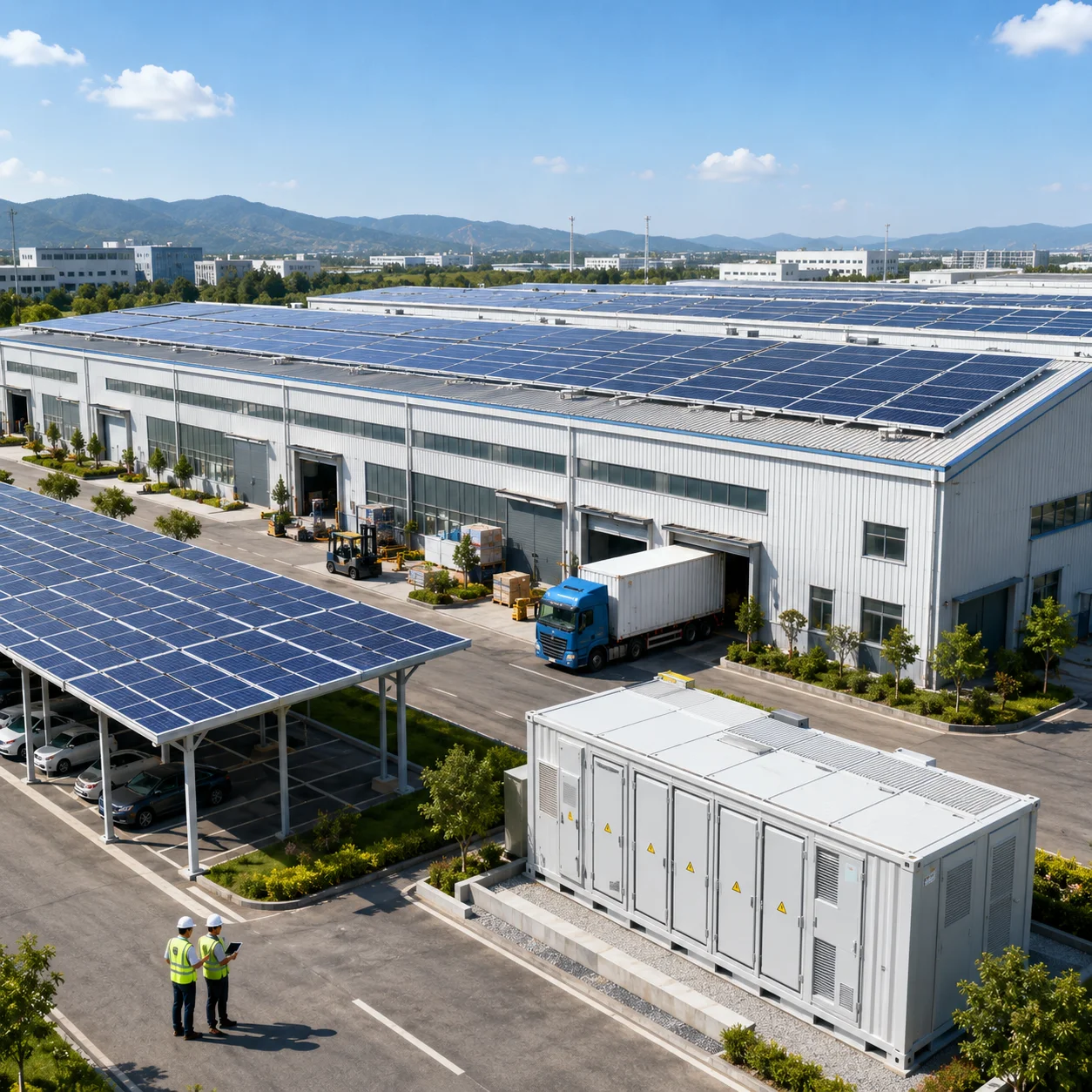
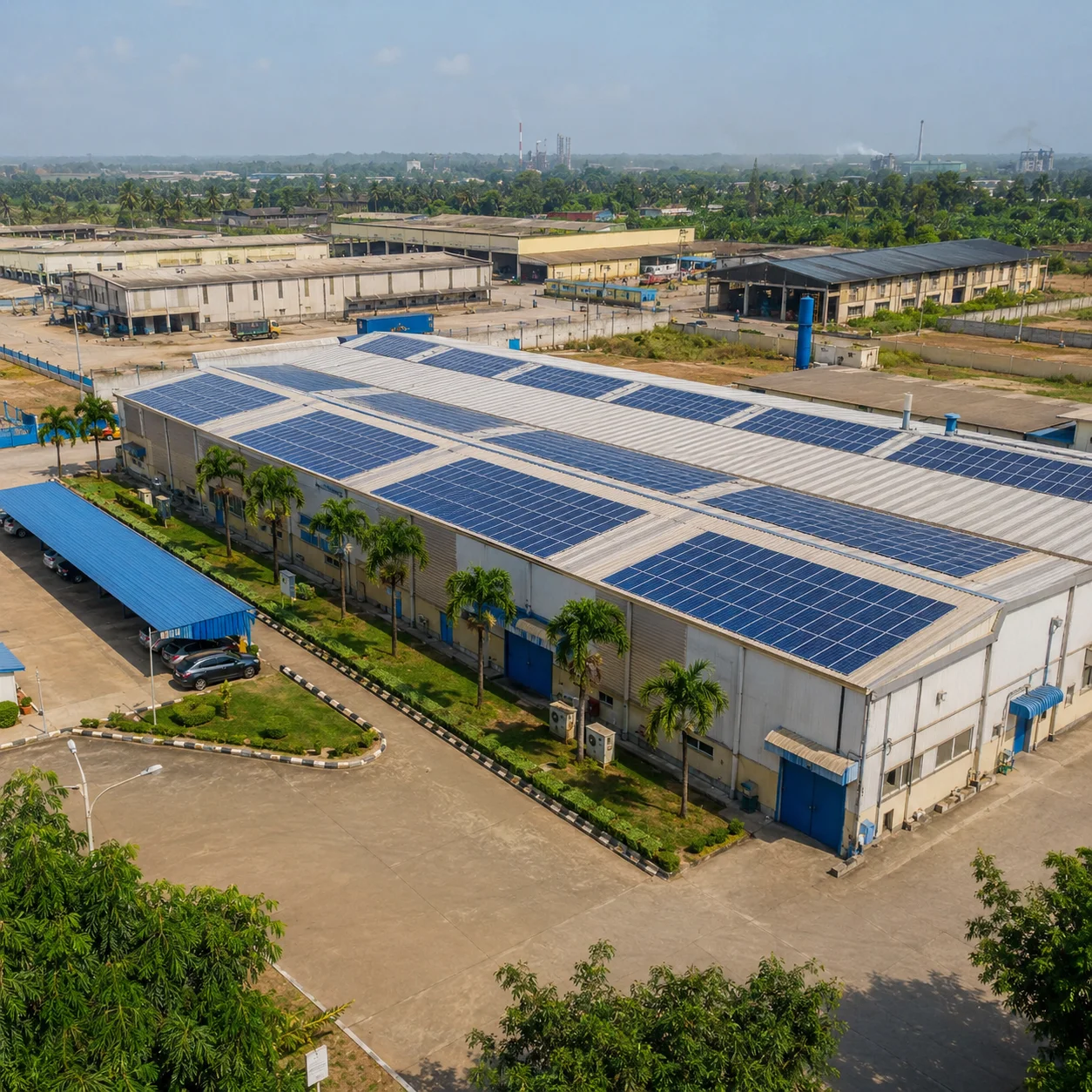
Commercial Solar Power Solutions for Businesses & C&I Projects
At Mars Solar, we know a commercial solar project is not simply about putting more panels on a roof or adding a larger battery. The real question is whether the system matches how the site actually uses power. A factory may have heavy daytime loads, a hotel may need backup through repeated outages, and another facility may already depend on a diesel generator every day. We start with the load profile, grid condition, operating hours, backup requirement and available installation space, then configure the solar capacity, inverter or PCS, battery storage and control logic around the project—so you are not paying for an oversized system or discovering compatibility problems after the equipment arrives.
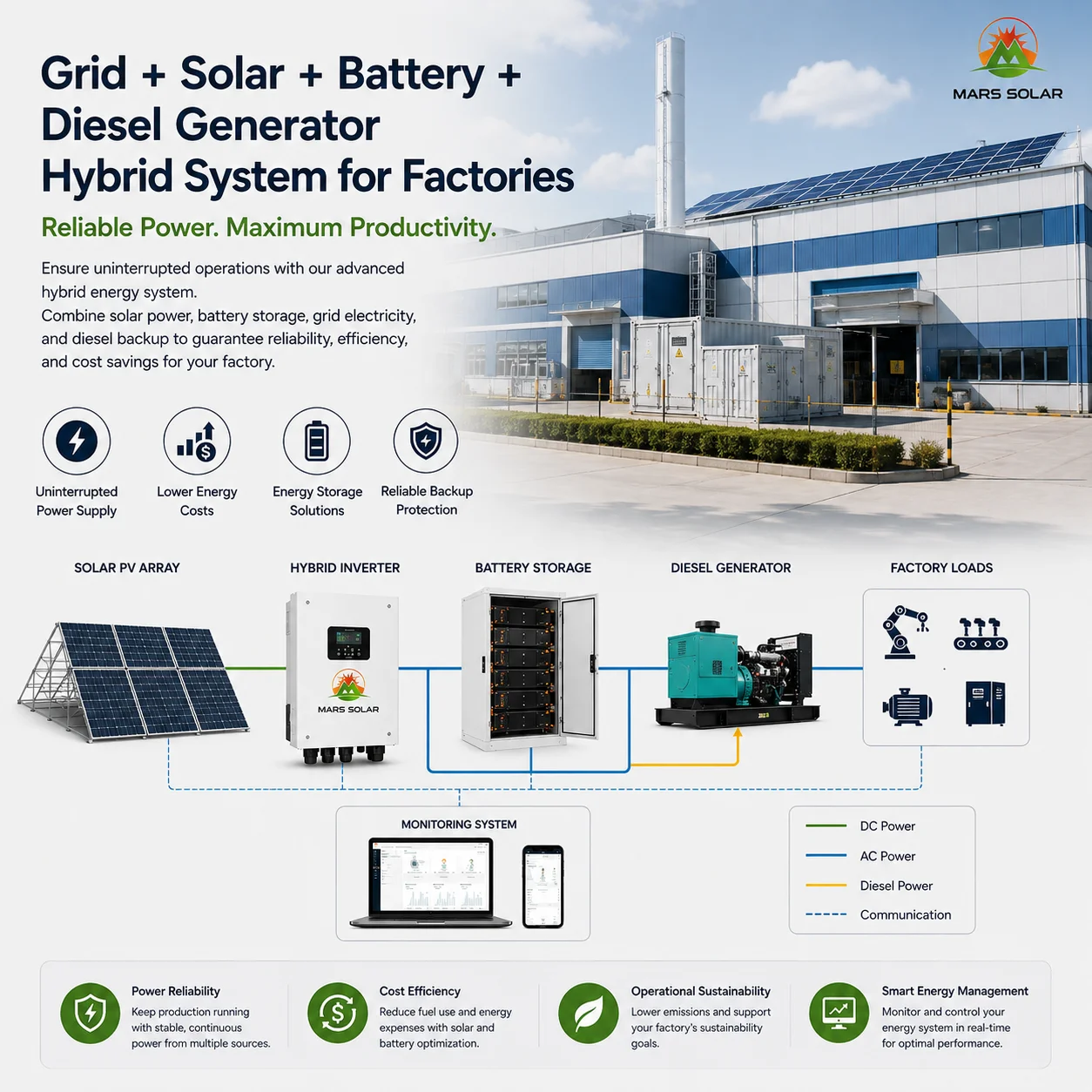
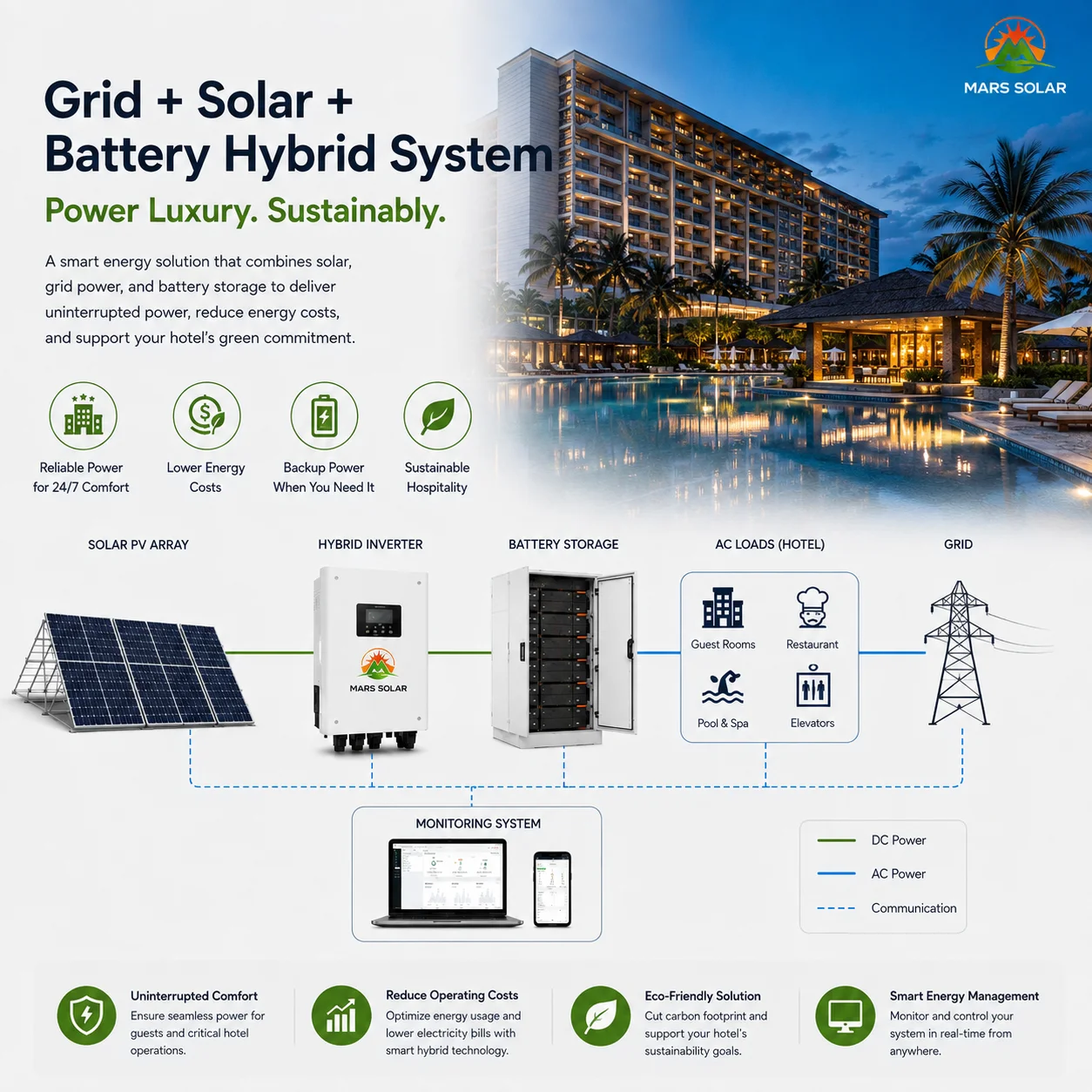
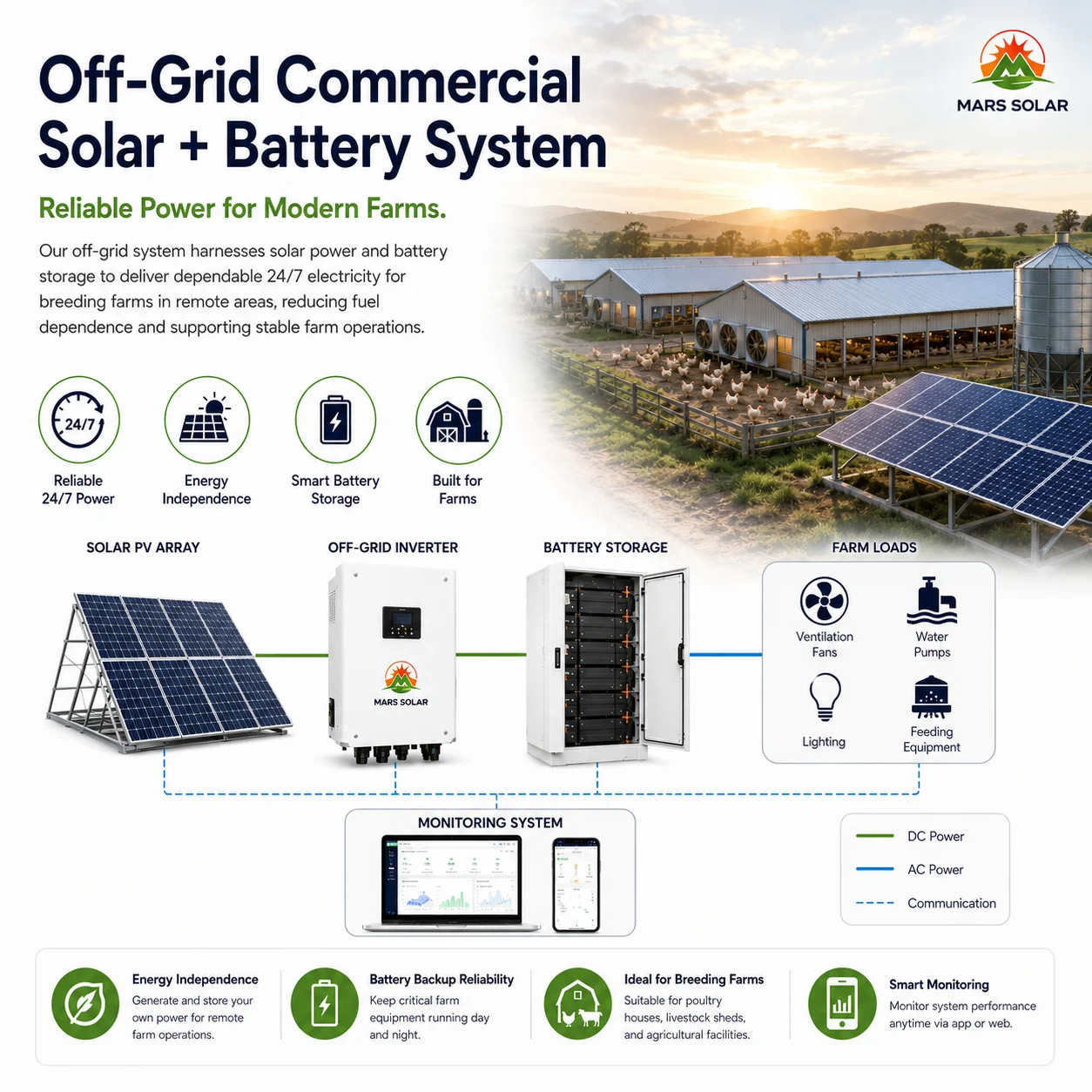
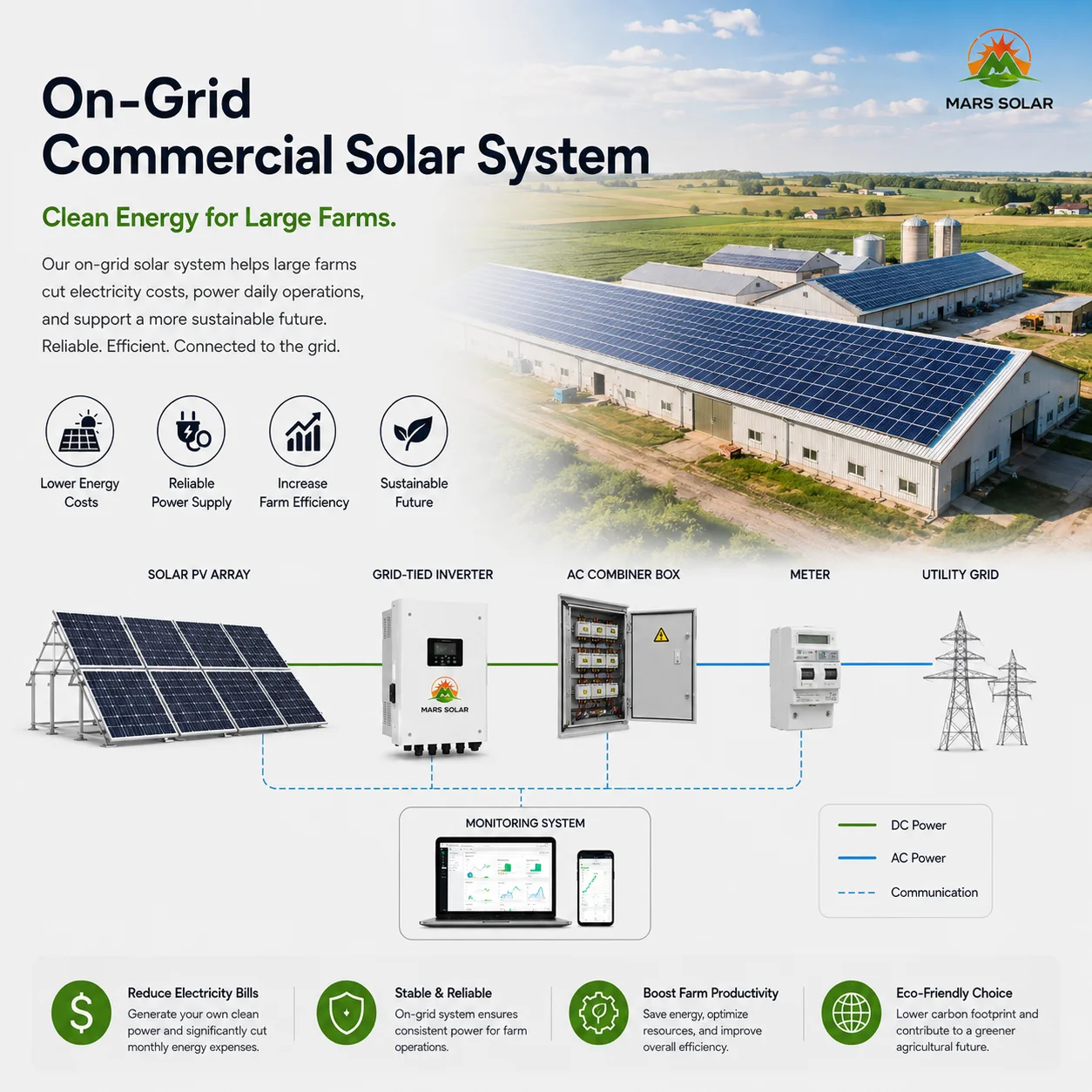
We support four practical commercial power architectures: On-Grid Commercial Solar Systems for businesses mainly looking to reduce daytime electricity costs, Grid + Solar + Battery Hybrid Systems for sites that need both savings and backup power, Grid + Solar + Battery + Diesel Generator Hybrid Systems for facilities dealing with frequent outages or high generator fuel costs, and Off-Grid Commercial Solar + Battery Systems for remote sites without dependable utility power. We do not push every project into the same package. The right architecture depends on when the load occurs, how reliable the grid is, how long backup is needed and whether an existing generator should remain part of the system.
Whether you are preparing an EPC quotation, developing a C&I energy project, expanding from electrical or generator work into solar, or sourcing a complete system for a factory, hotel, warehouse, farm, school or clinic, we help turn the requirement into a supply-ready solution. We coordinate the solar modules, inverter or PCS, lithium battery storage, BMS, EMS, protection, switching, monitoring and other required equipment together with the BOM and technical documentation. That gives you a clearer system to quote, procure and install—and reduces the risk of solving one energy problem only to create another during project delivery.
At Mars Solar, we know the real challenge is not simply adding solar panels and batteries to a diesel generator. The difficult part is making the whole power system work together under real site conditions. Your grid may fail several times a day, diesel costs may already be too high, or the battery and generator may need to support critical loads for different periods. We configure the solar capacity, battery storage, inverter or PCS, EMS and generator control around your actual load profile, grid availability and backup priorities—so you can reduce unnecessary generator runtime, avoid equipment compatibility problems and keep the project reliable without oversizing the system.
We support four practical system architectures: Off-Grid Solar + Battery + Diesel Backup Systems for sites without dependable utility power, Solar + Battery + Diesel Fuel-Saving Hybrid Systems for facilities already relying heavily on generators, Grid + Solar + Battery + Diesel Hybrid Backup Systems for commercial sites affected by frequent grid outages, and Solar + Battery + Diesel Microgrid Systems for larger remote or independent power projects. We do not force every project into the same standard package. We look at how the site actually uses power and then decide when solar should carry the load, when the battery should charge or discharge, and when the diesel generator should start.
Whether you are preparing an EPC quotation, adding solar to your generator business, developing a C&I energy project, or trying to reduce diesel dependence at a factory, hotel, farm, warehouse, school or clinic, we help turn the requirement into a supply-ready system. We coordinate the solar equipment, lithium battery storage, bidirectional inverter or PCS, EMS, switching, protection, monitoring and generator interface together with the technical documents and export supply. This helps you quote faster, reduce integration risks and move from system design to installation with fewer surprises.

Grid + Solar + Battery Hybrid System
Grid + Solar + Battery + Diesel Generator Hybrid System
On-Grid Commercial Solar System
Off-Grid Commercial Solar + Battery System
Build Your Commercial Solar Project With a Team That Understands What Really Matters
If you already have a factory, hotel, warehouse, farm, commercial facility, EPC project, or customer waiting for a quotation, you are not simply looking for a few solar products. You need to know whether the system will keep the site running, whether the investment makes financial sense, whether all the equipment will work together, and whether the supplier can actually support the project from configuration to delivery. These are the questions we focus on before we recommend any system.
Power Reliability & Correct System Architecture
The first question we ask is not how many panels you want. It is how the site currently receives and uses power. A business with a stable grid needs a very different solution from a factory experiencing several outages every day, and a site already relying on diesel generators should not be designed like a normal grid-connected building.
We review grid availability, outage frequency, critical loads, generator use, backup requirements and operating hours before deciding whether the project is better suited to an on-grid, solar + battery hybrid, grid + solar + battery + diesel hybrid, or off-grid system. The goal is simple: keep the loads that matter running without adding equipment the project does not actually need.
Energy Cost Reduction & Project ROI
A commercial solar system should solve a business problem, not just produce electricity. We look at how much energy the site uses, when that energy is consumed, what the customer currently pays for grid electricity, and how much diesel is already being burned.
From there, we can decide where solar should replace grid consumption, when battery storage makes sense, and whether reducing generator runtime creates enough value to justify the additional investment. We do not treat ROI as one fixed number. It depends on the actual load profile, electricity tariff, diesel cost, solar generation and operating strategy of the project.
System Sizing, Compatibility & Technical Integration
This is where many commercial projects become difficult. Solar modules, inverters, batteries, PCS, BMS, EMS and generators can all be individually good products and still create problems if they are not sized and integrated correctly.
We look at peak load, daily energy consumption, three-phase requirements, battery capacity, inverter or PCS power, communication, backup duration and future expansion before building the BOM. For hybrid projects, we also consider how the grid, battery and generator should interact rather than leaving the local installer to solve the operating logic after shipment.
Mars Solar’s current system portfolio includes lithium battery storage, industrial-grade BMS, bidirectional inverter capability, EMS and automatic generator/grid start-stop functions, which supports this kind of integrated commercial power architecture.
Project Delivery, Technical Support & Supply Reliability
A system can look correct on paper and still become difficult to deliver if the BOM is incomplete, documents arrive late, products do not match the approved configuration, or the installation team does not understand how the system is intended to work.
That is why we support the project beyond product selection. We help coordinate the equipment list, technical documents, production, testing, export supply and installation guidance so your local EPC or engineering team has a clearer path from quotation to commissioning. Mars Solar’s catalog describes a project process from Customer Inquiry and Demand Analysis through Design & Production, Testing & Delivery, Installation Guide and Project Acceptance, and states that equipment undergoes a 72-hour full-load test before dispatch.
Our goal is not to make every project look complicated. It is to remove the problems that usually appear too late. If you can provide the real load, grid conditions, backup requirements and project environment, we can help turn that information into a commercial solar system that is easier to evaluate, quote, supply and deliver.

More Than a Commercial Solar System Supplier
At Mars Solar, we know a commercial solar project is not successful because we shipped more panels, batteries or inverters. It is successful when the system fits the real load, improves the customer’s energy economics, can be installed by the local team, and performs the way you promised. That is why we work from the project requirement first, then coordinate the solar modules, inverter or PCS, battery storage, BMS, EMS, protection, switching and monitoring into a practical supply solution.

Win Projects Faster
When your customer is waiting for a proposal, slow system sizing and repeated supplier coordination can cost you the opportunity. We help organize the load profile, peak demand, grid condition, backup requirement, available roof or land area and battery needs into a clearer system configuration and BOM. This gives your team a stronger technical basis for quotation and helps you move from inquiry to proposal without rebuilding the solution from several separate suppliers.
Improve Your Project Economics
The lowest equipment price does not always create the best commercial result. Oversized batteries, unnecessary backup capacity, poor solar utilization, missing accessories and separate shipments can quickly increase total project cost. We look at what the site actually needs before finalizing the system, so you can control equipment cost more clearly while still protecting power reliability, future expansion and the customer’s expected ROI.
Protect Your Margin and Reputation
Most expensive project problems appear after equipment reaches the site. If the inverter, battery, PCS, BMS, EMS, protection and load requirements are not considered together, installation and commissioning can become slower and after-sales costs can increase. We coordinate the key system interfaces and technical requirements before delivery, helping your local engineering team install with fewer surprises and giving your customer a more reliable result.
Mars Solar’s current project process covers demand analysis, system design, production, testing, delivery and installation guidance, and the catalog states that equipment is subjected to a 72-hour full-load test before dispatch.
Grow With One Commercial Solar Partner
Your first project may be an on-grid factory system. The next may require battery backup, diesel integration, or a fully off-grid commercial solution. We support different commercial solar architectures without forcing every project into one standard package. As your project pipeline grows, you can keep one partner for system configuration, equipment coordination, technical documents and export supply instead of rebuilding the supply chain every time a new opportunity comes in.
Build Your Commercial Solar Project with More Support Than You Expected
At Mars Solar, you may first contact us because you need a price for a commercial solar system. But once we understand the project, the discussion usually goes beyond equipment cost. We look at how the site actually uses electricity, how reliable the grid is, which loads cannot stop, whether battery storage is really needed, and whether an existing generator should remain part of the system. Our goal is not simply to send a quotation—it is to help you turn the requirement into a clearer project that your team can actually quote, procure and deliver.
We Start With the Business Power Problem
Two factories with the same 300kW peak load can need completely different solutions. One may have a stable grid and only want to reduce daytime electricity costs. Another may experience daily outages, while a third may already run diesel generators for several hours every day.
We therefore review the load profile, daily consumption, grid condition, backup requirements, operating hours, available roof or land area and generator information before recommending the system. From there, we can decide whether the project is better suited to on-grid solar, solar + battery hybrid, grid + solar + battery + diesel hybrid, or an off-grid system instead of forcing every site into the same package.
More Than Panels, Inverters and Batteries
A commercial solar system only performs well when the main components are sized and considered together. PV capacity, inverter or PCS power, battery storage, BMS, EMS, protection, switching and monitoring all affect how the system operates.
We help organize these parts into a clearer system scope and BOM before production, so your team can understand what is included, what needs to be prepared locally, and how the main equipment is expected to work together. This helps reduce oversizing, missing accessories and compatibility questions that otherwise tend to appear when installation has already started.
A More Connected Route From Quotation to Delivery
We know a project becomes difficult when system design, pricing, technical confirmation, production and shipment are handled as separate conversations. Small changes made early can easily become expensive problems later.
That is why we keep the process connected—from requirement review and preliminary configuration through quotation, technical confirmation, production coordination, testing, packing, delivery and installation guidance. Mars Solar’s current project process follows this same path from Customer Inquiry and Demand Analysis to Design & Production, Testing & Delivery, Installation Guide and Project Acceptance, with equipment undergoing a 72-hour full-load test before dispatch.
Support That Makes the Next Project Easier
The real value of a good first commercial project is that the next one should become easier.
Once we understand the voltage standard, typical loads, grid conditions, backup expectations and installation practices in your market, future configurations can become faster and more repeatable. An EPC may start with a factory project, a generator company with a hotel hybrid system, or an energy company with a warehouse battery project. The next opportunity may require a different architecture, but you do not have to rebuild the supply chain from zero.
Our goal is not simply to complete one shipment. We want to help you build a more reliable way to evaluate, quote, source and deliver commercial solar projects—so you can respond to customers faster, control technical risk more clearly and move into the next project with less unnecessary work.
Commercial Solar Power Solutions Video Insights from Mars Solar
FAQs Commercial Solar Power Solutions
For your convenience, we’ve gathered the most commonly asked questions about our Commercial Solar Power Solutions. However, should you have any further queries, please don’t hesitate to reach out to us.
1. Are you a commercial solar equipment supplier or a complete system partner?
We work as a system supply partner rather than only selling individual solar products. Depending on the project, we can coordinate solar modules, grid-tied or hybrid inverters, lithium battery storage, BMS, EMS, bidirectional PCS, switching, protection and monitoring under one system scope. For projects that still rely on generators, the system can also be designed around grid and diesel-generator interaction. Our goal is to help you source a workable commercial power system instead of leaving your team to combine unrelated equipment after purchase. Mars Solar’s current catalog specifically covers inverter, lithium battery, EMS and generator/grid control functions.
2. What types of commercial solar systems can you support?
We mainly work around four practical architectures: On-Grid Commercial Solar Systems, Grid + Solar + Battery Hybrid Systems, Grid + Solar + Battery + Diesel Generator Hybrid Systems, and Off-Grid Commercial Solar + Battery Systems. The right option depends on whether the project mainly needs lower electricity costs, backup power, diesel reduction or full energy independence. We do not recommend adding batteries or generators simply because they are available—the system should match how the site actually uses power.
3. What information do you need before recommending a system size?
You do not need to choose a system from a catalogue first. We normally start with the site’s peak load, daily electricity consumption, operating hours, three-phase or single-phase requirements, grid availability, outage frequency, critical loads, required backup time, available roof or land area and any existing generator or solar equipment. For industrial loads, equipment lists and operating schedules are also useful. The more accurate the site information is, the easier it is for us to avoid unnecessary oversizing.
4. How do you decide whether a project needs battery storage?
Battery storage should solve a specific operating problem. If the grid is reliable and the main objective is reducing daytime electricity consumption, an on-grid system may be more economical. If the business experiences outages, needs critical-load backup, wants to increase solar self-consumption, or relies heavily on diesel generation, storage may create much more value. We look at when electricity is consumed and what happens when solar or grid power is unavailable before recommending the battery capacity.
5. Can your commercial solar system keep the business running during a grid outage?
Yes, if backup operation is included in the system architecture. A conventional grid-tied solar system normally shuts down when the utility grid fails, so backup power requires a different configuration using battery storage, suitable inverter or PCS functions, switching and clearly defined backup loads. We therefore confirm which equipment must remain powered and for how long before sizing the backup system. This is usually much more practical than trying to back up every load in the facility.
6. Can you integrate an existing diesel generator with solar and battery storage?
Yes. This is particularly relevant for factories, hotels and other facilities where generators already operate during frequent outages. We can configure the system so solar supplies as much of the normal demand as practical, batteries support the load when needed, and the generator remains available when battery SOC becomes low or an outage continues. Mars Solar’s catalog includes EMS functions and automatic diesel-generator/grid start-stop control, which supports this type of hybrid operating strategy.
7. Can the system handle motors, pumps, compressors and other industrial loads?
Yes, but we need to understand how those loads start and operate. A motor may draw considerably more power during startup than its normal running demand, and several machines starting together can change the inverter or PCS requirement significantly. We therefore review motor ratings, starting methods, simultaneous operation and the site’s peak demand instead of sizing the system only from the total nameplate load. This is especially important for factories, farms, pumping systems and other C&I projects.
8. Can you work with our local EPC or installation team?
Yes. In fact, this is often the most practical cooperation model for overseas commercial projects. We can support the system configuration, equipment scope, BOM, technical documents, production, export supply and installation guidance, while your local EPC or engineering team handles site surveys, civil works, permits, local electrical installation and long-term on-site service. Mars Solar’s published project process already includes demand analysis, design and production, testing and delivery, installation guidance and project acceptance.
9. What testing and technical documents can you provide before shipment?
The exact documentation depends on the equipment and project scope, but we can coordinate product datasheets, manuals, system information, packing details and technical guidance around the supplied system. Mars Solar’s catalog states that equipment undergoes a 72-hour full-load test before dispatch and also highlights modular electronic design, intelligent management, battery monitoring and remote system visibility. For larger or more customized projects, we confirm the required technical documents before production rather than waiting until shipment.
10. What are the MOQ, lead time and delivery arrangements for a commercial solar project?
Commercial solar projects are usually quoted around the actual system rather than one universal package. Battery capacity, inverter or PCS rating, customization, project voltage, accessories and component availability can all affect production and delivery planning. Mars Solar’s current catalog does not publish one fixed MOQ or lead time for every commercial system, so we confirm these after reviewing the project configuration. We can coordinate export packing and delivery of the supplied equipment, while local installation, permits and site works are normally handled by the customer’s local engineering team.

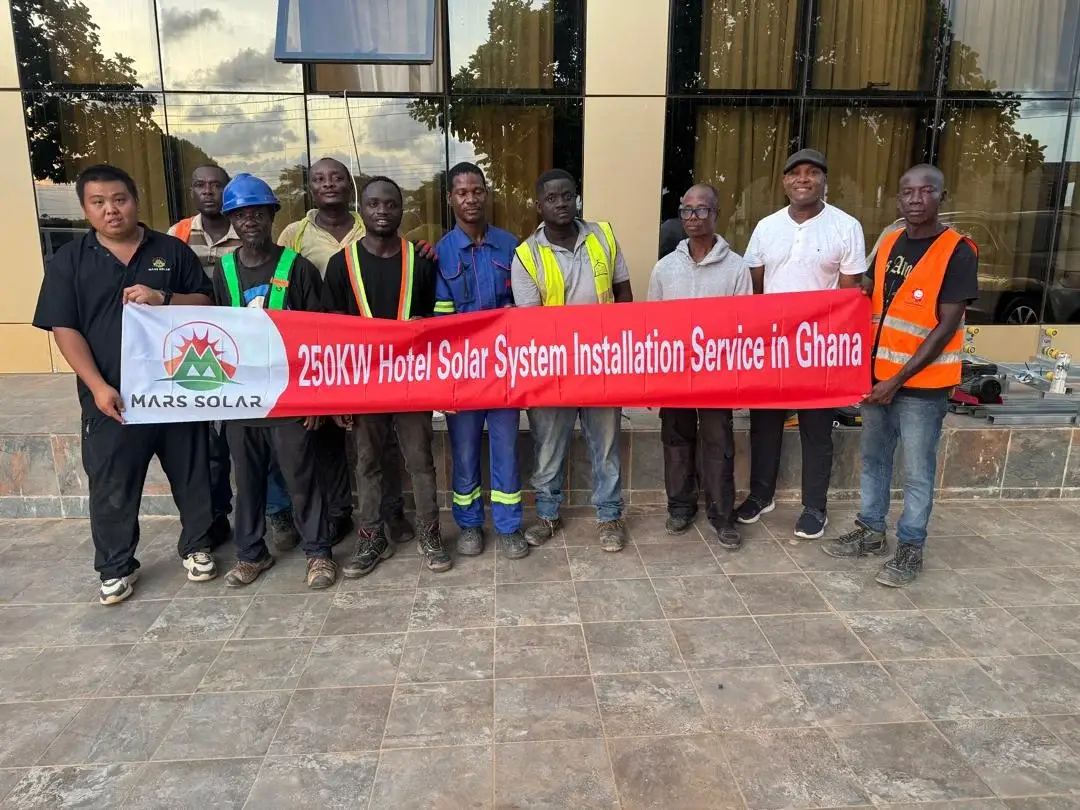
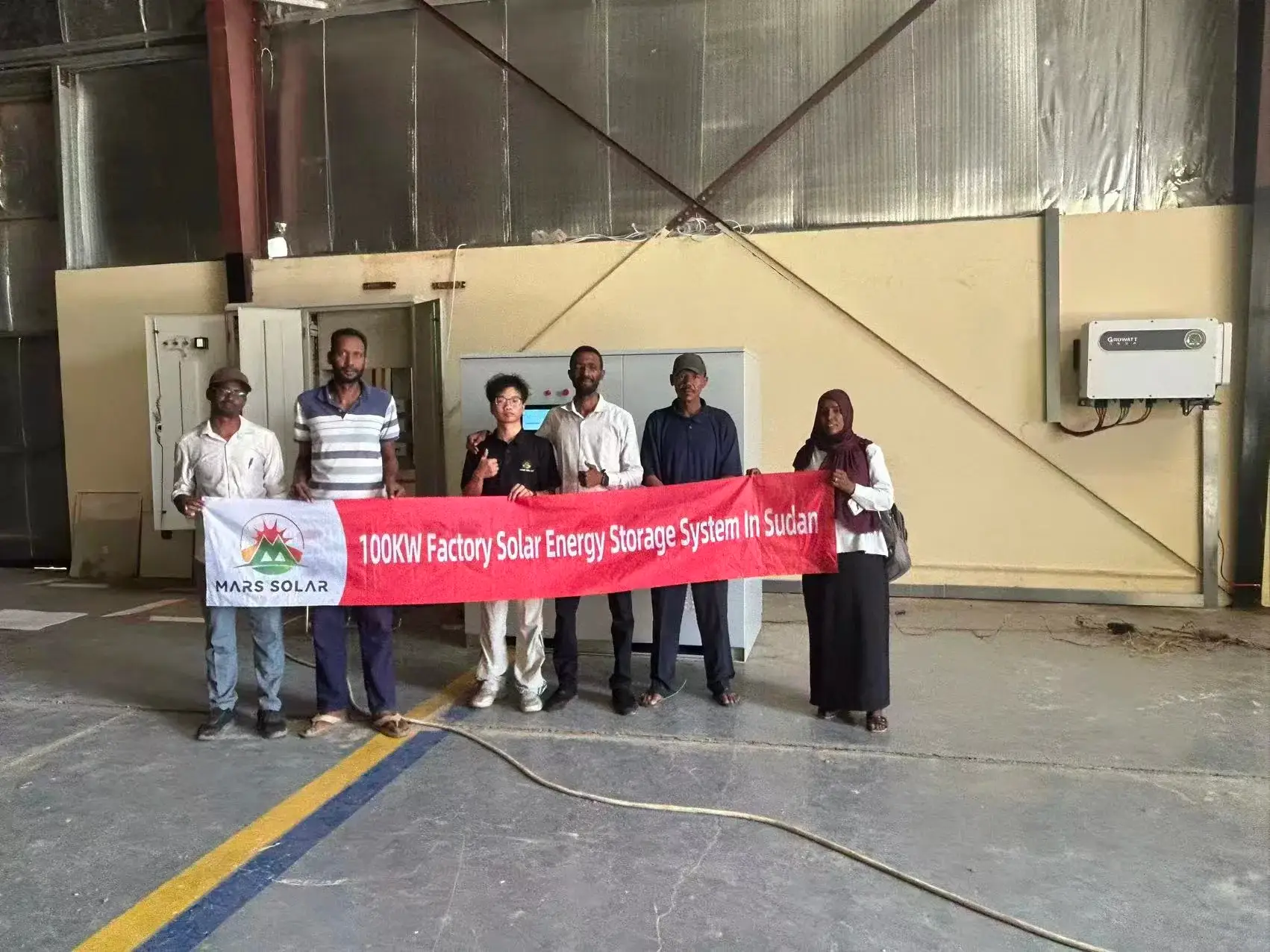
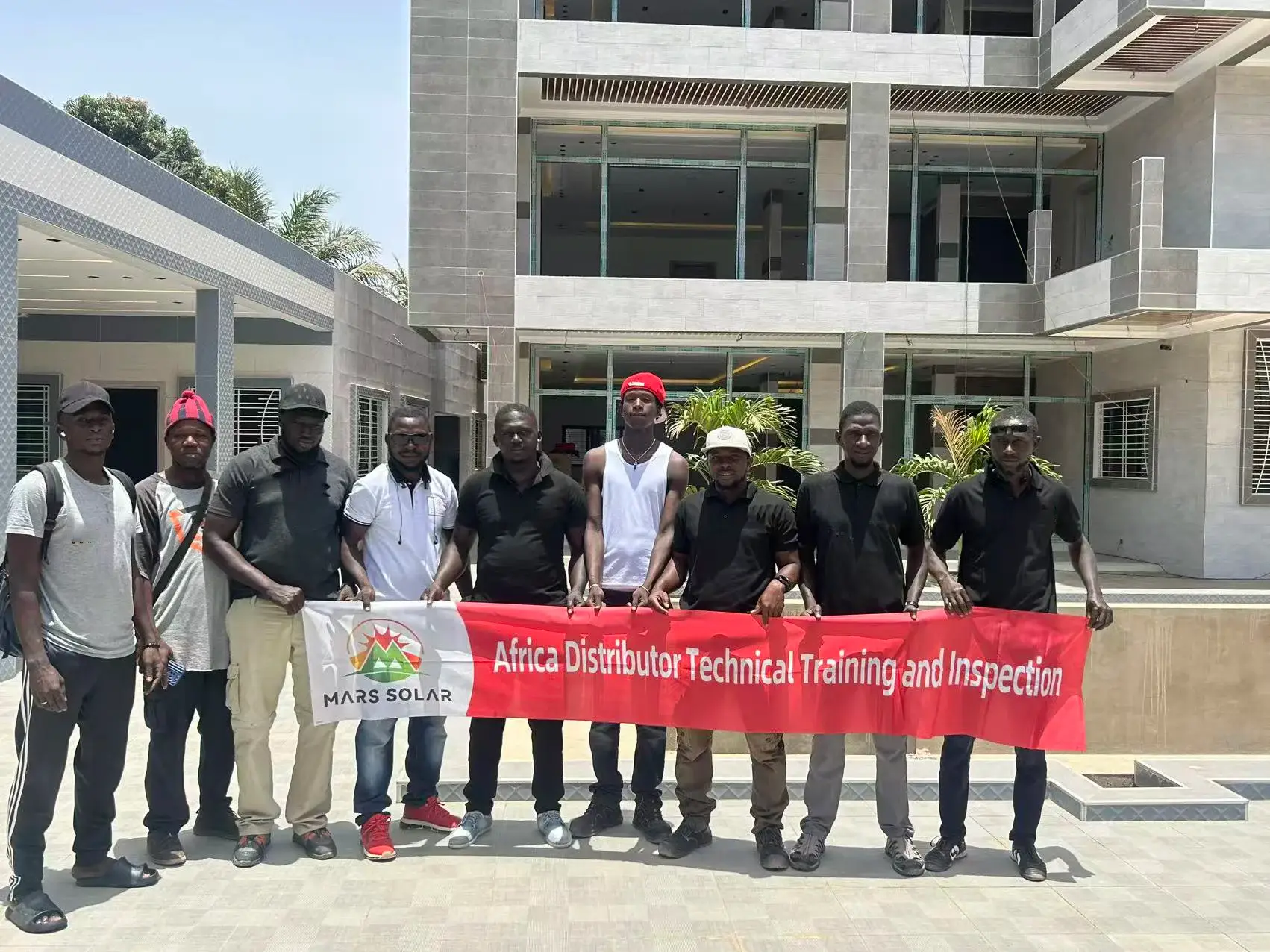
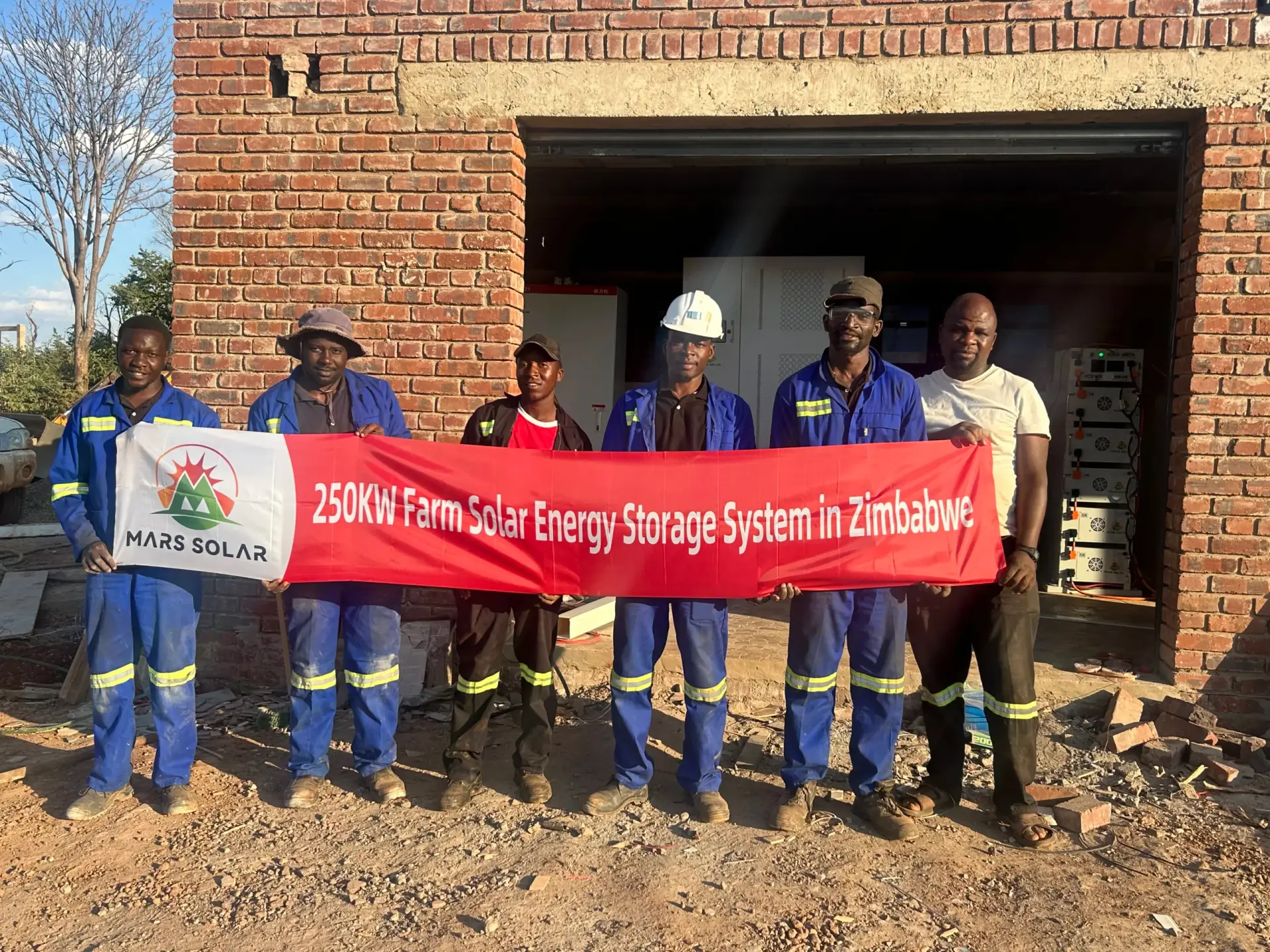

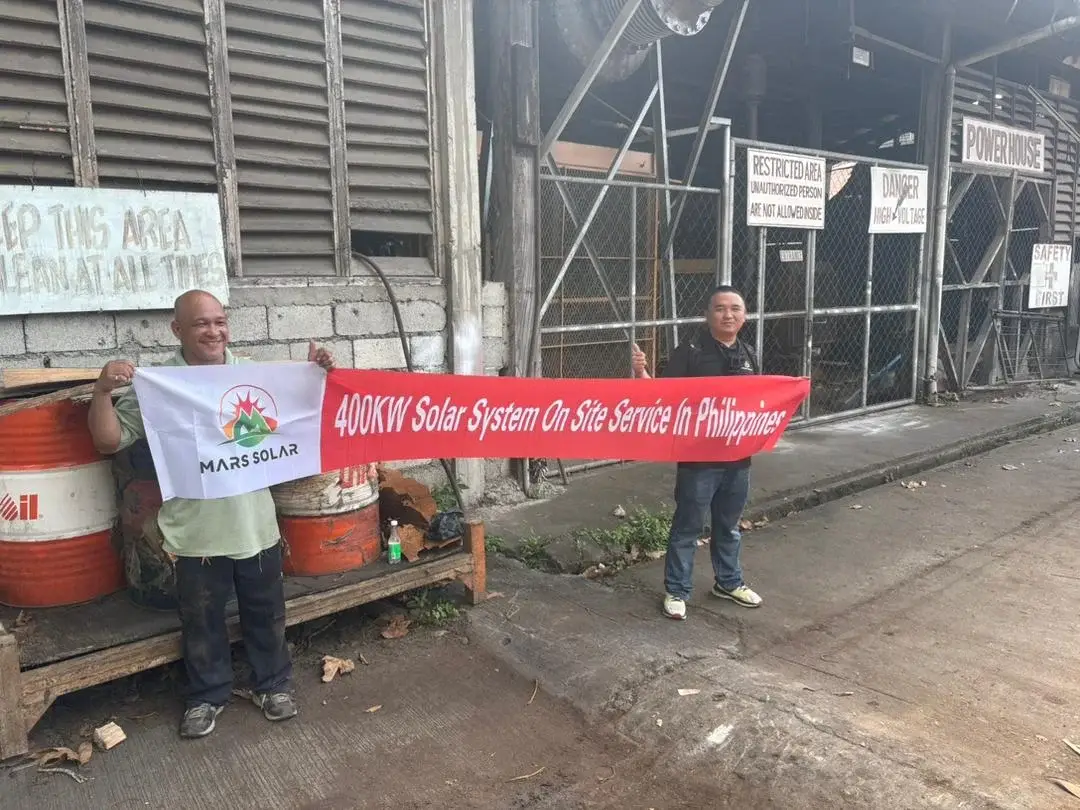
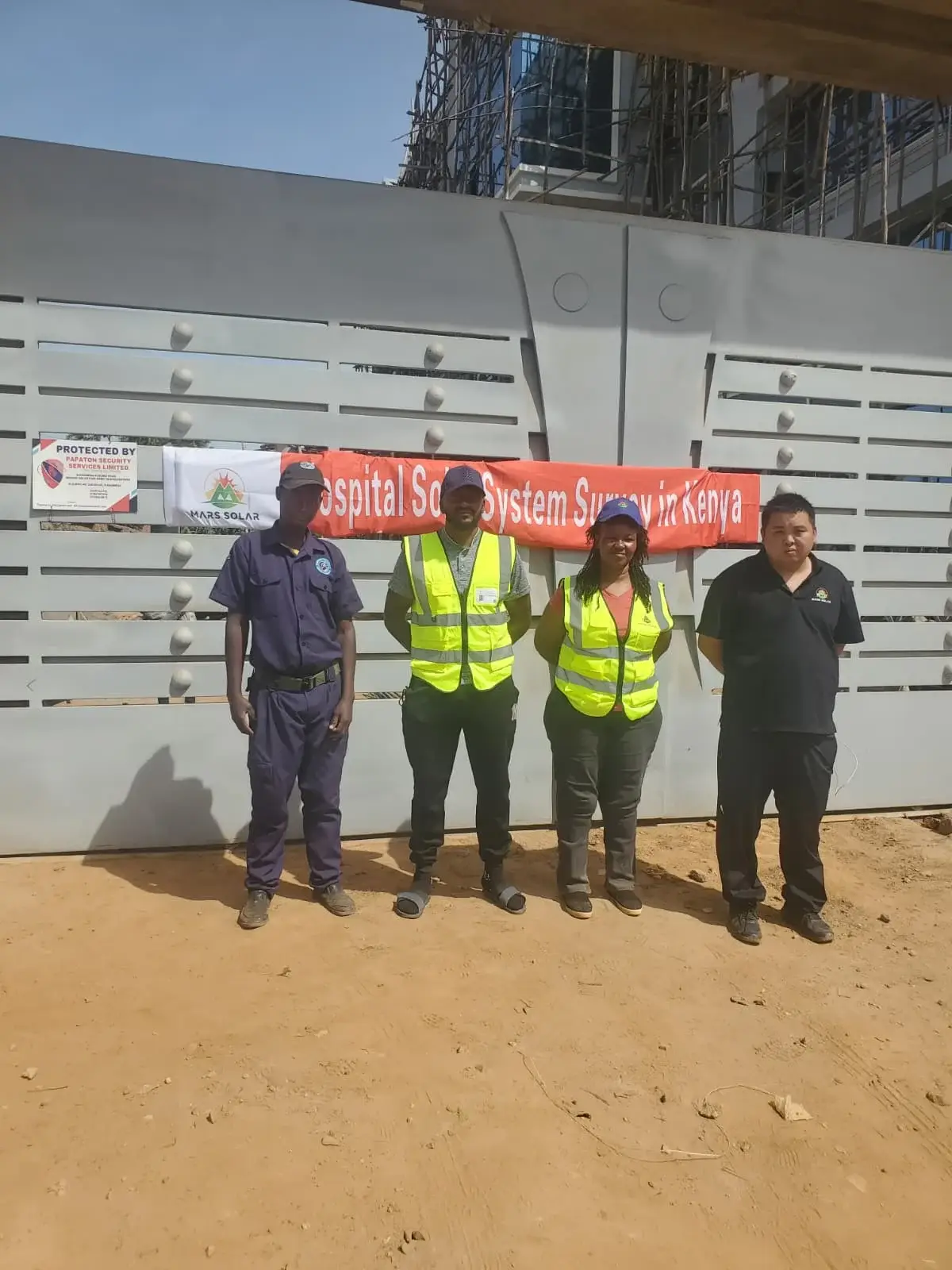
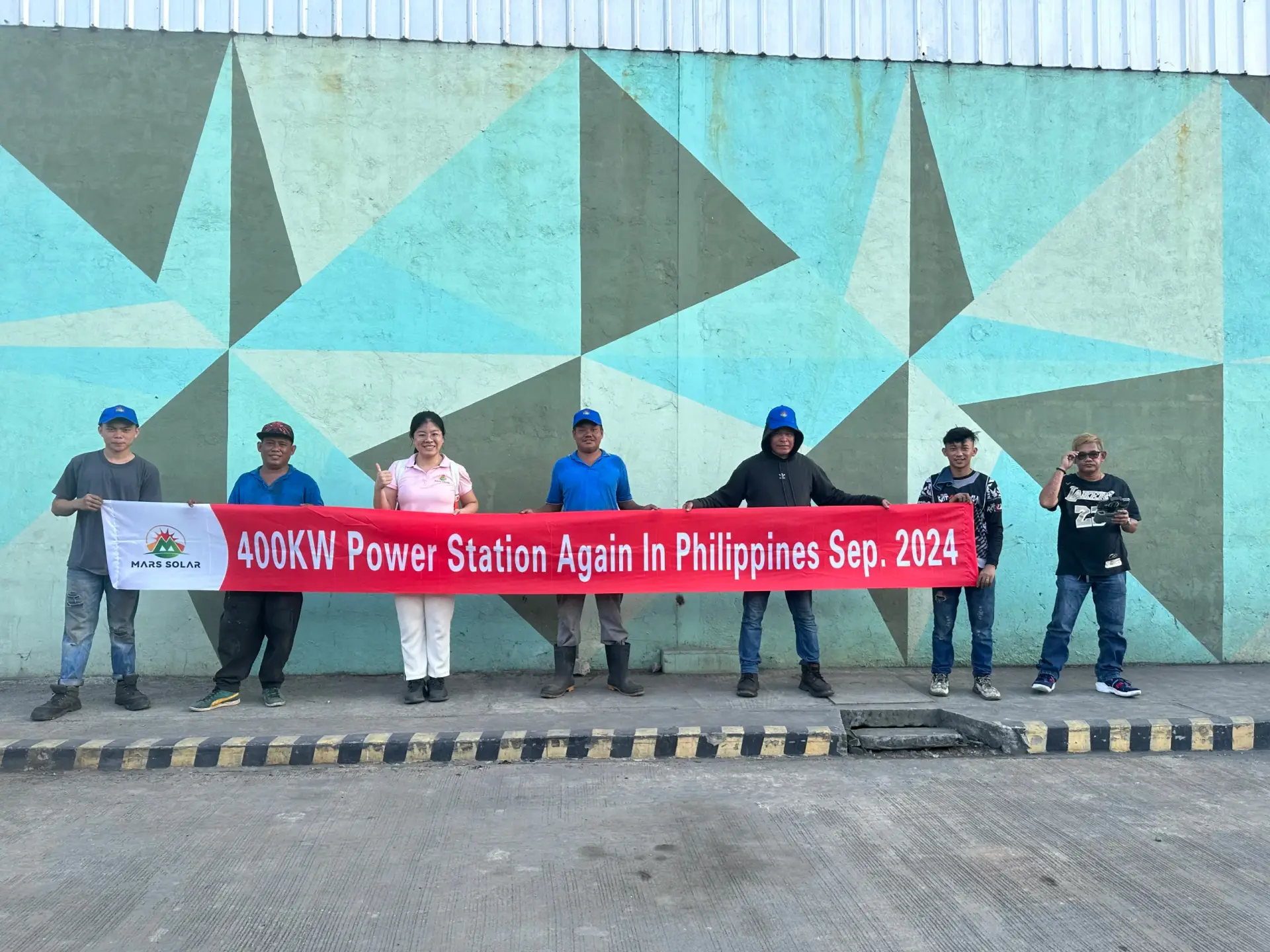
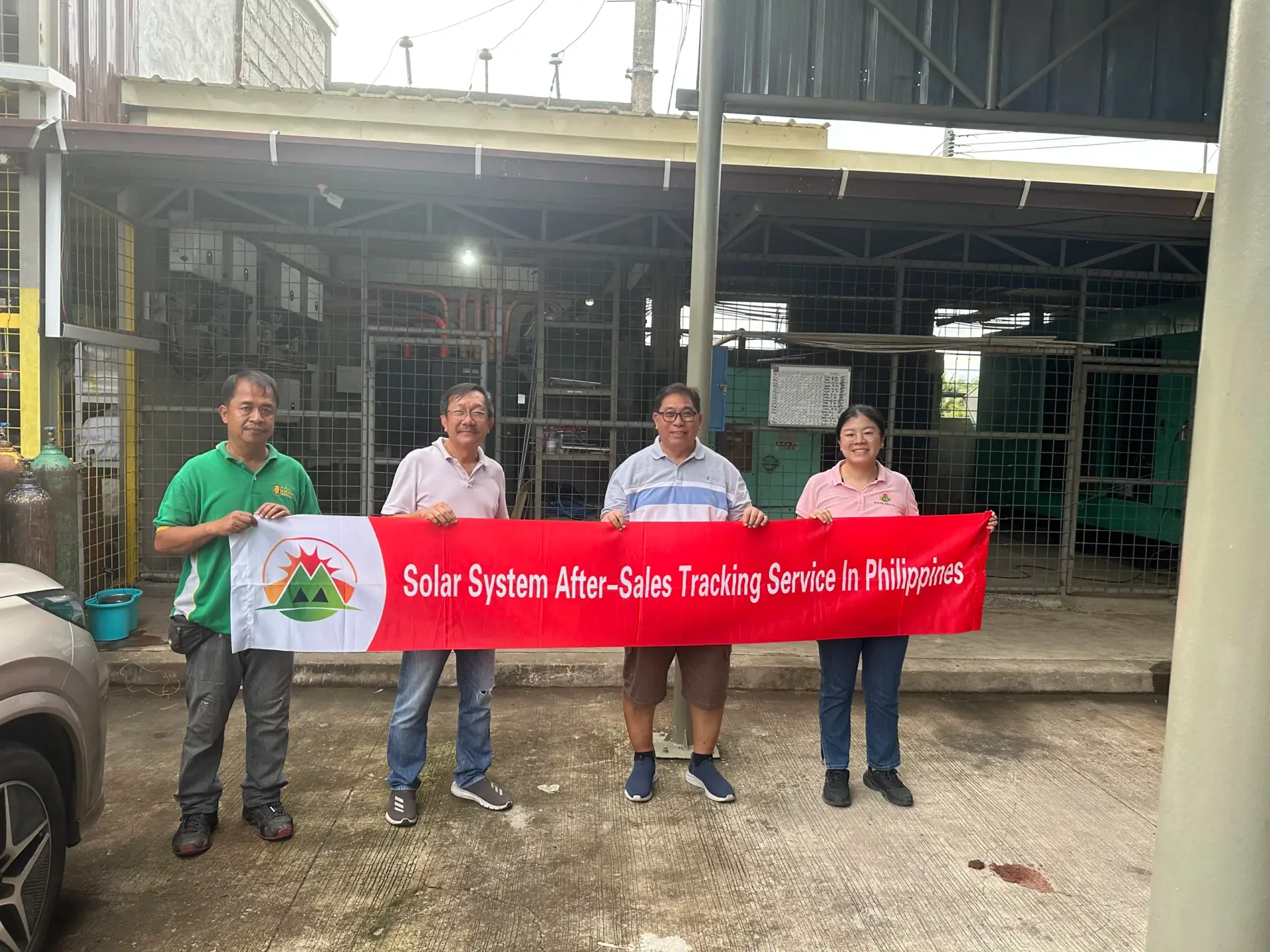
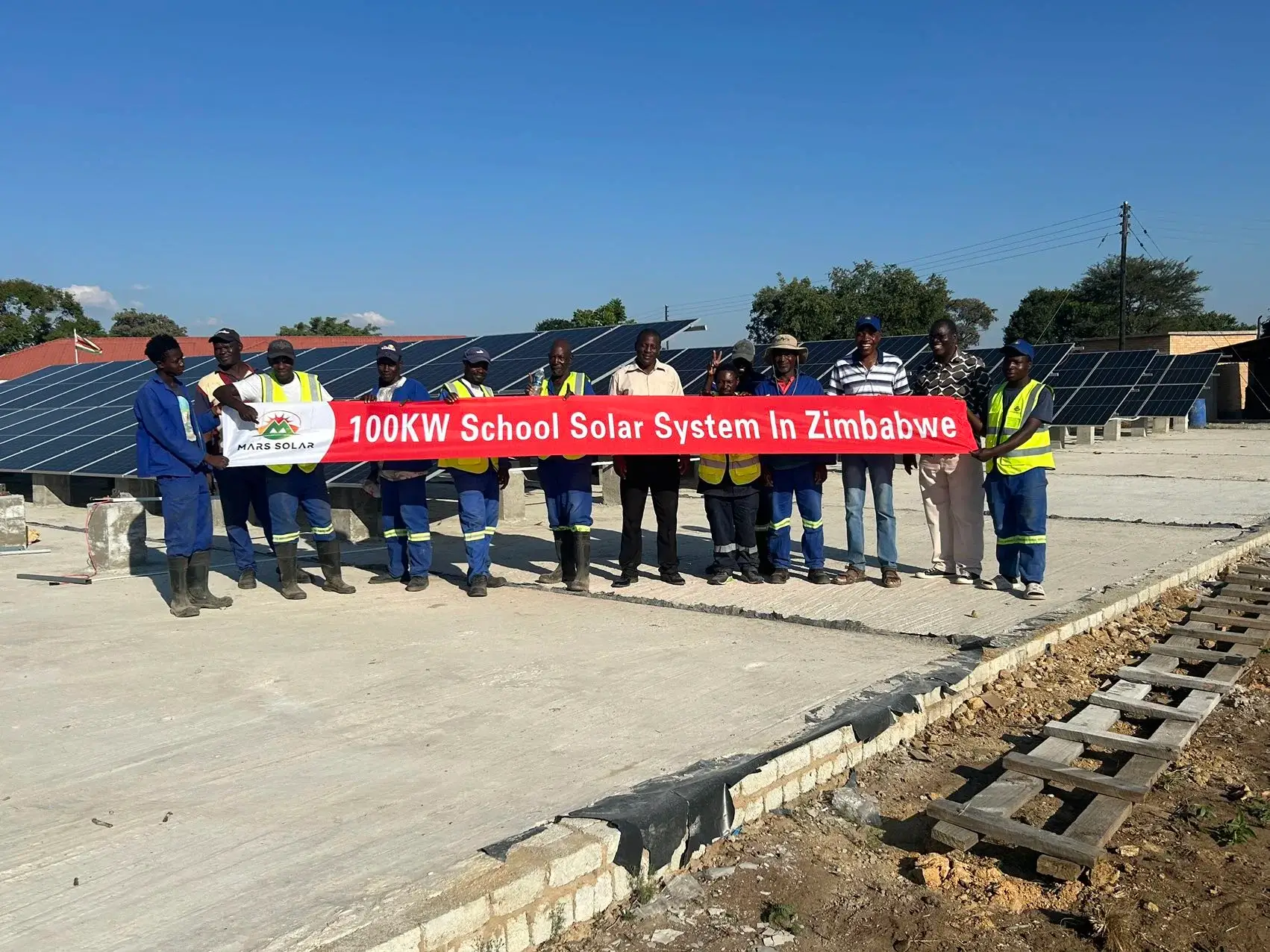
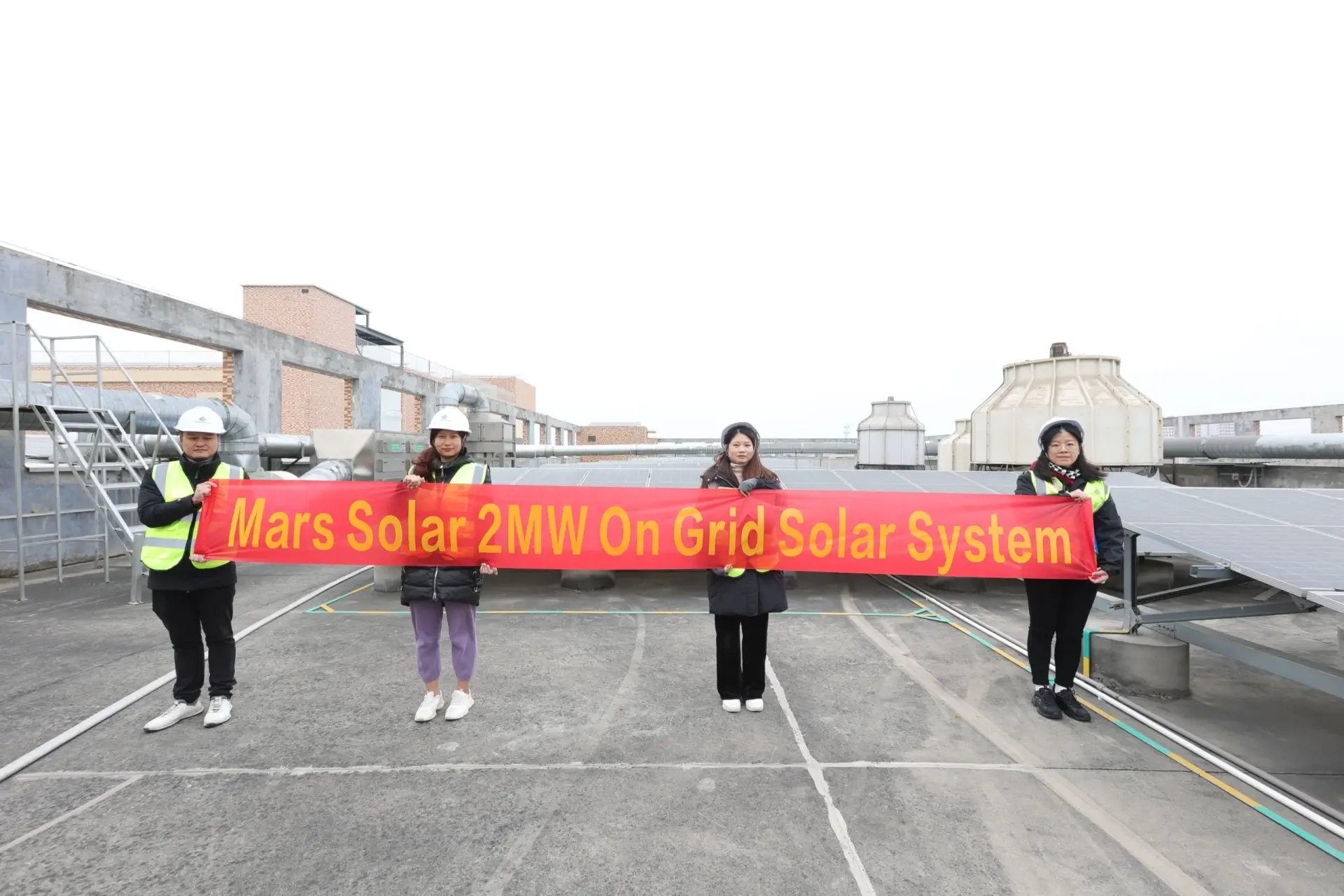
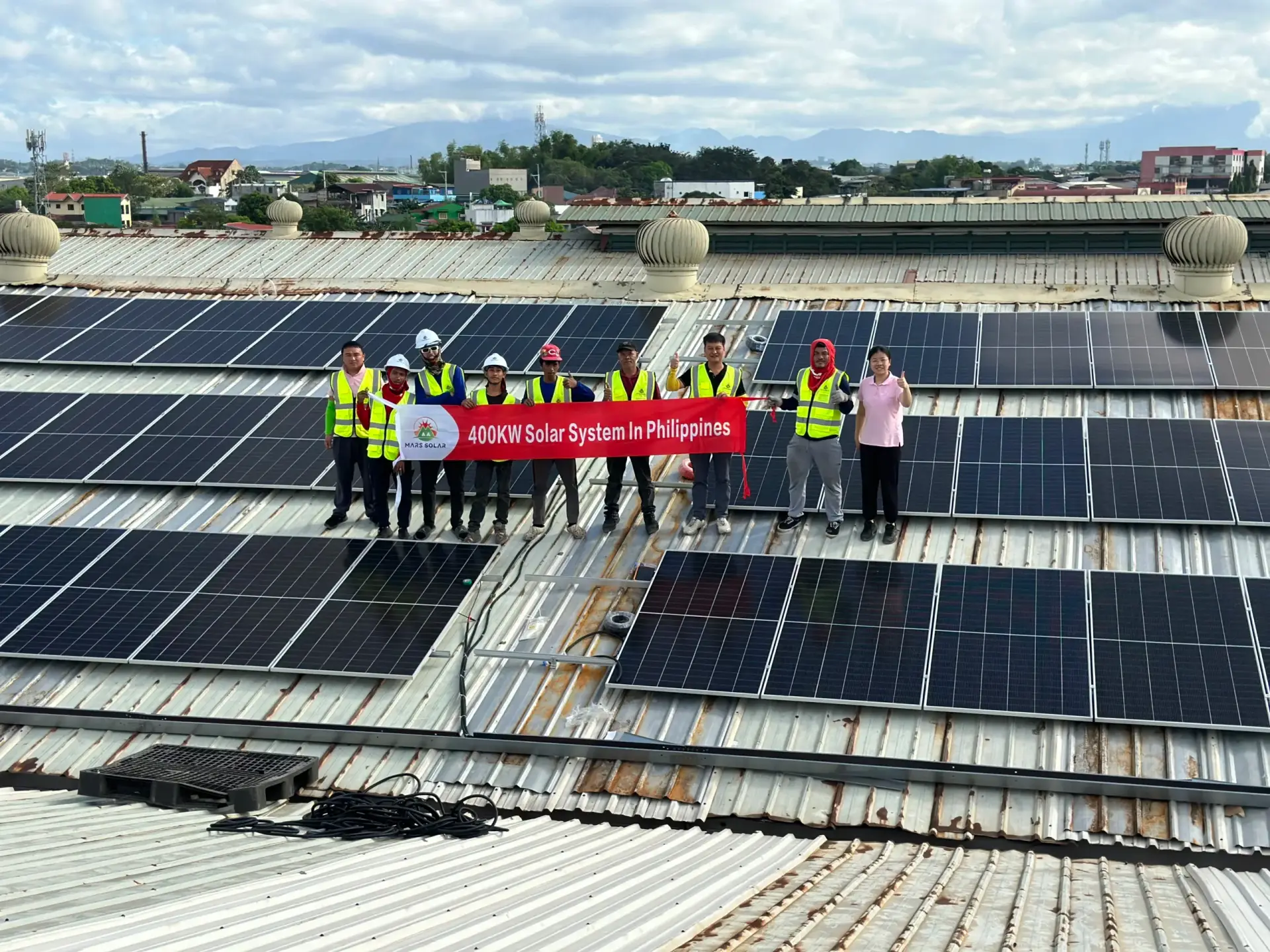
Mars Solar in Numbers
Industry Experience
Since 1000
Countries & Markets
0 +
Manufacturing Facilities
3000 ㎡
Technical & R&D Team
0 +
Systems Supplied or Supported
1500 +
Your Ultimate Guide to Commercial Solar Power Solutions for Businesses & C&I Project
If you’re planning a commercial solar project—whether it’s for a factory, hotel, warehouse, farm, commercial building, or a customer project you are preparing to quote—you’re not simply choosing solar panels and an inverter. You’re deciding how the site should use power for the next several years. The real value comes from matching the system architecture to the actual load, grid reliability, backup requirement, diesel use, and operating schedule. A well-designed project can reduce electricity and fuel costs while improving power reliability, but an oversized battery, the wrong inverter strategy, or poor load assumptions can quickly weaken the economics and create problems during installation.
Over the years, we’ve seen commercial solar projects become much more than straightforward grid-tied PV installations. More customers now need Grid + Solar + Battery, Solar + Battery + Diesel Hybrid, or fully Off-Grid solutions because their power problems are different. Some businesses are trying to reduce daytime grid consumption, while others are dealing with daily outages, expensive generator runtime, heavy industrial loads, or limited grid access. At Mars Solar, we’ve learned that the projects that move forward more smoothly are usually the ones where load data, critical loads, backup time, system compatibility, project cost, and local installation responsibilities are clarified before equipment is ordered—not after the system arrives on site.
This guide is built around what actually happens in commercial solar projects, from the first load discussion to system sizing, cost comparison, ROI evaluation, battery decisions, diesel-generator integration, supplier selection, and final delivery. We are not only explaining how the technology works; we want to show how the commercial and technical decisions connect in a real project. Whether you are an EPC preparing a customer proposal, an energy company developing a C&I project, an electrical or generator company expanding into solar, or a business owner evaluating your own facility, the goal is to help you understand what needs to be confirmed early so the project is easier to quote, finance, supply, install, and operate.
Table of Contents
How to Choose the Right Commercial Solar System: On-Grid vs Hybrid vs Diesel Hybrid vs Off-Grid
When businesses search for the “best commercial solar system,” the real question is usually not which technology is the most advanced. The real question is which power architecture fits the site’s actual operating conditions. A factory with stable utility power, a hotel experiencing several outages every day, a facility already running diesel generators for hours at a time, and a remote commercial site without usable grid access should not be designed around the same system. In real projects, the architecture decision comes before equipment selection because it determines how solar, the grid, batteries, generators, and critical loads are expected to interact. Once that operating logic is clear, decisions about PV capacity, inverter or PCS rating, battery size, control strategy, and equipment brands become much easier and much more defensible.
Start With the Grid Condition Before Thinking About Equipment
The first thing I normally look at is not the solar panel capacity but the condition of the utility grid. Grid reliability tells us whether the project is mainly an energy-saving project, a backup-power project, a diesel-reduction project, or an energy-independence project. If the grid is stable and the business mainly wants to reduce daytime electricity purchases, an on-grid commercial solar system is usually the most direct option. If outages are frequent and critical loads must continue operating, battery storage becomes more relevant. If the site already relies heavily on diesel generators, the generator should be treated as part of the existing power architecture rather than something that must automatically be removed. And if the grid is unavailable or too unreliable to depend on, the project needs to be designed as an off-grid or independent power system from the beginning. This is why two sites with the same 300kW peak demand can end up with completely different systems: one may only need PV and a grid-tied inverter, while another may require battery storage, PCS, EMS, switching, generator control, and a clearly defined backup strategy.
On-Grid Commercial Solar Is Best When Cost Reduction Is the Main Goal
An on-grid commercial solar system makes the most sense when the utility grid is relatively reliable and the customer’s main objective is reducing electricity costs during business hours. In this architecture, solar generation supplies part of the facility’s daytime demand while the grid covers any shortfall. For factories, warehouses, supermarkets, offices, and other sites with strong daytime consumption, this can be one of the most economical ways to reduce purchased electricity because the project does not need to carry the additional cost and complexity of a large battery system. The economics are usually driven by self-consumption: the more solar energy the business can use directly when it is generated, the stronger the financial result tends to be. The important limitation is that a conventional grid-tied solar system should not be assumed to provide backup power. When the utility grid fails, standard grid-connected inverters normally shut down for safety. So if uninterrupted operation is one of the real business requirements, simply increasing the number of panels will not solve the problem. The project needs to move toward a hybrid architecture instead.
Grid + Solar + Battery Works Better When Savings and Backup Both Matter
A Grid + Solar + Battery system becomes more appropriate when a business wants to reduce electricity costs but also needs some level of continuity during grid interruptions. This is common in hotels, clinics, schools, warehouses, commercial buildings, and factories where outages may not last all day but still disrupt production, refrigeration, lighting, communications, guest services, or other critical operations. The battery should not be treated as a generic add-on or sized according to a fixed ratio with the PV array. Its role needs to be defined first. In one project, the battery may mainly provide short-term backup during outages; in another, it may increase solar self-consumption or support nighttime loads; in a third, it may help reduce peak grid demand. The required battery capacity changes significantly depending on that objective. I also pay close attention to critical-load selection because backing up every connected load can make the project unnecessarily expensive. A commercial facility may have 400kW of total connected equipment but only 100kW that genuinely needs continuity. Separating critical and non-critical loads often produces a much more practical balance between reliability and project cost.
Grid + Solar + Battery + Diesel Generator Is Often the Most Practical Choice for Weak-Grid Sites
For businesses already dependent on diesel generators, the most realistic solution is often not to remove the generator completely, but to integrate it with solar and battery storage under a better operating strategy. In a factory, hotel, or industrial facility with frequent outages, solar can carry part of the daytime load, the battery can absorb excess generation and support short interruptions, the grid can be used whenever it is available, and the diesel generator can remain as backup for prolonged outages, high-load conditions, or low battery SOC. The value of this architecture does not come from simply adding more equipment. It comes from deciding when each source should operate and how they should support one another. In practice, many customers initially say they want to “replace the generator with solar,” but after reviewing generator runtime, outage duration, load profile, and backup expectations, the more economical solution is often to reduce generator operating hours rather than eliminate diesel entirely. A well-designed hybrid system can reduce fuel consumption while still preserving a dependable backup source, but that depends on the EMS logic, switching strategy, battery reserve, generator start conditions, and critical-load priorities being considered together from the beginning.
Off-Grid Solar + Battery Requires a Different Design Philosophy
An off-grid commercial solar system has to be designed more carefully because there is no dependable utility grid available to correct an undersized system. For remote farms, mines, processing plants, rural facilities, and other isolated commercial projects, the solar array and battery storage have to support the site through normal daily operation without assuming that the grid will appear when demand rises or solar production falls. Peak power is only one part of the design. Daily energy consumption, daytime versus nighttime load, seasonal operating patterns, required battery autonomy, and periods of poor solar conditions all become equally important. A system may have enough inverter power to run the loads but still fail operationally if the PV array cannot generate enough daily energy or the battery cannot carry the site through the required hours. At the same time, I do not believe every off-grid project should automatically use an extremely large battery. In some cases, retaining an emergency generator for rare low-solar periods can be more economical than installing enough storage to cover every possible weather scenario. The correct decision is usually a balance between reliability, battery investment, solar availability, and the acceptable level of backup risk.
Critical Loads and Backup Time Often Matter More Than Total Site Capacity
One of the most important things to clarify in a commercial solar project is the difference between total connected load and the load that actually needs backup. A site may have hundreds of kilowatts of installed equipment, but only a portion may need to remain powered during an outage. A hotel may need reception, lighting, internet, refrigeration, security, water pumps, and selected guest services to continue operating without keeping every air-conditioning system online. A factory may need to maintain control systems, safety equipment, servers, and one essential production process rather than supporting the entire plant. This distinction has a major impact on both inverter power and battery capacity. Backup duration matters just as much. The difference between one hour and eight hours of support can change the battery investment dramatically, so I prefer to define backup time in operational terms rather than starting from a desired battery size. The same is true for motors, compressors, pumps, chillers, and other heavy loads. Their startup current can be much higher than normal running power, which means a system that appears large enough on paper can still struggle under real operating conditions if starting methods, simultaneous loads, and load sequencing are not reviewed properly.
Diesel Dependency and Operating Cost Should Shape the Hybrid Strategy
When a facility already uses diesel generation, generator information becomes an important design input rather than just a cost item. I normally want to understand the generator capacity, how many hours it runs each day, how heavily it is loaded, what triggers it to start, and how much fuel it consumes under real conditions. This information often reveals where solar and battery storage can create the most value. A generator that runs for long periods at low load may be an inefficient way to support small nighttime or outage loads, so battery storage may reduce unnecessary runtime. A generator carrying heavy daytime demand may offer more opportunity for direct solar displacement. The strongest hybrid strategy therefore depends on how the generator is actually used, not simply on whether one exists. The same principle applies to project ROI. A grid-connected factory mainly creates value by replacing utility electricity, while a diesel-heavy site may achieve stronger economics by reducing fuel consumption and generator hours. That is why I avoid treating payback as one universal number; the financial logic depends on the architecture, the load profile, and the operating environment.
Choose the Architecture Before Choosing the Brand or Battery Size
One of the most common mistakes I see is starting the project from a product catalogue instead of from the site requirement. A customer may select a battery first and then try to make the backup requirement fit that battery, or choose an inverter based on price and later discover that the site needs generator integration, three-phase backup, or a different control mode. These problems are usually avoidable when the architecture is defined first. The more reliable sequence is to understand how the site uses electricity, evaluate grid conditions, identify critical loads, define backup requirements, understand existing generator use, and then decide whether the project should be on-grid, hybrid, diesel hybrid, or off-grid. Only after that does it make sense to size the PV array, inverter or PCS, battery storage, EMS, switching, and protection equipment. This sequence is not just technically cleaner; it also makes supplier quotations easier to compare because every proposal is being judged against the same operating requirement rather than a collection of different assumptions.
The Best Commercial Solar System Is the One That Matches the Business
There is no single commercial solar architecture that is “best” for every project. An on-grid system may be the right choice for a business with reliable utility power and high daytime consumption. A Grid + Solar + Battery system may provide more value where outages affect operations. A Grid + Solar + Battery + Diesel Generator system may be the most practical choice where businesses already depend heavily on generators and want to reduce fuel use without sacrificing reliability. An Off-Grid Solar + Battery system may be the only realistic option for remote facilities that cannot depend on utility power at all. The real objective is not to install the most advanced or most expensive system. It is to choose the simplest architecture that can meet the site’s requirements for power reliability, operating cost, backup capability, and long-term operation. Once that decision is right, the detailed engineering, equipment selection, quotation, and ROI analysis all become much clearer because the project is finally being designed around the business rather than around the products.
From Load Data to Delivery: A Real Commercial Solar Project From 0 to 1
When buyers search for a commercial solar project case study, I do not think they are mainly looking for another photograph of panels on a roof or a sentence saying that electricity costs were reduced. The more useful question is what actually happened between the first inquiry and the point where equipment was ready for delivery. In one of our commercial project workflows at Mars Solar, the customer did not arrive with a perfectly finished system design. The project had to move through requirement clarification, load review, architecture selection, equipment matching, BOM development, quotation, technical confirmation, production, testing, and delivery preparation. I have kept the customer identity and project-specific commercial information confidential here, and I will not invent figures that are not available for publication. What matters more is the decision process, because this is where most real C&I projects either become clearer or begin accumulating risks.
The First Inquiry Was a Starting Point, Not a Final System Specification
A serious commercial inquiry rarely arrives with every technical detail already confirmed. The customer may know the approximate project capacity, the type of facility, the problem they want to solve, and perhaps some major loads, but this is still very different from having enough information to finalize a system. I treat the first inquiry as the beginning of the engineering discussion rather than as permission to immediately combine a standard number of panels, inverters, and batteries into a quotation. What matters at this stage is understanding why the customer is considering solar in the first place. Is the objective mainly to reduce grid electricity purchases, maintain operation during outages, reduce diesel-generator runtime, or operate independently from an unreliable grid? The answer affects the complete architecture, so I would rather clarify that question early than prepare a fast quotation around the wrong assumption.
This is also where I often see a difference between a product inquiry and a project inquiry. A customer asking for a 200kW inverter price may genuinely only need an inverter, but a customer asking for a “200kW commercial solar system” has not yet told me enough to determine the solar array, storage requirement, backup strategy, or even whether 200kW is the correct design reference. The requested capacity is useful, but I do not treat it as the final answer.
The Missing Load Information Became More Important Than the Requested System Size
Once the project discussion moved beyond the initial request, the load information became the most important part of the conversation. Peak demand alone does not tell me how much energy the site consumes over a full day, when that electricity is required, whether production continues after sunset, or which loads must remain operating when the grid fails. These details directly affect the PV capacity, inverter or PCS rating, battery storage, and backup strategy.
This is why I normally try to understand the daily energy consumption, operating schedule, critical loads, heavy equipment, grid availability, outage pattern, and any existing generator before treating the configuration as final. For an industrial or commercial site, motors, pumps, compressors, air conditioning, refrigeration, and production equipment also deserve separate attention because their starting behavior may be very different from their normal running load. A configuration can look sufficient when the numbers are added together in a spreadsheet and still face problems on site if simultaneous starting currents or operating sequences have not been considered.
What this taught me again is that incomplete load data is not a small administrative issue. It is one of the main reasons two suppliers can quote dramatically different systems for what appears to be the same project. They may not actually be pricing the same operating requirement.
We Did Not Finalize the Architecture Until the Site’s Power Problem Was Clear
The next step was not choosing a battery brand or inverter model. It was deciding what the system was actually expected to do. I generally separate commercial projects into four practical architectures: On-Grid Commercial Solar, Grid + Solar + Battery, Grid + Solar + Battery + Diesel Generator, and Off-Grid Solar + Battery. The correct choice depends much more on the condition of the grid and the required continuity of the loads than on the customer’s preferred equipment brand.
This architecture decision is important because adding battery storage fundamentally changes the project. Once backup power is required, I have to think about critical-load separation, backup duration, inverter or PCS operation, battery discharge capability, switching, BMS communication, and EMS control. If an existing generator also needs to remain in the system, generator capacity, start-stop logic, battery SOC thresholds, and the relationship between solar, storage, grid power, and diesel all become part of the discussion.
I prefer to make these relationships visible before the customer commits to equipment. A battery that looks attractive in isolation may not provide the required backup duration. A large PV array may not solve nighttime reliability. A generator may still need to remain in the system even when the long-term objective is to reduce diesel consumption. These are not signs that the project is becoming worse; they are signs that the design is becoming more realistic.
The BOM Changed as the Project Became More Defined
One thing that is often hidden in polished case studies is that the first BOM is rarely identical to the final supply scope. In a real commercial project, the equipment list becomes more accurate as more information is confirmed. What may begin as solar modules, an inverter, and battery storage can expand into a more complete system scope once switching, protection, communication, monitoring, cabling interfaces, distribution requirements, and control functions are reviewed.
I consider this normal rather than a problem. The dangerous situation is not that the BOM changes during the design stage; it is that these missing items are discovered only after the equipment has reached the site. At that point, a small omitted accessory or misunderstood interface can delay installation, create extra local purchasing, or force the engineering team to redesign part of the system under pressure.
For this reason, I prefer to use the BOM as more than a price list. It should gradually become a clear description of what the supplier is providing, which functions the system is expected to perform, and which items remain the responsibility of the local EPC or installation team. The more clearly that boundary is defined before production, the fewer surprises appear later.
Technical Compatibility Had to Be Considered as a System, Not Product by Product
A commercial solar project can contain individually good products and still perform poorly if those products are not designed to work together. That is why I pay attention to the relationships between the PV array, inverter or bidirectional PCS, lithium battery, BMS, EMS, switching, protection, monitoring, and any existing generator or grid connection rather than evaluating every product separately.
For battery-based projects, voltage ranges, charge and discharge power, communication, control logic, and operating modes become particularly important. For three-phase commercial loads, system power and phase behavior also need to match the actual application. Where a generator is involved, I also want to understand when it should start, what loads it needs to support, and whether it may charge the battery while supplying the site. These questions can affect equipment selection even when the customer’s original requested capacity does not change.
Mars Solar’s current product platform includes lithium battery systems, industrial-grade BMS, bidirectional inverter capability, EMS, monitoring, and automatic generator/grid start-stop functions, so these are exactly the kinds of interfaces that need to be considered together rather than quoted as unrelated products.
The Quotation Became More Reliable Only After the Assumptions Became Clear
I understand why EPC contractors and commercial buyers often need an initial price quickly. A local EPC may be preparing a proposal for its own customer, while a factory owner may need a preliminary budget for internal approval. I can work with preliminary information, but I prefer to make the assumptions behind that first quotation visible.
This matters because changing one assumption can change the project economics substantially. Longer backup time increases battery capacity. Adding heavy nighttime loads changes the energy balance. Removing generator backup may require more solar and storage. A smaller usable roof area can limit the PV capacity. A different voltage standard may affect inverter and distribution equipment. If the initial quotation hides these assumptions, the customer may think the project price has unexpectedly changed later when, in reality, the system requirement has changed.
A more professional quotation process therefore becomes progressively more precise. The early proposal gives the customer a direction; the confirmed proposal should reflect the verified operating requirements much more closely.
Technical Confirmation Came Before Production, Not After the Equipment Arrived
Before moving a customized commercial system into production, I want the major configuration questions resolved. This is where the customer, supplier, and local engineering team need to be looking at the same project rather than three different interpretations of it.
The equipment rating, system architecture, key interfaces, battery requirement, control expectations, and major supply scope should be understood before production because changes become more expensive once equipment is already being built or prepared for shipment. I also think this is the right stage to clarify what the local team needs to prepare. Overseas projects often require local electrical work, civil construction, cable routing, foundations, rooftop assessment, grid approvals, and installation labor that cannot realistically be completed by a China-based equipment supplier from a distance.
Making those boundaries clear protects both sides. The customer knows what must be completed locally, while the supplier can focus on delivering the equipment and technical information that were actually agreed.
Factory Testing Was Part of Reducing Site Risk Before Shipment
I do not view factory testing as a marketing photograph taken before packing. Its purpose is to identify problems while the equipment is still accessible to the supplier rather than after it has traveled thousands of kilometers to the project site. Depending on the project and equipment scope, this means verifying the relevant operating, protection, communication, charging, discharging, and control functions before shipment.
Mars Solar’s published production process states that equipment undergoes a 72-hour full-load test before dispatch, and the catalog describes the project process as moving from demand analysis and design into production, testing, delivery, installation guidance, and project acceptance. I consider this especially valuable for overseas commercial projects because the cost of discovering a problem changes dramatically once the equipment is already on another continent.
Testing cannot replace local commissioning, because the final site includes real cables, switchboards, transformers, loads, generators, and installation conditions that do not exist inside the factory. What it can do is reduce the number of equipment-related uncertainties that the local engineering team has to solve when commissioning begins.
Delivery Was Not the Point Where Responsibility Suddenly Ended
For me, “delivery” in a commercial solar project should not mean putting equipment into export packaging and ending the technical conversation. The local EPC or engineering team still needs to understand what has been supplied, how the major components are intended to connect, and what operating logic was assumed during the system design.
At the same time, I think the responsibility boundary needs to stay realistic. Mars Solar can support system configuration, BOM preparation, equipment coordination, production, testing, export supply, technical documents, and installation guidance. The local engineering team is normally responsible for the actual site survey, civil work, local electrical installation, permits, grid approval where applicable, and long-term on-site maintenance. This division is not a limitation of the cooperation model; it is what allows a China-based system supplier and a local EPC to work efficiently without pretending that either side can replace the other’s role.
The Mars Solar catalog reflects a similar workflow through Customer Inquiry, Demand Analysis, Design & Production, Testing & Delivery, Installation Guide, and Project Acceptance.
What Changed Most From the First Inquiry to the Final Supply Stage
The biggest change across the project was not simply that more equipment was added to the quotation. The project itself became better defined. What started as a request for a commercial solar solution gradually became a clearer statement of how the site should operate, what needed backup, how the system sources should interact, what equipment belonged in the supply scope, and what the local team needed to handle.
This is the part of a real commercial case that I think buyers should pay attention to. The value of engineering support is not that a supplier can make every project look simple from the first email. The value is that uncertainty becomes smaller as the project progresses. Load assumptions are clarified, architecture decisions become justified, compatibility risks become visible, the BOM becomes more complete, and responsibilities become easier to understand.
A photograph of the finished equipment cannot show that process, but the process is usually what determines whether installation will be straightforward or difficult.
What This Project Taught Me About Commercial Solar Procurement
The main lesson I take from projects like this is that a good commercial solar quotation is the result of a decision process, not simply a catalogue calculation. The customer does not need to know every technical answer before contacting a supplier, but the project cannot remain vague all the way to production. Each stage should remove uncertainty rather than carry it forward.
That is why I prefer to move from real load information to architecture, from architecture to sizing, from sizing to the BOM, from the BOM to technical confirmation, and only then into production and delivery. It may require more discussion at the beginning, but it is usually much less expensive than discovering after shipment that the battery is too small, the backup loads were misunderstood, the generator interface was never defined, or an essential accessory was missing.
For EPC contractors, C&I energy companies, electrical and generator companies, and direct commercial project owners, this is what I believe a useful supplier case study should demonstrate. The important result is not simply that equipment was sold. It is that an incomplete requirement was turned into a clearer, supply-ready project while the technical and commercial risks were still manageable.
How to Size a Commercial Solar System From a Real Load Profile
When someone asks me to size a commercial solar system, they often begin with one number: “The factory load is 200kW,” or “We need a 500kW system.” That figure is useful, but it is rarely enough to produce a reliable design. In real projects, peak demand tells me how much power the site may need at one moment, but it does not tell me how much energy the business consumes across the day, when the load occurs, how much of it runs at night, whether several machines operate at the same time, or what happens when the grid fails. Two facilities with the same 300kW peak load can therefore require very different PV capacities, inverter ratings, battery sizes, and backup strategies. I prefer to size the system from the actual load profile and operating conditions first, because that gives a much more realistic picture of what the project needs and also explains why early quotations from different suppliers can sometimes vary so widely.
Peak kW Is Only One Part of the Sizing Problem
Peak load is important because it affects the inverter or PCS power requirement, but I do not treat it as the same thing as solar-system size. A factory may reach 300kW for only a short period while operating closer to 160kW for most of the day. Another factory may remain between 250kW and 300kW for ten hours continuously. Both can legitimately report a 300kW peak load, yet their daily energy consumption is completely different. If I simply match a 300kW PV array to a 300kW peak demand, I may significantly undersize the second project or oversize the first depending on the customer’s real objective. This is why I separate power, measured in kW, from energy, measured in kWh. Power tells me how large the instantaneous load can become; energy tells me how much electricity the site actually needs over time.
Daily Energy Consumption Shows How Much Solar the Site Can Really Use
Daily kWh consumption is one of the first figures I want once the project becomes serious. It tells me much more about the total energy requirement than peak load alone. A site consuming 2,000kWh per day has a very different solar-generation requirement from a site consuming 5,000kWh per day, even if both reach the same maximum load. I normally compare daily consumption with operating hours and the proportion of demand occurring during daylight. This helps me estimate how much solar energy can be consumed directly, how much may need to charge a battery, and whether excess generation is likely to appear during low-load periods.
I also pay attention to how the customer obtained the consumption figure. A monthly utility bill can provide a useful starting point, but it averages many operating conditions together. If production changes between weekdays and weekends, or if certain months have much higher cooling, pumping, or processing loads, a single monthly average may hide important variation. When better data is available, hourly or half-hourly load information gives a much stronger basis for commercial sizing because it shows when the electricity is actually being used.
Operating Hours Change the Solar Architecture More Than Many Buyers Expect
A business that operates from 8 a.m. to 5 p.m. has a very different solar opportunity from a facility running two or three shifts. If most of the load occurs during daylight hours, direct solar self-consumption can be high and battery storage may not be essential for economic reasons. If a large share of the load occurs after sunset, then a solar-only system cannot offset that nighttime consumption unless energy storage is added or the customer accepts continued grid or generator use.
This is why I always want to understand when the major loads operate rather than just how many kilowatts they total. A cold-storage warehouse may run compressors throughout the night, while an office building may have very little demand after working hours. A hotel can have substantial evening and nighttime consumption even when daytime solar production is strong. A factory may run one production line during the day and another shift at night. These differences determine whether the project is mainly a daytime solar project, a solar-plus-storage project, or a more complete hybrid power system.
Simultaneous Loads Matter More Than the Equipment List Alone
Commercial and industrial sites often provide a long list of equipment, but I do not simply add every nameplate rating together and assume that total is the real design load. The important question is which machines actually operate at the same time. A factory may have ten large motors installed, but only four may run simultaneously under normal production. A hotel may have dozens of air-conditioning units, pumps, elevators, kitchen equipment, and laundry machines, yet the maximum combined demand depends on occupancy and operating schedule.
At the same time, I do not underestimate short-duration starting loads. Motors, compressors, pumps, chillers, and some production equipment can draw considerably more power when starting than during steady operation. A system that appears sufficient from normal running kW can still experience problems if several high-inrush loads start together. That is why I look at starting methods, VFDs, soft starters, operating sequences, and whether the customer can stagger heavy loads. In many industrial projects, this is the difference between an inverter or PCS that works comfortably and one that is technically undersized even though the total running load looks acceptable.
Critical Loads Should Be Sized Separately From Total Site Demand
When battery backup is part of the project, I usually separate critical loads from non-critical loads before discussing battery capacity. This is one of the most effective ways to control project cost. A commercial facility may have 400kW of total connected demand but only 120kW that genuinely needs to remain online during a grid outage. If I size the battery and backup inverter around the entire 400kW without asking which loads are essential, the system can become unnecessarily expensive.
The definition of “critical” also changes from one project to another. In a hotel, reception, lighting, refrigeration, internet, security, water pumps, and selected guest services may be essential, while some air-conditioning loads can be reduced temporarily. In a factory, process controls, safety systems, servers, and one priority production line may matter more than supporting every machine. In a clinic or school, the continuity priorities are different again. I therefore prefer to size backup around the business function that must continue rather than around the theoretical maximum connected load.
Grid Condition Determines Whether Solar Sizing Is Enough on Its Own
A commercial solar system cannot be sized properly without understanding the grid. If the grid is reliable and the customer mainly wants to reduce electricity purchases, the design can focus heavily on daytime self-consumption and economic PV sizing. If outages are frequent, then solar capacity alone does not solve the problem because the project also needs to define backup power, critical loads, battery autonomy, switching, and sometimes generator integration.
I normally ask how many outages occur, how long they last, whether voltage is stable, and what the business currently does when grid power disappears. A site that loses power for ten minutes several times a day may need a different battery strategy from one that experiences six-hour outages. A site already running diesel generators for four hours every evening also presents a different opportunity because solar and storage may be able to reduce generator runtime. This grid information directly affects the system architecture, so I do not finalize PV or battery capacity until I understand how dependable the existing power supply actually is.
Roof and Land Area Can Become a Hard Design Constraint
Even when the energy calculation suggests a large PV array, the available installation area may limit what can actually be built. That is why I want roof drawings, roof dimensions, site photos, or available land information early in the project. A factory may consume enough electricity to justify 1MW of solar but only have sufficient usable roof area for a smaller array. Shading, rooftop equipment, fire lanes, structural restrictions, access corridors, and orientation can reduce the practical installation area further.
This physical constraint matters because it can change the project objective. If the available roof can only support part of the desired PV capacity, the design may focus on maximizing daytime self-consumption rather than trying to offset all annual energy use. If land is available, a ground-mounted system may create more flexibility. In some projects, the roof limitation also makes battery storage more important because the customer cannot simply keep increasing PV capacity to cover additional energy demand.
Future Expansion Should Be Considered Before the First System Is Finalized
Commercial loads rarely remain exactly the same for the full life of a solar project. Factories add production lines, hotels expand rooms, farms install more pumps, warehouses increase refrigeration, and businesses add electric equipment over time. I therefore ask whether the customer expects meaningful load growth in the next few years before finalizing inverter, PCS, switchgear, and battery arrangements.
This does not mean I automatically oversize everything for a hypothetical future project. That would increase current investment without guaranteed value. What I prefer is to understand the likely expansion path and make sure the present architecture does not unnecessarily block it. In some cases, leaving space for additional battery modules, selecting a scalable PCS platform, or planning switchgear capacity in advance can make future expansion much easier. The goal is not to buy tomorrow’s equipment today, but to avoid designing a system that becomes difficult to extend as soon as the business grows.
Why Early Supplier Quotations Can Be So Different
One of the most common questions I hear is why several suppliers can receive the same “300kW commercial solar project” inquiry and return very different prices. The answer is often that they are not actually quoting the same system. One supplier may assume 300kW of PV with no battery. Another may include several hours of backup. A third may assume the customer wants to support the full site load during outages. Someone else may size storage only for critical loads. Different assumptions about operating hours, daily kWh consumption, roof area, generator use, and future expansion can easily produce very different BOMs.
This is why I do not believe the cheapest early quotation is automatically the best benchmark. Before comparing prices, I prefer to compare the assumptions. If one proposal is based on 800kWh of backup and another is based on 2,000kWh, the difference is not simply supplier margin. The project scopes are different. A useful commercial quotation should make the design basis clear enough that the customer can understand what is being compared.
A Real Load Profile Makes the Quotation More Accurate and the Project Easier to Deliver
The more complete the site information becomes, the less the project depends on assumptions. Once I understand peak demand, daily kWh consumption, operating hours, simultaneous loads, critical loads, grid reliability, available installation area, and expected expansion, I can move from a rough estimate toward a much more defensible system configuration. At that point, PV size, inverter or PCS rating, battery capacity, and backup strategy can be discussed as connected decisions rather than isolated products.
For me, this is the real purpose of load analysis. It is not an academic engineering exercise and it is not about making the quotation process slower. It is about reducing uncertainty before equipment is ordered. A few extra hours spent understanding how the site actually operates can prevent much larger problems later, such as an oversized battery, an inverter that cannot handle real peak loads, insufficient nighttime energy, or a solar array that cannot physically fit on the available roof.
Commercial Solar Sizing Should Start With How the Business Uses Power
The most reliable way to size a commercial solar system is to begin with the business rather than with a catalogue capacity. Peak kW tells me part of the story, but daily energy, operating schedule, load coincidence, critical-load priorities, grid condition, available space, and future expansion explain how the system will actually be used.
That is why I would never consider “200kW load” or “500kW system” enough information for a final commercial design. Those numbers are useful starting points, but the real sizing work begins when the load profile is connected to the site’s operating priorities. Once that happens, the project becomes much clearer, supplier quotations become easier to compare, and the final system has a much better chance of performing the way the customer expects in real operating conditions.
Commercial Solar System Cost: Why Two 300kW Projects Can Have Very Different Prices
When buyers search for “commercial solar system cost,” they often hope to find one clean number that can be used as a budget benchmark. In practice, that number can be misleading if the system scope is not defined first. I have seen projects with the same 300kW label represent completely different technical and commercial packages. One may be a relatively simple grid-tied PV system designed mainly to reduce daytime electricity purchases, while another may include battery storage, a bidirectional PCS, EMS, backup switching, generator integration, additional protection, monitoring, and a much more complex distribution arrangement. The nominal kW may look the same on paper, but the project is not the same. For procurement teams, EPC contractors, and project owners, the more useful question is therefore not “What is the price of a 300kW commercial solar system?” but “What exactly is included in the 300kW project I am comparing?”
The System Architecture Changes the Cost Before Any Brand Is Selected
The first factor I look at is the power architecture because it determines which major equipment categories the project actually needs. A 300kW on-grid system may consist mainly of PV modules, grid-tied inverters, mounting, DC and AC protection, distribution equipment, monitoring, and cabling. The same 300kW site becomes a very different project once battery backup is required. Now the system may need lithium battery storage, a PCS or hybrid inverter, BMS, EMS, additional switching, backup distribution, and a more detailed control strategy. If the site also uses a diesel generator, generator communication and operating logic may need to be incorporated as well. This is why comparing two prices based only on “300kW” can create a false impression that one supplier is much cheaper when, in reality, the two quotations may be solving different problems.
PV Modules Are Important, but They Are Only One Part of the Project Cost
Solar modules are highly visible in a commercial project, so buyers naturally pay attention to module price. I do too, but I do not treat the panel cost as a reliable representation of the complete project. The final module requirement depends on target PV capacity, module wattage, available roof or land area, string design, expected solar yield, and the customer’s actual daytime demand. A project optimized for high self-consumption may use a different DC capacity from a project designed to maximize annual generation. Module type, mounting environment, and transportation requirements can also affect the landed cost. Even when two suppliers use similarly priced panels, the total project price may still differ significantly because the more expensive components are often elsewhere in the system.
Inverter or PCS Cost Depends on What the System Must Actually Do
The inverter is another area where two apparently similar projects can quickly diverge. A standard three-phase grid-tied inverter has a much simpler role than a bidirectional PCS that must manage charging and discharging, support backup loads, interact with batteries, communicate with an EMS, and possibly coordinate with a generator. In some projects, a single inverter platform may cover most functions; in others, separate PV inverters and a dedicated battery PCS may be more appropriate. Voltage, phase configuration, peak power, overload capability, communication requirements, and grid-forming or grid-following behavior can all influence the final selection. I therefore prefer to compare inverter or PCS quotations based on function, not simply rated kW, because two 300kW units can have very different technical roles and therefore very different prices.
Battery Storage Can Become the Largest Cost Difference Between Two Similar Projects
Once battery storage is added, project cost can change dramatically because kWh requirements are driven by backup duration, critical loads, operating strategy, and required power output. A 300kW facility that only needs one hour of critical-load backup may require a relatively modest storage system, while another site that expects several hours of autonomy can require several times the battery capacity. The battery price itself also reflects more than the cell count. Cabinet structure, BMS, thermal management, protection, communication, usable depth of discharge, cycle-life requirements, and integration with the PCS all contribute to the system cost.
This is also where oversizing becomes expensive very quickly. If a customer asks for “a large battery” without defining the actual backup load and required duration, a supplier may size conservatively and produce a technically safe but economically weak proposal. Another supplier may size aggressively and present a much lower price that does not deliver the expected backup time. I would rather define the operating requirement first and then compare battery capacity on a usable-energy basis, because that makes the cost discussion much more meaningful.
Mounting, Protection and Distribution Equipment Are Often Underestimated
Commercial solar systems require much more than panels and power electronics. Mounting structures, combiner boxes, breakers, isolators, surge protection, switchgear, distribution panels, transformers where required, metering, and interconnection equipment all have to be considered. Their cost varies with installation type, voltage level, site layout, local electrical standard, and the distance between the PV field, inverter room, battery system, and main distribution board.
These items may look secondary during the first quotation, but they become very important during installation. A low-priced proposal that excludes essential switchgear or protection may appear attractive until the EPC discovers that several additional items must be sourced locally under time pressure. At that point, the real project cost is no longer the original quotation. This is why I prefer a quotation that clearly defines the electrical scope even if the headline number is slightly higher.
Monitoring, EMS and Control Logic Add Cost but Can Also Protect the Investment
Monitoring and control are easy to underestimate because they are not as visually obvious as panels or battery cabinets. In a simple on-grid system, basic inverter monitoring may be sufficient. In a hybrid project, the control requirement can become much more important. The EMS may need to decide when solar supplies the load, when the battery charges or discharges, when the grid is used, and under what conditions a generator starts. If backup power is part of the project, switching and control must also be coordinated with critical-load priorities.
I do not treat these functions as optional software decoration. In a more complex C&I system, poor control logic can reduce self-consumption, increase unnecessary battery cycling, keep generators running longer than expected, or create commissioning problems. The initial cost of EMS and monitoring should therefore be evaluated against the operating value they create rather than compared only as line-item expenses.
Cables, Connectors and Small Accessories Can Create Large Cost Gaps
One of the easiest ways for a quotation to look cheaper is to leave smaller items unclear. DC cables, AC cables, connectors, cable trays, communication cables, grounding materials, lugs, terminals, breakers, and installation accessories may each represent a relatively small percentage of the total budget, but together they can become substantial. Cable length alone can vary significantly depending on the site layout, so a supplier quoting a standard allowance and another quoting a more complete estimated quantity may show very different totals.
I pay particular attention to whether the quotation clearly distinguishes factory-supplied equipment from items that must be purchased locally. There is nothing wrong with local sourcing when it makes commercial sense, but the customer needs to know that before comparing prices. A quotation is only useful when the boundary of supply is visible.
Packaging and Logistics Can Change the Landed Cost More Than Buyers Expect
For overseas C&I projects, the equipment price is only one part of the commercial decision. Battery cabinets, inverters, switchgear, mounting, and solar modules all have different packaging and shipping characteristics. Battery storage can also require specific transport arrangements because of weight, dangerous-goods rules, packaging standards, and documentation. A project that appears cheaper on an EXW basis may become more expensive after packing, inland transport, export handling, ocean freight, insurance, destination charges, and local delivery are added.
This is why I prefer to separate equipment cost from landed project cost. Procurement teams should know whether they are comparing EXW, FOB, CIF, or another delivery basis. Without that distinction, two quotations can appear very different simply because one includes logistics that the other leaves outside the headline price.
Customization Can Be Valuable, but It Should Solve a Real Project Requirement
Commercial projects often require some level of customization, but not every project needs a fully customized system. Local voltage, cabinet dimensions, battery capacity, generator interface, communication protocol, protection scheme, branding, or future expansion may justify changes to a standard configuration. Those changes can affect engineering time, production planning, component selection, testing, and lead time.
I generally prefer to keep as much of the project standardized as possible and customize only where the site requirement genuinely demands it. Excessive customization can increase cost and complicate after-sales support without creating proportional value. On the other hand, forcing a non-standard project into a fixed catalogue package can create bigger costs later. The best commercial result usually comes from balancing standard equipment with project-specific configuration.
Cheap Quotations Often Hide Cost Rather Than Eliminate It
A very low quotation can be attractive, but I usually look carefully at what has been omitted or assumed. The most expensive project problems are often not visible in the first price comparison. An oversized battery ties up capital unnecessarily. A missing protection panel creates extra local purchasing. Incompatible batteries and inverters can delay commissioning. Separate shipments increase freight and handling costs. A late change to voltage or backup requirements can force equipment substitutions after production has already started.
These are not theoretical issues. They are common reasons why a project with the lowest initial equipment price ends up with a higher total delivered cost. For procurement teams, I believe the right question is not “Which supplier is cheapest?” but “Which quotation leaves the fewest expensive surprises for the project team to solve later?”
Late Design Changes Are One of the Most Expensive Sources of Cost Escalation
Commercial solar projects often begin with incomplete information, so some refinement is normal. The problem comes when major design assumptions remain unresolved until after equipment has been ordered. If the customer later increases backup time, changes the critical-load requirement, adds generator integration, changes system voltage, or discovers that the roof area is smaller than expected, the BOM may need to change substantially.
The later this happens, the more expensive the change usually becomes. A design change during preliminary engineering may only require a revised quotation. The same change after production can create rework, new components, production delays, storage costs, or a second shipment. This is why I consider early technical clarification part of cost control, not just engineering administration.
Why Two 300kW Quotations Can Be Impossible to Compare Line by Line
When I receive two quotations for the same nominal 300kW project, I do not immediately compare the grand totals. I first compare the system architecture, PV capacity, inverter or PCS function, battery capacity, backup duration, critical-load assumption, switchgear scope, monitoring, cabling, logistics basis, and local-supply boundary. Only after those assumptions are aligned does the price comparison become meaningful.
A 300kW on-grid system and a 300kW hybrid system are not competing versions of the same product. A 300kW hybrid system with 400kWh of storage is not directly comparable with another using 1,200kWh. A quotation that includes distribution equipment and export packing is not equivalent to one that stops at the major equipment. Once these differences are made visible, much of the apparent price gap usually becomes understandable.
The Best Cost Comparison Is Based on Total Project Value, Not Headline Price
For a commercial solar project, I believe cost should be evaluated in three layers: what the system costs to purchase, what it costs to deliver and install, and what it costs to operate over time. A cheaper system that requires repeated local modifications, more generator runtime, higher maintenance, or earlier battery replacement may not create the lowest total cost of ownership. A slightly higher initial investment can be commercially stronger if it produces better energy savings, more reliable backup, fewer integration issues, and a clearer path to future expansion.
That is why I do not treat “commercial solar system cost” as a single price-per-kW question. The real cost comes from the complete project scope and the operating result the system is expected to deliver. For procurement teams, EPC contractors, and project owners, the most useful comparison is not the cheapest 300kW quotation. It is the quotation that clearly explains what the 300kW system includes, what problem it is designed to solve, what remains outside the supply scope, and what additional costs are likely to appear before the project is operating successfully.
Commercial Solar ROI: What Actually Determines the Payback Period?
When someone searches for “commercial solar ROI,” the real question is usually not academic. A factory owner may need to justify the investment to business partners, a hotel operator may need to compare solar against continued grid and diesel costs, and an EPC or C&I energy company may need to prove that the proposed system makes financial sense to its end customer. In those situations, a generic statement such as “commercial solar pays back in three to seven years” is not very useful unless the assumptions behind that number are visible. I prefer to look at ROI from the actual operating conditions of the site because the payback period can change significantly depending on electricity tariffs, daytime self-consumption, diesel prices, generator runtime, battery cycling, solar yield, load profile, financing cost, and the system architecture itself. An on-grid factory project and a diesel-heavy hybrid project may have the same PV capacity but completely different sources of financial value.
Start With the Cost the Business Is Already Paying Today
Before calculating solar savings, I first want to understand the energy cost the business is trying to replace. That sounds obvious, but many ROI estimates start with the proposed solar system instead of the current power bill. A commercial site may be paying for utility electricity, diesel fuel, generator maintenance, oil changes, spare parts, fuel transport, or even production losses caused by outages. If only the grid bill is included while diesel and interruption costs are ignored, the baseline can underestimate the value of a hybrid project. On the other hand, if every operational problem is converted into an optimistic financial benefit, the ROI can become unrealistic.
The most useful starting point is therefore a clear baseline: how many kWh the site consumes, what tariff it pays, how much diesel is used, how many hours the generator operates, and how those costs change across the year. Once that baseline is credible, I can compare what the business is likely to spend without the project against what it is likely to spend after the solar system is operating.
Electricity Tariffs Directly Affect the Value of Every Solar kWh
In an on-grid commercial project, one of the strongest ROI drivers is the price of electricity being displaced. A kilowatt-hour of solar energy has more financial value when it replaces expensive grid power than when it replaces very cheap electricity. This is why the same 300kW solar system can produce very different payback periods in two markets, even if annual solar generation is similar.
I also look at how the tariff is structured rather than only the average electricity price. Some commercial customers pay different rates at different times, while others face demand charges, capacity charges, or higher tariffs during certain periods. In those cases, the value of solar may depend not only on how much electricity is generated but also on when it is generated. A system that produces strongly during the site’s most expensive consumption period can be more valuable than one with the same annual kWh but poorer alignment with the load.
Daytime Self-Consumption Is One of the Most Important ROI Variables
For many commercial projects, the best solar economics come from using the generated electricity directly on site. If a factory operates heavily during the day, most solar production can immediately replace grid electricity, which makes the financial value relatively easy to understand. If the business consumes very little during daylight hours and most demand occurs at night, a large PV array may create excess daytime generation that cannot be used efficiently unless export or battery storage is available.
This is why I pay close attention to the load profile rather than relying only on monthly electricity consumption. Two businesses may both consume 100,000kWh per month, but one may use 80% of that energy during solar hours while the other uses most of it in the evening. Their optimal PV size and ROI can be very different. In my experience, projects with strong daytime self-consumption often produce cleaner economics because more of the solar energy directly replaces a known electricity cost without requiring additional storage.
Diesel Savings Can Change the Economics Completely
A diesel-heavy commercial project should not be evaluated using the same logic as a normal on-grid solar project. When a factory, hotel, mine, or remote facility already runs generators for several hours every day, solar and battery storage may create value by reducing fuel consumption and generator runtime rather than simply replacing grid electricity.
This can make the financial case much stronger in some sites because diesel-generated electricity is often expensive once fuel, transport, maintenance, and inefficient low-load operation are considered together. I therefore want to know how many liters of fuel the generator consumes, how many hours it operates, what loads it normally carries, and whether it spends long periods running below an efficient load level. A hybrid system that reduces several generator hours per day may create a completely different payback profile from an on-grid project, even if both use the same amount of PV.
I also avoid assuming that every generator hour can disappear. The generator may still be required for prolonged outages, high-load events, or low battery conditions. A realistic ROI model should therefore estimate how much generator operation can actually be reduced, not simply compare diesel cost against an idealized “zero-generator” scenario.
Battery Storage Can Improve Value, but It Can Also Lengthen Payback
Battery storage is often discussed as though it automatically improves commercial solar ROI. I do not see it that way. A battery can create real value when it provides backup, reduces diesel runtime, shifts energy into more expensive tariff periods, or increases solar self-consumption. But it also adds significant capital cost, so the economics depend on how often and how effectively the battery is used.
If a business has a reliable grid and high daytime consumption, adding a large battery only for the sake of having storage may make the payback period longer. If the same business experiences frequent outages and burns diesel every evening, the battery may have much stronger financial value. The correct question is therefore not whether batteries are “good for ROI,” but what specific cost or operating problem the battery is solving.
Battery cycling also matters. A storage system that cycles regularly to replace high-cost electricity or diesel may generate more economic value than one that sits almost fully charged and is only used a few times per year. At the same time, more cycling affects long-term battery degradation, so I prefer to look at lifetime value rather than only first-year savings.
Solar Yield Determines How Much Energy the Investment Can Produce
A commercial solar system only creates financial value when it produces usable electricity, so expected solar yield is another major ROI variable. Irradiance, panel orientation, tilt, temperature, shading, soiling, system losses, and equipment performance all affect annual generation. A project in a high-irradiance location can produce more energy from the same installed PV capacity than one in a weaker solar environment.
I am careful with this part of the model because overestimating solar production makes the payback look better on paper without improving the actual project. A strong ROI analysis should use realistic yield assumptions and include normal system losses rather than treating every installed kW as though it produces at its theoretical maximum. For commercial buyers, conservative but credible energy estimates are usually more valuable than aggressive numbers that are difficult to achieve after installation.
The Load Profile Determines Whether the Generated Energy Has Real Value
Annual solar generation and annual electricity consumption are not enough on their own. The timing of both matters. If the solar system produces most strongly when the site is already consuming heavily, the energy has direct financial value. If generation occurs when the load is low, the project may depend more on grid export, curtailment, or battery storage.
This is why I consider the load profile one of the most important inputs in a serious ROI study. It helps determine the realistic self-consumption rate, the likely battery utilization, and whether a generator can be displaced during meaningful operating periods. In many cases, a slightly smaller PV system with a very high self-consumption rate can produce a better financial result than a larger system that generates significant unused or low-value energy.
Financing Structure Can Change the Payback Even When the System Is Identical
The same solar system can produce different financial results depending on how it is financed. A customer paying cash evaluates the project differently from one using bank financing, leasing, or another structured payment model. Interest rate, repayment period, down payment, financing fees, and available incentives can all change annual cash flow.
When I discuss payback, I therefore prefer to distinguish between simple project payback and financed cash-flow performance. Simple payback compares the initial investment against annual savings. A financed project needs a different view because the business may be making loan payments while also receiving energy savings. In some cases, the project can be cash-flow positive before the financing is fully repaid; in others, high borrowing costs can weaken an otherwise attractive solar investment.
This is also why I am cautious about quoting one ROI number without explaining whether financing costs, taxes, incentives, and maintenance assumptions are included. A payback figure is only useful when the reader understands what sits behind it.
On-Grid Solar and Diesel Hybrid Projects Create Value in Different Ways
I think this distinction is especially important for commercial buyers. In a straightforward on-grid project, most of the economic value usually comes from replacing utility electricity during the day. The ROI therefore depends heavily on the electricity tariff, self-consumption rate, solar yield, and installed system cost.
In a diesel-heavy hybrid project, the economics can be more complex but also potentially more attractive. Solar may replace part of the generator’s daytime production, while the battery can reduce generator starts, cover short outages, and shift solar energy into periods when the generator would otherwise operate. The value is therefore linked to diesel price, generator efficiency, runtime reduction, maintenance savings, and battery utilization in addition to grid savings.
This is why I would never compare the payback of these two architectures using one generic “commercial solar ROI” assumption. They are solving different cost problems.
A Shorter Payback Is Not Always the Only Measure of a Better Project
It is easy to focus entirely on the shortest possible payback period, but commercial energy projects are not always approved on ROI alone. A factory may accept a slightly longer payback if the system also reduces production interruptions. A hotel may value guest comfort and continuity during outages. A clinic may place a very high value on reliable backup even if that battery capacity does not maximize financial return.
I therefore separate pure financial savings from operational value. Some benefits can be quantified directly, such as reduced electricity purchases and diesel consumption. Others, such as improved power reliability, lower outage risk, or reduced dependence on fuel delivery, may be harder to express as one clean ROI percentage. Ignoring them can undervalue the project, while exaggerating them can make the analysis less credible. The best approach is to make those assumptions visible.
I Prefer Scenario-Based ROI Over One Perfect Payback Number
In real projects, many variables can change after installation. Electricity tariffs can rise, diesel prices can move, production volumes can increase, solar conditions vary by year, and generator runtime may not follow the exact operating pattern used in the first model. That is why I prefer to look at several realistic scenarios rather than one “perfect” forecast.
A conservative case can use lower solar yield or savings assumptions, a base case can reflect the most likely operating conditions, and a stronger case can show what happens if electricity or diesel costs increase. The purpose is not to create three marketing numbers. It is to help the buyer understand which variables matter most and how sensitive the investment is to changes in those assumptions.
For internal approval, this is much more useful than telling a decision-maker that the system will “pay for itself in five years” without explaining what has to happen for that number to be true.
Commercial Solar ROI Should Be Built From Real Operating Data
For me, a credible commercial solar ROI calculation begins with the business as it operates today. I want to understand its grid electricity cost, load profile, daytime consumption, diesel use, outage pattern, generator runtime, solar resource, backup requirements, and financing structure before making a payback claim.
Once those inputs are clear, the project economics become much easier to interpret. An on-grid system can be evaluated mainly against displaced grid electricity. A solar-plus-storage project should include the additional value created by the battery. A diesel hybrid project should measure realistic generator and fuel reductions rather than assuming diesel disappears completely.
The most important lesson is that there is no universal three-, five-, or seven-year commercial solar payback period. The correct figure comes from the relationship between how the site currently buys and produces electricity, how the proposed system changes that operating pattern, and how much capital is required to achieve those savings. For factory owners, EPC contractors, and C&I energy companies, that is the ROI analysis I believe is worth using when a real investment decision has to be made.
Does Your Commercial Solar Project Really Need Battery Storage?
Many buyers now assume that a “complete” commercial solar system should automatically include battery storage. I do not think that is the right starting point. In a C&I project, batteries are usually one of the most expensive parts of the system, so they should solve a clearly defined business problem rather than simply make the system look more advanced. A factory with reliable grid power and strong daytime consumption may achieve better economics with a conventional on-grid solar system, while a hotel that experiences repeated outages may place much more value on battery backup. The decision should therefore begin with the site’s real operating conditions: how reliable the grid is, when the load occurs, which loads are critical, whether diesel generators are already in use, and what the customer actually expects the battery to do.
Battery Storage Should Solve a Specific Operating Problem
The first question I normally ask is not how many kWh of battery the customer wants, but why the project needs storage in the first place. A battery can provide backup during grid outages, increase solar self-consumption, reduce peak grid demand, support nighttime loads, or reduce diesel-generator runtime, but these are very different use cases and they should not be mixed together without a clear operating strategy. A battery designed mainly for short-term backup may spend most of its life waiting for outages, while a battery used for solar shifting or diesel reduction may cycle almost every day. The technical configuration, battery capacity, PCS power, control logic, expected cycle life, and financial value can all be different. This is why I prefer to define the business problem first and then decide whether storage is actually necessary, rather than using a fixed “solar + battery” package for every commercial project.
Reliable Grid and Strong Daytime Loads Often Favor On-Grid Solar
If the utility grid is reliable and most of the facility’s electricity is consumed during daylight hours, I often find that a standard on-grid solar system gives the customer a stronger return than adding a large battery. A factory, warehouse, office building, or supermarket with heavy daytime consumption can use solar energy directly as it is generated, which means the project avoids the additional capital cost, conversion losses, control complexity, and long-term replacement considerations associated with storage. In this situation, the main economic value comes from reducing grid electricity purchases through high self-consumption. Batteries may still be useful if the customer faces demand charges, time-of-use tariffs, or occasional outage risks, but I do not add them by default. If the business already consumes most solar generation directly and the grid can reliably cover the rest, storage may simply increase CAPEX without creating enough additional value.
Backup Power Is One of the Strongest Reasons to Add Batteries
Battery storage becomes much more valuable when grid outages directly affect business operations. A hotel may lose lighting, internet, refrigeration, water supply, and guest services; a factory may lose control systems or interrupt production; a warehouse may depend on refrigeration, security, and communication; a clinic or school may have loads that cannot tolerate frequent interruptions. In these situations, battery storage is no longer only an energy-saving tool but part of the site’s power-reliability strategy. Even then, I do not assume the battery should support every connected load. A facility with 500kW of total load may only need 120kW of critical backup. Separating critical from non-critical loads can reduce battery and PCS requirements dramatically while still protecting the functions that matter most. The correct backup design therefore depends on which loads must continue operating, how long they need support, what happens if the outage lasts longer than expected, and whether the grid or generator can take over later.
Higher Solar Self-Consumption Can Make Storage More Valuable
Battery storage can also make sense when the solar array produces more energy during the day than the business can use immediately. Without storage, this excess energy may be exported to the grid, curtailed, or have relatively low value depending on local regulations and tariffs. A battery can store part of that daytime surplus and discharge it later when the site still has demand. This can be especially useful for hotels, cold-storage facilities, farms, and industrial operations where electricity demand remains significant after sunset. The value, however, depends on what would otherwise happen to the excess solar. If exported electricity receives attractive compensation, storage may be less financially compelling. If export is restricted, poorly compensated, or technically difficult, increasing self-consumption through batteries can create more value. I therefore look at the relationship between solar generation and the actual load curve rather than assuming that more storage automatically means more savings.
Nighttime Loads and Peak Demand Can Change the Storage Decision Completely
A project with significant nighttime consumption needs to be evaluated differently from one that operates mainly during the day. Solar generation disappears after sunset, so any attempt to use daytime solar energy at night requires either battery storage or continued dependence on the grid or generator. Hotels, cold-storage warehouses, farms with pumping requirements, and some factories can have large evening or overnight loads, but that does not always mean the battery should support the entire site until morning. In many cases, it is more economical to use storage for selected loads, expensive tariff periods, or short grid interruptions while allowing the grid or generator to handle the rest. The same principle applies to peak shaving. If electricity tariffs penalize short periods of high demand, batteries may be able to discharge during those peaks and lower the grid draw, but this only works economically when the peak duration and timing are understood. A brief predictable peak is very different from several hours of continuous high demand, so hourly or interval load data becomes much more valuable than a monthly electricity bill when evaluating storage.
Diesel Reduction Is One of the Most Practical Commercial Uses for Battery Storage
For businesses already dependent on diesel generators, battery storage can create value in a way that is very different from a normal grid-connected project. A battery can cover short outages, reduce unnecessary generator starts, absorb excess solar energy, and support small or moderate loads during periods when running a large generator would be inefficient. I see this especially in hotels, factories, remote sites, and commercial facilities where generators already operate every day. The objective is usually not to eliminate the generator completely. It is to reduce how often and how long it runs while keeping it available for long outages, high-load conditions, or low battery SOC. In these projects, the most useful sizing input is not simply the solar capacity but the generator operating pattern: how many hours it runs, what loads it supports, how heavily it is loaded, and how much fuel it consumes. A battery that replaces several inefficient generator hours every day can create strong value, while a battery that remains almost unused because the grid is already stable may not justify its cost.
Battery Sizing Should Start With Critical Load and Backup Time
One of the most common mistakes I see is using a fixed ratio between PV capacity and battery capacity, such as assuming that every 300kW solar system should automatically have a certain number of kWh of storage. I do not consider that a reliable design method because batteries are sized to support loads over time, not to match solar panels by appearance or catalogue convention. A site needing 100kW of critical load for two hours has a very different requirement from one needing 250kW for six hours, even if both projects have the same PV capacity. The final usable battery requirement also depends on depth of discharge, system efficiency, battery reserve, PCS power, charging strategy, and whether the grid or generator remains available as backup. The solar array matters because it affects how quickly the battery can recharge, but it should not be the only reference. In serious commercial projects, I prefer to calculate the battery around the actual load that needs support, the required duration, and the fallback power sources available after that period.
Oversized Batteries Can Hurt the Economics as Much as Undersized Batteries Hurt Reliability
Buyers sometimes oversize battery storage because more capacity feels safer, especially in weak-grid markets, but this can lock a large amount of capital into equipment that is rarely used. If the battery is designed to cover every possible outage, including rare extreme events, project cost can rise quickly without creating proportional daily value. In many cases, a better strategy is to size storage around the most common outage duration, typical nighttime load, or regular diesel-reduction opportunity, while keeping the grid or generator available for unusually long events. At the other extreme, undersizing the battery can create the opposite problem: the system reaches low SOC too quickly, the generator still starts frequently, or the customer does not receive the backup performance they expected. This is why I prefer to evaluate storage as a balance between reliability, operating value, and capital efficiency rather than simply choosing the largest battery the budget can tolerate.
Battery Cycling and Long-Term Use Should Be Considered Before Purchase
The financial value of battery storage does not stop at the initial purchase price. How the battery will be used over the next several years matters just as much. A battery that cycles every day for solar shifting or diesel reduction will accumulate more cycles than one used mainly for occasional backup, but that does not automatically make daily cycling a bad strategy. If each cycle creates meaningful savings, frequent use can justify the investment very well. The important point is that the expected operating strategy should match the battery chemistry, usable depth of discharge, warranty conditions, thermal management, and long-term degradation expectations. I prefer to look at the value created over the life of the battery rather than judging the project only by the first-year savings. For C&I buyers, this is important because the battery is an operating asset that should produce value consistently, not simply a large piece of equipment that remains idle most of the time.
When Battery Storage May Be Unnecessary
There are commercial projects where I would not recommend battery storage at all. If the grid is reliable, daytime self-consumption is high, export conditions are acceptable, and the customer does not need backup or peak management, an on-grid solar system may already provide the strongest economic result. I also become cautious when the customer cannot clearly explain what the battery is expected to accomplish. If the only reason is that “commercial solar systems usually include batteries,” then the project probably needs more analysis before that investment is made. A good commercial solar system is not defined by how many technologies it contains. It is defined by whether each major component has a clear function and whether the additional cost creates measurable operational or financial value.
The Right Battery Decision Comes From the Site’s Operating Priorities
For me, the decision becomes much easier once the site’s priorities are clear. If the business mainly wants to reduce daytime electricity costs and the grid is dependable, I start with on-grid solar. If outages are disrupting operations, battery backup becomes more valuable. If a large share of electricity use occurs after sunset, I look at whether shifting daytime solar into nighttime hours makes financial sense. If diesel generators already run every day, I evaluate how storage can reduce fuel consumption and generator runtime. If peak demand charges are significant, I study whether the battery can realistically reduce those peaks. The central point is that battery storage should be designed around a defined requirement—backup power, higher solar self-consumption, peak management, nighttime energy use, or diesel reduction—rather than around a fixed ratio between PV kW and battery kWh. Once the role is clear, the capacity can be sized more accurately and the buyer can make a much better decision about whether storage improves the project or simply adds unnecessary CAPEX.
How to Add Solar and Battery Storage to an Existing Diesel Generator System
In many commercial energy projects, the starting point is not a blank site. The business already has diesel generators, an electrical distribution system, backup procedures, and a team that knows how to keep the facility running during grid failures. That changes the way I approach the project. The goal is usually not to remove the generator completely and replace it with solar at any cost. The more practical objective is to reduce unnecessary generator runtime, lower diesel consumption, and let solar and battery storage carry the load whenever they can do so reliably. The generator should remain available when solar production is insufficient, battery SOC becomes too low, the load rises unexpectedly, or an outage lasts longer than the storage system is designed to support. A successful retrofit therefore depends less on adding equipment and more on defining how the existing generator, solar array, battery, PCS or hybrid inverter, EMS, switching, and commercial loads should work together.
Start With the Existing Generator System Before Designing the Solar
Before I think about PV capacity or battery size, I want to understand the generator system that is already operating on site. The generator rating alone is not enough. I need to know whether there is one generator or several, whether they run in parallel, how they are started, what loads they normally carry, how often they operate, and whether the site already has an ATS, synchronization panel, or other switching arrangement. A 500kVA generator that only runs during long outages is very different from the same generator running six or eight hours every day. The existing power architecture tells me whether the project is mainly a fuel-saving retrofit, a backup optimization project, or a broader hybrid power conversion. I prefer to work with the current system rather than assume that everything should be redesigned from zero, because the existing generator and distribution infrastructure may still have important value.
Generator Runtime Tells Me Where Solar and Batteries Can Create the Most Value
One of the first operating figures I look at is how many hours the generator runs each day and under what conditions. If the generator only starts occasionally during rare outages, the economic case for a large battery may be weaker. If it runs every day for several hours because the grid is unreliable, the opportunity can be much stronger. I also want to know whether the generator runs mainly during daytime, evening, or overnight periods, because that affects how much of its operation can realistically be displaced by direct solar generation and how much would require battery storage.
This is where the load profile becomes very important. A generator running heavily during sunny daytime hours may offer a strong opportunity for direct solar substitution. A generator operating mostly at night creates a different challenge because solar energy has to be stored before it can replace that runtime. The project therefore becomes more accurate when generator runtime is evaluated together with the actual load rather than treated as a separate equipment issue.
Minimum Generator Loading Matters More Than Many Buyers Expect
A diesel generator does not always operate efficiently at very low load, and that is one reason I pay attention to minimum generator loading before designing the hybrid strategy. If the generator is oversized relative to the actual site demand, it may spend long periods running inefficiently while carrying a small load. In that case, batteries can sometimes create strong value by covering those low-load periods and allowing the generator to shut down completely instead of continuing to run at poor efficiency.
At the same time, I do not simply assume that solar should reduce generator loading as far as possible while the generator remains online. Depending on the generator and operating requirements, that can create control or efficiency problems. The better strategy may be to let solar and batteries carry the load independently for certain periods and only start the generator once a defined threshold is reached. This is why the operating logic matters as much as the equipment capacity. A hybrid system should not only reduce fuel; it should also keep the generator operating in a sensible way when it is needed.
Load Fluctuation Changes the Way the Hybrid System Should Respond
Commercial and industrial loads are rarely perfectly stable. Factories may have motors, compressors, pumps, production lines, and process equipment that start and stop throughout the day. Hotels can see large changes in HVAC, kitchen, laundry, and guest-room demand. Farms and water-pumping projects can have very high short-duration loads followed by lighter periods. These fluctuations affect both the battery power requirement and the way the generator should be used.
If the site load changes quickly, the battery can help absorb short-term variations and reduce unnecessary generator starts, but only if the PCS or hybrid inverter has enough power to respond. A system with sufficient battery energy but insufficient discharge power may still fail to support the site during a sudden load increase. That is why I separate battery energy capacity in kWh from battery and PCS power in kW. The hybrid strategy has to be designed around both how much energy the site needs over time and how quickly the system must respond when the load changes.
Battery SOC Strategy Determines When the Generator Should Start and Stop
In a diesel hybrid project, battery state of charge is one of the most important control variables. I do not want the battery to discharge to its minimum limit every time before the generator starts, because that can reduce operating flexibility and create unnecessary stress. At the same time, keeping the battery too full all the time can waste solar energy that could otherwise be stored.
This is where the SOC strategy becomes part of the operating logic. The system may reserve part of the battery for unexpected outages or critical loads, while allowing another portion to cycle for daily diesel reduction. The generator can then start when SOC reaches a defined lower threshold, when the load exceeds the battery and PCS capability, or when solar production remains too low for too long. Once the battery reaches the required SOC or solar generation becomes sufficient again, the generator can stop. I prefer to define these thresholds around the real operating priorities of the site rather than use the same SOC settings for every project.
Solar Availability Decides How Much Generator Runtime Can Realistically Be Replaced
Solar capacity should not be selected only from the generator rating. I look at the local solar resource, daytime load, available installation area, and expected generation profile before estimating how much diesel use can be reduced. A large generator does not automatically justify a large PV array if the daytime load is low or the roof area is limited. On the other hand, a site with strong daytime demand and good solar availability may be able to displace a substantial portion of generator energy without relying heavily on batteries.
The relationship between solar production and the existing generator schedule is especially important. If the generator currently operates mainly during sunny hours, direct solar substitution can create strong fuel savings with relatively limited storage. If generator operation occurs mostly after sunset, the battery becomes much more important. I therefore treat solar availability and generator runtime as two parts of the same energy problem rather than separate design inputs.
The EMS Is What Turns Separate Power Sources Into One Hybrid System
Solar panels, batteries, generators, and the utility grid can all work well individually, but a hybrid project only becomes efficient when the control strategy decides which source should operate and when. This is where EMS logic becomes critical. The EMS can prioritize solar generation, manage battery charging and discharging, keep a defined reserve, monitor grid availability, and send generator start or stop commands based on SOC, load, or other operating conditions.
I see the EMS as the part that converts a collection of equipment into a coordinated power system. Without clear control logic, the generator may start too often, the battery may cycle unnecessarily, or solar production may be curtailed even when there is available storage. The objective is not to make the control strategy overly complicated. It is to define a clear hierarchy so the site knows which source should carry the load under normal operation, short outages, low battery conditions, and long periods of insufficient solar.
The Best Strategy Is Usually to Reduce Generator Runtime, Not Eliminate Diesel Completely
One of the most important industry realities is that many commercial customers do not need to remove the generator completely. They need to stop using it when it is economically unnecessary. This distinction changes the project design. If the generator remains as backup, the battery does not always need to cover the worst possible outage duration. It may only need to handle the most common outage period, low-load hours, or the transition between solar and generator operation.
This can reduce battery CAPEX while still cutting fuel consumption significantly. For a factory or hotel already comfortable with generator backup, keeping diesel as a final reliability layer can be a much more practical solution than attempting to build enough battery storage to cover every possible scenario. I prefer to evaluate how many generator hours can reasonably be removed, how much fuel that saves, and whether the remaining generator operation is concentrated in periods where it genuinely adds value.
Existing Electrical Distribution Must Be Reviewed Before Integration
Adding solar and batteries to a generator system is not just a matter of connecting another inverter. The existing AC distribution, voltage level, switchboard, protection arrangement, transformer, generator connection point, and critical-load circuits all affect the integration approach. I want to understand where the solar and battery system will connect and whether the existing switchgear can support the new operating modes.
This becomes especially important when the project needs backup or islanded operation. The system has to know when the grid is available, when the generator is online, and which loads should remain energized under each condition. If the original electrical distribution was designed only around grid and generator switching, adding a bidirectional PCS or hybrid inverter may require changes to protection, metering, or control. I prefer to identify these interfaces before the equipment is shipped rather than leave them for the local team to discover during commissioning.
Generator Companies Can Use Hybrid Systems to Expand Their Existing Business
For generator distributors and electrical contractors, I think this type of project is a natural expansion rather than a completely new business model. These companies already understand backup power, electrical distribution, site installation, and customer expectations around reliability. What they often lack is experience with PV sizing, battery storage, PCS, BMS, EMS, and hybrid control. That makes solar-plus-storage integration especially relevant because it allows them to offer lower fuel costs and better energy management without abandoning the generator systems they already know well.
In practical terms, the generator becomes part of a broader energy solution instead of the only backup source. This can help the contractor retain existing customers as those customers start asking for solar and storage. From my perspective, the strongest first projects are usually those where the generator company already knows the site, understands the electrical system, and can provide accurate information about runtime, loads, and operating problems.
The Hybrid System Should Be Designed Around Real Operating Priorities
The most reliable diesel-hybrid project starts by deciding what the site values most. Some customers care mainly about fuel savings, while others care more about uninterrupted operation, battery backup, or reducing generator maintenance. These priorities affect how aggressively the generator should be displaced and how much battery capacity is justified.
I prefer to define the operating sequence clearly before selecting the final equipment. Under normal conditions, solar may supply the load and charge the battery. When solar falls, the battery may support the site. If SOC becomes too low or the load rises beyond the battery and PCS capacity, the generator can start. Once the battery has recovered and solar becomes sufficient again, the generator can shut down. That sequence sounds simple, but the exact thresholds depend on the site’s load profile, generator characteristics, battery reserve, and business priorities.
A Good Retrofit Makes the Existing Power System Smarter, Not More Complicated
For me, the purpose of adding solar and battery storage to a diesel generator system is not to create the most complex power architecture possible. It is to make the existing system operate more efficiently. The best result is usually a site that burns less fuel, runs the generator fewer hours, uses more solar energy directly, keeps critical loads protected, and still has diesel available when conditions become difficult.
That is why I do not begin by asking how large the battery should be or how many panels can fit on the roof. I begin with the generator capacity, runtime, minimum loading, load fluctuations, battery SOC strategy, solar availability, electrical distribution, and EMS control requirements. Once those relationships are understood, the project becomes much easier to size and the customer can see where the real value comes from.
In most developing commercial energy markets, the strongest hybrid strategy is not “replace diesel completely.” It is use solar first where it makes sense, use the battery to reduce unnecessary generator operation, and keep the generator as a reliable final backup when solar and storage are not enough. That is usually the most practical path to lower fuel costs without making power reliability worse.
Can Commercial Solar Systems Handle Motors, Pumps, Compressors and Heavy Industrial Loads?
Yes, commercial solar systems can support motors, pumps, compressors, chillers, conveyors, production machinery and other heavy industrial loads, but I would never size that type of project from the normal running kW alone. This is where many standard quotations become misleading. A factory may show a 250kW connected load and appear to fit comfortably within a 300kW inverter or PCS, yet the system can still struggle when several motors start at the same time or when a compressor creates a sudden power surge. In industrial projects, the important question is not simply how much power the equipment consumes while running. I need to understand how it starts, how often it starts, whether several machines overlap, whether VFDs or soft starters are used, and how much short-duration overload the inverter or PCS must tolerate. That operating behavior often has more influence on system reliability than the nameplate total itself.
Nameplate Power Does Not Tell Me How the Load Behaves
When I review an industrial load list, I treat the nameplate rating as a starting point rather than the final design value. A pump rated at 30kW may consume close to that amount once it is operating steadily, but the electrical demand during startup can be much higher depending on the motor type and starting method. The same is true for compressors, chillers, fans, crushers and many production machines. If the system is sized only around normal running power, the inverter or PCS may appear adequate on paper but experience overload protection, voltage drop or unstable operation during startup. This is why I prefer to understand both steady-state demand and transient demand before confirming the power electronics.
Motor Starting Method Can Change the Required Inverter or PCS Size
The way a motor starts makes a major difference. A direct-on-line motor can create a high inrush current for a short period, while a soft starter or VFD can reduce that starting demand and make the load much easier for a solar-plus-storage system to support. I do not automatically assume every motor requires a very large inverter, but I do want to know whether the site uses DOL starting, star-delta starting, soft starters or variable-frequency drives. That information helps determine whether the system needs additional overload margin or whether the existing motor control can already reduce the startup stress. For heavy industrial projects, this is often one of the first technical questions I would clarify before accepting a simple “total load” figure.
Simultaneous Operation Matters More Than the Total Equipment List
A factory may have ten large machines installed, but that does not mean all ten run at the same time. Conversely, a site may normally operate only several machines together but occasionally start multiple loads during a shift change or production ramp-up. I therefore look at simultaneity rather than simply adding every installed load together. If three compressors, two pumps and a chiller are likely to start within the same short period, that operating sequence can create a much higher peak demand than the normal production load suggests. In some projects, changing the startup sequence can reduce the required PCS or inverter power and avoid unnecessary oversizing. This is why I often see operational scheduling as part of system design rather than something separate from the electrical configuration.
VFDs Can Make Heavy Loads Easier to Integrate
Variable-frequency drives are especially useful in pumps, fans, compressors and other motor loads because they can reduce starting current and allow the equipment to ramp up more gradually. From a solar system perspective, this can make the load easier to support and can reduce sudden power demand on the inverter or PCS. It can also help the business match motor speed more closely to the actual process requirement instead of running continuously at full output.
I still do not assume that the presence of a VFD solves every issue. Harmonics, control compatibility, motor duty cycle and the way multiple VFD loads operate together may still need attention. But when I see a heavy motor load with a properly selected VFD, I generally have more flexibility than with a large direct-on-line motor starting against full mechanical load.
Peak Demand Must Be Separated From Average Energy Consumption
One of the most important distinctions in industrial solar design is the difference between power and energy. A factory may consume 2,000kWh across the day but still create a 400kW peak for a few seconds or minutes. The battery may have enough energy to support the facility for several hours, yet the PCS can still be too small to handle that short peak. This is why I size kW and kWh separately.
The inverter or PCS has to handle the highest realistic instantaneous demand and the required transient behavior, while the battery capacity has to provide enough energy over the desired period. A 1,000kWh battery does not automatically mean the system can supply a 500kW motor load if the PCS is only rated for 250kW. That distinction is essential in factories, pumping stations and industrial facilities because large loads often create short power events that do not show up clearly in monthly energy data.
Pumps and Compressors Need More Than a Simple kW Check
Pumps and compressors deserve special attention because their electrical demand is closely tied to the mechanical process. A water pump may start against static head or pressure conditions that increase startup demand. A compressor can cycle frequently and create repeated load spikes. Chillers may have multiple compressors that stage on and off depending on temperature conditions. I therefore want to understand the rated power, starting method, duty cycle, pressure or head conditions, and whether multiple units can start together.
For agricultural pumping projects, I also look at operating hours and whether the pump runs mainly during daylight. If it does, direct solar operation may be very efficient. If pumping continues at night, battery storage or grid/generator support becomes more important. In other words, the load is not only a technical number; its operating schedule also affects the most economical system architecture.
Battery Storage Can Help With Short-Duration Load Changes, but It Is Not a Substitute for Correct PCS Sizing
Battery storage can be very useful when industrial loads fluctuate. A battery can respond quickly to short-term demand increases and support the site when solar generation changes or the grid becomes unstable. However, I do not use battery capacity as a way to hide an undersized PCS. The battery must have both enough energy and enough discharge power, and the PCS must be capable of delivering that power when the load requires it.
This is particularly important when buyers focus heavily on battery kWh because it is an easy number to compare between quotations. In a heavy-load project, I am equally interested in the battery discharge rate, PCS continuous power, short-term overload capability and how the system behaves during sudden changes. A large battery behind an undersized PCS can still create a system that fails to support the real industrial load.
Grid, Generator and Battery Support Can Reduce the Need to Oversize Everything
For some C&I projects, the most practical solution is not to make the solar and battery system carry every possible peak alone. If the grid is available, it can support short periods of unusually high demand. If the site already has a diesel generator, that generator may remain available for heavy startup conditions or long outages. The battery can then handle shorter interruptions, peak support or energy shifting.
I often prefer this coordinated approach because it can reduce unnecessary CAPEX. Designing the battery and PCS to cover the absolute worst-case load under every possible condition can make the project much more expensive than necessary. If the customer already has reliable fallback sources, the better question is how those sources should share the load rather than how to eliminate them from the design.
A System That Looks Large Enough on Paper Can Still Fail in Real Operation
This is the part I think many buyers underestimate. A quotation may show 300kW of inverter capacity against a 250kW factory load and appear to include a comfortable margin. But if that 250kW includes several large motors that start together, the real transient demand may briefly exceed what the inverter or PCS can support. The same system may work perfectly when the machines are already running and still trip every morning when production starts.
That is why I do not judge industrial compatibility only from the total kW. I look for the load sequence behind the number. Starting current, motor control, simultaneous operation, short-duration peaks and backup source availability all need to be understood before I consider the design reliable.
Heavy Industrial Loads Are Manageable When the Load Profile Is Detailed Enough
For me, the question is not whether commercial solar can support heavy industrial equipment. It can. The more important question is whether the system has been designed around the real behavior of those loads. Pumps, compressors, chillers, motors and production equipment become much easier to integrate once the starting method, simultaneous operation, duty cycle, peak demand and critical-load priorities are clear.
That is why I prefer industrial customers and EPC teams to provide more than a total load figure. When I can see how the equipment actually operates, the inverter or PCS can be sized more realistically, battery power can be matched to the real demand, and the project can avoid the two most common mistakes: oversizing everything to feel safe or selecting a system that looks sufficient in normal running conditions but cannot handle the site when heavy equipment starts.
How to Evaluate a Commercial Solar System Supplier Before You Place an Order
When buyers search for a commercial solar system supplier, I rarely think they are simply trying to find another company that sells panels, inverters or batteries. In a real C&I project, the supplier decision is really about deciding how much technical and execution risk the buyer is willing to keep on their own side. A low quotation can look attractive at the beginning, but it becomes expensive very quickly if the supplier cannot review the load properly, explain why a particular architecture is being recommended, confirm battery and inverter compatibility, prepare a complete BOM, provide the required technical documents or support the local engineering team when questions appear during installation. For that reason, I do not evaluate a commercial solar supplier by catalogue size alone. I look at whether the supplier can help reduce uncertainty from the first load discussion through system configuration, production, testing, export and installation support.
Start by Checking Whether the Supplier Understands the Project Before Quoting Products
The first thing I pay attention to is what the supplier asks before preparing the quotation. If a commercial project is reduced immediately to “How many kW do you need?” I become cautious, because peak capacity alone is rarely enough to design a reliable C&I system. A serious supplier should want to understand the site type, daily energy consumption, load profile, grid reliability, critical loads, backup requirement, operating hours, existing generator, available roof or land area and any major motors or industrial equipment. I do not expect every buyer to provide perfect engineering data at the first contact, but I do expect the supplier to know which missing information matters. The quality of the questions often tells me more about system capability than the number of products displayed on the website.
System Design Capability Matters More Than a Long Product Catalogue
A supplier can carry excellent solar panels, batteries and inverters and still be a weak project partner if those products are not translated into a coherent system architecture. I want to know whether the supplier can explain why the project should be on-grid, grid + solar + battery, grid + solar + battery + diesel generator, or off-grid rather than simply presenting whichever package is easiest to sell. For me, this is one of the clearest differences between a product trader and a system supplier. A system supplier should be able to connect the load requirement with PV capacity, inverter or PCS power, battery storage, backup duration, switching, EMS logic and future expansion. The answer does not need to be overly complicated, but it should be technically consistent and easy enough for an EPC, project owner or procurement team to understand and challenge.
Load Analysis Support Shows Whether the Supplier Can Handle Real C&I Conditions
Commercial and industrial loads are rarely as simple as the total kW written in an inquiry. Factories may have motors, compressors, chillers, pumps and production lines with startup currents and changing operating schedules. Hotels can have large differences between daytime and nighttime demand. Farms may rely on pumping loads that change with irrigation schedules. A supplier that only matches inverter capacity to total running load may miss important transient or simultaneous-load issues. I therefore want to see whether the supplier understands the difference between peak kW, daily kWh, critical loads, simultaneous operation and motor startup. This becomes especially important when battery backup is involved, because the PCS may need to handle a much higher short-duration demand than the average battery discharge requirement. A supplier that asks about these details before finalizing the configuration is usually leaving less technical risk for the local installer to solve later.
Inverter, Battery, PCS, BMS and EMS Compatibility Should Be Treated as One System
One of the biggest risks in commercial solar procurement is assuming that individually good components will automatically work well together. I look carefully at whether the supplier can explain the relationship between the battery voltage range, PCS or hybrid inverter, BMS communication, EMS control, charge and discharge limits, three-phase operation, grid conditions and generator interface. In a simple on-grid project, this may be relatively straightforward. In a hybrid C&I project, the compatibility questions become much more important because several power sources and control layers may need to coordinate under changing site conditions. I am especially cautious when a supplier cannot clearly explain which communication protocol is used, how the battery and PCS exchange operating limits, or how the EMS decides when to charge, discharge or start a generator. These details are not small technical extras; they determine whether the equipment behaves like one system or like several products that happen to be installed in the same room.
A Good BOM Should Reduce Questions, Not Create More of Them
I consider the BOM one of the most useful documents for evaluating whether the supplier has really thought through the project. A weak BOM often lists only the high-value equipment because those are the easiest items to quote. A stronger BOM should make the main system scope visible enough that the buyer can understand what is included, what is optional and what must be sourced locally. I look for consistency between the proposed architecture and the equipment list, because missing switching, protection, communication, monitoring, cabling interfaces or other accessories often appear later as “unexpected” local purchases. I do not expect every cable length to be finalized before site engineering is complete, but I do expect the supply boundary to be clear. A cheaper quotation is not actually cheaper if the local EPC has to discover and purchase several essential items after the shipment arrives.
Technical Documentation Should Be Available Before the Installation Team Needs It
For overseas C&I projects, documentation is part of the product. I want to know what the supplier can provide before I approve the order, not after the equipment reaches the destination. Depending on the system scope, this may include product datasheets, manuals, wiring information, communication documents, preliminary diagrams, operating descriptions, packing information and technical guidance for the supplied equipment. The exact document package will vary by project, but the important point is whether the supplier understands what the EPC or electrical team will need to prepare and install the system. A technically capable installation team can work efficiently when the system information is clear, while even experienced engineers can lose time if documents are incomplete, outdated or inconsistent with the equipment actually shipped. This is one of the areas where a slightly more organized supplier can save far more time than a small difference in equipment price.
Testing Should Match the Functions That Matter in the Project
I do not evaluate testing only by whether the supplier says the equipment was “tested before shipment.” I want to understand what is actually being checked and whether those tests relate to the project. For a standard product, factory quality-control procedures may be sufficient. For a more integrated battery or hybrid system, charging, discharging, protection, communication and control functions may also need verification before shipment. A full site cannot be reproduced inside a factory, so I do not expect factory testing to replace commissioning, but it should remove as many equipment-side uncertainties as practical before the system travels overseas. The cost of identifying a configuration or communication issue is far lower when the equipment is still with the supplier than when it is already installed thousands of kilometers away.
Product Continuity Matters More Than Buyers Realize
Commercial projects are not always one-time purchases. An EPC may return six months later with another factory project, a distributor may need replacement units or additional battery modules, and a facility owner may expand the system after production capacity increases. I therefore look at whether the supplier’s main platforms are reasonably stable and whether future expansion, spare parts and model continuity have been considered. Constantly changing inverter or battery models can create problems for repeat projects because the buyer may need to revalidate compatibility, documentation and installation practices every time. I do not expect technology to remain unchanged forever, but I want to know whether the supplier manages product transitions professionally rather than simply replacing models whenever a cheaper component becomes available.
Warranty Boundaries Should Be Clear Before There Is a Problem
Warranty is easy to discuss when everything is working and much harder once a fault appears on site. I prefer to understand the warranty boundary before placing the order. In a multi-component commercial system, the battery, inverter, PCS, BMS, EMS and other equipment may have different warranty conditions, and the distinction between product failure, installation error, environmental damage and configuration issues can become important. I also want to know what evidence may be required for a warranty claim, whether remote diagnosis is available, how replacement parts are handled and whether the local EPC is expected to perform certain checks before the supplier approves a solution. A warranty that looks impressive on a brochure has limited value if the actual claim process is unclear. For B2B projects, clarity is often more valuable than the longest possible warranty headline.
Export Experience Is Part of Project Reliability, Not Just Logistics
For an overseas commercial project, the supplier also needs to understand how equipment moves from factory to site. I consider export packing, shipping documentation, battery transport requirements, container planning, delivery terms and communication with the buyer’s freight forwarder part of the commercial evaluation. A supplier may be technically strong but still create problems if the packing method is poor, documentation is late or the shipment is split unnecessarily. Large solar modules, battery cabinets, PCS equipment and switchgear have very different transport characteristics, so logistics should be considered when the BOM and delivery plan are finalized rather than after production is complete. For procurement teams, the meaningful number is not only the EXW equipment price but the cost and risk of getting the complete system to the project site in usable condition.
Support for the Local EPC Team Is One of the Most Important Selection Criteria
I believe this is especially important for international commercial solar projects because the China-based supplier and the local EPC have different responsibilities. The supplier may support system configuration, equipment coordination, documentation, testing and remote technical guidance, while the local team handles site surveys, civil works, cabling, permits, installation, grid requirements and long-term on-site maintenance. A good supplier should understand this division and communicate accordingly. I become cautious when a supplier either refuses to support technical questions after shipment or, at the opposite extreme, promises to take responsibility for local work it cannot realistically control. The strongest cooperation model is usually one where both sides understand their role and information can move quickly between the equipment supplier and the engineers who actually see the site.
The Cheapest Supplier Can Leave You With the Most Expensive Problems
The reason I do not select a commercial solar supplier only from the bottom line is that many project costs appear after the purchase order. An incomplete BOM may require urgent local sourcing, a communication mismatch can delay commissioning, an oversized battery can weaken ROI, a missing document can stop an installer from moving forward, and an unclear warranty boundary can create weeks of argument after a fault. None of these problems necessarily appear in the original quotation, but they all affect the final project margin and customer relationship. For an EPC contractor or energy solution company, that risk is particularly important because the end customer does not care which upstream supplier caused the problem. The EPC is usually the company whose reputation is exposed.
I Compare How Much Risk the Supplier Leaves Behind
When I compare commercial solar suppliers, I eventually come back to one question: after the equipment is purchased, how much of the difficult work is still left for the buyer and local engineering team to solve? A strong supplier does not need to take over every part of the project, but it should reduce uncertainty around system architecture, equipment compatibility, BOM scope, documentation, testing, delivery and technical support. A weak supplier may offer a lower price while transferring most of those questions back to the customer.
That is why I believe C&I buyers are not really comparing catalogues. They are comparing technical risk, execution risk and the amount of coordination each supplier removes from the project. Once I look at supplier selection this way, system design capability, load-analysis support, component compatibility, documentation, testing, product continuity, warranty boundaries, export experience and EPC support become much more meaningful than a small difference in unit price. For a real commercial solar project, the best supplier is usually not the one that sells the cheapest equipment. It is the one that helps the project team reach installation with fewer unresolved problems.
From Commercial Solar Quotation to Installation: Where Projects Usually Go Wrong
When people search for the commercial solar installation process, they often want a simple answer to one question: “How long will this project take?” In real C&I work, I think the more useful question is where time is usually lost and where avoidable mistakes begin. A commercial solar project does not move cleanly from quotation to installation simply because the major equipment is available. It moves through a chain of decisions: project information collection, preliminary architecture, sizing, BOM development, quotation, technical confirmation, production, testing, packing, shipment, local installation and commissioning. If uncertainty is carried forward from one stage to the next, small assumptions become expensive changes later. Mars Solar’s own project process follows the same broad path from Customer Inquiry and Demand Analysis through Design & Production, Testing & Delivery, Installation Guide and Project Acceptance, which reflects how closely commercial delivery depends on getting each stage sufficiently clear before moving to the next.
Problems Often Begin Before the First Quotation Is Issued
The earliest project information has more influence on the final result than many buyers expect. A customer may send a message saying they need a 300kW solar system, but that does not tell me whether 300kW refers to peak load, desired PV capacity, inverter size or simply an early budget estimate. It also does not tell me how many kWh the site consumes each day, when the load occurs, how reliable the grid is, whether there is an existing diesel generator, or which loads must remain operating during outages. If these questions remain unanswered, the first quotation may still look precise, but the precision is artificial.
I prefer to treat the initial quotation as only as accurate as the information behind it. Missing load data is one of the main reasons commercial solar quotations can change later. If the project initially assumes daytime-only operation and later turns out to have heavy nighttime loads, battery requirements can change substantially. If a customer says “backup needed” without defining critical loads or required backup time, different suppliers may calculate completely different storage capacities. The problem is not that quotations evolve; the problem is when assumptions are not made visible and everyone starts treating a preliminary number as a final design.
The Wrong Preliminary Architecture Creates Problems That Sizing Cannot Fix
Once the initial information is collected, I believe the next important step is choosing the correct system architecture before trying to optimize equipment capacity. A project can be on-grid, grid + solar + battery, grid + solar + battery + diesel generator, or off-grid, and each architecture changes the role of the inverter, battery, switching equipment, controls and backup strategy. If the wrong architecture is selected at this stage, increasing panel capacity or choosing a larger battery later does not necessarily solve the underlying problem.
For example, a factory with a stable grid and high daytime consumption may be well served by a straightforward on-grid system. A hotel that loses power several times a day may need battery backup. A site already depending on generators may need a coordinated diesel hybrid strategy. A remote facility without usable grid power needs an off-grid design from the beginning. I prefer to settle this logic early because the architecture determines what the system is expected to do under normal operation, during an outage and when solar production falls. Without that operating logic, equipment sizing becomes a collection of guesses.
Sizing Errors Usually Come From Incomplete Operating Data
Commercial solar sizing is often where the project starts to appear technical, but many mistakes here are still caused by missing basic operating information. Peak kW, daily kWh consumption, operating hours, simultaneous loads, critical loads, motor starting behavior, grid availability and future expansion all influence the design. A site with a 300kW peak may run close to that level all day or may only reach it briefly. These two sites should not automatically receive the same PV or battery configuration.
I also pay particular attention to heavy industrial loads. Motors, pumps, chillers and compressors may draw significantly more power during startup than during normal running conditions. If the system is sized only from steady-state load, the inverter or PCS can appear large enough and still struggle during real operation. This is why I see sizing as an operating analysis rather than simply a multiplication exercise. Good sizing reduces uncertainty before procurement; poor sizing transfers that uncertainty to installation and commissioning.
An Incomplete BOM Is One of the Fastest Ways to Delay Installation
Once the system is sized, the BOM becomes the bridge between engineering and procurement. I do not see the BOM as just a price list of high-value items. It should make the main supply scope visible enough that the buyer and local EPC understand what is included, what is optional and what must be prepared locally. Solar modules, inverter or PCS, batteries, BMS, EMS, switchgear, protection, monitoring, communication interfaces and other necessary equipment need to reflect the selected architecture rather than appear as unrelated products.
Where projects often go wrong is that the headline equipment is included but secondary items remain unclear. Missing breakers, protection devices, communication accessories, connectors, switching equipment or other interfaces may seem small compared with the cost of batteries or inverters, but they can stop installation completely when the shipment arrives. I would rather clarify the supply boundary during BOM development than discover on site that a necessary interface was never assigned to either the supplier or the local EPC.
Quotations Become Dangerous When Commercial Assumptions and Technical Assumptions Are Mixed
A commercial solar quotation is often expected quickly because an EPC needs to respond to its customer or a project owner needs an internal budget. I understand that pressure, but I also think early quotations should clearly distinguish confirmed information from assumptions. If the backup duration is still unknown, that matters. If generator integration has not been confirmed, that matters. If roof area or cable distances remain provisional, those items can affect the final scope.
The problem begins when a preliminary quotation is treated as though every technical condition has already been fixed. Later, when the customer changes the backup requirement or provides more accurate load data, the revised price can look like a supplier increase even though the project itself has changed. I prefer a quotation that explains its basis because that makes later revisions easier to understand and gives procurement teams a fairer way to compare suppliers.
Technical Confirmation Is Where Late Changes Should Be Prevented
Before production starts, I want the major technical questions resolved as much as possible. This stage should confirm the system architecture, major equipment ratings, battery requirement, voltage and phase conditions, communication expectations, backup logic, generator interface if applicable and the division between supplier scope and local scope. It is much cheaper to change a configuration during technical confirmation than after customized equipment is already in production.
Late changes are one of the most common causes of schedule disruption. Increasing battery backup hours, changing system voltage, adding generator integration or changing major equipment after production begins can affect component availability, drawings, control logic and testing. The later the change, the more likely it becomes that lead time extends or multiple shipments are required. From my perspective, technical confirmation is not an administrative delay; it is the stage where the project team should eliminate the most expensive uncertainties before they are turned into physical equipment.
Production Problems Are Often Symptoms of Earlier Unresolved Decisions
Once the system enters production, buyers naturally focus on lead time. However, production itself is usually not the only source of delay. If the equipment specification is still changing, if the customer has not confirmed drawings or if customization requirements remain unclear, production becomes difficult to plan consistently. A factory can only build efficiently when the technical scope is sufficiently stable.
This is also why I separate standard equipment from project-specific customization. Standardized equipment can usually move faster, while custom cabinet layouts, special voltage requirements, generator control or non-standard communication may require additional engineering and testing. Customization is not inherently a problem, but it needs to be justified by a real site requirement and confirmed early enough to avoid repeated changes during manufacturing.
Factory Testing Reduces Equipment-Side Risk but Does Not Replace Site Commissioning
Testing before shipment is one of the most valuable stages in an overseas commercial project because any equipment-side issue is easier to address while the system is still at the supplier. Depending on the scope, this may involve checking charging and discharging functions, protection behavior, communication, controls and general operating performance. Mars Solar’s catalog states that equipment undergoes a 72-hour full-load test before dispatch, and its published workflow explicitly includes Testing & Delivery before Installation Guide and Project Acceptance.
I still make a clear distinction between factory testing and final commissioning. The factory cannot reproduce every transformer, switchboard, cable run, generator, load and local grid condition that will exist at the project site. Testing reduces equipment-side uncertainty; commissioning verifies that the complete installed system works correctly in the actual environment. Problems occur when either side expects factory testing to eliminate the need for proper local commissioning or expects the local installer to solve issues that should have been identified before shipment.
Packing and Shipment Can Disrupt a Good Project if They Are Treated as an Afterthought
Commercial solar equipment does not all move in the same way. Modules, battery cabinets, inverters, switchgear and mounting components have different packaging, weight and transport requirements. Battery systems can also introduce additional shipping requirements. I therefore prefer packing and logistics to be considered before production is complete rather than after all equipment is waiting on the factory floor.
Delays can occur when export documents are prepared late, packaging is not suitable for the equipment, container planning is inefficient or the shipment has to be split because parts of the system were not ready at the same time. Multiple shipments can also increase handling cost and create another risk: the installation team may receive the main equipment before smaller but essential accessories arrive. Good logistics planning does not make the engineering better, but poor logistics can easily prevent good engineering from reaching the site on schedule.
Local Installation Problems Usually Come From Unclear Responsibility
For international C&I projects, one of the most common sources of friction is unclear responsibility between the equipment supplier and the local EPC. A China-based system supplier can support equipment configuration, BOM preparation, production, testing, documentation and installation guidance, but local site surveys, civil works, structural checks, local cabling, permits, grid requirements and physical installation are normally managed by the local engineering team. Problems begin when either side assumes the other has taken responsibility for something that was never clearly assigned.
I prefer to make this boundary visible before shipment. The local EPC should understand the equipment being supplied, the expected connection points and the operating logic. At the same time, the supplier should understand enough about the site to avoid delivering a system that depends on local conditions that were never verified. This cooperation model is also consistent with Mars Solar’s documented process, which includes Installation Guide rather than implying that every overseas project is installed entirely by the supplier.
Commissioning Is Where Earlier Decisions Are Finally Tested Against Reality
Commissioning is not the stage where the system should be designed for the first time. It is where the design, equipment, local installation and operating logic are finally tested together under real site conditions. If the earlier stages were handled well, commissioning should mainly involve verification, parameter adjustment, communication checks and confirmation of operating modes. If important questions were deferred, commissioning becomes the place where the project team is forced to solve them under time pressure.
This is where unresolved generator logic, unclear battery SOC thresholds, incorrect phase arrangements, missing communication settings or misunderstood critical-load priorities can become visible. The cost of solving these issues on site is much higher than resolving them during technical confirmation. That is why I view commissioning problems as useful feedback about the earlier project process. A difficult commissioning stage often reveals where the design, documentation or responsibility boundary was not clear enough.
The Biggest Project Risk Is Carrying Uncertainty Too Far Forward
Looking across the full process, the pattern I see most often is not one single catastrophic mistake. It is uncertainty being passed from one stage to the next. Missing load data moves into rough sizing, rough sizing becomes an incomplete BOM, the incomplete BOM becomes a provisional quotation, the quotation is treated as final, technical changes arrive during production, accessories are added late, shipments become fragmented and the local EPC is left to resolve the remaining interfaces during commissioning.
The most reliable commercial solar projects move in the opposite direction. Each stage removes uncertainty before the next one begins. Project information becomes clearer, architecture becomes more justified, sizing becomes more accurate, the BOM becomes more complete, the quotation becomes easier to compare, technical confirmation closes major gaps, production becomes more stable, testing verifies the supplied equipment and the local team receives a clearer installation package.
A Good Commercial Solar Process Is Less About Speed Than About Avoiding Rework
I do not believe the best project process is the one that produces the fastest first quotation or the shortest-looking schedule. The stronger process is the one that reduces rework. A quotation prepared one day faster has little value if the battery must be resized later, the generator interface was overlooked or the local EPC discovers missing equipment during installation.
For me, the most practical project sequence is information collection → architecture → sizing → BOM → quotation → technical confirmation → production → testing → packing → shipment → local installation and commissioning. Each stage should answer enough questions to make the next one more reliable. That is what turns a commercial solar project from a collection of products into a deliverable system.
The main lesson for EPC contractors, C&I energy companies, generator companies and project owners is simple: most commercial solar delays are not caused by one bad product. They are caused by decisions made too late, assumptions left unconfirmed and responsibilities left unclear. The earlier those issues are made visible, the easier it is to protect project margin, installation schedule and the final customer relationship.
Ready to Build
Your Solar Project?
*Mars Solar takes your project information seriously. All technical, commercial, and contact information is used only to evaluate your requirements and prepare your system proposal. It will not be disclosed to unrelated third parties.
GET YOUR COMPLETE SOLAR SYSTEM PROPOSAL
From system sizing and component matching to BOM preparation and complete supply, we help EPC contractors, distributors, installers, and commercial buyers move projects forward with fewer technical and procurement risks.
Initial response within one business day.